TEVMUN 2026

Towarzystwo Edukacyjne Vizja Model United Nations

Sep 4–6, 2026 Warsaw, Poland

Towarzystwo Edukacyjne Vizja Model United Nations

Conference

Warsaw, Poland·Europe

Sep 4–6, 2026

150 delegates expected

High school and university students

In English

How it went

2.1745 ratings from delegates
Academics
2.22
Logistics
2.04
Socials
2.24

About

“Modern Leaders, Today's Decisions”


Dear prospective chairs, delegates, and guests,


Welcome to TEVMUN26. The theme we have chosen for this year’s edition of TEVMUN, "Modern Leaders, Today's Decisions" aims to emphasise the critical role that today’s youth play in shaping global policies and driving meaningful change. TEVMUN26 will bring together passionate delegates from around the world to engage in diplomatic discourse, tackle pressing international challenges and craft innovative solutions.

Through formal debates, negotiations, and collaborative resolutions, participants will explore topics ranging from climate change to international security, developing the leadership skills, strategic thinking, and global perspective necessary to make informed decisions. Our theme reflects the belief that by embracing responsibility, exercising diplomacy, and making thoughtful choices today, modern leaders can influence a better, more inclusive world for tomorrow.

We look forward to welcoming you in September!

Please pay the Delegate fee within 48 from being accepted. Thank you.

-TEVMUN 26 Secretariat

Committees

  • 17 countries
    1. Discussing the political status of the breakaway regions of Georgia.

    • Gabriela Kowalczyk
    • Daniel Cal

    Security Council

    Expert · English · 17 countries

    Topic

    Discussing the political status of the breakaway regions of Georgia.

    About the committee

    The Republics of Abkhazia and South Ossetia are two mostly unrecognised states which declared independence in the 1990s and achieved recognition from the Russian Federation in 2008, following the Russo-Georgian War. For Georgia and most of the international community, the territory of these countries is simply Georgian land under Russian occupation. Functionally, however, South Ossetia and Abkhazia are independent states under significant Russian influence. Their existence has led to a prolonged frozen conflict, whose effects are growing more visible by the day, as Georgia seems to be growing further from meeting the requirements from joining the NATO or the EU. With recent shifts in the dynamics characterising the conflict (the Georgian Dream party winning the Georgian election and the abolishment of the pro-Georgian administration-in-exile of South Ossetia), the conflict, which had, until now, seemed unsolvable, appears to be slowly reopening to a potential conclusion. As Georgia is increasingly being strained from the Western community and grows closer to Russia and China, the issue of the breakaway states seems the last obstacle to Georgia formally aligning itself with Russia.

    Chairs

    Countries

    How this committee type works
  • 17 countries
    1. The Turkish War of Independence (1919-1922)
    • Kamil Strzelec
    • Eymen Yıldız

    War Cabinet

    Expert · English · 17 countries

    Topic

    The Turkish War of Independence (1919-1922)

    About the committee

    Empires are collapsing. Armies are retreating. Revolutions are whispering across Anatolia. Before the Turkish Grand National Assembly is founded, before the future of the region is decided, delegates enter a moment of total uncertainty. In this historical crisis committee, imperial officials, nationalist commanders, foreign leaders, and regional representatives will compete to decide whether the Ottoman state survives, whether a new national movement rises, and who will control the fate of Anatolia. History is not yet written.

    Chairs

    Countries

    How this committee type works
  • 17 countries
    1. Examining opportunities and regulatory challenges in the use of Artificial Intelligence in healthcare.
    • Róża Nowak
    • Joanna Weronika Czerniejewska
    • Natasza Wochnik

    United Nations Commission on Science and Technology for Development

    Intermediate · English · 17 countries

    Topic

    Examining opportunities and regulatory challenges in the use of Artificial Intelligence in healthcare.

    About the committee

    It is widely recognised that AI is beginning to transform medicine, from improving the accuracy of diagnoses and evaluating imaging studies to predicting illnesses and supporting physicians in clinical decision-making. AI also has the potential to increase the efficiency of healthcare systems and expand access to medical services for populations living in areas with limited healthcare provision. This committee will examine how this emerging technology can enhance patients’ lives and shape the future development of healthcare systems around the world. At the same time, regulatory and ethical issues related to artificial intelligence are becoming increasingly significant. The use of AI in healthcare raises important concerns regarding personal data privacy, patient consent, algorithmic bias, and liability for medical errors. Because healthcare is such a sensitive field, involving direct risks to human life and safety, clear legal frameworks for the use of AI are essential. In this committee, we will discuss the challenge of balancing regulation that fosters innovation with regulation that ensures adequate protection.

    Chairs

    Countries

    How this committee type works
  • 17 countries
    1. Addressing ways to combat Female Genital Mutilation and its long term effect on Women.

    • Sara Wysocka
    • Michał Jakubowski

    United Nations Entity for Gender Equality and the Empowerment of Women

    Beginner · English · 17 countries

    Topic

    Addressing ways to combat Female Genital Mutilation and its long term effect on Women.

    About the committee

    Gender-based violence impacts women in various ways globally, with one of the most scarring forms of it being Femal Genital Mutilation (FGM). The practice is universally harmful, imposes deep trauma and persists because of cultural norms and myths. It has no health benefits and leaves survivors with long-lasting physical and psychological trauma. FGM covers all procedures removing or injuring female genitalia for non-medical reasons, carried out on girls from infancy to age 15. Female genital mutilation is an infringement upon fundamental human rights of girls and women. The right to health, security, dignity, bodily autonomy, and, in the common cases where the procedure leads to death, even their right to life. The committee will discuss the strategies to limit the occurence of FGM and support victims of this life-threatening procedure.

    Chairs

    Countries

    How this committee type works
  • 17 countries
    1. Addressing the maternal death spikes in conflict zones.
    • Yeonhwa Song
    • Jin Heng Li

    World Health Organisation

    Beginner · English · 17 countries

    Topic

    Addressing the maternal death spikes in conflict zones.

    About the committee

    In times of armed conflict and wars, maternal death cases rise sharply, due to a number of factors such as hospitals facing destruction, medical staff fleeing and supply chains crumpling. Lack of resources lead to pregnant women losing access to essential treatments including antenatal care, safe childbirth facilities, and emergency obstetric treatment which makes many preventable deaths fatal and inevitable especially in countries experiencing long time instability, like Afghanistan, Yemen, and South Sudan. Infrastructure damage have restricted access to hospitals and displacement from houses leads to worse living conditions and health risks, which not only leads to the maternal deaths spike but builds up several barriers to mental health. What role could humanitarian organizations play in providing maternal care? What are the strategies to improve healthcare access for displaced pregnant women? How could we protect and prevent maternal healthcare facilities during conflict?

    Chairs

    Countries

    How this committee type works
  • 17 countries
    1. Preventing the use of refugees as a political and country-destabilizing weapon.
    • Krzysztof Nowicki
    • Aleksander Dytkowski

    Human Rights Council

    Beginner · English · 17 countries

    Topic

    Preventing the use of refugees as a political and country-destabilizing weapon.

    About the committee

    The topic revolves around immigrants who come to Europe, North America, and other parts of the world. Historically, immigration was always a hot topic in internal struggles for power between parties. But not only did immigrants play a role in internal politics, but also in external politics. There are instances where immigrants are used as a weapon in hybrid wars or used in a way to destabilize a nation. In instances where immigrants and, in general, immigration was used as a political weapon, we can point out the rise of right-wing to far-right parties in Europe and the USA. In France, the UK, and Germany, after the attacks in 2015 and 2016, which plagued big cities like Paris and London, parties in charge started to lose popularity. In France, the incumbent president, Francois Hollande, reached a point where if he ran for reelection, he would receive only 3-2% of the vote, and in Germany, a new anti-migration, eurosceptic party called Alternative für Deutschland rose to power, getting elected to the Bundestag in the 2016 elections. Nowadays the UK is in a political polling sensation where the leader changes from the Labour Party to the Tories to reform the UK, which openly is for deporting immigrants to countries such as Afghanistan and other war-torn countries. Germany after 2020 saw a surge for the AFD, after the war in Ukraine and worsening of the living standard, people in the previous DDR have voted in droves for the far-right party. The AFD is blocked by the cordon sanitaire, which is a blockade form creating a coalition with the party. The most upsetting for the German left and center was when the CDU was trying to pass an immigration bill with the support of the AFD. Such cooperation put in question the indestructible cordon sanitare. Regarding immigration as a country-distabalizing weapon, a perfect example of this are situations like the Polish-Belarusian border crisis, mass migration from Ukraine to Poland due to the Russian-Ukrainian war, and mass immigration from Palestine to Lebanon.

    Chairs

    Countries

    How this committee type works
  • 15 countries
    1. Addressing the raising problem of ocean pollution.

    • Zuzanna Belina Brzozowska
    • Patrycja Placak

    United Nations Environmental Programme

    Beginner · English · 15 countries

    Topic

    Addressing the raising problem of ocean pollution.

    About the committee

    Ocean pollution is the introduction of harmful elements such as plastics, chemicals, oil, and waste into the world’s oceans. Every year, millions of tons of plastics pollute the oceans, making a huge impact on environment and people. Pollution severely damages marine ecosystems, harming wildlife through habitat degradation, disruption of food chains, and the decline of biodiversity. Additionally, toxic substances can enter the food chain, posing long-term health risks to people worldwide. This problem is further complicated, and it causes harm not only to people, but also the environment. In this committee delegates will focus ontackling the growing issue of ocean pollution, working to develop effective solutions while emphasizing the urgency and global importance of the issue.

    Chairs

    Countries

    How this committee type works
  • 17 countries
    1. Reforming Governance and Ethical Standards within the FiA to Ensure Transparency and Equity in Formula 1.
    • Pola Sadowska
    • Aleksander Cichoński

    FiA

    Intermediate · English · 17 countries

    Topic

    Reforming Governance and Ethical Standards within the FiA to Ensure Transparency and Equity in Formula 1.

    About the committee

    The Fédération Internationale de l'Automobile is a body which oversees the world of Formula One. For years there grew many concerns about the transparency of its actions, accountability and fairness. Numerous controversial decisions, such as the incident during the 2021 Abu Dhabi Grand Prix have additionally raised questions about FIA’s consistency in rule enforcement. Furthermore, Formula One exists as a very exclusive society, where financial inequalities and discrimination are on a daily basis, while individuals attempting to get into the sport are often disqualified due to financial capabilities or other factors like gender – all threatening the sports integrity, spirit and hurting the image among global viewers.

    Chairs

    Countries

  • 17 countries
    1. Combating the rise of financial fraud with an emphasis on deepfakes.
    • Aleksandra Maria Rokicka
    • Juliusz Wertenstein-Żuławski
    • Helena Hodgdon

    INTERPOL

    Intermediate · English · 17 countries

    Topic

    Combating the rise of financial fraud with an emphasis on deepfakes.

    About the committee

    With the rise of AI deepfakes are becoming more prevalent and increasingly harder to detect. Due to this we are seeing a surge in financial fraud. It is important to adres these concerns through implementing deepfake specific policies.

    Chairs

    Countries

    How this committee type works
  • 17 countries
    1. Evaluating the Economic Significance of Rare Earth Minerals and the Investment Potential of Mining in Greenland.
    • Adam Skurowski
    • Julia Jargieło

    Economic and Financial Council

    Intermediate · English · 17 countries

    Topic

    Evaluating the Economic Significance of Rare Earth Minerals and the Investment Potential of Mining in Greenland.

    About the committee

    Rare earth minerals have various uses in the modern world economy, including electronic devices, magnets, electronic vehicles, defense systems, and many more. Due to their unreplacability and difficulty in obtaining, minerals such as neodymium, lithium, or molybdenum are regarded as one of the most valuable and important natural resources in the current market. The European Union currently obtains 95% of its total rare earth mineral use and reserve by importing it, mostly from china, which has almost complete control over world supply chains of these resources, which reassures their dominance on the international stage. The EU, looking to make itself more economically independent, has the option to invest in mining infrastructure in Greenland, which has one of the biggest world reserves of the raw minerals in question. It must act relatively quickly, as world superpowers are already taking interest in Greenland, with the main example being the attempted annex, by the United States of America.

    Chairs

    Countries

    How this committee type works

Partner conferences

IESMUN 2026

Warsaw, Poland

View conference
CEMUN 2026

Łódź, Poland

View conference
TBSMUN 2026

Warsaw, Poland

View conference
IASMUN 2025

Warsaw, Poland

View conference
SilMUN 2026

Opole, Poland

View conference
LUBMUN 2026

Lublin, Poland

View conference
AKAMUN 2026

Warsaw, Poland

View conference
QueenMUN 2026

Warsaw, Poland

View conference
PlocMUN 2026

Płock, Poland

View conference
RaszMUN 2026

Warsaw, Poland

View conference
CASMUN 2026

Sopot, Poland

View conference
YESMUN 2026

Warsaw, Poland

View conference
JagiMUN 2026

Kraków, Poland

View conference
VisMUN 2026

Kraków, Poland

View conference
BiaMUN 2027

Białystok, Poland

View conference
MarieMUN 2026

Warsaw, Poland

View conference
IASMUN 2026

Warsaw, Poland

View conference
PrusMUN 2027

Warsaw, Poland

View conference
LeoMUN 2027

Warsaw, Poland

View conference
WrocMUN 2026

Wrocław, Poland

View conference
LitMUN 2027

Warsaw, Poland

View conference
SilMUN 2027

Opole, Poland

View conference

Organizers

Antoni Brzozowski
Deputy Secretary General
Blanka Sikora
President of the General Assembly

Eric Tan
Head of Social Media
Kiryl Sakalou
Director General

Maja Connerney
Secretary General
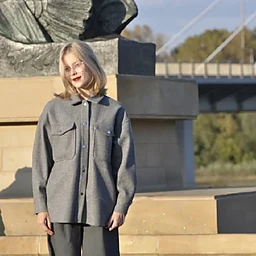
Marharyta Varanovich
Head of Public Relations
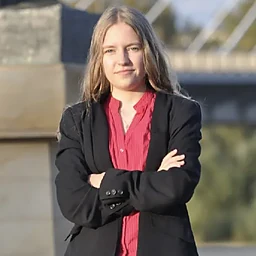
Nina Banaszak
Head of Pages
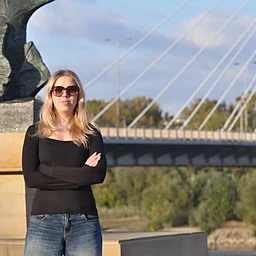
Olena Dura
Head of Graphic Design

Xu Wang
Head of Logistics
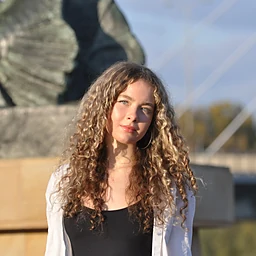
Zlata Suslikava
Head of Finance

More MUN conferences

ConferencesPolandTEVMUN 2026