IESMUN 2026

International European School * Warsaw Model United Nations

Feb 12–15, 2026 Warsaw, Poland

International European School * Warsaw Model United Nations

Conference

Warsaw, Poland·Europe

Feb 12–15, 2026

300 delegates expected

High school and university students

In English

How it went

4.47228 ratings from delegates
Academics
4.56
Logistics
4.33
Socials
4.50

About

A Europe built on cooperation that strengthens, diversity that inspires, and solidarity that unites

It is our pleasure to announce that the inaugural edition of the International European School’s Model United Nations will take place between the 12th and 15th of February. Our team is a driven and dedicated group that aims to guide future generations of world leaders and peacemakers. We stand at the ready to support, assist, and advocate for our delegates and chairs. We invite you to a distinguished forum of proactive debate, constructive dialogue, and stimulating interaction.

Set against the skyline of Poland’s capital, IESMUN is a distinguished gathering that invites students to fruitful discussion, collaboration and debate. Cultivating the values and principles of the European community, our conference sets a foundation for justice, cooperation, and mutual respect. We firmly attest that this year’s theme: “A Europe built on cooperation that strengthens, diversity that inspires, and solidarity that unites.” is an earnest demonstration of a shared vision; one that expresses a desire to shape history, fostering universal comprehension between cultures, people, and ideals. Facing the most pressing challenges of today as citizens of a united Europe, we must recognise its story and profound impact as a grassroot of our history. There is no better time to refocus our energies than the present – on the threshold of conflict, and in the wake of the international community reaffirming its abhorrence of violence, demonstrating its willingness to act as a collective body.

PAYMENT DETAILS:

  • DELEGATE FEE: 80 EUR / 350 PLN
  • FACULTY ADVISOR FEE: FREE OF CHARGE
  • HEAD DELEGATE FEE: 30 EUR
  • Payments are to be made mainly via mymun, unless stated otherwise by the delegate/delegation. In any event where the delegate’s/delegation’s preferred method of payment is in PLN - contact us via: info@iesmun.com

**Please note that delegates will only get assigned once they have paid the delegate fee. 

REQUIREMENTS:

  • One must be 14 years old or older to attend this conference as a delegate, unless they are to turn 14 that year and are a member of a delegation or secondary educational institution (High School).
  • One must showcase sufficient expertise and personal excellence to attend the conference as a chair.

📩Do not hesitate to reach out to us via email: info@iesmun.com

or our Instagram account: @ies.mun

Committees

  • 18 countries
    1. Reconciling Sovereignty and Self-Determination in Europe’s Unrecognized Regions: The Cases of Cyprus and Transnistria
    • Kinga Nowak
    • Nicolas Paul Plodzik
    • Muhammad Taha Nadeem

    United Nations Security Council

    Expert · English · 18 countries

    Topic

    Reconciling Sovereignty and Self-Determination in Europe’s Unrecognized Regions: The Cases of Cyprus and Transnistria

    About the committee

    The United Nations Security Council (UNSC) is the principal organ of the United Nations responsible for maintaining international peace and security. It holds the authority to make binding decisions that member states are obligated to implement under the UN Charter. The Council addresses conflicts, authorizes peacekeeping missions, imposes sanctions, and can take military action to prevent or resolve threats to global stability. Its deliberations and resolutions are fundamental to upholding the principles of collective security and international cooperation.

    Chairs

    Countries

    How this committee type works
  • 16 countries
    1. Establishing a new world order after the conclusion of the Great War.
    • Alan Tadeusz Olech
    • Wiktoria Nawrot
    • Emilia Sałajczyk

    Paris Peace Conference (1919-1920)

    Expert · English · 16 countries

    Topic

    Establishing a new world order after the conclusion of the Great War.

    About the committee

    How can one assassination change the course of world history? In 1919 the most powerful world leaders gathered in Paris to discuss a new world order, following the tragedy of the Great War (1914-1918). Little did they know what consequences their decisions would have on the next century. Now we know the ravages - now is the time to ask the question of what the treaty could’ve looked like, without the shortcomings and errors. In this committee, delegates will take on the roles of world delegations during the 1919-1920 Paris Peace Conference, challenging their debate skills and potentially changing the course of world history.

    Chairs

    Countries

    How this committee type works
  • 18 countries
    1. Responding to the continental uprising led by Carlito Marxito in the Americas
    • Cezary Bizoń
    • Aleksandra Bronowska
    • Aleksander Zybrant

    Future Security Council

    Intermediate · English · 18 countries

    Topic

    Responding to the continental uprising led by Carlito Marxito in the Americas

    About the committee

    Carlito Marxito, a secret descendant of Leon Trotsky who grew up in Mexico, has emerged as the leader of a massive rebellion across the Americas. Beginning in Mexico, his forces have quickly spread into Central and South America, seizing key cities, trade routes, and strategic resources. Rumors suggest he is building alliances with rogue states, disaffected militias, and unconventional armies. His campaign has destabilized multiple governments, and his influence is now threatening regional and global security. The FSC must consider how to respond to this unprecedented uprising and prevent further escalation of the conflict.

    Chairs

    Countries

    How this committee type works
  • 15 countries
    1. The topic will be disclosed 24 hours before committee sessions commence.
    • Lena Krasa
    • Stanisław Woźniak
    • Marysia Gałka

    Crisis Committee

    Expert · English · 15 countries

    Topic

    The topic will be disclosed 24 hours before committee sessions commence.

    Chairs

    Countries

    How this committee type works
  • 19 countries
    1. Regulating the Usage of Autonomous Weapons in Warfare
    • Magdalena M. Skowrońska
    • Anastasiia Vyshniak

    Disarmament and International Security Committee

    Intermediate · English · 19 countries

    Topic

    Regulating the Usage of Autonomous Weapons in Warfare

    About the committee

    The First Committee deals with disarmament, global challenges and threats to peace that affect the international community and seeks out solutions to the challenges in the international security regime. It considers all disarmament and international security matters within the scope of the Charter or relating to the powers and functions of any other organ of the United Nations; the general principles of cooperation in the maintenance of international peace and security, as well as principles governing disarmament and the regulation of armaments; promotion of cooperative arrangements and measures aimed at strengthening stability through lower levels of armaments. The Committee works in close cooperation with the United Nations Disarmament Commission and the Geneva-based Conference on Disarmament.

    Chairs

    Countries

    How this committee type works
  • 20 countries
    1. Managing migratory pressure at the EU’s external borders with an emphasis on balancing humanitarian obligations with border security
    • Tomasz Pogorzelski
    • Paweł Zapora
    • Gabriela Lis

    FRONTEX

    Intermediate · English · 20 countries

    Topic

    Managing migratory pressure at the EU’s external borders with an emphasis on balancing humanitarian obligations with border security

    About the committee

    Frontex, the European Border and Coast Guard Agency, is an EU agency that helps member states manage the EU's external borders, fight cross-border crime, and assist in search and rescue operations. It does this by providing support, expertise, and resources, including its own uniformed service known as the Standing Corps, which works alongside national authorities. Frontex also engages in risk analysis and shares intelligence to strengthen Europe's resilience against threats like trafficking, terrorism, and health emergencies.

    Chairs

    Countries

  • 16 countries
    1. Examining the Chat Control law and its effects on EU data protection standards and right to privacy.
    • Stanisław J. Haller
    • Magdalena Jensz

    European Council

    Intermediate · English · 16 countries

    Topic

    Examining the Chat Control law and its effects on EU data protection standards and right to privacy.

    About the committee

    The European Council is an institution of the European Union that brings together the heads of state or government of the member states to set the EU's general political direction and priorities. It is not a legislative body, meaning it does not pass laws, but it provides political impetus and strategic objectives for the EU. The body consists of the national leaders, the European Council President, and the President of the European Commission.

    Chairs

    Countries

    How this committee type works
  • 18 countries
    1. Addressing the risks of a Digital Euro with an emphasis on cybersecurity.
    • Blanka Sikora
    • Zocha Naziębłło

    European Central Bank

    Intermediate · English · 18 countries

    Topic

    Addressing the risks of a Digital Euro with an emphasis on cybersecurity.

    About the committee

    The European Central Bank (ECB) is the main institution responsible for the monetary policy of the Euro area. It works independently from national governments, but together with national central banks it forms the Eurosystem, which manages the euro and maintains financial stability. The Digital Euro program aims to create a safe and accessible digital version of cash. To protect the system, countries must cooperate on strong cybersecurity measures.

    Chairs

    Countries

  • 18 countries
    1. Responding to the Refugee and Humanitarian Impacts of the 2023 Sudan Conflict: International and Regional Responsibilities.

    • Paulina Dzwonnik-Pamirska
    • Stanisław Wadowski

    United Nations High Commissioner for Refugees

    Intermediate · English · 18 countries

    Topic

    Responding to the Refugee and Humanitarian Impacts of the 2023 Sudan Conflict: International and Regional Responsibilities.

    About the committee

    The 2023 conflict between Sudan’s Armed Forces and the Rapid Support Forces has triggered one of the world’s fastest-growing refugee crises. Over 12 million people have been displaced, with millions going to neighboring countries such as Chad, Egypt, and South Sudan. Refugees face shortages of food, shelter, and medical care, while host nations struggle to provide real support. Ongoing violence and instability make humanitarian access difficult and prevent safe returns.

    Chairs

    Countries

    How this committee type works
  • 18 countries
    1. Addressing internal conflicts and the invocation of Article 5: Assessing the risks and response mechanisms with emphasis on Greece–Türkiye relations
    • Eymen Yıldız
    • Jin Heng Li
    • Lena Hejna

    North Atlantic Treaty Organisation

    Intermediate · English · 18 countries

    Topic

    Addressing internal conflicts and the invocation of Article 5: Assessing the risks and response mechanisms with emphasis on Greece–Türkiye relations

    About the committee

    Tensions between the Republic of Türkiye and Greece-two neighboring NATO members have endured for nearly a century, rooted in deep-seated historical disputes over the Aegean Sea, maritime borders, and airspace violations. In recent years, repeated military encounters, overflight incidents, and conflicting claims over natural resources have reignited fears of open confrontation. Both countries possess strong militaries and strategic positions within NATO, making any escalation between them a severe test of alliance unity. The North Atlantic Treaty was written to defend member states against external aggression, but not to address potential conflicts within the alliance. This ambiguity raises pressing questions about how NATO should act if two of its members come into direct conflict. Should Article 5 be reinterpreted or revised to prevent internal wars from fracturing the alliance? How can NATO mediate disputes while maintaining impartiality and collective security? Addressing these issues is essential for preserving the integrity and credibility of NATO’s collective defense principle.

    Chairs

    Countries

    How this committee type works
  • 19 countries
    1. Reforming the Voting System.
    2. Discussing the Participation of the Russian Federation and the State of Israel in the Contest.
    • Ignacy Salitra
    • Natasza Sudoł

    Eurovision

    Beginner · English · 19 countries

    Topics

    1. Reforming the Voting System.
    2. Discussing the Participation of the Russian Federation and the State of Israel in the Contest.

    About the committee

    The Eurovision Song Contest is an annual international music competition organized by the European Broadcasting Union (EBU) that features singers representing countries from across Europe and beyond. Participants are selected by their national broadcasters, and the winner is determined by a combination of public votes and professional jury votes from participating countries. The contest started in 1956 with a goal of promoting unity through music after World War II. Note: all acronyms refer to national broadcasting stations.

    Chairs

    Countries

  • 18 countries
    1. Addressing the potential health issue stemming from unauthorized access to uncontacted tribes.
    • Adam Biały
    • Krzysztof Nowicki
    • Olivier Kucharski

    World Health Organisation

    Beginner · English · 18 countries

    Topic

    Addressing the potential health issue stemming from unauthorized access to uncontacted tribes.

    About the committee

    Founded in 1948, WHO is the United Nations agency that connects nations, partners and people to promote health, keep the world safe and serve the vulnerable – so everyone, everywhere can attain the highest level of health. WHO leads global efforts to expand universal health coverage. They direct and coordinate the world’s response to health emergencies. They promote healthier lives – from pregnancy care through old age. Their Triple Billion targets outline an ambitious plan for the world to achieve good health for all using science-based policies and programmes.

    Chairs

    Countries

    How this committee type works
  • 19 countries
    1. Addressing the Misuse of Political Asylum for Criminal Evasion

    • Nadia Chodnicka
    • Natasza Wochnik

    United Nations Office on Drugs and Crime

    Beginner · English · 19 countries

    Topic

    Addressing the Misuse of Political Asylum for Criminal Evasion

    About the committee

    In recent years, political asylum systems have increasingly been exploited by individuals seeking to evade criminal prosecution rather than genuine persecution. This misuse undermines both international justice and the credibility of humanitarian protection mechanisms. In Europe, several high-profile cases have highlighted gaps in coordination between asylum authorities and law enforcement agencies, enabling corrupt officials or organized criminals to avoid extradition. The UNODC plays a vital role in promoting stronger legal cooperation, transparency, and data-sharing to prevent such abuses. The challenge lies in ensuring that reforms protect legitimate asylum seekers while closing loopholes that allow criminals to escape accountability.

    Chairs

    Countries

    How this committee type works
  • 19 countries
    1. Addressing Gender-Based Violence in Current Conflict Zones
    2. Advancing Rights for Marginalized Women from: Indigenous, LGBTQ+ and Disabled communities

    • Ala Ben Khadhra
    • Gabriela Montealegre

    United Nations Entity for Gender Equality and the Empowerment of Women

    Beginner · English · 19 countries

    Topics

    1. Addressing Gender-Based Violence in Current Conflict Zones
    2. Advancing Rights for Marginalized Women from: Indigenous, LGBTQ+ and Disabled communities

    About the committee

    UN Women is the United Nations entity dedicated to gender equality and the empowerment of women. It works to develop and uphold standards, and create an environment where women and girls can exercise their human rights and reach their full potential. UN Women focuses on four key areas: promoting women's leadership and political participation, ending violence against women, ensuring economic empowerment for women, and advancing women's role in peace and security efforts.

    Chairs

    Countries

    How this committee type works
  • 20 countries
    1. Evaluating the Environmental Impacts of Deep-Sea Mining With an Emphasis on Eco-friendly Resource Extraction.
    • Antoni Rymarczuk
    • Angela Dudzińska
    • Mikołaj Kamiński

    United Nations Environmental Programme

    Beginner · English · 20 countries

    Topic

    Evaluating the Environmental Impacts of Deep-Sea Mining With an Emphasis on Eco-friendly Resource Extraction.

    About the committee

    With resources on land diminishing by the day, many countries have turned their attention to the ocean floor. This has given rise to deep-sea mining, a process that many countries judge too environmentally disruptive. With trillions of dollars worth of minerals hidden on the ocean floor, a solution that balances ecological concerns and the need for resource extraction has to be found.

    Chairs

    Countries

    How this committee type works
  • 20 countries
    1. Addressing the trafficking of women under the guise of cross-border marriages, with an emphasis on non-European states
    • Pola Dyrcz
    • Kornelia Kobierzewska

    Human Rights Council

    Beginner · English · 20 countries

    Topic

    Addressing the trafficking of women under the guise of cross-border marriages, with an emphasis on non-European states

    About the committee

    The Human Rights Council is an intergovernmental body within the United Nations system made up of 47 States responsible for the promotion and protection of all human rights around the globe. It has the ability to discuss all thematic human rights issues and situations that require its attention throughout the year. It meets at the United Nations Office at Geneva.

    Chairs

    Countries

    How this committee type works

Partner conferences
LALMUN 2025

Warsaw, Poland

View conference
BioMedMUN 2025

Poznań, Poland

View conference
HoffMUN 2025

Warsaw, Poland

View conference
IASMUN 2025

Warsaw, Poland

View conference
WawMAL 2025

Warsaw, Poland

View conference
TARMUN 2025

Tarnów, Poland

View conference
TEVMUN 2025

Warsaw, Poland

View conference
EłkMUN 2026

Ełk, Poland

View conference
DeMUN 2025

Gliwice, Poland

View conference
NEPMUN 2026

Gdańsk, Poland

View conference
KOSZMUN 2026

Koszalin, Poland

View conference
AKAMUN 2026

Warsaw, Poland

View conference
POLMUN 2025

Warsaw, Poland

View conference
QueenMUN 2026

Warsaw, Poland

View conference
TBSMUN 2026

Warsaw, Poland

View conference
MonMUN 2026

Warsaw, Poland

View conference
CASMUN 2026

Sopot, Poland

View conference
RaszMUN 2026

Warsaw, Poland

View conference
LUBMUN 2026

Lublin, Poland

View conference
HoffMUN 2026

Warsaw, Poland

View conference
JagiMUN 2026

Kraków, Poland

View conference
PrusMUN 2026

Warsaw, Poland

View conference
YESMUN 2026

Warsaw, Poland

View conference
BiaMUN 2027

Białystok, Poland

View conference
VisMUN 2026

Kraków, Poland

View conference
TARMUN 2026

Tarnów, Poland

View conference

Organizers

Agata Warchol
Deputy Head of Technical Staff and Volunteers
Alexa Cirpeanu
Deputy President of the General Assembly
Alicia Dankowski
President of the General Assembly
Amelia Połubok
USG for Public Relations
Anna Hollanek
Faculty Advisor
Ewa Hollanek
USG for Logistics

Jacqueline Maxwell
USG for Delegate Services
Jagoda Stanek
Member of the Sponsorships Team
Jakub Ilyas Czapski
Head of Technical Staff and Volunteers
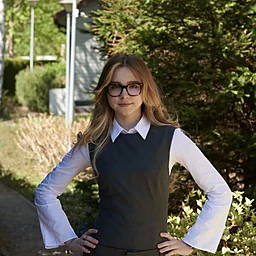
Michalina Dzięcioł
Secretary General
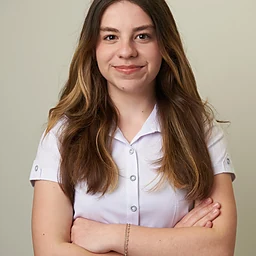
Paulina Reda
Deputy Secretary General
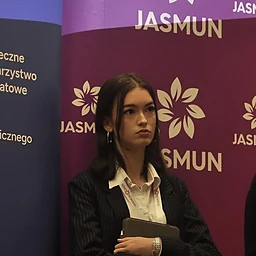
Raisa Avram
Head of Pages
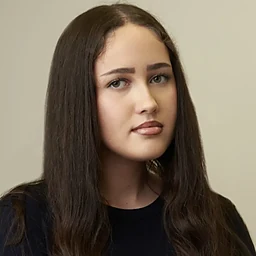
Rebecca Halford
Deputy Director General
Stefania Gieraltowska
USG for Social Media

Tymoteusz Kasparek
USG for Finance

More MUN conferences

ConferencesPolandIESMUN 2026