YESMUN 2026

Young Entrepreneurs Society Model United Nations

Oct 23–25, 2026 Warsaw, Poland

Young Entrepreneurs Society Model United Nations

Conference

Warsaw, Poland·Europe

Oct 23–25, 2026

210 delegates expected

High school and university students

In English

Applications

Closed
  • Delegates, Faculty advisorsMay 19 – Oct 18, 2026
  • ChairsFeb 15 – May 1, 2026

About

Empowering Youth to Lead Global Change

The inaugural edition of the Young Entrepreneurs’ Society Model United Nations (YESMUN 2026) will take place from 23rd to 25th October 2026, under the theme Ab Ideis ad Impactum - From Ideas to Impact. This theme reflects the core mission of YESMUN: transforming innovative ideas into meaningful global change through youth-led diplomacy, leadership, and entrepreneurship.

YESMUN 2026 is organised by the Young Entrepreneurs’ Society, a non-governmental organisation driven by nurturing young minds through access to resources, education, and opportunities. With a strong commitment to cultivating innovative thinkers and supporting future leaders, the Society empowers youth to achieve their ambitions and make a positive impact on society through diverse programmes and initiatives.

For the first time, delegates will have the opportunity to participate in debates within the Wizengamot Committee and the Council of the Olympian Gods at a Model United Nations conference. In addition, attendees may choose to join the War Cabinet, where they will assume the roles of military generals and engage in strategic decision-making through troop deployment and combat simulations.

The conference is scheduled to take place in Warsaw, the capital and largest city of Poland.

Payments are to be made primarily via MYMUN, unless otherwise stated by the delegate/delegation. 

In any event where the delegate’s/delegation’s preferred method of payment is in another currency, contact us via: yesmun2026@gmail.com

Please note that delegates will only get assigned once they have paid the delegate fee. 

The minimum age to attend our conference is 13 for delegates and 15 for chairpersons.

The Conference fee is non-refundable due to the organization being an NGO.

Email: yesmun2026@gmail.com

Instagram profile: @_yesmun_

Committees

  • 19 countries
    1. The Situation in Azerbaijan
    • Igor Mazurkiewicz
    • Stanisław J. Haller

    Security Council

    Expert · English · 19 countries

    Topic

    The Situation in Azerbaijan

    About the committee

    The frozen conflict in the Nagorno-Karabakh region and post-war accountability - Nagorno-Karabakh is an Armenian-populated enclave inside Azerbaijan, which was seized by Armenian forces in the first war that took place between 1988 and 1994, creating a decades-long conflict that has not been resolved. Four UN Security Council resolutions went unenforced, and OSCE-led mediation produced no lasting agreement. In 2020, Azerbaijan recaptured most of its lost territory in an offensive, ending with a Russian backed ceasefire and the deployment of Russian peacekeepers, with which there was some controversy. Furthermore, a subsequent blockade of the Lachin corridor, which is the enclave's only supply route, triggered a humanitarian crisis. On 19 September 2023, Azerbaijan launched a 24-hour military operation that forced Artsakh's capitulation. Within weeks, over 100,000 ethnic Armenians were forced to flee their area of residence, and the Republic of Artsakh formally dissolved on 1st of January 2024. The Security Council must thus address the historical background of the conflict when attempting to resolve a humanitarian crisis, to which previous resolutions have already proven ineffective, while ensuring that any mediation efforts are not shrouded in controversy, as was the case with the 2020 Russian Contingent in the region.

    Chairs

    Countries

    How this committee type works
  • 20 countries
    1. Discussing new geopolitical strategies in response to the Continental Redistribution Event

    • Tomasz Pogorzelski
    • Pola Kurek
    • Roman Liber

    Future Security Council

    Expert · English · 20 countries

    Topic

    Discussing new geopolitical strategies in response to the Continental Redistribution Event

    About the committee

    The year is 2101. The world has faced yet another challenge - a catastrophe that wiped out 1/3 of the entire world and changed its structure forever. The continents have shifted, and so have the global powers. North America is split in half, Africa changed places with the Antarctic, and Eurasia broke off into two separate pieces. The world is now destroyed; the earthquakes and tsunamis that happened after the meteor struck the Earth left catastrophic consequences behind. Will humanity get back on its feet after facing such a detrimental wipeout? Will the new arrangement of the continents change the way the geopolitical power is distributed? This topic is an interesting choice for delegates who specialize in dealing with chaotic scenarios that remain mysterious till the moment when they get to know the topic better. It is a highly interactive topic, as it does not state which countries are in power.

    Chairs

    Countries

    How this committee type works
  • 16 countries
    1. Managing the decline of faith amongst devotees

    • Bianca Wilkowicz
    • Stanisław Woźniak
    • Hania Kaźmir

    Council of Olympian Gods

    Expert · English · 16 countries

    Topic

    Managing the decline of faith amongst devotees

    About the committee

    The committee took place during the reign of Julian the Apostate (361 - 363), the second emperor after Constantine, who decriminalised Christianity in the Edict of Milan and converted to the religion himself. The spread of Christianity seriously threatens the Olympians' position, as a monotheistic cult has now attracted many devotees and even imperial approval, with backlash against pagan practices - Julian's predecessor went as far as to ban sacrifices. However, the current emperor is in favour of the old gods and has brought back the Hellenic religion as an institutional cult. This is presumably the last chance of a great comeback the Pantheon has, and they need to find ways to reinvigorate devotees. Now, the gods forming part of the Council, alongside the emperor, must put aside their feuds and work together to restore the dominant position of the divine whole among the empire's citizens.

    Chairs

    Countries

  • 13 countries
    1. Prosecutor v. Tom Marvolo Riddle
    • Anna Pokładek
    • Zuzanna Okrasa
    • Maja Przepiórkowska

    Wizengamot

    Expert · English · 13 countries

    Topic

    Prosecutor v. Tom Marvolo Riddle

    About the committee

    This International Criminal Court inspired committee is set in the magical universe of Harry Potter and it takes place in an alternate timeline in which Lord Voldemort is apprehended after the First Wizarding War comes to an end. Wizengamot stands before a difficult task of delivering justice and conducting a fair trial of the most hated man in Wizarding Britain. The delegates will take on the roles of well-known, beloved canon characters and act as either judges, prosecution or the defense. Each side offers a unique perspective on the case. The prosecution seeks retribution, the general defense will fight fiercely to protect the man in question, and the judges… well, some may just have their own agendas. Initially the verdict can seem obvious, but while the committee aligns with the international law guidelines we know from the real world, there is always a factor of uncertainty where magic (and bias) are concerned…

    Chairs

    Countries

    How this committee type works
  • 20 countries
    1. The Destiny War, 2049
    • Krzysztof Kłosowski
    • Filip Żurawski
    • Kamil Strzelec

    War Cabinet

    Intermediate · English · 20 countries

    Topic

    The Destiny War, 2049

    About the committee

    Year 2049, Europe. The Destiny War; war to settle down the destiny of the entire humankind for once and for all. The Spears of Destiny, one used during the crucifixion of Jesus Christ. The relics of history that were meant to be kept as a memorialization of old traditions and religions are now the pillars to the existence of the World. Whoever possesses the Spear, leads the World, one’s army has no enemies even worth comparison, basically untouchable and one’s victory is inevitable. European nations are seeking the original Spear of Destiny in order to gain control over the continent, even the World.The question is, in whose hands will this power be laid?

    Chairs

    Countries

    How this committee type works
  • 20 countries
    1. Developing response mechanisms against Hybrid Warfare Tactics

    • Maria Tober
    • Hanna Roszak
    • Stanisław Kośmicki

    North Atlantic Treaty Organisation

    Intermediate · English · 20 countries

    Topic

    Developing response mechanisms against Hybrid Warfare Tactics

    About the committee

    Hybrid warfare combines military and non-military strategies such as cyberattacks, disinformation, election interference, and proxy groups to weaken regional stability without resorting to open war. The key challenge is the fact that NATO was originally designed to counter conventional military threats and open armed conflicts. Hybrid attacks usually remain below the threshold of traditional armed conflict, which makes them significantly harder to deter and more politically sensitive, as overreaction could escalate into an open conflict. A central issue is the interpretation of Article 5 in the context of hybrid warfare, specifically, what level of damage or aggression qualifies as an attack sufficient to trigger collective defence.

    Chairs

    Countries

    How this committee type works
  • 20 countries
    1. Addressing the exploitation of drug mules and strengthening international efforts to dismantle drug trafficking networks

    • Alicia Dankowski
    • Stanisław Miciałkiewicz

    United Nations Office on Drugs and Crime

    Intermediate · English · 20 countries

    Topic

    Addressing the exploitation of drug mules and strengthening international efforts to dismantle drug trafficking networks

    About the committee

    This topic focuses on protecting individuals who are forced, pressured, or misled into transporting drugs, while also addressing the wider networks that exploit them. The committee will discuss how governments, NGOs, and countries can cooperate through education, safe support systems, information sharing, stronger legal and border mechanisms, and closer international action to help vulnerable people seek assistance and dismantle drug trafficking networks. However, we also have to ensure that actions aimed at addressing this problem will comply with the law, with an emphasis on ensuring a fair trial for drug mules (perhaps through the use of UNODC subsidiary bodies, such as HONLAC, HONLAF, and HONLAP). The committee will also need to create a method for combating further drug smuggling.

    Chairs

    Countries

    How this committee type works
  • 20 countries
    1. Improving early warning systems for zoonotic spillover in order to prevent future pandemics

    • Anna Porycka
    • Alexa Cirpeanu
    • Zofia Borowska

    World Health Organization

    Beginner · English · 20 countries

    Topic

    Improving early warning systems for zoonotic spillover in order to prevent future pandemics

    About the committee

    Zoonotic spillovers are a group of infectious diseases that spread from animals to humans, accounting for over 75% of emerging infectious diseases. The spread of these diseases has witnessed a proliferation in recent years, due to the proliferation of deforestation, intensive agriculture, and climate change. These factors have disrupted the natural functioning of ecosystems by creating an unnatural form of contact between wildlife, livestock, and humans. This connection between species forms a web of interactions that allows all kinds of new diseases to emerge. Outbreaks such as Ebola or the COVID-19 (SARS, MERS) pandemic demonstrated how severe these outbreaks can be and how a looming health threat can turn into a global crisis when action is delayed. Some of these outbreaks arise because early warning indicators are flouted or addressed too late, as was previously mentioned. Effective surveillance systems are difficult to build and maintain, but neglecting the issue can have even more disastrous results. These consequences include overburdening healthcare systems or even endangering entire populations. For this reason, nations need to come together and discuss how to solve this problem on a global scale.

    Chairs

    Countries

    How this committee type works
  • 22 countries
    1. Addressing the dangers related to legal/illegal sex work worldwide

    • Natasza Wochnik
    • Lena Krasa
    • Nadia Chodnicka

    United Nations Entity for Gender Equality and the Empowerment of Women

    Beginner · English · 22 countries

    Topic

    Addressing the dangers related to legal/illegal sex work worldwide

    About the committee

    Both legal and illegal sex work have global implications and a significant impact on millions of people. People who work in the sex industry face severe consequences, including human trafficking, physical and sexual violence, and exploitation; poverty, discrimination, and few avenues to seek assistance. The criminalization of sex work increases the vulnerability of sex workers to violence and crime, because sex work is more difficult to report as a result of its criminal nature. There is a great deal of concern over the issues of organized crime within the sexual/sex worker industry, unsafe working conditions for sex workers, and social stigma associated with being involved in sex work, although countries that regulate and legislate sex work have many policy challenges to address with respect to these issues. The reason this issue is of such significance is due to the way it affects the individual, the public health of the individual, as well as the overall safety of individuals, and how gender equality is created. The vast majority of people subjected to forced sexual exploitation (trafficking and forced prostitution) are minors and women who have been victimized for the economic gain of another person and who have lost their basic personal freedoms. In addition, there has been a large amount of debate surrounding how governments will regulate sex work without infringing on human rights, and how to reduce the harm done to the participants in sex work. Addressing these issues surrounding sex work will require a global collaborative effort to find solutions to problems impacting individuals engaged in sex work by protecting those experiencing violence or exploitation as a result of participation in the sex industry.

    Chairs

    Countries

    How this committee type works
  • 20 countries
    1. Establishing a framework for the disarmament of non-state armed forces with an emphasis on improving the national security of Lebanon
    • Jin Heng Li
    • Gabriela Lis

    Disarmament and International Security Committee

    Beginner · English · 20 countries

    Topic

    Establishing a framework for the disarmament of non-state armed forces with an emphasis on improving the national security of Lebanon

    About the committee

    The topic will discuss one of the most persistent challenges to Lebanese sovereignty. Where the existence of heavily armed non-state actors, such as Hezbollah, has sustained power over many years due to the chronic institutional weaknesses leading to the formation of many parallel military structures outside of state control. This issue is compounded by the expected termination of the UNIFIL peacekeeping mandate set to be on the 31st December 2026. A comprehensive disarmament framework should be created to discuss the competing interests of regional powers, the sustained flow of arms from external state sponsors, and the capacity of the Lebanese armed forces to manage possible security threats. The question is how can disarmament be reached without triggering renewed internal conflict.

    Chairs

    Countries

    How this committee type works
  • 20 countries
    1. Addressing the violation of human rights in recent military operations labelled as counter-terrorism operations
    • Aleksander Dytkowski
    • Patrycja Placak
    • Uddhav Sharma

    Human Rights Council

    Beginner · English · 20 countries

    Topic

    Addressing the violation of human rights in recent military operations labelled as counter-terrorism operations

    About the committee

    In recent times, military operations have been carried out which have been labelled as counter-terrorism operations. However, concerns have been raised about how these military operations have been labelled as counter-terrorism operations when they actually have a completely different goal and intention. This is because in these operations, innocent civilians have been harmed. Along with that, destruction of necessary infrastructure including hospitals and schools have occurred. This extremely relevant topic involves not only mechanisms to protect civilians, but the establishment of frameworks to strengthen international laws concerning the topic while ensuring justice and appropriate consequences for the people who violate these laws.

    Chairs

    Countries

    How this committee type works
  • English

    Countries

Partner conferences

QueenMUN 2026

Warsaw, Poland

View conference
LALMUN 2026

Warsaw, Poland

View conference
JagiMUN 2026

Kraków, Poland

View conference
StetiMUN 2026

Szczecin, Poland

View conference
HoffMUN 2026

Warsaw, Poland

View conference
VisMUN 2026

Kraków, Poland

View conference
MUNSA 2026

Barcelona, Spain

View conference
BiaMUN 2027

Białystok, Poland

View conference
IESMUN 2027

Warsaw, Poland

View conference
PrusMUN 2027

Warsaw, Poland

View conference
WawMUN 2026

Warsaw, Poland

View conference
IPSMUN 2027

Wrocław, Poland

View conference
TBSMUN 2027

Warsaw, Poland

View conference
WrocMUN 2026

Wrocław, Poland

View conference
LUBMUN 2027

Lublin, Poland

View conference
ILSMUN 2026

Wrocław, Poland

View conference
SilMUN 2027

Opole, Poland

View conference
RaszMUN 2027

Warsaw, Poland

View conference

Organizers

Amelia Czutro
Director General
Deia Kadłubowska
Under-Secretary-General for Marketing
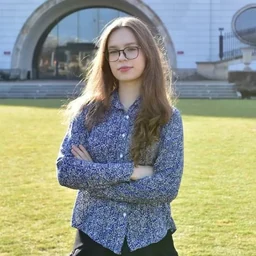
Emilia Sałajczyk
President of the General Assembly
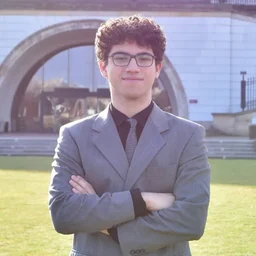
Eymen Yıldız
Secretary-General

Maja Piasecka
Under-Secretary-General for Public Relations

Natalia Kunicka
Head of Pages
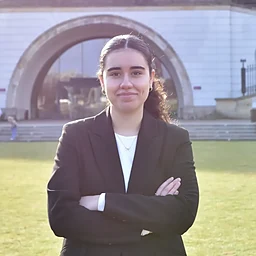
Nurbanu Erkol
Secretary-General

More MUN conferences

ConferencesPolandYESMUN 2026