ILSMUN 2026

International Lower Silesian Model United Nations

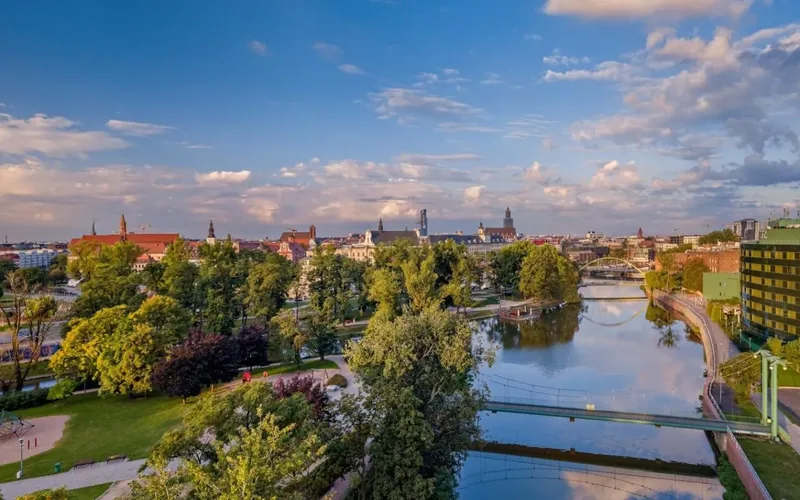
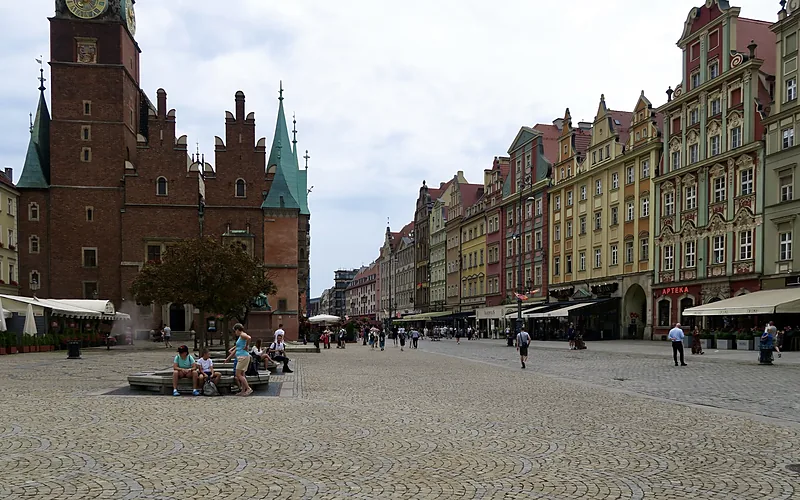
Nov 28–30, 2026 Wrocław, Poland

International Lower Silesian Model United Nations

Closes Nov 20 · 15 days left

Conference

Wrocław, Poland·Europe

Nov 28–30, 2026

120 delegates expected

High school and university students

In English

Applications

Open for some roles
  • Delegates, Head delegatesOct 1 – Nov 20, 2026Open
  • Faculty advisorsSep 20 – Nov 20, 2026Open
  • ChairsAug 1 – Sep 23, 2026Closed

About

Decisions of Today to Define Tomorrow

We are proud to announce the third edition of the International Lower Silesian Model United Nations - ILSMUN 2026 - returning to the vibrant city of Wrocław under this year’s theme:

“Decisions of Today to Define Tomorrow”

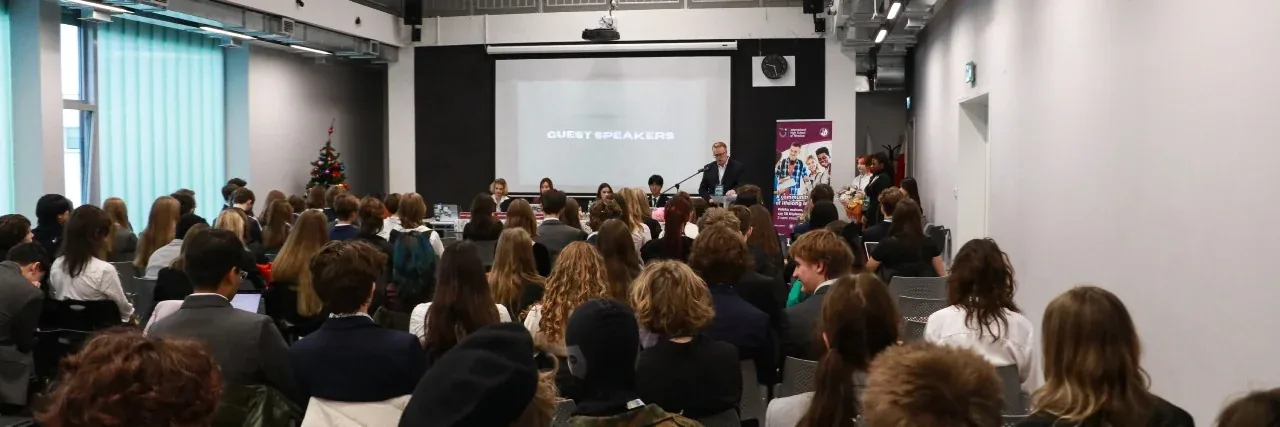
Organised by an international team of students studying in Wrocław, ILSMUN is more than just a conference. It is a conference where diplomacy, cooperation, and diverse perspectives come together, empowering young people to discuss the decisions shaping the future of our world.

Building on the success of our previous two editions, ILSMUN 2026 will offer new committees, thought-provoking topics, and an even more engaging conference experience. Through dynamic debate, negotiation, resolution writing, and collaborative problem-solving, participants will be encouraged to examine global challenges and consider how the choices made today may influence generations to come.

Whether you are joining us as a delegate or serving as a chair, ILSMUN 2026 will provide an opportunity to develop your public-speaking, leadership, critical-thinking, and diplomatic skills in an international and welcoming environment.

Beyond committee sessions, ILSMUN is a place to form meaningful connections, exchange ideas, experience different perspectives, and become part of a growing community of ambitious young leaders.

📍 Wrocław, Poland

Delegate applications are now open! — apply and become part of ILSMUN 2026!

📱 Follow us on Instagram: @ilsmun26 for updates and announcements.

Important Information

• Applicants must be at least 13 years old to participate as delegates and at least 15 years old to apply as chairs.
• No previous MUN experience is required. All you need is curiosity, commitment, and a passion for global affairs.

📩 Questions? Contact us at ilsmodelun26@gmail.com or send us a message on Instagram.

Committees

  • 15 countries
    1. Addressing the territorial disputes over the region of Kashmir and Jammu
    • Ksawery Malicki
    • Marcin Wołk

    Security Council

    Expert · English · 15 countries

    Topic

    Addressing the territorial disputes over the region of Kashmir and Jammu

    About the committee

    After the partition of India, the ownership of the Kashmir and Jammu territory has been heavily disputed by India, Pakistan and China in the Aksai Chin region and the Trans-Karakoram Tract. Both India and Pakistan have claimed the entire region as their own, which has led to rising tensions and recurring clashes between their respective military forces. The lack of mediation and weak administration of the region unsurprisingly led to the outbreak of 2 full-scale wars, which were both ended through UN-led mediation. After the end of the Indo-Pakistani war of 1971, both countries agreed to establish a Line of Control (LoC) separating the region into 2 separate territories administered by India and Pakistan, aside from the Chinese Aksai Chin region determined by the Line of Actual Control (LAC) established after the end of the Sino-Indian war of 1962. Ever since those borders have been infringed many times by all parties, with military clashes happening regularly, further escalating the rising tensions in the region. The United Nations Security Council is tasked with creating a non-violent solution to this issue and preventing a full-scale war.

    Chairs

    Countries

    How this committee type works
  • 18 countries
    1. The Fourth Punic War
    • Stanisław Filip Jeleń
    • Michał Zapaśnik

    Future Security Council

    Expert · English · 18 countries

    Topic

    The Fourth Punic War

    About the committee

    The newly established Great Roman Empire, wishing to grow in size, declared a war against Islamic Republic of Cartagena. However, the Carthaginian army was stronger and pushed the Romans back to the Alps. Currently, sides reached a stalemate with only the bravest divisions fighting in the mountains. Other nations were touched by the conflict, destabilising many communities across the Earth. The Security Council must consider how to respond to this conflict and prevent further escalation of the conflict.

    Chairs

    Countries

    How this committee type works
  • 18 countries
    1. Strengthening international standards for transparent and responsible use of AI-generated visual content, with an emphasis on AI-generated personas in advertising
    • Hania Marchwińska
    • Aniela Maria Rita Olejnik

    Commission on Science and Technology for Development

    Intermediate · English · 18 countries

    Topic

    Strengthening international standards for transparent and responsible use of AI-generated visual content, with an emphasis on AI-generated personas in advertising

    About the committee

    For decades, advertising has depended on real people to give products a recognizable face, whether they were actors, models or public figures. Today, artificial intelligence can create a person who does not exist, give them a face and voice and place them in an advertisement for a product they have never seen, used or experienced. This creates a new problem for the advertising industry: consumers may be watching a convincing recommendation from someone who has no identity, opinion or experience behind it at all. With AI-generated personas becoming easier to produce and increasingly difficult to distinguish from real people, the international community must consider how their use should be disclosed, what rights human performers should retain and where the responsibility for these artificial endorsements should lie.

    Chairs

    Countries

    How this committee type works
  • 15 countries
    1. Preparing for increased sea traffic in the northwest and northeast passages amid decreasing ice-cover duration
    • Michał Jakubowski
    • Beata Błażowska

    Arctic Council

    Intermediate · English · 15 countries

    Topic

    Preparing for increased sea traffic in the northwest and northeast passages amid decreasing ice-cover duration

    About the committee

    The Arctic Council is the leading intergovernmental forum for cooperation, coordination and interaction among the Arctic states and Indigenous peoples on issues concerning the Arctic. Established in 1996, it consists of eight Arctic states and six organisations representing Arctic Indigenous peoples as Permanent Participants. Its work focuses on sustainable development and environmental protection, including climate change, biodiversity, pollution, and the well-being of Arctic communities. The Council does not deal with military security or defence matters and generally operates through consensus.

    Chairs

    Countries

  • 19 countries
    1. Addressing the systematic censorship and violations of human rights that undermine press freedom in the region of Latin America
    • Zosia Prokopowicz
    • Wiktor Gaweł

    Human Rights Council

    Beginner · English · 19 countries

    Topic

    Addressing the systematic censorship and violations of human rights that undermine press freedom in the region of Latin America

    About the committee

    This topic focuses on censorship, threats and violence against journalists and activists in Latin America. Delegates will discuss ways to protect freedom of expression, improve journalist safety, fight impunity and promote cooperation between governments and human rights organizations.

    Chairs

    Countries

    How this committee type works
  • 18 countries
    1. Ensuring safe and equitable health care systems with an emphasis on the Sahel region
    • Kacper Wiech
    • Lena Żołędziowska

    World Health Organization

    Beginner · English · 18 countries

    Topic

    Ensuring safe and equitable health care systems with an emphasis on the Sahel region

    About the committee

    The Sahel region in Africa is currently considered by the World Health Organization to be one of the largest and most neglected humanitarian crises in the world. According to data from 2026, more than 24 million people in this geographical area urgently require humanitarian and medical assistance. In the centre of Sahel region the attacks of terrorist groups already lead to the complete closure or destruction of over 7,000 health centres. Medical personnel are fleeing combat zones, leaving millions of people without access to any doctor. Due to a lack of safe hospitals, maternal mortality in the Sahel is almost 100 times higher than the global average. In many places, one in 10 children dies before the age of five. Because of the lack of medical deliveries the market has been flooded with counterfeit pharmaceuticals. It's estimated that contraband and toxic, adulterated syrups and antibiotics kill nearly half a million people a year in sub-Saharan Africa. There is also a big issue of the shortage of vaccinations illnesses on infectious diseases have increased significantly. This problem needs to be addressed as fast as possible to prevent people from dying and give them back their fundamental human rights.

    Chairs

    Countries

    How this committee type works
  • 16 countries
    1. Preventing digital gender-based violence and sexualized intimidation against women politicians and public figures
    • Marlena Makowiecka
    • Lea Jezierska

    United Nations Entity for Gender Equality and the Empowerment of Women

    Beginner · English · 16 countries

    Topic

    Preventing digital gender-based violence and sexualized intimidation against women politicians and public figures

    About the committee

    This UN Women committee directly addresses the instrumentalization of gender-based digital violence as a deliberate political weapon, moving beyond generalized cybercrime. While male public figures face policy critique, women in public life: politicians, journalists, and activists - are uniquely targeted through armed sexualization, including deepfake pornography, rape threats, sextortion, and doxxing. The objective of these assaults is not political debate, but character assassination, intimidation, and the erosion of personal dignity. Left unchecked, this harassment creates a severe "chilling effect" that systematically deters women from seeking public offices and drives female voices out of the democratic sphere. Delegates stand before the critical task of treating this digital violence not merely as an online grievance, but as a direct violation of fundamental political rights and democratic integrity.

    Chairs

    Countries

    How this committee type works

Partner conferences

IPSMUN 2027
Wrocław, Poland

View conference
YESMUN 2026

Warsaw, Poland

View conference
LUBMUN 2027

Lublin, Poland

View conference
WrocMUN 2026

Wrocław, Poland

View conference
KOSZMUN 2027

Koszalin, Poland

View conference
EkoMUN 2026

Wrocław, Poland

View conference
IASMUN 2026

Warsaw, Poland

View conference

Organizers

Anastasiia Neveshkina
Deputy Secretary General

Chaeyoung Kim
Queen of Pages
Hena Oh
Secretary General

Jungwoo Han
USG of Delegate Services
Ksieniia Turchenko
USG of Finances
Mahmud Gurbanov
President of General Assembly
Małgorzata Maciejewska
President of General Assembly
Maria Lekszycka
USG of Social Media
Matylda Miękisiak
USG of External Affairs
Myesha Amelie Adele
USG of Logistics
Pauline Sany
USG of Graphic Design
yuuki kojima
Head of Finances

More MUN conferences

ConferencesPolandILSMUN 2026