IESMUN 2027

International European School * Warsaw Model United Nations

Feb 25–28, 2027 Warsaw, Poland

International European School * Warsaw Model United Nations

Closes Feb 7, 2027

Conference

Warsaw, Poland·Europe

Feb 25–28, 2027

350 delegates expected

High school and university students

In English

Applications

Open
  • DelegatesNov 2, 2026 – Feb 7, 2027Open
  • Faculty advisorsOct 5, 2026 – Feb 7, 2027Open

About

Humanity in a World Connected by Rights

We invite you all to join us for the second edition of IESMUN!

We, as humans, are all different. We have different personalities, different characteristics, different faiths and religions, we are born in different regions of the world, with different backgrounds and roles in society. No two people are, or can ever be the same, yet there is something connecting all 8 billion of us - we are all members of the human race, equal, and united by the fundamental rights we all have. Everybody, regardless of age, gender, race, sexuality or religion has the right to safety, dignity, health and life. In a world where these human rights are so often breached, we can never hope to achieve world peace, justice and sustainability, or to evolve, not only individually, but as a society.  It is the creation of a population in  which everyone is seen and heard that lies at the very core of the United Nations, as well as the Model United Nations community. In today’s world, new conflicts and issues emerge, leading to more violations of fundamental rights, hence there is only one thing that we must never stop protecting and fighting for - humanity itself and the people that make up what we call “society.”

For this reason, IESMUN is returning in the second edition under the theme “Humanity in a world connected by rights,” a topic focused specifically on protecting human rights across the globe. Over 4 days, between the 25th and 28th February, delegates will have the chance to explore all aspects influencing human rights and their enforcement around the world.

By debating environmental influences, international laws and world conflicts, impacting the lives of all people, all delegates and participants can learn the true value of diplomacy, unity and equality, while also making new connections and having fun.

PAYMENT DETAILS:

  • Coming soon!
  • Payments are to be made mainly via mymun, unless stated otherwise by the delegate/delegation. In any event where the delegate’s/delegation’s preferred method of payment is in PLN - contact us via: info@iesmun.com
  • REFUNDS WILL NOT BE POSSIBLE ONCE THE PARTICIPANT HAS PAID THE FEE

**Please note that delegates will only get assigned once they have paid the delegate fee. 

REQUIREMENTS:

  • One must be 14 years old or older to attend this conference as a delegate, unless they are to turn 14 that year and are a member of a delegation or secondary educational institution (High School).
  • One must showcase sufficient expertise and personal excellence to attend the conference as a chair.

📩Do not hesitate to reach out to us via email: info@iesmun.com

or our Instagram account: @ies.mun

Committees

  • 16 countries
    1. The Situation in Russia (Chechnya)
    • Stanisław Miciałkiewicz
    • Magda Jaszczak
    • Stanisław J. Haller

    Security Council

    Expert · English · 16 countries
  • 18 countries
    1. Ensuring Peaceful Integration of the Owl Empire into the Global Diplomatic Landscape
    • Stanisław Filip Jeleń
    • Zofia Koncewicz
    • Michał Zapaśnik

    Future Security Council

    Expert · English · 18 countries

    Topic

    Ensuring Peaceful Integration of the Owl Empire into the Global Diplomatic Landscape

    About the committee

    It is set in the year 2060, and the Owls Empire, a state of mutated owls, has spent a few years fighting with Israel, and other powers in the region. It now has immense military capabilities. The Security Council is trying once again to resolve the crisis, but experience has shown that peacekeeping forces alone cannot end a conflict with an actor this powerful.

    Chairs

    Countries

    How this committee type works
  • 16 countries
    1. Concluding the Thirty Years’ War (1618 - 1648)
    • Filip Żurawski
    • Aleksandra Bronowska
    • Alan Tadeusz Olech

    Peace of Westphalia 1648

    Expert · English · 16 countries

    Topic

    Concluding the Thirty Years’ War (1618 - 1648)

    About the committee

    In 1648 delegations from 109 states across all of Europe gathered in Münster and Osnabrück to end the war that has ravaged all of central Europe for the past thirty years. While the old empires collapse and new powers start emerging, the delegates shaping the Westphalian Settlement try to get the most of what they can for their states. Every action that the delegates in this committee take, will echo across the next centuries of history. In this committee the delegates will partake in immersive historical experience and challenging debates to rewrite one of the major events of human history.

    Chairs

    Countries

    How this committee type works
  • 20 countries
    1. The topic will be revealed 24 hours before debates commence.
    • Özlem Emine Güler
    • Stanisław Woźniak
    • Hania Kaźmir

    Crisis Committee

    Expert · English · 20 countries

    Topic

    The topic will be revealed 24 hours before debates commence.

    Chairs

    Countries

    How this committee type works
  • 20 countries
    1. Improving Frontex’s Operational Response to Migration and Migrant Smuggling in the Mediterranean
    • Piotr Kalbarczyk
    • Pola Sadowska

    FRONTEX

    Intermediate · English · 20 countries

    Topic

    Improving Frontex’s Operational Response to Migration and Migrant Smuggling in the Mediterranean

    Chairs

    Countries

  • 20 countries
    1. Addressing the Displacement of Indigenous Communities from their Ancestral Lands Due to Investment Projects
    • Emilia Sałajczyk
    • Aleksander Dytkowski

    United Nations High Commissioner for Refugees

    Intermediate · English · 20 countries

    Topic

    Addressing the Displacement of Indigenous Communities from their Ancestral Lands Due to Investment Projects

    Chairs

    Countries

    How this committee type works
  • 17 countries
    1. Discussing the Feasibility and Implications of European Federalisation

    • Sara Hannoush
    • Blanka Sikora

    European Council

    Intermediate · English · 17 countries

    Topic

    Discussing the Feasibility and Implications of European Federalisation

    Chairs

    Countries

    How this committee type works
  • 18 countries
    1. Case C-713/23 - Jakub Cupriak-Trojan and Mateusz Trojan vs. Wojewoda Mazowiecki
    • Soma Bartfai-Bako
    • Kamil Strzelec

    Court of Justice of the European Union

    Intermediate · English · 18 countries

    Topic

    Case C-713/23 - Jakub Cupriak-Trojan and Mateusz Trojan vs. Wojewoda Mazowiecki

    About the committee

    This case exposes the friction between national sovereignty over family law and the uniform application of EU freedom of movement. Jakub Cupriak-Trojan and Mateusz Trojan, dual Polish/German and Polish citizens respectively, lawfully married in Berlin in 2018. When they returned to reside in Poland, they applied to have their foreign marriage certificate transcribed into the Polish civil registry. Polish authorities repeatedly rejected the request, citing domestic law and constitutional provisions that do not recognize same-sex marriage, maintaining that transcribing the certificate would violate Polish public policy (ordre public). The dispute moved through the Polish legal system until the Supreme Administrative Court referred preliminary questions to the European Court of Justice. The primary question before the Court is whether Articles 20 and 21 TFEU (governing EU citizenship and free movement), read alongside Articles 7 and 21 of the EU Charter of Fundamental Rights (guaranteeing respect for family life and non-discrimination based on sexual orientation), require a Member State to recognize a same-sex marriage lawfully solemnized in another Member State.

    Chairs

    Countries

    How this committee type works
  • 20 countries
    1. The Use of Technology Export Controls as Instruments of Geopolitical Pressure
    • Maciej Pulit
    • Jakub Strasz

    Commission on Science and Technology for Development

    Intermediate · English · 20 countries

    Topic

    The Use of Technology Export Controls as Instruments of Geopolitical Pressure

    Chairs

    Countries

    How this committee type works
  • 20 countries
    1. Combatting Antimicrobial Resistance and Adressing the Overuse of Antibiotics in Europe
    • Natasza Sudoł
    • Barbara Jeziorowska

    World Health Organisation

    Beginner · English · 20 countries

    Topic

    Combatting Antimicrobial Resistance and Adressing the Overuse of Antibiotics in Europe

    Chairs

    Countries

    How this committee type works
  • 17 countries
    1. Addressing the Environmental Impact of Global Meat Production and its Consumption
    • Helena Rodriguez Ratajczak
    • Jagoda Kowalska

    United Nations Environmental Programme

    Beginner · English · 17 countries

    Topic

    Addressing the Environmental Impact of Global Meat Production and its Consumption

    Chairs

    Countries

    How this committee type works
  • 20 countries
    1. Addressing Human Rights Violations Stemming from State-Sponsored Demographic Engineering in Disputed and Occupied Territories
    • Jagoda Stanek
    • Damian Klepacki
    • Liliana Galara

    Human Rights Council

    Beginner · English · 20 countries

    Topic

    Addressing Human Rights Violations Stemming from State-Sponsored Demographic Engineering in Disputed and Occupied Territories

    Chairs

    Countries

    How this committee type works
  • 20 countries
    1. Combatting the Exploitation of Flag State Responsibility by Maritime Criminal Networks to Protect the Rights of Persons at Sea
    • Zofia Mańkowska
    • Zofia Sax

    United Nations Office on Drugs and Crime

    Beginner · English · 20 countries

    Topic

    Combatting the Exploitation of Flag State Responsibility by Maritime Criminal Networks to Protect the Rights of Persons at Sea

    Chairs

    Countries

    How this committee type works
  • 19 countries
    1. Discussing the Significance and Source of Low Birth Rates With An Emphasis on East Asia and Europe
    • Izabela Kozłowska
    • Maja Malawko

    United Nations Entity for Gender Equality and the Empowerment of Women

    Beginner · English · 19 countries

    Topic

    Discussing the Significance and Source of Low Birth Rates With An Emphasis on East Asia and Europe

    Chairs

    Countries

    How this committee type works
  • 17 countries
    1. Expanding Access to Mental Health Support for Children and Adolescents

    • Nina Toruniewska
    • Pola Kurek

    United Nations Children’s Fund

    Beginner · English · 17 countries

    Topic

    Expanding Access to Mental Health Support for Children and Adolescents

    About the committee

    Mental health challenges in children and adolescents became a growing global concern, especially in the years following the pandemi, where social interactions were limited. Factors such as bullying, social media, academic pressure, poverty, armed conflict, and social isolation contribute to this type of distress. Despite the increasing need for support, many young people face significant barriers to accessing mental health services, which include things like financial constraints, a shortage of qualified professionals, social stigmas and bad or underequipped healthcare infrastructure. These challenges are particularly severe in LICs and regions affected by conflicts and political instability.

    Chairs

    Countries

    How this committee type works
  • 18 countries
    1. 1986 Chernobyl Disaster
    • Piotr Pokładek
    • Lena Krasa
    • Jan Wojdyło

    Soviet Emergency Council

    Expert · English · 18 countries

    Topic

    1986 Chernobyl Disaster

    About the committee

    The Soviet Union had just suffered the worst nuclear accident in history, and the state's first instinct is to deny it. Reactor No. 4 at the Chernobyl Nuclear Power Plant has exploded during a safety test, throwing radioactive material across Ukraine, Belarus, and eventually most of Europe. Moscow has not told the world, its allies, and not even their own people. Firefighters are dying, the reactor core is still burning, and every hour of delay widens the zone that will have to be evacuated. The Council must act under pressure with incomplete information, in a system built to hide failure and only then, eventually, manage it. Every hour of delay or silence may mean thousands more people breathing contaminated air, drinking poisoned water, and sending their children to play 3 kilometres away from “the most dangerous place on Earth”.

    Chairs

    Countries

Partner conferences
BiaMUN 2027

Białystok, Poland

View conference
VisMUN 2026

Kraków, Poland

View conference
YESMUN 2026

Warsaw, Poland

View conference
TARMUN 2026

Tarnów, Poland

View conference
MarieMUN 2026

Warsaw, Poland

View conference
TEVMUN 2026

Warsaw, Poland

View conference
StetiMUN 2026

Szczecin, Poland

View conference
PrusMUN 2027

Warsaw, Poland

View conference
HoffMUN 2026

Warsaw, Poland

View conference
KalMUN 2026

Kalisz, Poland

View conference
MonMUN 2026

Warsaw, Poland

View conference
IASMUN 2026

Warsaw, Poland

View conference
JagiMUN 2026

Kraków, Poland

View conference
EłkMUN 2026

Ełk, Poland

View conference
DeMUN 2026

Gliwice, Poland

View conference
KOSZMUN 2027

Koszalin, Poland

View conference
RaszMUN 2026

Warsaw, Poland

View conference
QueenMUN 2026

Warsaw, Poland

View conference
JASMUN 2026

Warsaw, Poland

View conference
LUBMUN 2026

Lublin, Poland

View conference
WawMUN 2026

Warsaw, Poland

View conference
TBSMUN 2027

Warsaw, Poland

View conference
KOCHMUN 2027

Warsaw, Poland

View conference
POMUN 2027

Szczecin, Poland

View conference
ANVMUN 2027

Warsaw, Poland

View conference
LeoMUN 2027

Warsaw, Poland

View conference

Organizers

Aditi Bhardwaj
USG for Delegate Services
Agata Warchol
USG for Logistics

Agnieszka Darmos
Head of Pages and Technical Staff
Anna Hollanek
Faculty Advisor

Aparajeet Mitra
USG for Sponsorships
Apolonia Dziwinska
Deputy Secretary-General

Ewa Hollanek
Secretary-General
Franka de la Vega
Head of Pages and Technical Staff

Gabriela Lis
President of the General Assembly

Gonçalo Baldaia
Deputy USG for Finance
Iga Franczyk
USG for Finance
Jelena Petriaggi
USG for Delegate Services
Mariachiara Mola
USG for Design

Maria Makowska
USG for Social Media

Mathilde Jara
USG for Academics

Michalina Dzięcioł
President of the General Assembly
Roberta Andriani
USG for Design
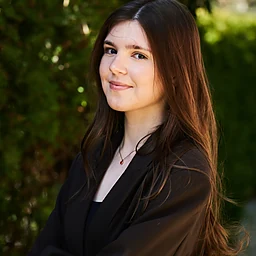
Sofija Milonjic
USG for Academics

More MUN conferences

ConferencesPolandIESMUN 2027