MarieMUN 2026

Marie Skłodowska Curie Model United Nations

Dec 11–13, 2026 Warsaw, Poland

Marie Skłodowska Curie Model United Nations

Next deadline Nov 20 for head delegates and faculty advisors · 18 days left

Conference

Warsaw, Poland·Europe

Dec 11–13, 2026

120 delegates expected

High school and university students

In English and Polish

Applications

Open for some roles
  • Head delegates, Faculty advisorsAug 1 – Nov 20, 2026Open
  • DelegatesJul 31 – Nov 25, 2026Open
  • ChairsMar 23 – Jul 2, 2026Closed

About

Inspired by Marie Skłodowska-Curie, Driven by diplomacy.

MarieMUN is a Model United Nations conference held in Warsaw that brings together students who want to sharpen their debating skills, deepen their understanding of international politics, and explore the global challenges connected to science, health, and innovation.

Inspired by the legacy of Marie Skłodowska‑Curie, the conference uniquely combines traditional Model UN debate with themes drawn from biology, medicine, and life sciences. Skłodowska-Curie, born in Warsaw during the era of the Partitions of Poland, is renowned for having broken barriers in science and society, not only for women. She was first person to receive two Nobel Prizes, honoured with the Nobel Prize in Physics and the Nobel Prize in Chemistry, and remains the only woman to have achieved this distinction in two distinct scientific fields.

We aim to reflect her spirit of curiosity, perseverance, and intellectual courage. Delegates at our conference will come across global issues at the intersection of international policy and scientific progress. Through dynamic committee sessions, and collaborative problem-solving, participants will not only learn how diplomacy works in the United Nations, but also how science can shape the future of global decision-making.

We welcome both experienced delegates and beginners. Whether participants come for the challenge of high-level debate, the opportunity to learn more about global politics, or an interest in life sciences and medicine, MarieMUN offers a unique environment where diplomacy meets scientific inspiration.

MarieMUN is not only a UN-inspired conference, but a place where the next generation of thinkers, diplomats, and scientists can meet in the city where Marie Skłodowska-Curie’s story began.

The age requirement for chairs is 16 years old, and for delegates, 14 years old.

Payment is mandatory in order to receive an assignment for a delegate, any payments are non-refundable.

We are not able to provide visa invitation letters.


Committees

  • 16 countries
    1. The Situation in Yemen
    • Pola Kurek
    • Stanisław Woźniak

    United Nations Security Council

    Expert · English · 16 countries

    Topic

    The Situation in Yemen

    About the committee

    The situation in Yemen, ongoing for more than a decade since September 2014, when Houthi forces seized control of the country’s capital city, Sana’a, has resulted in one of the world’s most severe humanitarian and security crises, with a conflict between the internationally recognized government, the Houthi movement, separatists, and other relevant domestic and international actors, making this crisis much more than an internal conflict, but one of the most pressing proxy wars of modern history, with many countries such as the UAE, Saudi Arabia, and Iran, all further backed by superpowers like the USA and Russia, holding stake in the topic. Exchange of missiles, displacement of millions, threatened maritime security, and economic devastation, are just some of the symptoms. Further exacerbating the situation, the war in Iran, and the closure of the Strait of Hormuz, have put Yemen and their largest supporter, Iran, in the spotlight.

    Chairs

    Countries

    How this committee type works
  • 20 countries
    1. Countering the Misuse of Privacy-Enhancing Technologies and Regulatory Loopholes in Terms of Money Laundering
    • Jan Wojdyło
    • Apolonia Dziwinska

    United Nations Office on Drugs and Crime

    Beginner · English · 20 countries

    Topic

    Countering the Misuse of Privacy-Enhancing Technologies and Regulatory Loopholes in Terms of Money Laundering

    About the committee

    The rise of privacy-enhancing technologies, accelerating dramatically since the emergence of privacy coins like Monero in 2014 and the growth of cryptocurrency mixing services and decentralized finance protocols throughout the 2020s, has created one of the most technically complex and rapidly evolving threats to the global anti-money laundering architecture, with a conflict between the right to privacy, the demands of law enforcement, and the ungoverned spaces exploited by criminal networks, sanctioned states, and terrorist financiers, making this crisis much more than a technical regulatory gap, but one of the defining battlegrounds of modern financial crime, with jurisdictions ranging from offshore havens to major financial centers, and actors as varied as transnational drug cartels, ransomware groups, and state-sponsored hacking units, all exploiting the seams between national regulatory regimes and the deliberately permissive frameworks of regulatory havens designed to attract capital at the expense of oversight. Further worsening the situation, the growing use of privacy-enhancing technologies to finance sanctions evasion amid intensifying geopolitical fragmentation, and the explosive growth of DeFi platforms operating entirely outside traditional regulatory perimeters, have put the international financial system's ability to trace illicit funds directly in the spotlight.

    Chairs

    Countries

    How this committee type works
  • 20 countries
    1. Regulating Ozempic and Other Weight-Loss Drugs in Global Healthcare Systems

    • Izabela Kozłowska
    • Zuzanna Chilińska

    World Health Organization

    Beginner · English · 20 countries

    Topic

    Regulating Ozempic and Other Weight-Loss Drugs in Global Healthcare Systems

    About the committee

    The rise of GLP-1 drugs like Ozempic, Wegovy, and Mounjaro has become one of the biggest medical breakthroughs of our time. What started as a treatment for Type 2 diabetes has completely transformed weight loss care, just as the World Health Organization recognized obesity as a chronic disease affecting over a billion people. Yet, global infrastructure wasn’t ready for this demand. The frenzy has strained healthcare systems, exposing deep flaws in supply chains, trade policies, and equity. Between price gaps, supply shortages, and US trade sanctions that complicate shipments and push restricted nations to bypass Western patents, ensuring fair access has become a major international challenge.

    Chairs

    Countries

    How this committee type works
  • 21 countries
    1. Addressing Harmful Practices Towards Women Justified by Religious or Cultural Interpretations

    • Lena Basiak
    • Filip Żurawski

    United Nations Entity for Gender Equality and the Empowerment of Women

    Beginner · English · 21 countries

    Topic

    Addressing Harmful Practices Towards Women Justified by Religious or Cultural Interpretations

    About the committee

    Harmful practices towards women are defined as a form of gender-based violence and violation of human rights that infringe upon health and rights of women all ages. Many of those practices are justified by interpretetions of religious scriptures, those of world's main religions, such as "Bible" or "Quran", as well as indigenous religions. Other harmful practices stem from culture in which the victims live, reinforcing systematic gender inequalities, stereotypes and limiting women's autonomy. Those practices include female genital mutilation, forced and child marrige, virginnity testing, femicides, body modifications and many more. UN Women was created to protect and advance rights of all women and girls, as well as fighting for gender equality progress around the world. This committee will try to adress this issue, through examining the root causes, finding ways to combat it, such as establishing legal frameworks or higher enforcement of already existing laws, in order to come up with a solution to this global issue.

    Chairs

    Countries

    How this committee type works
  • 20 countries
    1. Mitigating the negative effects of Transnational Corporations (TNCs) on developing countries

    • Marlena Bastock
    • Olivier Kucharski

    United Nations Economic and Social Council

    Intermediate · English · 20 countries

    Topic

    Mitigating the negative effects of Transnational Corporations (TNCs) on developing countries

    About the committee

    Transnational Corporations are companies operating on a global scale, traditionally based in highly developed countries, but expanding internationally to maximise profit. While beneficial for the countries where the capital returns, TNCs often operate using resources and labour of developing countries, exploiting workers and land. This often results in economic stagnation, human rights violations, and environmental crises. The role of the Economic and Social Council will be to effectively manage the grip these corporations have on developing countries, safeguarding economic integrity while protecting the well-being of workers and local populations.

    Chairs

    Countries

    How this committee type works
  • 20 countries
    1. Safeguarding intellectual property in the era of generative artificial intelligence

    • Remigiusz Piotrowski
    • Melania Jasińska

    United Nations Commission on Science and Technology for Development

    Intermediate · English · 20 countries

    Topic

    Safeguarding intellectual property in the era of generative artificial intelligence

    About the committee

    The rapid advancement of generative artificial intelligence (AI) has transformed the creation of text, images, music, software, and other digital content. While these technologies present significantly important opportunities for innovation, education and economic growth, they also raise varipus questions regarding intellectual property (IP) rights. AI models are often trained on different datasets, that contain copyrighted works, which leads to disputes over authorship, ownership, fair use and compensation for creators. The absence of international standards has resulted in differing national approaches to copyright protection, licensing, and the legal status of AI generated content. These inconsistencies create uncertainty for creators, technology developers, businesses and consumers.

    Chairs

    Countries

    How this committee type works
  • 20 countries
    1. Dyskusja nad polską polityką migracyjną w świetle napływu uchodźców z Ukrainy i sytuacji na granicy polsko-białoruskiej
    • Aleksander Montana
    • Zuzanna Lubczyńska

    Polish Sejm

    Beginner · Polish · 20 countries

    Topic

    Dyskusja nad polską polityką migracyjną w świetle napływu uchodźców z Ukrainy i sytuacji na granicy polsko-białoruskiej

    About the committee

    Komitet poświęcony będzie analizie polskiej polityki migracyjnej w kontekście napływu uchodźców z Ukrainy oraz kryzysu na granicy polsko-białoruskiej. Delegaci zmierzą się z wyzwaniem pogodzenia bezpieczeństwa państwa, zobowiązań humanitarnych i długofalowej strategii migracyjnej Polski.

    Chairs

    Countries

  • 20 countries
    1. Addressing stereotypes, conspiracy theories, and discrimination targeting Jewish populations and other religious and ethnic minorities
    • Liliana Galara
    • Małgorzata Pompe
    • Maja Malawko

    Human Rights Council

    Intermediate · English · 20 countries

    Topic

    Addressing stereotypes, conspiracy theories, and discrimination targeting Jewish populations and other religious and ethnic minorities

    About the committee

    Despite decades of international efforts to combat discrimination targeting Jewish populations and other religious and ethnic minorities continue to spread globally, particularly through digital platforms. These narratives fuel prejudice, social exclusion, hate crimes, and violence, threatening human rights, social cohesion, and democratic values. While international legal instruments prohibit discrimination, no comprehensive global framework specifically addresses the rapid online dissemination of harmful stereotypes and conspiracy theories.

    Chairs

    Countries

    How this committee type works

Partner conferences
DeMUN 2026
Gliwice, Poland

View conference
LUBMUN 2026

Lublin, Poland

View conference
IPSMUN 2026

Wrocław, Poland

View conference
IASMUN 2026

Warsaw, Poland

View conference
LALMUN 2026

Warsaw, Poland

View conference
IESMUN 2026

Warsaw, Poland

View conference
TARMUN 2026

Tarnów, Poland

View conference
BiaMUN 2027

Białystok, Poland

View conference
TEVMUN 2026

Warsaw, Poland

View conference
IESMUN 2027

Warsaw, Poland

View conference
LeoMUN 2027

Warsaw, Poland

View conference
CLVMUN 2027

Warsaw, Poland

View conference
LUBMUN 2027

Lublin, Poland

View conference
IPSMUN 2027

Wrocław, Poland

View conference
ANVMUN 2027

Warsaw, Poland

View conference

Organizers

Amelia Nowicka
USG for Social Media
Emily Dziura
USG for Social Media
Emma Lukowska
USG for Graphic Design
Katarzyna Kopyś
President of the General Assembly
Lena Krasa
USG for Delegate Service
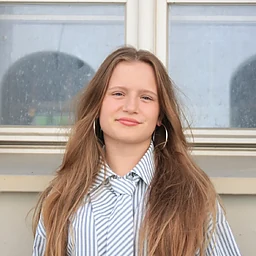
Lilianna Witkiewicz
USG for Page Management
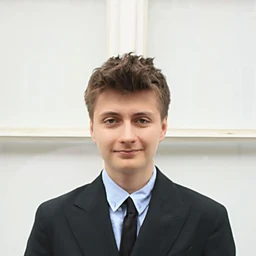
Mikołaj Załucki
Secretary General
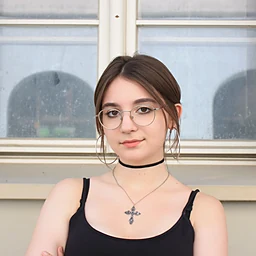
Patrycja Placak
USG for Page Management
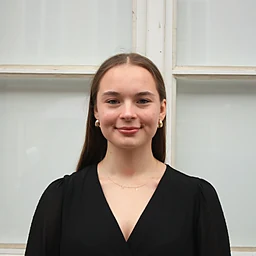
Pola Sadowska
USG for Logistics
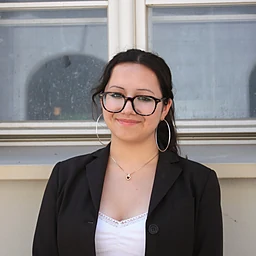
Sofie Kalwani
Director General
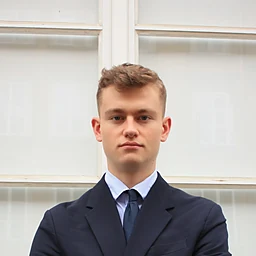
Szymon Auda
USG for Finance
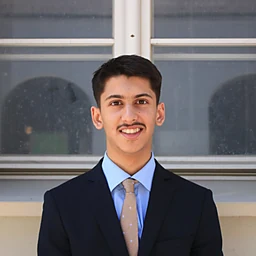
Uddhav Sharma
Vice-President of the General Assembly

More MUN conferences

ConferencesPolandMarieMUN 2026