GDNMUN 2026

Gdańsk Model United Nations

Nov 20–22, 2026 Gdańsk, Poland

Gdańsk Model United Nations

Closes Nov 8 · 5 days left

Conference

Gdańsk, Poland·Europe

Nov 20–22, 2026

200 delegates expected

High school and university students

In English

Position paper deadlines differ by committee

Applications

5 days left
Aug 1 – Nov 8, 2026Same dates for every role
  • Delegates
  • Head delegates
  • Faculty advisors

About

Gdańsk Model United Nations 2026

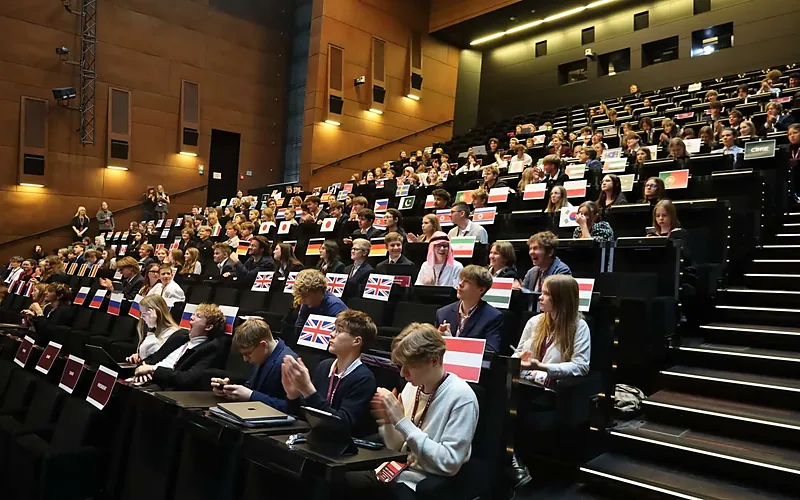
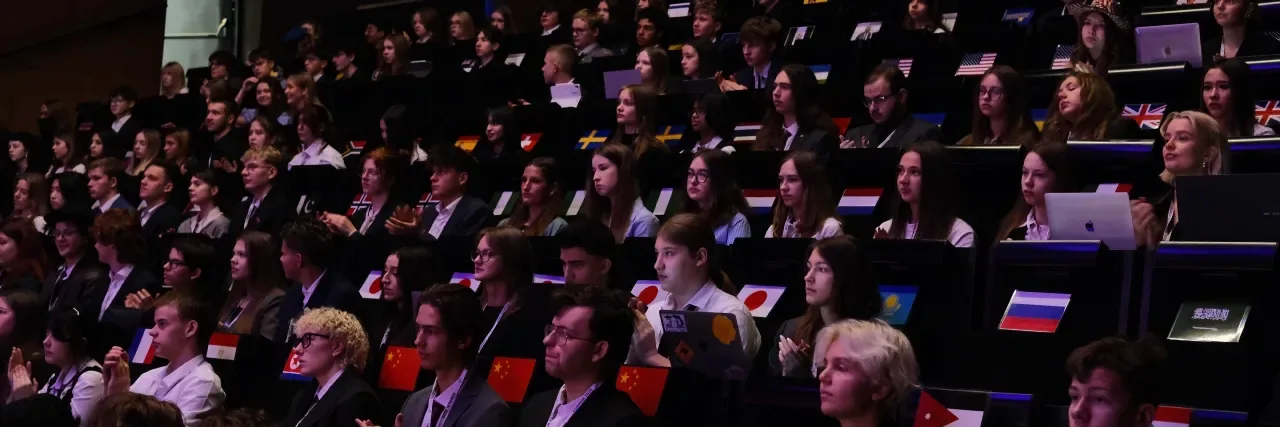
We are delighted to announce that Gdańsk Model United Nations is back for its 9th edition! The conference will take place from the 20th to 22nd of November 2026 at the European Solidarity Centre.


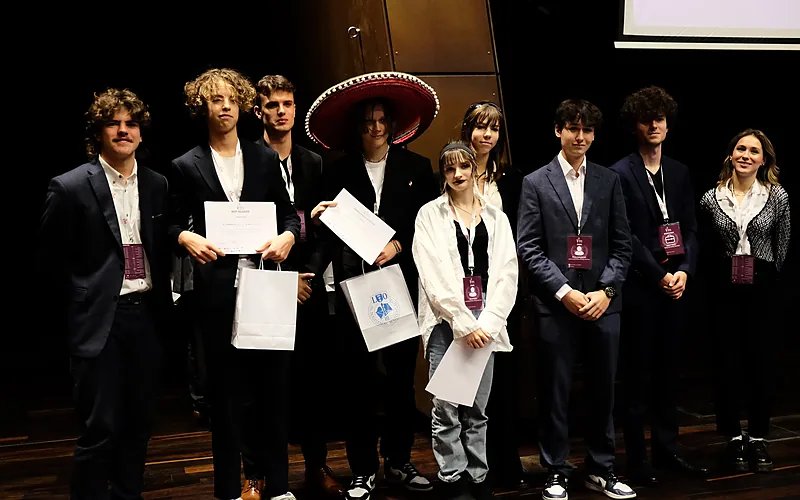
The conference is organised by students from the 3rd High school in Gdańsk (IB World School 1309). The secretariat aims to provide a unique experience for both high school students and university students to participate in debates on important world issues.


We hope to see you at GDNMUN!


Important: Participants must be at least 14 to attend the conference.

Payment information:

  • Any fees should be paid through MyMUN transaction system.
  • The delegate fee is non-refundable.
  • You will receive an assignment only after paying your delegate fee.


Contact information & business inquires

E-mail: gdnmun@gmail.com

Instagram: @gdnmun


Committees

  • 17 countries
    1. The situation in Syria.
    • Ivory Skrzyniarz
    • Daniel Cal

    United Nations Security Council (UNSC)

    Expert · English · 17 countries

    Topic

    The situation in Syria.

    About the committee

    For more than a decade, the Syrian Arab Republic has faced one of the world’s most severe humanitarian and security crises as a result of the civil war, foreign interventions, and political instability. While many international initiatives have aimed to address the situation, progress has remained limited. The country continues to experience widespread displacement, economic collapse, damaged infrastructure, and significant humanitarian needs, with millions of Syrians requiring assistance both within the country and as refugees abroad. More than thirteen million people have been displaced since the conflict began. As a result, the crisis has become a matter of global concern, with the problems spillover onto others nations of the Middle East.

    Chairs

    Countries

    How this committee type works
  • 20 countries
    1. Addressing the dangers imposed by atomic warfare with an emphasis on nuclear latency.
    • Feliks Liberak
    • Marysia Gryglewska

    Disarmament and International Security Committee (DISEC)

    Intermediate · English · 20 countries

    Topic

    Addressing the dangers imposed by atomic warfare with an emphasis on nuclear latency.

    About the committee

    Addressing the dangers imposed by atomic warfare with an emphasis on nuclear latency is an important international security issue that raises concerns about the future spread of nuclear weapons. Nuclear latency refers to a situation in which a country has the technology, knowledge, and materials needed to quickly develop a nuclear weapon, even if it has not yet decided to do so. Although international law allows the peaceful use of nuclear energy, these advanced capabilities can increase tensions between states, encourage regional arms races, and make it more difficult to prevent nuclear proliferation. Therefore, it is essential to discuss how the international community can improve transparency, strengthen international oversight, and reduce the risks posed by nuclear latency while respecting countries' rights to peaceful nuclear energy.

    Chairs

    Countries

    How this committee type works
  • 20 countries
    1. Preventing ghost town formation by addressing community collapse and permanent population displacement.
    • Blanka Sikora
    • Aleksander Sowa

    Economic and Social Council (ECOSOC)

    Beginner · English · 20 countries

    Topic

    Preventing ghost town formation by addressing community collapse and permanent population displacement.

    About the committee

    A “ghost town” refers to a once-thriving human settlement that has been completely deserted. Nowadays, the emergence of these abandoned spaces is becoming a visible consequence of armed conflicts, natural disasters, demographic decline and failing local infrastructure, forcing entire populations to suddenly leave their homes behind. As more communities face permanent displacement, preventing community collapse has become a major aspect of securing global sustainable growth. In this committee, prospective delegates will collaborate to protect vulnerable regions before the life within them disappears forever.

    Chairs

    Countries

    How this committee type works
  • 20 countries
    1. Addressing the misuse of power by prison authorities.

    • Lena Kamińska
    • Kornel Pietrewicz

    Human Rights Council (HRC)

    Beginner · English · 20 countries

    Topic

    Addressing the misuse of power by prison authorities.

    About the committee

    The misuse of power by prison authorities is a significant worldwide issue that requires immediate action. Prisoners who should get the chance to rehabilitate often have to face mistreatment and abuse which interferes with their comeback into the society. Prison authorities that should be there to help as well as end violence that happen in between inmates, often are the ones responsible for it. These cases are not only under-reported but also remain unsolved due to lack of evidence and lack of trust towards convicts. Therefore it is crucial to realise the human rights violations that happen across prisons worldwide and work towards viable solutions.

    Chairs

    Countries

    How this committee type works
  • 20 countries
    1. Addressing disparities among individuals coping with dementia.
    • Oliwia Trześniewska
    • Zuzanna Karolak

    World Health Organisation (WHO)

    Beginner · English · 20 countries

    Topic

    Addressing disparities among individuals coping with dementia.

    About the committee

    Dementia is a condition causing decline in brain functions such as memory, thinking, reasoning, language, and behaviour, affecting daily life. It is not a normal part of aging but results from brain damage. Dementia affects individuals, families, carers, and society. Lack of awareness often causes stigma and barriers to care. Support, education, and better dementia care systems are needed worldwide to improve the quality of life for those affected.

    Chairs

    Countries

    How this committee type works
  • 20 countries
    1. Discussing the regulation and prevention of the criminal misuse of deepfake and artificial intelligence technologies by transnational organised crime groups.

    • Antonina Podgórska
    • Błażej Kotwicki
    • Helena Harciarek

    United Nations Office on Drugs and Crime (UNODC)

    Beginner · English · 20 countries

    Topic

    Discussing the regulation and prevention of the criminal misuse of deepfake and artificial intelligence technologies by transnational organised crime groups.

    About the committee

    In recent years transnational organized crime networks (TOC’s) have been actively exploiting generative artificial intelligence and deepfake technologies to scale global operations. Criminal organisations utilise artificial media, real-time voice cloning, and AI-automated softwares to conduct highly sophisticated financial fraud, corporate extortion, and human trafficking operations. Due to the international and digital nature of these actions, the chance of tracking one down is virtually nonexistent due to existing loopholes in banking and criminal law. The UNODC committee aims to battle this global threat by establishing standardised international frameworks.

    Chairs

    Countries

    How this committee type works
  • 20 countries
    1. Addressing the impact of harmful beauty standards in the digital space on gender equality, discrimination, and mental health of young women.
    • Barbara Burchardt
    • Franciszek Jerzy Wincenty Basiński

    United Nations Entity for Gender Equality and the Empowerment of Women (UNW)

    Beginner · English · 20 countries

    Topic

    Addressing the impact of harmful beauty standards in the digital space on gender equality, discrimination, and mental health of young women.

    About the committee

    Ever since the consumption of mass media increased, specific, restrictive body types started being promoted. Starting in the 1920s, harmful practices and disordered eating habits began to appear more across the global population. With changing perceptions of the ideal standard for what a woman should look like, the phenomenon started taking an even heavier toll on women. This in turn marked a transition from beauty being perceived as a natural trait to a commodity filled with commercial value, putting constant pressure on young women to be seen as valuable in the era of standards not possible to achieve. In recent years, the propagation of harmful trends of improving one’s appearance in harmful methods has began rising on platforms such as TikTok, leading to an increase in the problem’s urgency for resolve. This year’s GDNMUN UNW committee is focused on tackling just this problem and mitigating effects unrealistic beauty standards have on women across the globe.

    Chairs

    Countries

    How this committee type works
  • 11 countries
    1. The Prosecutor v. Jean-Pierre Bemba Gombo.

    • Gabriela Kowalczyk
    • Sara Wysocka

    International Criminal Court (ICC)

    Expert · English · 11 countries

    Topic

    The Prosecutor v. Jean-Pierre Bemba Gombo.

    About the committee

    This ICC trial will focus on Jean-Pierre Bemba, who was the leader of the Movement for the Liberation of Congo (MLC). The politician was charged with war crimes and crimes against humanity that took place around the time of the Second Congolese War. His arrest was justified by evidence stating he was responsible for the atrocities committed by his subordinates, particularly sexual assault and murder. Bemba was acquitted of the charges 10 years later, his conviction being overturned due to misjudgement regarding responsibility assessment. The trial itself became one of the most recognisable and controversial ICC cases, being the first one that focused primarily on the responsibility for sexual violence.

    Chairs

    Countries

    How this committee type works
  • 17 countries
    1. Live television crew reporting on Gdańsk Model United Nations 2026.
    • Julia Wasiluk
    • Andrzej Bansleben
    • Marianna Mikołajczak

    GDNMUN TV

    Intermediate · English · 17 countries

    Topic

    Live television crew reporting on Gdańsk Model United Nations 2026.

    Chairs

    Countries

  • 18 countries
    1. Establishing The New World Order Following The German Victory in the Great War.

    • Aleksander Cichoński
    • Axel Myszko

    Alternative Historical Committee (AHC)

    Expert · English · 18 countries

    Topic

    Establishing The New World Order Following The German Victory in the Great War.

    About the committee

    After the bloodbath of the war the world has faced, Germany emerged victorious alongside its allies. The USA held it’s ground, and together with the children of Bismarck found itself among the two strongest empires in the world. Many nations struggled during the great war, and will now put all of their diplomatic efforts into regaining political relevance and power. With some leaders handing cards out, and others having empty decks the future of the world is yet to be decided upon.

    Chairs

    Countries

    How this committee type works

Partner conferences
PozMUN 2026
Poznań, Poland

View conference
TBSMUN 2026

Warsaw, Poland

View conference
NEPMUN 2026

Gdańsk, Poland

View conference
CASMUN 2026

Sopot, Poland

View conference
VisMUN 2026

Kraków, Poland

View conference
HoffMUN 2026

Warsaw, Poland

View conference
VLOMUN 2026

Warsaw, Poland

View conference
TriMUN 2026

Gdynia, Poland

View conference
CEMUN 2026

Łódź, Poland

View conference
LUBMUN 2026

Lublin, Poland

View conference
PozMUN 2027

Poznań, Poland

View conference
PlocMUN 2026

Płock, Poland

View conference
PrusMUN 2027

Warsaw, Poland

View conference
IPSMUN 2027

Wrocław, Poland

View conference
EkoMUN 2026

Wrocław, Poland

View conference
AKAMUN 2027

Warsaw, Poland

View conference

Organizers

Antoni Banaszak
President of the General Assembly
Edyta Probucka
Deputy Secretary General

Jakub Gotalski
Head of IT
Julia D'Arcy
Secretary General
Lena Gościniak
Head of Finance
Maja Dominiak
Director General
Maja Gawrysiak
Head of Media
Marta Zmitrowicz
Head of Supplies
Piotr Buczkowski
Head of Logistics

Piotr Kudan
Head of External Affairs
Urszula Flisikowska
Head of Design

Witold Cieśliński
President of the General Assembly

More MUN conferences

ConferencesPolandGDNMUN 2026