MUNUSAL 2027

Model United Nations University of Salamanca

Apr 12–16, 2027 Salamanca, Spain

Model United Nations University of Salamanca

Closes Dec 13

Conference

Salamanca, Spain·Europe

Apr 12–16, 2027

120 delegates expected

University students

In English and Spanish

Applications

Open for some roles
  • Delegates, Head delegates, Faculty advisorsNov 10 – Dec 13, 2026Open
  • ChairsAug 24 – Oct 20, 2026Closed

About

Beyond the Horizon: Building Resilience in an Era of Global Unpredictability

Welcome to the 19th edition of the Model United Nations of the University of Salamanca!

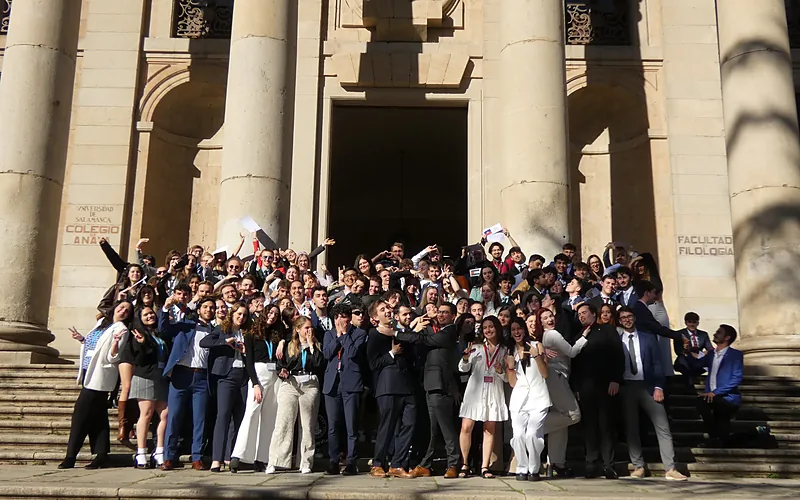
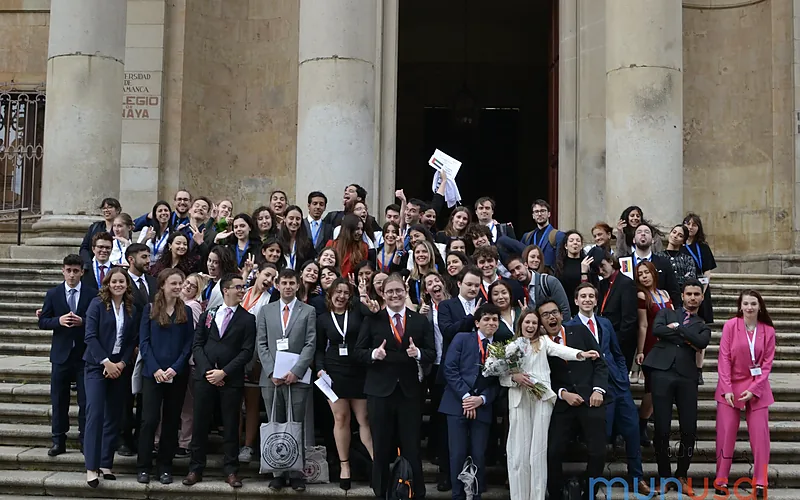
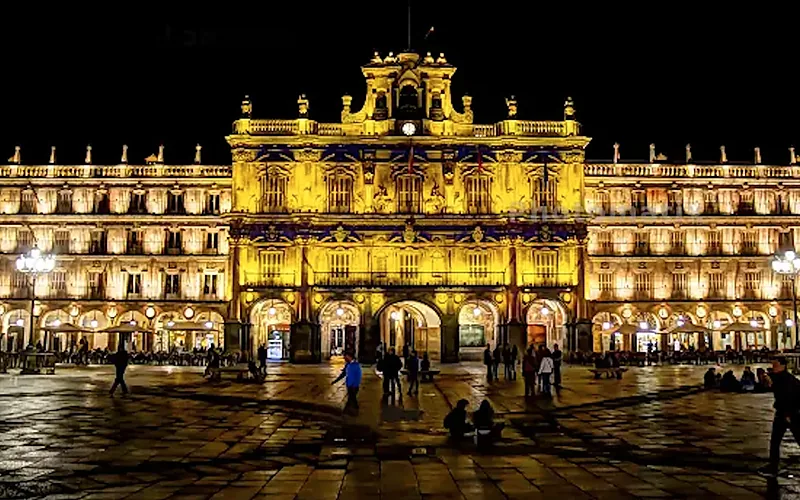
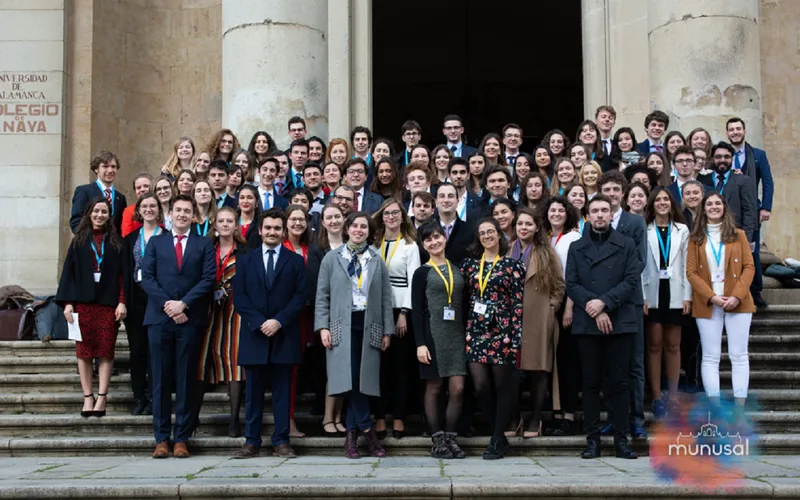
Our Conference takes place at the University of Salamanca, the oldest university in Spain and the fourth oldest educational institution in Europe. Steeped in centuries of history, its halls have witnessed some of the greatest intellectual debates in the world, and during MUNUSAL, they will once again be filled with discussions on diplomacy, cooperation, and global affairs. The Cultural and Youth Association MUNUSAL was founded with the aim of bringing together students from Salamanca and beyond, introducing them to the world of diplomacy and the international MUN community. Over the years, our association has proudly represented Salamanca in prestigious conferences such as BerlinMUN, PoziMUN, MIMUN, KULMUN, LISBOMUN, BIMUN, MALTMUN, and many others.

Our theme for this year's conference is “Beyond the Horizon: Building Resilience in an Era of Global Unpredictability”.

The international order established in the aftermath of the Second World War was built upon a simple aspiration: that no state should be inherently more or less sovereign than another. While this system was never truly equal, it sought to promote stability, development, cooperation, and peaceful relations between states. Out of the ashes of war emerged a new paradigm, one that attempted to rebuild the international community stronger than it had been before.

Yet, as history has repeatedly demonstrated, no international order is permanent. States continue to pursue their own interests, while the norms and institutions designed to govern international relations are constantly tested. Questions surrounding sovereignty, the justification of war, terrorism, climate change, technological development, and the persistent divide between developed and developing countries have become increasingly pressing. At the heart of these challenges lies a fundamental question: how do we respond to an ever-changing world?

We find ourselves in an era of profound uncertainty. Climate change is reshaping our societies, technological innovation is transforming the way we interact with one another, and established norms are increasingly challenged, even by the very actors that once advocated for them. Meanwhile, international institutions face growing difficulties in effectively responding to global crises. This forces us to question the foundations of the system itself: Can a norm remain legitimate if it is not enforced? Who has the authority to enforce it? Can an international system truly be considered equal when violations committed by influential actors do not always carry the same consequences?

However, Beyond the Horizon is not a call to surrender to uncertainty. It is a call to look beyond it.

The challenges facing the international community may seem overwhelming, but resilience is built precisely through moments of adversity. The horizon represents a future that cannot yet be fully seen, but which remains within our capacity to shape. Navigating towards it will require dialogue, cooperation, adaptability, and the willingness to rethink the systems we have inherited. The path ahead may be unpredictable, but it is not predetermined.

At MUNUSAL 2027, we invite our delegates to become part of this journey. Through debate, negotiation, diplomacy, and collective problem-solving, they will be challenged not only to understand the crises of today, but also to envision the international order of tomorrow. The future lies beyond the horizon, and it is our responsibility to decide what awaits us there.

For our 19th edition, we are proud to present seven committees, designed to offer every delegate a space to develop their skills and engage with global affairs. For those taking their first steps into the world of Model United Nations, we offer two beginner committees: UN Women, conducted in Spanish, and the International Maritime Organization (IMO), conducted in English.

For intermediate delegates, we offer the European Parliament, conducted in English, while those looking for a greater challenge can participate in our intermediate-advanced Spanish committee, Disarmament and International Security Committee (DISEC).

For our most experienced delegates, we present the United Nations Security Council, conducted in English, providing an opportunity to engage with some of the most pressing questions of international peace and security.

Finally, for those who prefer reporting over debating, our bilingual Press Committee, The Globe, will once again document the conference from a different perspective. This year, MUNUSAL will also introduce Crisis as a system integrated across the conference. Our Crisis Directors will introduce unexpected developments and scenarios directly into the different committees throughout the conference. This means that every delegate, regardless of their committee or level of experience, will be called upon to respond to unforeseen challenges, adapt their strategies, and navigate situations that test their ability to think critically and act under pressure. In this way, crisis will become an integral part of the MUNUSAL experience, reflecting the unpredictability and complexity of the international environment our theme seeks to explore.

Each committee offers a unique environment in which delegates can debate, negotiate, collaborate, and develop solutions to complex international challenges. Whether this is your first MUN or you are a seasoned delegate, there is a place for you at MUNUSAL.

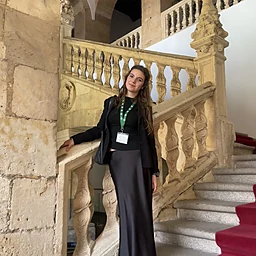
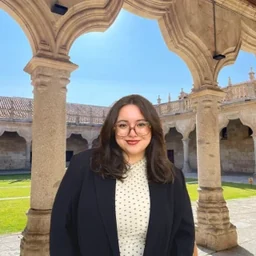
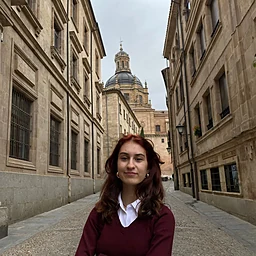
Beyond the conference itself, Salamanca makes MUNUSAL a truly unforgettable experience. Known for its golden sandstone architecture, vibrant student life, and extraordinary cultural heritage, the city offers the perfect setting to meet people from different backgrounds, explore its historic streets, and experience the unique atmosphere of one of Europe's most renowned university cities.

We cannot wait to welcome you to Salamanca for MUNUSAL 2027, where together we will look Beyond the Horizon and begin building the resilience needed for the world that awaits us.

Committees

  • 25 countries
    1. Protección sin impunidad: Abusos en Misiones de Paz
    2. Trata de mujeres y niñas en la Era Digital: Regularización de los Deep Fakes sexuales y la prevención de nuevas forma de explotación

    ONU Mujeres: Entidad de las Naciones Unidas para la Igualdad de Género y el Empoderamiento de la Mujer

    Beginner · Spanish · 25 countries

    Topics

    1. Protección sin impunidad: Abusos en Misiones de Paz
    2. Trata de mujeres y niñas en la Era Digital: Regularización de los Deep Fakes sexuales y la prevención de nuevas forma de explotación

    About the committee

    ONU Mujeres es la entidad de las Naciones Unidas dedicada a promover la igualdad de género y el empoderamiento de las mujeres y las niñas en todo el mundo. Creada en 2010, trabaja junto a gobiernos, organizaciones de la sociedad civil y otros actores internacionales para defender los derechos de las mujeres, combatir la discriminación y abordar las barreras estructurales que continúan dificultando la consecución de una igualdad efectiva. En MUNUSAL 2027, ONU Mujeres ofrecerá a los delegados principiantes la oportunidad de adentrarse en el mundo de los Modelos de Naciones Unidas a través de la diplomacia, la negociación y la cooperación multilateral. Los delegados deberán analizar las causas y consecuencias de las desigualdades de género, teniendo en cuenta las distintas realidades a las que se enfrentan mujeres y niñas alrededor del mundo, y trabajar conjuntamente para desarrollar soluciones inclusivas, sostenibles y aplicables. Como comité de iniciación y desarrollado íntegramente en español, ONU Mujeres constituye una oportunidad para familiarizarse con el funcionamiento de un MUN mientras se abordan cuestiones de gran relevancia dentro de la agenda internacional. Los delegados no solo deberán identificar los problemas existentes, sino también demostrar su capacidad para cooperar, negociar y alcanzar consensos que permitan avanzar hacia una mayor igualdad de género.

    Countries

    How this committee type works
  • 25 countries
    1. Regulating the Dark Fleet and Combatting Sabotage with Resilience
    2. Safe Passage Under Pressure: Adaptive Resilience for the World’s Maritime Chokepoints

    IMO: International Maritime Organization

    Beginner · English · 25 countries

    Topics

    1. Regulating the Dark Fleet and Combatting Sabotage with Resilience
    2. Safe Passage Under Pressure: Adaptive Resilience for the World’s Maritime Chokepoints

    About the committee

    The International Maritime Organization (IMO) is a specialised agency of the United Nations responsible for establishing a regulatory framework for international shipping and promoting safe, secure, efficient, and environmentally sustainable maritime transport. Since its creation in 1959, the IMO has played a central role in developing international standards to prevent maritime accidents, protect the marine environment, and facilitate cooperation between states in one of the world's most essential sectors. At MUNUSAL 2027, the IMO will offer beginner delegates the opportunity to take their first steps into the world of Model United Nations while exploring the complex challenges surrounding international maritime affairs. Delegates will represent different Member States and work towards developing cooperative solutions to issues such as maritime safety, environmental protection, shipping regulations, and the future sustainability of global maritime transport. As an introductory committee conducted in English, the IMO provides an accessible environment for delegates to develop their debating, negotiation, and diplomatic skills while gaining a deeper understanding of the importance of international cooperation. Delegates will be challenged to balance national interests with the need for collective action in addressing the challenges facing the maritime sector.

    Countries

  • 25 countries
    1. Defence Made in Europe: Overcoming Taboos to Implement the Common Defence Industrial Strategy
    2. Safeguarding Freedom of Movement in the Schengen Area Amid Challenges to Border Management

    EP: European Parliament

    Intermediate · English · 25 countries

    Topics

    1. Defence Made in Europe: Overcoming Taboos to Implement the Common Defence Industrial Strategy
    2. Safeguarding Freedom of Movement in the Schengen Area Amid Challenges to Border Management

    About the committee

    The European Parliament is one of the European Union’s main institutions and the only EU body directly elected by its citizens. Together with the Council of the European Union, it plays a central role in shaping European legislation, approving the EU budget, and holding the European Commission and other institutions accountable. Representing the interests of more than 450 million European citizens, the Parliament provides a forum for political debate and decision-making on some of the most pressing issues facing the European Union. At MUNUSAL 2027, the European Parliament will offer intermediate delegates the opportunity to engage with European politics through parliamentary debate, negotiation, and coalition-building. Delegates will represent Members of the European Parliament and will be expected to balance political priorities, national interests, and ideological positions while working towards common solutions. As an intermediate committee conducted in English, the European Parliament will challenge delegates to develop their public speaking, negotiation, and diplomatic skills in a dynamic political environment. Through discussion and compromise, delegates will have to navigate different perspectives and build the consensus necessary to shape effective European policies. The committee will encourage delegates to look beyond individual interests and consider how collective European action can respond to an increasingly complex and unpredictable international environment.

    Countries

  • 25 countries
    1. Exportación de armas y responsabilidad en proxy wars
    2. Órbitas en disputa: normas para evitar una carrera armamentística en el espacio
    • Álvaro Suárez Gil
    • Sergio Fernández Ramos

    DISEC: Comisión de Desarme y Seguridad Internacional

    Intermediate · Spanish · 25 countries

    Topics

    1. Exportación de armas y responsabilidad en proxy wars
    2. Órbitas en disputa: normas para evitar una carrera armamentística en el espacio

    About the committee

    La Primera Comisión de la Asamblea General de las Naciones Unidas, conocida como DISEC (Comisión de Desarme y Seguridad Internacional), se ocupa de las cuestiones relacionadas con el desarme, la seguridad internacional y la prevención de amenazas a la paz y la estabilidad mundial. Como uno de los principales espacios de debate de Naciones Unidas en materia de seguridad, DISEC aborda cuestiones como la proliferación de armas, los conflictos armados, las nuevas tecnologías militares y los desafíos emergentes para la seguridad internacional. En MUNUSAL 2027, DISEC ofrecerá a los delegados de nivel intermedio-avanzado la oportunidad de profundizar en algunos de los asuntos más complejos de la agenda internacional. Los delegados deberán representar los intereses y posiciones de sus respectivos Estados, negociar con otras delegaciones y trabajar conjuntamente para desarrollar propuestas capaces de responder a los desafíos actuales en materia de desarme y seguridad. Como comité desarrollado en español, DISEC pondrá a prueba la capacidad de los delegados para argumentar, negociar y alcanzar consensos en un entorno diplomático exigente. Los participantes deberán enfrentarse a posiciones divergentes y encontrar puntos de encuentro entre distintos intereses nacionales, teniendo siempre presente la necesidad de preservar la paz y la seguridad internacionales. En línea con el tema de MUNUSAL 2027, el comité invitará a los delegados a reflexionar sobre cómo puede la comunidad internacional adaptarse a un entorno de seguridad cada vez más impredecible y construir respuestas resilientes ante las amenazas del presente y del futuro.

    Chairs

    Countries

    How this committee type works
  • 15 countries
    1. Beyond the Mandate: Adressing the Challenges of Peacekeeping in Lebanon
    2. Restoring Order in the Atlantic: The Threat of Piracy in the Gulf of Guinea to International Peace and Security
    • Yehor Shcherbakov

    UNSC: United Nations Security Council

    Expert · English · 15 countries

    Topics

    1. Beyond the Mandate: Adressing the Challenges of Peacekeeping in Lebanon
    2. Restoring Order in the Atlantic: The Threat of Piracy in the Gulf of Guinea to International Peace and Security

    About the committee

    The United Nations Security Council (UNSC) is one of the principal organs of the United Nations, entrusted with the maintenance of international peace and security. Composed of fifteen members, including five permanent members with veto power, the Security Council has the authority to adopt resolutions, impose sanctions, establish peacekeeping operations, and take other measures in response to threats to international peace and security. At MUNUSAL 2027, the Security Council will provide advanced delegates with the opportunity to engage with some of the most pressing and complex challenges facing the international community. Delegates will represent the members of the Council and must navigate competing national interests, diplomatic alliances, and the political realities that shape international decision-making. As an advanced committee conducted in English, the Security Council will challenge delegates to demonstrate strong negotiation, strategic thinking, and diplomatic skills. Reaching consensus will not always be possible, and delegates will have to carefully assess when to compromise, when to stand firm, and how to build sufficient support for their positions. In keeping with this year's theme, the committee will encourage delegates to consider how the international community can respond to an increasingly unpredictable global environment while preserving international peace and security. Faced with evolving crises and complex geopolitical dynamics, delegates will be challenged to look "Beyond the Horizon" and determine what resilience should look like in the future of international security.

    Chair

    Countries

    How this committee type works
  • 15 countries

    The Globe is MUNUSAL’s bilingual Press Corps, providing delegates with the opportunity to experience the conference from the perspective of the international media. Rather than representing states or political institutions, delegates will take on the role of journalists working for different media outlets from around the world, each with its own political perspective, editorial line, geographical context, and approach to international affairs. At MUNUSAL 2027, The Globe will be an intermediate level committee conducted in both Spanish and English. Each delegate will be assigned a specific media outlet and will be expected to understand and embody its particular perspective when covering the events and debates taking place throughout the conference. These perspectives may differ significantly, reflecting the diversity of political ideologies, regional interests, and journalistic approaches found in the international media landscape. Delegates will be responsible for following the developments of the different committees, identifying relevant stories, conducting interviews, and producing journalistic content that reflects the perspective of their assigned outlet. They will have to decide which issues deserve attention, how events should be presented to their audience, and how their editorial line influences the way they interpret and report on international affairs. As a bilingual and intermediate-level committee, The Globe offers a different kind of MUN experience, combining journalism, political analysis, creativity, and critical thinking. Delegates will be challenged not only to report what happens at MUNUSAL, but to understand how the same event can be interpreted in fundamentally different ways depending on who is reporting it. Ultimately, The Globe invites delegates to look beyond the events themselves and question the role of the media in shaping public perception, influencing political discourse, and determining which voices are heard in an increasingly complex and unpredictable world.

    "The Globe" Press Corps

    Intermediate · English · 15 countries

    About the committee

    The Globe is MUNUSAL’s bilingual Press Corps, providing delegates with the opportunity to experience the conference from the perspective of the international media. Rather than representing states or political institutions, delegates will take on the role of journalists working for different media outlets from around the world, each with its own political perspective, editorial line, geographical context, and approach to international affairs. At MUNUSAL 2027, The Globe will be an intermediate level committee conducted in both Spanish and English. Each delegate will be assigned a specific media outlet and will be expected to understand and embody its particular perspective when covering the events and debates taking place throughout the conference. These perspectives may differ significantly, reflecting the diversity of political ideologies, regional interests, and journalistic approaches found in the international media landscape. Delegates will be responsible for following the developments of the different committees, identifying relevant stories, conducting interviews, and producing journalistic content that reflects the perspective of their assigned outlet. They will have to decide which issues deserve attention, how events should be presented to their audience, and how their editorial line influences the way they interpret and report on international affairs. As a bilingual and intermediate-level committee, The Globe offers a different kind of MUN experience, combining journalism, political analysis, creativity, and critical thinking. Delegates will be challenged not only to report what happens at MUNUSAL, but to understand how the same event can be interpreted in fundamentally different ways depending on who is reporting it. Ultimately, The Globe invites delegates to look beyond the events themselves and question the role of the media in shaping public perception, influencing political discourse, and determining which voices are heard in an increasingly complex and unpredictable world.

    Countries

    How this committee type works
  • 1 country

    Crisis

    Expert · English · 1 country

Partner conferences
OxIMUN 2026

Oxford, United Kingdom

View conference
NebrijaMUN 2026

Madrid, Spain

View conference
MUNDay 2026

Louvain-la-Neuve, Belgium

View conference
MaltMUN 2026

Valletta, Malta

View conference
LISBOMUN 2023

Lisbon, Portugal

View conference
FREIMUN 2026

Freiburg, Germany

View conference
EuroMUN 2026

Maastricht, Netherlands

View conference
TEIMUN 2026

The Hague, Netherlands

View conference
KULMUN 2026

Leuven, Belgium

View conference
UEMUN 2026

Madrid, Spain

View conference
Salient 2025

Ljubljana, Slovenia

View conference
KentMun 2024

Canterbury, United Kingdom

View conference
UEMUN 2027

Madrid, Spain

View conference
KULMUN 2027

Leuven, Belgium

View conference
WIMUN 2027

Tirana, Albania

View conference
NebrijaMUN 2027

Madrid, Spain

View conference

Organizers

More MUN conferences

ConferencesSpainMUNUSAL 2027