TEIMUN 2026

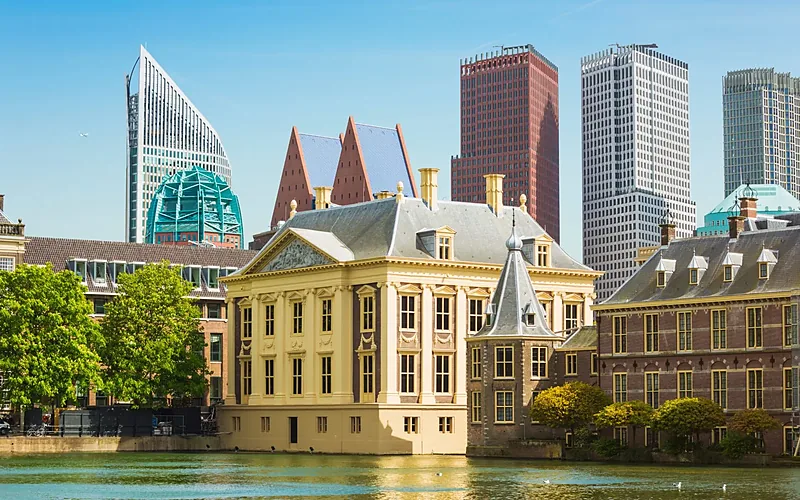
The European International Model United Nations

Jul 13–17, 2026 The Hague, Netherlands

The European International Model United Nations

Conference

The Hague, Netherlands·Europe

Jul 13–17, 2026

100 delegates expected

University students

In English

How it went

4.5523 ratings from delegates
Academics
4.57
Logistics
4.70
Socials
4.39

About

The European International Model United Nations

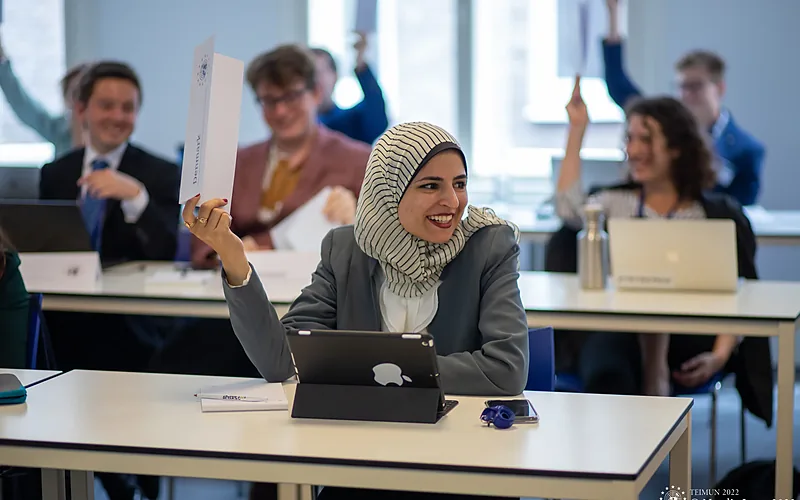
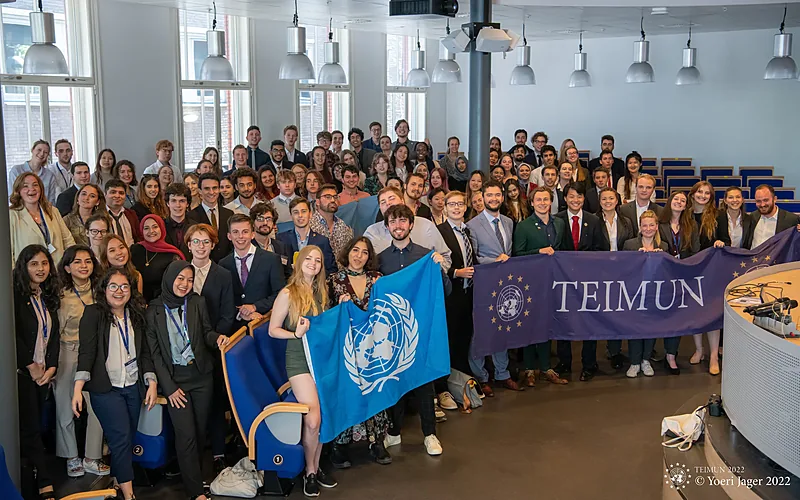
TEIMUN is a five-day conference held every summer in The Hague, the Netherlands, for students from all over the world. This conference strikes the perfect balance between a professional atmosphere and social interaction between the delegates. Our councils are interesting and inspiring for beginner and veteran MUNers alike, and our cultural events and inspiring speakers are just as much part of the conference as the sessions. 


Unity or Uniformity: Navigating Diversity in a Globalized World

In an increasingly interconnected world, the lines between cultures, nations, and identities are both blurring and being redrawn. Globalization has brought people closer together, fostering collaboration, innovation, and shared progress. Yet, it has also raised a pressing question: Does our pursuit of global unity risk erasing the very diversity that defines humanity?

This year’s theme challenges delegates to explore the delicate balance between ensuring cooperation while maintaining individuality. Join the discussions by applying to TEIMUN 2026!


Our Conference Offers:
The academic programme engages in high-quality committee sessions led by experienced chairs, with lunches provided throughout. Step beyond the conference room and explore The Hague's most distinguished institutions during our excursions into the city of Peace and Justice.  Push yourself intellectually, make your mark in debate, and compete for a chance to win prestigious awards.

Social unforgettable events await you outside the committee room:
- Orange Party: Immerse yourself in Dutch culture and party the night away dressed in the Netherlands' iconic national colour.
- Gala Night: Put on your finest attire and enjoy an elegant evening in the company of fellow delegates from around the world.
- Beach Social: Unwind at the stunning Scheveningen beach, where sun, waves, and good company await.
- Global Village: Celebrate the diversity of our conference by sharing and discovering the most fascinating aspects of cultures from across the globe.

The venue of the conference is located at Schouwburgstraat 2, Den Haag.

Committees

  • 25 countries
    1. Addressing Gender-based and Conflict-related Sexual Violence against Women in the Context of Military Coups and Insecurity
    2. Human Rights in El Salvador: Addressing the Rising Incidence of Arbitrary Detention, Torture and Internal Displacement
    • RixtAnneRoos Ruedisueli
    • Herve Heyndrickx

    UNHRC

    Beginner · English · 25 countries

    Topics

    1. Addressing Gender-based and Conflict-related Sexual Violence against Women in the Context of Military Coups and Insecurity
    2. Human Rights in El Salvador: Addressing the Rising Incidence of Arbitrary Detention, Torture and Internal Displacement

    About the committee

    Topic 1: The resurgence of military coups and unconstitutional changes of government, particularly in parts of Africa and Asia, has coincided with a deterioration in human rights protections, particularly for women and girls. In contexts of political instability and a weakened rule of law, gender-based violence (GBV) increases significantly, including conflict-related sexual violence (CRSV) by armed actors such as state forces, militias and non-state groups. Women and girls are disproportionately affected due to pre-existing gender inequalities, limited access to justice, and inadequate institutional protection mechanisms. Survivors often experience stigma and are unwilling to report incidents, and have limited access to medical, psychological, and legal support. Furthermore, transitional governments following coups often lack the legitimacy or capacity to address these violations, while accountability mechanisms remain weak or non-existent. Key issues include the role of international humanitarian and human rights law, the effectiveness of UN peacekeeping mandates in protecting civilians, and the importance of gender-sensitive approaches in post-conflict reconstruction. Topic 2: El Salvador has attracted international attention due to its harsh security measures intended to combat gang violence, particularly since the state of exception was declared in 2022. While these measures have contributed to a significant reduction in homicide rates, they have also raised serious human rights concerns. Reports from organisations such as Human Rights Watch and Amnesty International have highlighted a substantial increase in arbitrary detentions, allegations of torture and ill-treatment in detention facilities, and violations of due process. Furthermore, this security crackdown has led to patterns of internal displacement. Individuals and families may flee their homes due to fear of wrongful arrest, retaliation, or violence from either state forces or remaining criminal groups. This puts further strain on social systems and highlights gaps in the protection of internally displaced persons (IDPs). Key questions include how to ensure accountability for abuse, strengthen judicial independence, and support victims of arbitrary detention and displacement.

    Chairs

    Countries

    How this committee type works
  • 25 countries
    1. Leveraging International Trade for Decarbonisation: Supporting Developing Countries in Transitioning to Sustainable Manufacturing Economies

    • Yasmine Galea
    • Mihnea Pasere

    UNCTAD

    Intermediate · English · 25 countries

    Topic

    Leveraging International Trade for Decarbonisation: Supporting Developing Countries in Transitioning to Sustainable Manufacturing Economies

    About the committee

    Topic 1: With the increase in climate-related challenges, developing nations must strike a balance between attaining their industrial development goals and not adopting carbon-heavy models. This issue highlights the role that global trade can play as an enabler in transitioning agricultural-based nations into environmentally friendly manufacturing industries. Currently, non-tariff trade barriers, access to critical minerals, technology gatekeeping and geopolitical fragmentation are all constraining global green industrialisation. Through the lens of the UNCTAD, delegates will explore the opportunities presented by trade, investments, and technology transfer to achieve sustainable industrialization. Some of the critical areas of discussion are non-tariff trade barriers and guaranteeing equal access to markets, combating green protectionism, and sustainable and equitable development.

    Chairs

    Countries

  • 25 countries
    1. The End of the ROPE: The Future of NATO Under Uncertain Security Assurances
    • Tomáš Kučera
    • Dominik Palkovič

    NATO

    Expert · English · 25 countries

    Topic

    The End of the ROPE: The Future of NATO Under Uncertain Security Assurances

    About the committee

    Topic 1: As the fires of war keep raging across the Middle East, the temperatures in the West are plummeting to Absolute Zero. Decades of development of the Allied defence capabilities, trillions of dollars worth of equipment, ammunition, vehicles and ordinance spent, and scores of crises averted. The most powerful and successful military Alliance in human history. And yet, the aluminium shield of the North Atlantic Treaty Organisation started to show cracks. In recent years, some leaders of Member States expressed their dissatisfaction with the Organisation, which sparked serious concerns regarding the preparedness of NATO in the case of a shrinking. Some leaders, experts, and the Secretary General of NATO have expressed their doubts and concerns regarding the resilience and defence capabilities if the contributions of certain member states were to be withdrawn. With that in mind, the question is rather simple: Is NATO doomed to fall apart, piece by piece? And if so, what can we do to stop it?

    Chairs

    Countries

    How this committee type works
  • 25 countries
    1. Climate Harm as an International Wrong: Defining State Obligations and Accountability under International Law
    2. Legal Pathways for Reforming the Use of the United Nations Security Council Veto Vote
    • Alicja Kowalczyk
    • Karina Balaban

    Legal

    Expert · English · 25 countries

    Topics

    1. Climate Harm as an International Wrong: Defining State Obligations and Accountability under International Law
    2. Legal Pathways for Reforming the Use of the United Nations Security Council Veto Vote

    About the committee

    Topic 1: Climate change is increasingly framed not only as a policy challenge but as a potential international wrong. Around the world, states are facing legal action for failing to prevent or mitigate climate harm, signalling a shift toward understanding climate change through the lens of legal obligation, accountability, and responsibility. The recent ICJ advisory opinion reinforces this development. It clarified that states’ climate obligations arise from multiple sources of international law, including environmental treaties, customary norms, and human rights law. Crucially, the Court indicated that these obligations may be owed erga omnes, to the international community as a whole, and that failure to act could trigger consequences under the law of state responsibility. Yet significant legal uncertainties remain. Questions of attribution, shared responsibility, differentiated obligations, and the appropriate remedies for climate harm continue to divide states. This tension reflects a deeper divide: while climate‑vulnerable states push for recognition of climate harm as a matter of legal responsibility, others maintain that climate action remains primarily political, grounded in sovereignty, consent, and developmental priorities. The delegates must address not only whether states have binding obligations to act on climate change, but also how far international law can go in defining duties, assigning responsibility, and enforcing accountability in a system built on state consent and unequal contributions to harm. Topic 2: The veto power of the permanent members of the United Nations Security Council, established under Article 27(3) of the UN Charter, remains one of the most contested features of the UN’s collective security framework. While the veto was intended to preserve unity among major powers and ensure the functioning of the Security Council, its frequent use has led to institutional paralysis in situations involving threats to international peace and security. This raises fundamental legal questions concerning the balance between unity in decision-making and structural inequality embedded within the Charter. From a legal standpoint, the veto reflects a deliberate departure from the principle of sovereign equality enshrined in Article 2(1) of the Charter. As international law has evolved—particularly through the development of peremptory norms, obligations erga omnes, and doctrines such as the responsibility to protect—debate has intensified over whether the unrestricted exercise of the veto remains compatible with the purposes and principles of the United Nations under Article 1 The questions delegates must answer during the debates range from what the legal limits, if any, are on the use of veto under Article 27(3) UNC, and whether the unrestricted use of the veto conflicts with jus cogens norms or erga omnes obligations. Ultimately, the issue calls into question the compatibility of the veto with the principle of sovereign equality under Article 2(1) UNC, and whether legal criteria can or should be developed to restrict its use in cases involving mass atrocities, without undermining the foundational structure of the Charter itself.

    Chairs

    Countries

    How this committee type works
  • 15 countries
    1. Sengoku Jidai: The Japanese Feudal Wars
    • Carl Sjölin Fagerlind
    • Simon Scheidler
    • Nicolas Drew
    • Matilde Minto
    • Gabriela Grigoraș

    Crisis

    Expert · English · 15 countries

    Topic

    Sengoku Jidai: The Japanese Feudal Wars

    About the committee

    Topic 1: Japan, late 16th century. For nearly a hundred years, the country has been in a state of constant fighting. After the Shogunate collapsed and no authority capable of controlling Daimyo, war engulfed the whole country. Since then, the Daimyo have governed, expanded and strengthened their territories through warfare and diplomacy. Now, alliances have formed. Some march under one banner of unification, only a Japan united in belief can rise out of this broken nation. Others follow old beliefs and loyalties, holding on to an order from the past. And then there are those who only serve their own cause, hungry for power. But no group is strong enough to do it on their own. While diplomacy can do what the sword can’t, your ally marching with you today may burn down your castle tomorrow. There is no single way to success, and it is up to you to rewrite Japan’s volatile feudal history.

    Chairs

    Countries

    How this committee type works

Past editions

  • 5editions since 2022
  • 4.44 average of 40 ratings
  • 4+in every rated edition

Partner conferences
KULMUN 2026
Leuven, Belgium

View conference
EuroMUN 2026

Maastricht, Netherlands

View conference
MaltMUN 2026

Valletta, Malta

View conference
URUMUN 2026

Utrecht, Netherlands

View conference
TIMUN 2026

Tilburg, Netherlands

View conference
LeiMUN 2026

Leiden, Netherlands

View conference
Salient 2025

Ljubljana, Slovenia

View conference
BASISMUN 2026

The Hague, Netherlands

View conference
IsarMUN 2025

Munich, Germany

View conference
UCLMUN XII 2026

London, United Kingdom

View conference
CMS Model WHO 2026

Lisbon, Portugal

View conference

Organizers

Anna OConnor
Treasurer

Caroline Noack
Deputy Secretary-General
Codrin Corodeanu
Secretary-General
Diana Deneva
Participants Coordinator
Jelte Mast
Programme Coordinator
Maria Enea
Deputy Secretary-General

More MUN conferences

ConferencesNetherlandsTEIMUN 2026