TEIMUN 2024

The European International Model United Nations

Jul 8–12, 2024 The Hague, Netherlands

The European International Model United Nations

Latest edition: TEIMUN 2026Jul 13–17, 2026

Conference

The Hague, Netherlands·Europe

Jul 8–12, 2024

80 delegates expected

University students

In English

How it went

4.247 ratings from delegates
Academics
4.71
Logistics
4.00
Social programme
4.00

About

Reshaping the Future: Structural Change in a World of Development

Applications open for delegates not requiring visas!

About TEIMUN 2024

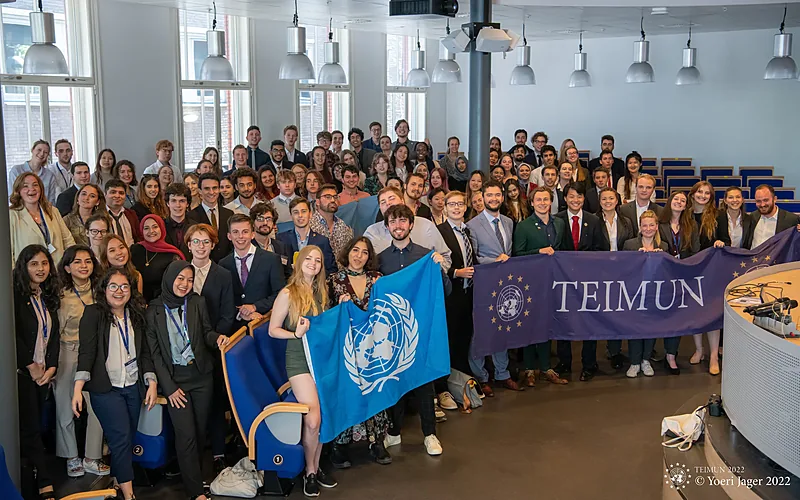
TEIMUN, or the European International Model United Nations, is a six-day conference held every summer in The Hague, the international city of peace and security. It brings together young, ambitious students from all over the world to discover new solutions to conflicting international ideals and national interests. TEIMUN is the oldest university-level MUN conference in the Netherlands and continental Europe, with over 35 years of experience. 

Our Theme

The developments of the recent decades have brought remarkable changes and progress. "Development" has become the watchword in various realms: sustainability, culture, economy, technology, digitalisation and international relations. It is a concept that expresses the process of structural improvements in multiple aspects of human life and perfectly fits the current dynamic in the global society. 

Therefore, it is in these challenging times that we must harness the power of collective innovation and cooperation to navigate the problematic complexities that accompany progress.

In recent years society has engaged in discussions on development issues and addressing changes with new measures, agendas and legislation. However, development is an ongoing journey leading to structural shifts within our society and so every day creates new challenges. Legislators are struggling to address the surge of AI and technological advancements. The planet steadily grows warmer, giving rise to environmental crises like wildfires and flooding. Achieving equality remains an unfulfilled dream, creating a barrier to societal development. Conflict and environmental problems contribute to rising migration levels and a need for more effective migration policies. Security and privacy are challenged by the digital world. The current international setting is being reshaped by the ascent of new powers and actors, asking for adjustments in international law.

These are just a few of the pressing issues that demand immediate attention. Join us at TEIMUN 2024, an MUN organised by the TEIMUN Foundation to discuss development on an international scale and witness first-hand how our global society confronts these emerging challenges. Join us and help reshape the future! 

Our Socials and Excursions

At TEIMUN, we believe that the experience extends beyond the formal sessions. Our carefully curated social events and excursions offer a perfect blend of networking, relaxation, and cultural immersion. 

Socials

On Day 1, get ready to paint the town orange at our vibrant Orange Party! Don your best orange attire, while we provide the party vibes, and celebrate the start of our conference. If you are looking for an occasion to wear your best black tie attire, you don't need to wait past Day 2 and our grand Gala - an evening that promises to be the classiest event of the week. On Day 3, we change the pace and embark on an afternoon of cultural exchange with our Global Village. Towards the end of the week, we come together for the Beach BBQ at Scheveningen, which provides a laid-back setting to enjoy good food and even better company. On Day 5, we get together for one last toast for casual drinks at our final social. Each event is designed to help you connect with fellow participants and create lasting memories.

Excursions

TEIMUN’s excursions provide a deep dive into the rich history and cultural heritage of The Hague. A highlight is the visit to the iconic Peace Palace, where you’ll enjoy a guided tour of the serene gardens and gain insights into the International Court of Justice (ICJ). Our cultural excursions also include a comprehensive tour of The Hague’s historical landmarks, offering you a unique opportunity to explore the city’s highlights through the lens of a diplomat. Each carefully planned excursion promises not only educational value but also a memorable adventure into the heart of one of Europe’s most vibrant cities.

Financial Aid

At TEIMUN, we believe that access to opportunities should not be limited by financial constraints. Our Financial Aid Policy for the 2024 conference aims to support ambitious students who might otherwise face barriers to participation. By offering partial or full subsidies of the conference fee starting at €50, we strive to make the TEIMUN experience more inclusive and accessible. We encourage all participants to apply for financial aid, ensuring that financial hardship does not stand in the way of valuable educational and cultural exchanges. Our commitment is to consider each application with care and fairness, opening doors for diverse voices and perspectives to join our vibrant community. For more information consult our Financial Aid policy.

Committees

  • 22 countries
    1. Combatting Human Trafficking in Conflict Zones: NATO's Response
    2. Discussing the framework and implications of Lethal Autonomous Weapons (LAWS) in NATO’s defense strategy
    • Dominik Palkovič
    • Sebastián Aguilar
    • lakshya awatramani

    NATO

    Intermediate · English · 22 countries

    Topics

    1. Combatting Human Trafficking in Conflict Zones: NATO's Response
    2. Discussing the framework and implications of Lethal Autonomous Weapons (LAWS) in NATO’s defense strategy

    About the committee

    Combatting Human Trafficking in Conflict Zones: NATO's Response: The NATO council will be discussing combatting human trafficking in conflict zones with a focus on NATO's response. The council will explore the specific challenges and dynamics of human trafficking within conflict areas, considering factors like displacement, breakdowns in governance, and the exploitation of vulnerable populations. We will delve into NATO's potential role in prevention efforts, including border security, intelligence gathering, and coordination with local authorities and discuss the protection of vulnerable populations, such as refugees and internally displaced persons, emphasizing the need for safe havens, support services, and legal assistance. Lastly, NATO will have to address the importance of capacity building and training initiatives within NATO operations, ensuring member states have the tools and knowledge to identify and combat trafficking effectively./ Discussing the framework and implications of Lethal Autonomous Weapons: (LAWS) in NATO’s defense strategy Lethal autonomous weapons (LAWs) are a variation of an autonomous military system that possesses the capability to independently seek out and engage targets based on programmed constraints and descriptions. The current system’s autonomy has been restricted in the sense that a human gives the final command to attack - though there are exceptions within specific “defensive” systems. Within NATO’s Autonomy Implementation Plan, the alliance has established a set of desired outcomes when responsibly harnessing autonomous systems. To protect its edge, NATO and Allies must guard against interference, deception, and harmful use of autonomous systems. They acknowledge competitors' efforts to surpass their capabilities and counter disinformation campaigns to create distrust in the military use of autonomous systems. Allies should be committed to a responsible approach to autonomy development and use.

    Chairs

    Countries

    How this committee type works
  • 25 countries
    1. Combating Illicit Financial Flows Through International Cooperation
    2. Moving Towards Sustainable Extraction of Rare Earth Elements
    • Henry Krenzer
    • Jáchym Šetka
    • Egan Paquay

    ECOFIN (General Assembly Second Committee)

    Expert · English · 25 countries

    Topics

    1. Combating Illicit Financial Flows Through International Cooperation
    2. Moving Towards Sustainable Extraction of Rare Earth Elements

    About the committee

    Combating Illicit Financial Flows through International Cooperation: Addressing illicit financial flows is crucial in the fight against corruption and for promoting transparency, aligning with the objectives outlined in Sustainable Development Goal 16 (SDG 16) - Peace, Justice, and Strong Institutions. Illicit financial flows encompass various illicit activities such as corruption, money laundering, tax evasion, and organised crime, which undermine the rule of law, weaken institutions, and impede sustainable development efforts. By addressing these flows, countries can enhance their institutional capacity, bolster transparency and accountability, and cultivate an environment conducive to sustainable development. / Moving Towards Sustainable Extraction of Rare Earth Elements: Leading companies responsible for mining rare earths prefer on using the open-pit mining method, which generates significant waste and creates air pollutants. In numbers, around one million tons of ore and waste rock per day are removed from these pits globally, which negatively impacts the environment. However, extraction in such enormous numbers opens the inquiry as to how long such a process will last, and whether it can support future generations on Earth. Guided by Sustainable Development Goal no. 12 (SDG12), Responsible Consumption and Production, the ECOFIN Committee is called to examine and debate this issue. Rare earth elements are crucial for renewable energy sources and for driving Earth to complete electrification. With surging demand and geopolitical uncertainty, there is a need to address the supply patterns and subsequently commitment to sustainability.

    Chairs

    Countries

    How this committee type works
  • 25 countries
    1. Implementing zero carbon emissions in urban centres
    2. Promotion of circular economy practices for sustainable development on a global scale

    • Matilde Minto
    • Giulia Wałęsa
    • Ethan Spaanjaars

    UNEP

    Beginner · English · 25 countries

    Topics

    1. Implementing zero carbon emissions in urban centres
    2. Promotion of circular economy practices for sustainable development on a global scale

    About the committee

    Implementing Zero Carbon Emissions Zones in Urban Centers: Cities globally are actively pursuing sustainable development, with the implementation of zero carbon emissions zones in urban centers emerging as a pivotal strategy. This crucial topic explores various countries' policies and initiatives aimed at curbing carbon emissions from transportation, industry, and buildings within city limits. Discussions will spotlight innovative transportation solutions, including the electrification of public transit and the promotion of non-motorized transport, alongside efforts to incentivize renewable energy use and enhance energy efficiency in urban infrastructure. Recognizing that structural changes in urban planning, transportation systems, and energy sources are indispensable for transforming city centers into carbon-neutral hubs. UNEP will address the issue and contribute to sustainable urban planning. / Promotion of Circular Economy Practices for Sustainable Development: The topic is meant to explore strategies for reshaping global production and consumption patterns to achieve environmental sustainability and economic prosperity. This crucial topic centers on the adoption of circular practices, aiming to minimize waste, promote resource efficiency, and establish closed-loop systems. These incentives play a vital role in fostering innovation, making sustainable initiatives economically viable, and encouraging widespread adoption across diverse industries. Recognizing the proactive role of government agencies, discussions will center on the implementation of regulatory measures and the setting of standards for sustainable production. Delegates of UNEP will draft comprehensive resolutions that integrate economic incentives, research and development, global technology transfer, and effective regulatory frameworks.

    Chairs

    Countries

    How this committee type works
  • 25 countries
    1. Closing the Digital Gap in Latin America
    2. Gender Equality in Middle Eastern and North African Labour Markets
    • Zofia Gordon
    • Matúš Molčan
    • Alex Koval

    SOCHUM (General Assembly Third Committee)

    Beginner · English · 25 countries

    Topics

    1. Closing the Digital Gap in Latin America
    2. Gender Equality in Middle Eastern and North African Labour Markets

    About the committee

    Gender Equality in Middle Eastern and North African Labour Markets: According to the IMF, women in Middle Eastern and North African (MENA) countries make up only 29% of the labour force, the lowest figure globally. With women most likely to be working in the informal sector and for lower wages than men in the area as well as being underrepresented politically, this issue requires urgent and coordinated action. While this varies from country to country, social norms are the root of legislative and legal barriers preventing an increased female labour force participation (LFP). Current issues women face in most MENA countries include unequal inheritance laws, a lack of paid maternity leave as well as limited access to affordable childcare. These all prevent women from seeking and staying in stable employment, especially after having children. The SOCHUM committee will deal with this challenge in order to address Gender Equality in the MENA region. / Closing the Digital Gap in Latin America: Nothing showcases the change and development in an ever shifting world better than the rapid digitalization that we have undergone in the past few decades. It is of the utmost importance that everyone has access to the internet and technological literacy as a lack of access means denial of opportunities and material improvements. One of the regions most affected by this issue is Latin America with around 45% lacking access to the internet, highlighting the already existing inequalities in the region. It is up to the committee to carefully navigate the topic to tackle the issue from all sides. Not only do delegates have to navigate the social aspect of these issues, ensuring that the disparities are addressed, but also that closing the digital gap propels Latin American countries economically.

    Chairs

    Countries

    How this committee type works

Past editions

Partner conferences

EuroMUN 2024
Maastricht, Netherlands

View conference
KULMUN 2024

Leuven, Belgium

View conference
URUMUN 2023

Utrecht, Netherlands

View conference
IsarMUN 2024

München, Germany

View conference
GrunnMUN 2024

Groningen, Netherlands

View conference
CUIMUN 2024

Cambridge, United Kingdom

View conference
UNISCA 2024

Amsterdam, Netherlands

View conference
UCLMUN 2024

London, United Kingdom

View conference

Organizers

Emmelotte Roeloffs
PR Coordinator

Galina Milenova
Participants Coordinator
Lucia Lamošová
Secretary General
Mihnea Pasere
Deputy Secretary General
More MUN conferences

ConferencesNetherlandsTEIMUN 2024