Salient 2025

Salient Youth Conference

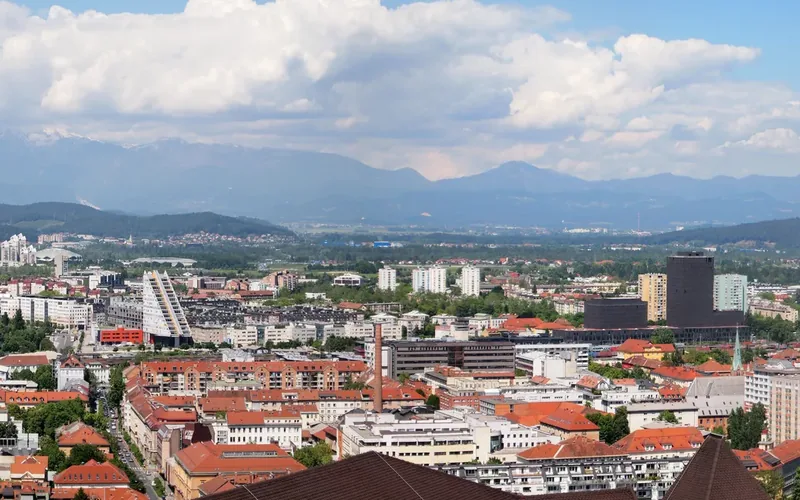
Sep 10–13, 2025 Ljubljana, Slovenia

Salient Youth Conference

Conference

Ljubljana, Slovenia·Europe

Sep 10–13, 2025

50 delegates expected

University students

In English

Applications

Closed
Jul 28 – Aug 10, 2025
  • Delegates

About

REWRITING TOMORROW: Confronting the Legacy of neo-colonialism

APPLICATIONS ARE VIA GOOGLE FORMS: https://forms.gle/qGSvq2qCh4jQjYZu8

Focus on Neo-Colonialism
In an increasingly multipolar world, with rising powers establishing themselves in the global order and challenging existing hegemonies, the dynamics of power are shifting and States are beginning to reevaluate their roles on the international stage. While some aim to reinforce their positions by revitalising their traditional alliances and strengthening their economies through strategic investments, others seek to expand their sphere of influence and forge new partnerships. Meanwhile, others still, find themselves on the periphery of international decision-making, navigating complex relationships to balance structural inequalities and dependencies with opportunities, in order to assert their agency vis-à-vis key actors.

In this context of waning multilateralism, the return of geopolitics and recourse to hard power, neocolonialism emerges as one of the most overlooked political phenomena on the international agenda.

Operating through indirect mechanisms that maintain global hierarchies and keep certain countries reliant on foreign powers through tools such as exploitative trade agreements, predatory lending practices, corporate dominance over natural resources, political leverage and cultural hegemony, neocolonialism lays at the centre of international politics. Therefore, confronting its legacy is essential for fostering equitable solutions to global problems that prioritise genuine cooperation over exploitation.

Join us at the 2025 edition of the Salient Conference, where we will aim to simulate these dynamics of the contemporary global order in three separate committees, each representing a key bloc in the politics surrounding neocolonialism, and focused on aligning their specific interests, priorities and strategies. On the last day of the conference, the barriers between the committees will dissolve, as all delegates convene in a joint General Assembly session, bring together diverse perspectives on the enduring structures of economic, political and cultural power imbalances, and pave the way towards rewriting a fairer, more sustainable and inclusive tomorrow.

Committees

  • 8 countries
    1. Geopolitics of Transnational Tech Companies: Towards an Equitable and Stable Global Economy
    • Lev Roškar

    Group of Seven

    Expert · English · 8 countries

    Topic

    Geopolitics of Transnational Tech Companies: Towards an Equitable and Stable Global Economy

    About the committee

    The Group of Seven (G7) is an informal bloc of some of the world’s largest advanced democracies, comprising the United States, Canada, France, Germany, Italy, Japan, and the United Kingdom. Originally founded in the 1970s to address global economic challenges, the G7 has since expanded its scope to address a broader range of global challenges, including security, trade, climate change, and development. As the architects of the current global systems of governance and economic policy, the G7 holds significant influence. These structures often perpetuate disparities deeply rooted in colonial legacies. In this committee, delegates will be challenged to balance power and inclusivity, propose solutions for global equity while leveraging the G7’s unique position. Through collaboration and strategic diplomacy, you will have the opportunity to reimagine the G7’s role in building a fairer and more sustainable world.

    Chair

    Countries

  • 10 countries
    1. Challenging the Western Tech-Order: Building an Equitable Tech Model for the Global South

    • Sam Van Outrive

    BRICS

    Intermediate · English · 10 countries

    Topic

    Challenging the Western Tech-Order: Building an Equitable Tech Model for the Global South

    About the committee

    The BRICS group, an intergovernmental organization uniting major emerging economies, serves as a platform for fostering economic cooperation, political dialogue, and development initiatives among its member states. Founded by Brazil, Russia, India, China, later joined by South Africa in 2010, BRICS has recently expanded with five new members, emerging as a key alternative to the established global order. In an era marked by instability, declining trust in international law, and a waning commitment to multilateralism, BRICS has become increasingly significant in global discussions, particularly on issues such as neocolonialism. With most of its members being former colonies—except Russia and China—BRICS stands as a testament to nations overcoming development challenges and transitioning into influential global players. This committee invites delegates to explore the pivotal role of BRICS in shaping a fairer and more inclusive international system in this new era of multipolarity.

    Chair

    Countries

  • 20 countries
    1. Holding Big-Tech Accountable: Ensuring Human Rights and Environmental Justice in the Digital Age
    • Simon Scheidler

    The Non Alligned Movement

    Beginner · English · 20 countries

    Topic

    Holding Big-Tech Accountable: Ensuring Human Rights and Environmental Justice in the Digital Age

    About the committee

    Representing nearly two-thirds of UN Member States and over half of the world's population, the Non-Aligned Movement (NAM) stands as a critical global forum. Established during the Cold War to counterbalance global bi-polarization, NAM champions the sovereignty, independence, and territorial integrity of nations resisting domination by major power blocs. In today’s increasingly multipolar world, NAM's mission remains profoundly relevant as countries grapple with the complexities of neo-colonialism—manifestations of economic, political, and cultural dominance by former colonial powers or emerging global actors. Guided by the Bandung and Havana Declarations aiming to combat “imperialism, colonialism, neo-colonialism, racism, and all forms of foreign domination,” this committee will critically examine neo-colonial practices, their impact on global equity, and pathways for sustainable sovereignty in the 21st century.

    Chair

    Countries

  • No Conference is complete without its Press Corps. „The SPOTLIGHT“ will be the eyes and ears of the Conference, connecting all committees. Acting as the Conference's media arm, the Press Corps facilitates transparency, disseminates information, and shapes perception of committee efforts. Additionally, who better could take care of all the gossip and memes? As a journalist, led by your Editor-in-Chief, you will not represent a specific country and debate with other delegates about certain topics. You will observe committee proceedings and report the developments.

    • Mia Baškovič

    The Press Committee

    Intermediate · English

    About the committee

    No Conference is complete without its Press Corps. „The SPOTLIGHT“ will be the eyes and ears of the Conference, connecting all committees. Acting as the Conference's media arm, the Press Corps facilitates transparency, disseminates information, and shapes perception of committee efforts. Additionally, who better could take care of all the gossip and memes? As a journalist, led by your Editor-in-Chief, you will not represent a specific country and debate with other delegates about certain topics. You will observe committee proceedings and report the developments.

    Chair

    Countries

    How this committee type works

Partner conferences

KULMUN 2025

Leuven, Belgium

View conference
MUNUSAL 2025

Salamanca, Spain

View conference
BIMUN/ SINUB 2024

Bonn, Germany

View conference
PragueMUN 2025

Prague, Czech Republic

View conference
MCOP ALBANIA 2024

Tirana, Albania

View conference
MaltMUN 2024

Valletta, Malta

View conference
IsarMUN 2025

Munich, Germany

View conference

More MUN conferences

ConferencesSloveniaSalient 2025