
MUNUSAL 2023

Model United Nations University of Salamanca

Apr 17–21, 2023 Salamanca, Spain

Model United Nations University of Salamanca

Conference

Salamanca, Spain·Europe

Apr 17–21, 2023

84 delegates expected

University students

In English and Spanish

How it went

4.8232 ratings from delegates
Academics
4.88
Logistics
4.88
Socials
4.69

About

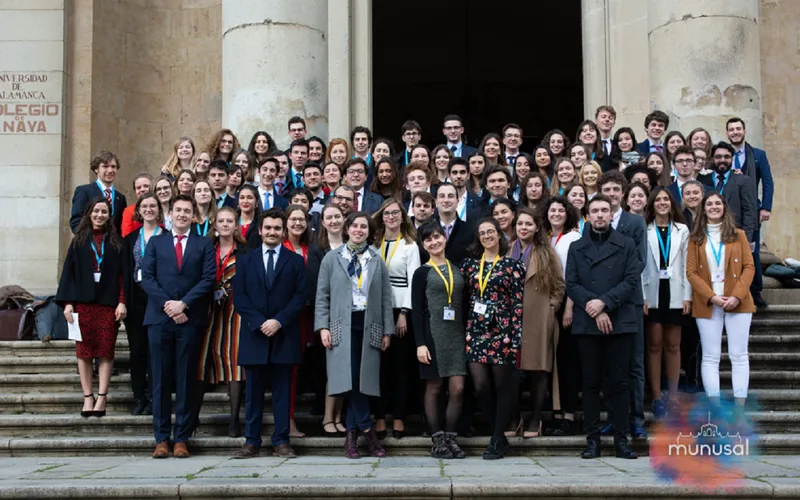
MUNUSAL: XV years changing the world

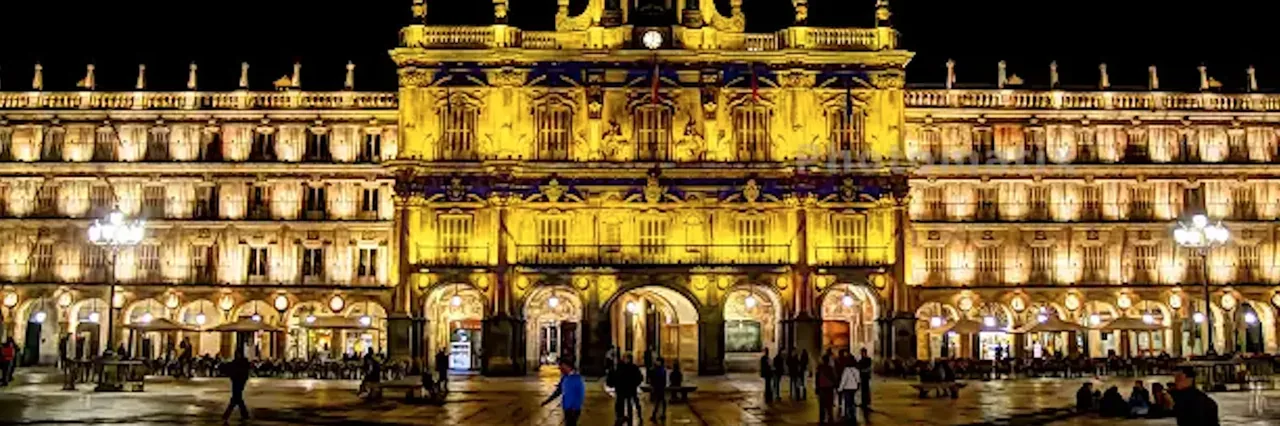
Welcome back for the 15th edition if the international model of the United Nations held in Salamanca. The University of Salamanca is the oldest university in Spain, and the fourth oldest educational institution in Europe. 
 

The Cultural and Youth Association Model United Nations, University of Salamanca (MUNUSAL) was created as a vehicle for the students of the USAL to interact with the world of diplomacy and the MUN community, in Spain and in other countries. Since its conception, the association has taken an active role in various prestigious models abroad. Over the years we have attended BerlinMUN (Germany), PoziMUN (Poland), MIMUN (Madrid), KULMUN (Belgium), UCIMUN (Portugal), BIMUN (Germany) among others and we are looking forward to attending many more.

This year's theme is “Our world at Odds: Multilateralism in an Age of Multipolarity”. Our world is becoming increasingly complex. Geopolitical balances are shifting through the rise of new contenders and decline of old powers. New blocs are emerging, old conflicts are flaring up, and global political and economic instability is plaguing the world community. In this situation, it becomes inevitable to ask the question whether multilateralism and institutions such as the United Nations can still maintain their positions as the foundations of the current world order, or if they will suffer the same fate as the League of Nations in the past. 

As more and more nations progressively develop their economic, military and technological capabilities, they increasingly stand in a position to participate in exchanges within the international community. With this new bargaining chip, they understandably seek strategic autonomy and demand an international society in which their interests are better represented. Despite this, one cannot ignore the ever-increasing mutual reliance between member states through continued globalization and global interconnectedness. Only a few, if any, issues can be solved by unilateral or bilateral solutions, as our world has reached the point where the strongest nations can barely survive without another. 

Through the debates and simulations of the various committees in MUNUSAL 2023, we aim to discuss this phenomenon, how it has impacted the work of the United Nations across the whole spectrum of its activities and what can be done to address these new challenges to the UN. 

Committees

  • 25 countries
    1. Impacto social y económico del bloqueo económico a Cuba
    2. Tratado de no proliferación, ¿necesita que se redacte uno nuevo o que mantengamos el actual?
    • Sebastián Cuevas

    Asamblea General de las Naciones Unidas

    Spanish · 25 countries

    Topics

    1. Impacto social y económico del bloqueo económico a Cuba
    2. Tratado de no proliferación, ¿necesita que se redacte uno nuevo o que mantengamos el actual?

    About the committee

    Siendo parte de los seis órganos principales de las ONU, la Asamblea General de las Naciones Unidas (AGNU) es el principal organismo de formulación de políticas de la organización. Entre sus muchas funciones estan el aprobar el presupuesto de la ONU, elegir a los miembros no permanentes del Consejo de Seguridad y formular recomendaciones en forma de resoluciones con el apoyo de sus diversos órganos subsidiarios. La AGNU incluye a los 193 Estados miembros y es el único órgano de la ONU en el que todos ellos tienen igual representación. La AGNU tiene 6 comisiones principales, de las cuales las cuatro primeras son relevantes para esta conferencia: La Primera Comisión se ocupa del tema del desarme y su papel en la seguridad internacional, especialmente en lo que se refiere a las armas de destrucción masiva. La Segunda Comisión delibera sobre asuntos financieros y económicos mundiales, como la globalización y la interdependencia, el desarrollo agrícola y las políticas macroeconómicas. La Tercera Comisión se ocupa de cuestiones de importancia humanitaria y social, como el trato a los refugiados, la protección de los derechos de los niños y la defensa de los derechos humanos. Por último, la Cuarta Comisión se ocupa de una gran variedad de temas, como la descolonización, el mantenimiento de la paz y los efectos de la radiación atómica.

    Chair

    Countries

    How this committee type works
  • 25 countries
    1. Moving forward - The implementation and development of electric vehicles
    2. Looking to the future - Rethinking policies on genetically modified organisms
    • Tomás Branco
    • Koen Kockx

    United Nations Commission on Science and Technology for Development

    English · 25 countries

    Topics

    1. Moving forward - The implementation and development of electric vehicles
    2. Looking to the future - Rethinking policies on genetically modified organisms

    About the committee

    As a subsidiary of the Economic and Social Council, the United Nations Commission on Science and Technology for Development hosts a variety of discussions on science and technology, and their implications for development in their yearly forum. Its membership consists of 43 Member States selected by ECOSOC, but civil bodies have also been welcomed to the forum. These discussions result in high level advice for the UNGA and ECOSOC including analysis of the technological and scientific developments in question as well as specific policy recommendations to allow these bodies to make informed decisions. The topics considered include questions pertaining research efforts to address future pandemics and health crises, the implications of frontier technologies such as big data, genome editing and artificial intelligence, as well as addressing the ever-expanding gap that technology and science are leaving in the world.

    Chairs

    Countries

    How this committee type works
  • 15 countries · 2 delegates each
    1. Tigray war: reconstructing a war-torn nation
    2. The situation in Haiti
    • Christine Langman
    • Wendy Dewit

    United Nations Security Council

    English · 15 countries · 2 delegates each

    Topics

    1. Tigray war: reconstructing a war-torn nation
    2. The situation in Haiti

    About the committee

    The Security Council is one of the six principal organs of the United Nations, with its primary responsibility being the maintenance of international peace and security. Within the UN, it is tasked to determine the existence of a threat to the peace or act of aggression, call upon the parties to settle a dispute by peaceful means, recommend methods of adjustment or terms of settlement, and in some cases, impose sanctions or authorize the use of force to maintain or restore international peace and security. The Council is composed of five permanent and ten non-permanent Member States, with each of the latter being elected for two-year terms. It is the only UN organ that can adopt binding resolutions. ​ In MUNUSAL 2023, we aim to simulate the committee with double delegation format as an additional special feature! In this format, each Member State can be represented by two delegates as a team (popularly known in MUN colloquialism as “power couples”), which would allow them to coordinate and make better decisions as well as more efficient multitasking. In return, this should reduce workload at certain points in time, which leads to a better flow of debate and a better Resolution to each topic. Additionally, if you are a first-time or newer delegate, you should have more confidence in joining the (often perceived as advanced) committee, as you will be able to enjoy the experience with someone more experienced beside you!

    Chairs

    Countries

    How this committee type works
  • 1 country · 4 delegates each

    As per every edition of MUNUSAL, the press work will be conducted through MUNUSAL’s own press agency simulation under “The Globe”. The Globe consists of a team of journalists under the leadership of two Editors-In-Chief, who will coordinate the works and operations of Press in the conference. ​ The members of the Globe seek to use a varied repertoire of novel and creative ways of presenting the events of the world as well as the debates and narratives within the conference, allowing you to practice and hone your journalistic skills.
    • Aitor Anseeuw

    The Globe

    English · 1 country · 4 delegates each

    About the committee

    As per every edition of MUNUSAL, the press work will be conducted through MUNUSAL’s own press agency simulation under “The Globe”. The Globe consists of a team of journalists under the leadership of two Editors-In-Chief, who will coordinate the works and operations of Press in the conference. ​ The members of the Globe seek to use a varied repertoire of novel and creative ways of presenting the events of the world as well as the debates and narratives within the conference, allowing you to practice and hone your journalistic skills.

    Chair

    Countries

Partner conferences

KULMUN 2019
Leuven, Belgium

View conference
BIMUN/SINUB 2022

Bonn, Germany

View conference
Salient 2021

View conference
KIIT e-MUN 2021

Bhubaneswar, India

View conference
MIMUN - UCJC 2022

Madrid, Spain

View conference
MEI Simulation 2022

Madrid, Spain

View conference
LisboMUN 2020

Lisbon, Portugal

View conference
AUMUN 2023

Madrid, Spain

View conference
MaltMUN 2022

Valletta, Malta

View conference

More MUN conferences

ConferencesSpainMUNUSAL 2023