
About
Safeguarding shared values and principles amidst an increasingly polarized world
Presentation of this year's theme :
Since 1945, the international order has rested on the idea that, despite our differences, nations can agree on common values and principles: human dignity, the sovereign equality of states and the peaceful settlement of disputes. Today, that consensus can no longer be taken for granted. Geopolitical rivalries are hardening into rival blocs, trust in institutions is eroding, and principles once seen as universal are increasingly contested. In this context, the very notion of “shared values” raises difficult questions. Are they truly shared? Who defines them? And can they survive when the world no longer speaks with one voice?
The United Nations stands at the centre of this tension. It is both the guardian of these common principles and the arena where their limits are most visible, from Security Council deadlocks to disputes over human rights and sovereignty. Yet it remains the place where dialogue, however difficult, is still possible.
This year, LyonMUN invites delegates to explore how common ground can be preserved, rebuilt or reimagined. Through debate, negotiation and the drafting of resolutions, they will experience first-hand the challenge of defending a position while seeking consensus. The theme does not ask for easy answers. It asks for the courage to listen, to negotiate and to search for what still unites us.
About LyonMUN
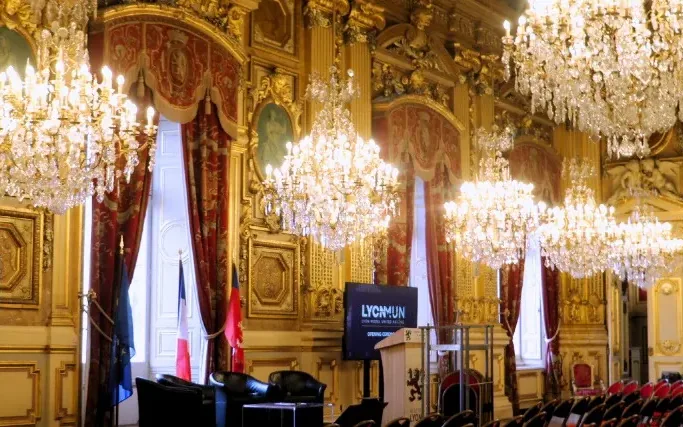
Founded in 2012, LyonMUN is a student-run association based in Lyon, dedicated to promoting the principles and practices of the United Nations through Model United Nations conferences.
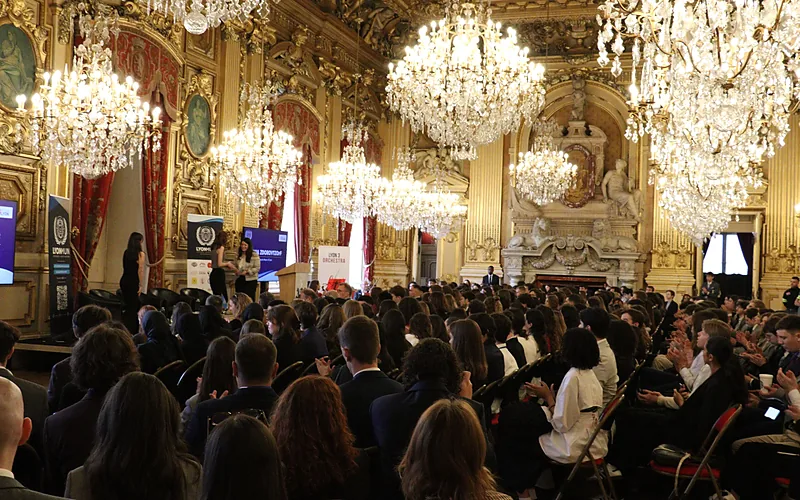
Each year, our conference brings together participants from different countries and academic backgrounds. By representing a country within a committee, delegates experience international negotiations firsthand.
How does the conference work?
Over four days, participants take part in committee sessions alongside opening and closing ceremonies and opportunities to meet fellow delegates.
Each committee focuses on specific issues, with discussions guided by chairs who facilitate debate and help delegates navigate the rules of procedure. Preparation materials will allow you to research your assigned country and committee topics ahead of the conference.
You can apply individually or as part of a delegation through MyMUN.
What’s included in the delegate fees?
- Participation in all committee sessions as a delegate;
- Lunch, coffee and snacks during the conference;
- Exclusive conference goodies;
- 3 themed socials;
- MyMUN processing fees.
What’s included in the chairing fees? (35€)
- Lunch, coffee and snacks during the conference;
- Housing accomodation;
- Exclusive conference goodies;
- 3 themed socials;
What about the socials?
The LyonMUN experience continues beyond committee sessions! Our social events give participants the chance to discover another side of Lyon, get to know one another and enjoy time together throughout the conference. Further information about the programme, venues and booking arrangements will be shared ahead of the conference.
Plan your participation
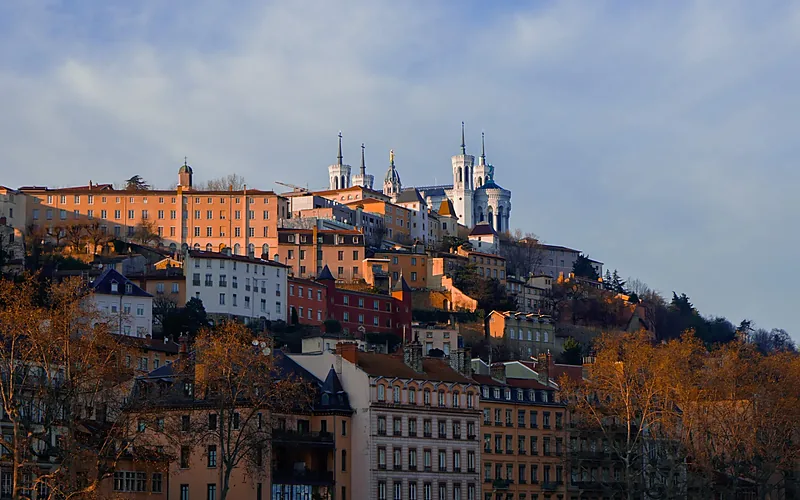
The conference will take place in Lyon, France, from May 19 to 22, 2027. Please take these dates into account when planning your travel and accommodation.
Further practical information, including the detailed schedule and conference venues, will be shared with participants ahead of the event.
For any enquiries regarding applications or delegation arrangements, please contact us at applications@lyonmun.com.
We look forward to welcoming you to LyonMUN 2027!
Committees
Le Haut-Commissariat des Nations Unies pour les réfugiés (HCR, ou UNHCR en anglais) est l’agence des Nations unies dont le mandat est de sauver des vies de réfugiés, de protéger leurs droits. Elle vise à batîr un avenir meilleur pour tous les réfugiés, personnes déplacées de force, et apatrides à travers le monde. Créé le 14 décembre 1950 par l’Assemblée générale des Nations Unies, son siège est situé à Genève, en Suisse. Ses missions principales sont les suivantes : veiller au respect de la Convention de Genève de 1951 relative au statut des réfugiés, fournir une aide vitale lors des crises majeures, rechercher des solutions durables pour aider les personnes déracinées à reconstruire leur vie, et lutter contre l’apatridie.)
La commission économique pour l’Afrique (ou UNECA) est l’une des cinq commissions régionales du Conseil économique et social des Nations Unies (ECOSOC) fondée en 1958. Elle travaille en étroite collaboration avec l’Union Africaine (UA) pour favoriser le développement économique et social du continent. Le siège permanent de l’UNECA se trouve à Addis-Abeba, en Éthiopie. L’organisation est dirigée par un secrétaire exécutif ; aujourd’hui, il s’agit de Claver Gatete (nommé en 2023). L’UNECA appuie les cadres stratégiques de l’Union africaine, notamment l’Agenda 2063 et l’accélération de la Zone de libre-échange continentale africaine.
The United Nations Entity for Gender Equality and the Empowerment of Women was created by the General Assembly in 2010 and became operational in 2011, bringing together four existing UN bodies working on gender issues to give the system a stronger and more unified voice. The committee supports intergovernmental bodies in setting global standards, helps member states implement them, and holds the UN system accountable for its own commitments on gender equality. Women’s political participation, economic empowerment, ending violence against women and girls, and the role of women in peace and security stay at the core of their mission. Delegates in this committee will represent member states and address the obstacles that continue to limit women’s rights across the world. Debate will require a solid understanding of each country’s legal framework, cultural context, and international commitments, and delegates will be expected to move beyond statements of principle towards concrete, achievable measures.)
UN-Habitat is the United Nations programme dedicated to sustainable urban development and adequate housing solutions for all. It was established in 1978, following the first UN Conference on Human Settlements held in Vancouver in 1976. It became a full programme of the United Nations in 2001, and its headquarters are in Nairobi, Kenya. Housing and urban environments shape daily life, which makes the committee's subject matter relevant to every delegate, regardless of prior experience in MUNs. The scope of the committee is to focus on the pressures that rapid urbanisation places on housing and public services. As well as how climate change reshapes urban life and drives displacement. The UN-Habitat goes beyond debate to study innovative urban models. Through negotiation and international cooperation, participants will assess how such projects could be designed and implemented.
The Community of Latin American and Caribbean States (CELAC) is an intergovernmental mechanism for political dialogue and regional integration in Latin America and the Caribbean. Established in 2010 at the Playa del Carmen Summit in Mexico, it brings together the 33 countries of the Americas, with the exception of the United States and Canada. CELAC has no permanent headquarters or permanent secretariat. It operates through a rotating annual presidency rather than a central bureaucratic structure. The country holding the presidency manages the agenda and organizes summits on its own territory. CELAC was created to deepen regional integration and reduce the historical influence of the United States. Its main objectives are political dialogue, regional integration, cooperation, and the development of a common voice. La Comunidad de Estados Latinoamericanos y Caribeños (CELAC) es un mecanismo intergubernamental de diálogo político e integración regional en América Latina y el Caribe. Establecida en 2010 durante la Cumbre de la Unidad de América Latina y el Caribe, celebrada en México, reúne a 33 países de América Latina y el Caribe, excluyendo a Estados Unidos y Canadá. La CELAC no tiene una sede fija ni una secretaría permanente, sino que funciona mediante una presidencia pro tempore anual, sin una estructura burocrática centralizada. El país que ejerce la presidencia gestiona la agenda y organiza las cumbres. La CELAC fue creada para profundizar la integración regional y reducir la influencia histórica de Estados Unidos. Sus principales objetivos son el diálogo político, la integración regional, la cooperación y la articulación de una voz común.
Fondée en 1923 et dont le siège se trouve à Lyon, l’Organisation internationale de police criminelle relie les forces de police de ses 196 pays membres. Elle facilite la coopération entre États grâce à des bases de données criminelles partagées, à un réseau mondial de communication sécurisé et à son système de notices, dont la plus connue est la notice rouge visant les personnes recherchées. En revanche, Interpol n’est pas un service de police à proprement parler. En vertu de l’article 3 de son Statut, toute activité ou intervention dans des questions présentant un caractère politique, militaire, religieux ou racial lui est rigoureusement interdite, un principe que les délégués devront respecter tout au long des débats. Au sein de ce comité, les délégués représenteront les autorités policières des États membres et travailleront au renforcement de la réponse internationale face à la criminalité transnationale. Ils devront concilier l’efficacité de la coopération avec le respect de la souveraineté nationale, la protection des droits humains et les inquiétudes liées au détournement des outils d’Interpol par certains gouvernements. Accueillir ce comité à Lyon, ville du Secrétariat général, lui confère une résonance toute particulière pour LyonMUN 2027.
The Arab League is a regional organisation created in 1945 by Egypt, Iraq, Lebanon, Saudi Arabia, and Yemen around a shared goal of coordinating member states' political, cultural, economic, and social programs. The League has since grown in both size and scope, with its 22 member states now also striving to promote collaboration on military affairs and human rights. Despite its foundations as a Pan-Arabist project appealing to shared Arabic culture and historical experiences, tensions often arise from the League’s prioritisation of independence and national sovereignty. Furthermore, the organisation's commitment to non-violence – enshrined in Article V of its Charter – has been challenged by internal turmoil and regional violence, fuelled by conflicting interests amongst its diverse member states. This regional committee allows delegates to immerse themselves in the Arab World's rich culture, politics and complex interrelations. At the heart of this committee is the pursuit of shared interests and regional unity at a time of sustained instability within North Africa and the Middle East. )
The UN Office for Digital and Emerging Technologies (ODET) is one of the most recent institutions established by the General Assembly on 1 January 2025 to tackle contemporary issues concerning digital advancements. It serves as an advisory organ focusing on technology policy, artificial intelligence governance and global cooperation in the digital sphere. As a reponse to such challenges, ODET aggregates cooperation initiatives globally and allows parterns to align activities and principles in accordance with human rights. Its aim is to build a universal framework that will regulate the use of these devices and technologies while maintaining human-control over them for substantial decisions. The ODET gives delegates a unique opportunity to discuss contemporary issues by finding measures to establish a humanitarian system within the digital infrastructure.
Since 1945, the United Nations Security Council (UNSC) has been one of cornerstones of the international system, at the epicentre of the global security matrix. The Council's mandate to maintain international peace and security, as well as its exlusive binding authority, grant the institution considerable power within the UN system. However, this institution has experienced multiple internal crises, as its limited membership structure and P5 dynamics easily lead to polarisation and gridlocks. Delegates looking for a challenge will feel at home in UNSC, as they navigate complex global rivalries and the ever-looming threat of veto in their quest for international security. This classic committee offers an opportunity for rich and spirited debates, with the fate of global security on the line.
La conférence de Genève de 1949 est un comité historique qui plonge les délégués dans le contexte de l'immédiat après-guerre. LyonMUN propose aux délégués une expérience unique : réunis à Genève, les représentants des grandes puissances doivent s'accorder sur un texte destiné à protéger les populations civiles en temps de conflit armé. La guerre froide se fait déjà sentir et les délégués doivent défendre les intérêts et priorités de leurs pays. Ce comité de niveau expert s'adresse à des participants aguerris qui connaissent les procédures et peuvent mobiliser des connaissances juridiques et historiques précises. Il invite à une réflexion approfondie sur la construction du droit international humanitaire, entre idéaux universels et rapports de force.
The Crisis Committee is a fast-moving simulation set within a challenging political situation. It has no fixed agenda, since the scenario evolves in real time. It is shaped by delegates' decisions and by developments that no one can fully anticipate. As a no-level committee, it is open to participants of all backgrounds, from first-time delegates to experienced MUNers. Each delegate represents a specific actor with its own resources and interests. The particularity of this committee is that formal debates are not necessarily the main form of diplomacy; there is also a place for confidential channels of action, like directives. The crisis Committee offers delegates the opportunity to put their adaptability and decision-making to the test.
Instituée en 1959 au sein du Conseil de l’Europe, la Cour européenne des droits de l’homme a vocation à garantir le respect des exigences de la Convention de sauvegarde des droits de l’homme et des libertés fondamentales de 1950, ainsi que de ses protocoles additionnels. La CEDH est une juridiction permanente qui peut être saisie pour statuer sur des litiges relatifs aux droits et libertés défendus par la Convention, notamment le droit à la vie, le droit à un procès équitable, le droit à la vie privée et familiale, ou encore les libertés de conscience, d’expression ou d’association. Depuis 2022, l’année du déclenchement de la guerre en Ukraine, elle ne compte que 46 États. Aujourd’hui, son rôle est incontournable dans l’interprétation et la clarification du droit positif, intervenant en dernier recours à la demande des particuliers ou de l’un des États signataires. Ainsi, ce conseil offre la possibilité aux délégués de tous les niveaux de découvrir le déroulement d'une affaire jugée auprès de la Cour.
(French / English / Spanish) The International Press Corps brings the media into the heart of the conference. Rather than representing a country, each journalist represents a real news outlet and reports on the debates, negotiations and crises unfolding across all committees. Journalists will attend sessions, interview delegates, hold press conferences and publish articles throughout the conference, reflecting the editorial line and political perspective of their assigned outlet. This committee suits participants with strong writing skills and an interest in journalism, communication or international affairs. Members of the Press Corps play an active role in the simulation. Their coverage can shape public perception of delegations, expose contradictions between speeches and actions, and add pressure to negotiations, just as the press does in real diplomacy. Le Corps de presse international place les médias au cœur de la conférence. Plutôt que de représenter un pays, chaque journaliste incarne un véritable organe de presse et rend compte des débats, des négociations et des crises qui se déroulent au sein de toutes les commissions. Les journalistes assisteront aux séances, interviequeront les délégués, tiendront des conférences de presse et publieront des articles tout au long de la conférence, en reflétant la ligne éditoriale et la perspective politique de l’organe de presse qui leur a été attribué. Cette commission s'adresse aux participants dotés de solides compétences rédactionnelles et s'intéressant au journalisme, à la communication ou aux affaires internationales. Les membres du Corps de presse jouent un rôle actif dans la simulation. Leur couverture médiatique peut influencer la perception que le public a des délégations, mettre en évidence les contradictions entre les discours et les actes, et exercer une pression supplémentaire sur les négociations, tout comme le fait la presse dans la diplomatie réelle. El Cuerpo de Prensa Internacional sitúa a los medios de comunicación en el centro de la conferencia. En lugar de representar a un país, cada periodista representa a un medio de comunicación real e informa sobre los debates, las negociaciones y las crisis que se desarrollan en todas las comisiones. Los periodistas asistirán a las sesiones, entrevistarán a los delegados, celebrarán ruedas de prensa y publicarán artículos a lo largo de la conferencia, reflejando la línea editorial y la perspectiva política del medio que les haya sido asignado. Esta comisión es ideal para participantes con grandes habilidades de redacción e interés por el periodismo, la comunicación o los asuntos internacionales. Los miembros del Cuerpo de Prensa desempeñan un papel activo en la simulación. Su cobertura puede influir en la percepción pública de las delegaciones, poner de manifiesto contradicciones entre discursos y acciones, y ejercer presión en las negociaciones, tal y como hace la prensa en la diplomacia real.



Past editions
average of 1,421 ratings
12 editions since 2016
- Academics
- 4.5
- Logistics
- 4.4
- Socials
- 4.4
What delegates say
Liked
- Lively, well-received socials (2025, 2026)
- Friendly, capable chairs (2026)
- Smooth logistics and a helpful, present organising team (2024–2026)
Could be better
- Delegate experience better matched to committee level (2025, 2026)
- Social venues closer and easier to reach (2026)






Partner conferences
 KAMUN: The Black Forest Summit 2026
 WIMUN 2027
 UABMUN 2027
 FMUN 2026
 GIMUN 2027
Organizers
Alexandre Boulay
Under-Secretary-General for Logistic
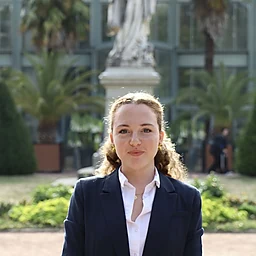
Camille Belloir
Under-Secretary-General for Human Relations
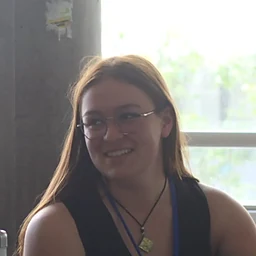
Dangla Chloée
Academics
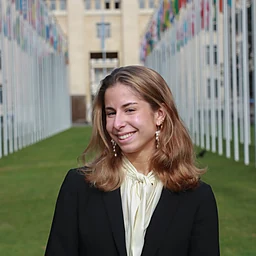
Gaëlle Roy
Academics
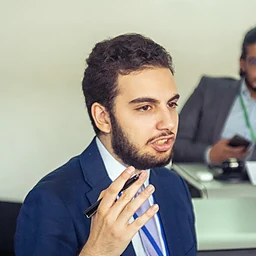
Ibrahim Bechara
Deputy-Secretary-General
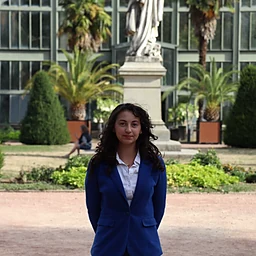
Ines Aouadi
Assistant-Under-Secretary-General for Human Relations
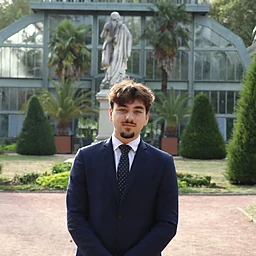
Julien Georgin
Under-Secretary-General for Finance
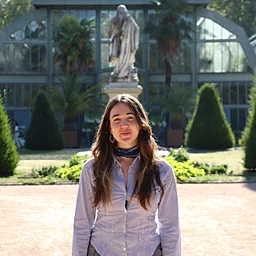
Klaudia Stelli-Kis
Academics

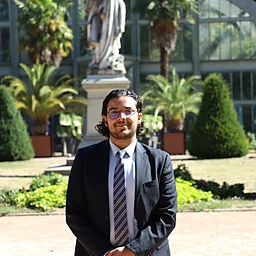
Mamoun Benseddik
Deputy-Secretary-General
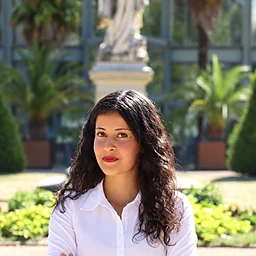
May Ben Elarbi
Under-Secretary-General for Communication
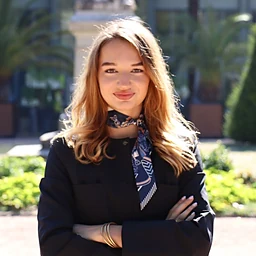
Mélissa Brun-Buisson
Under-Secretary-General for Socials
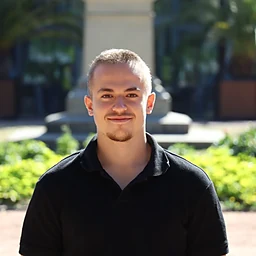
Rémi d'Aviau
Under-Secretary-General for Events
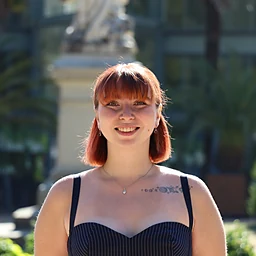
Sofiia Zakrasniana
Under-Secretary-General for Academics
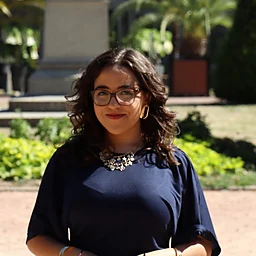
Soraya El Mokhtari
Secretary-General
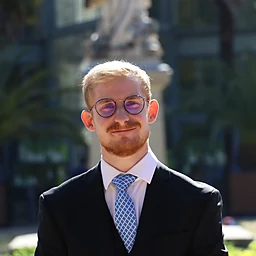
Tom Liebelt
Assistant Under Secretary General for Academics
More MUN conferences
FranceMUN conferences in France EuropeMUN conferences in Europe May 2027MUN conferences in May 2027 High school MUNMUN conferences for high school students University MUNMUN conferences for university students
ConferencesFranceLyonMUN 2027