LHMUN 2026

Le Havre Model United Nations

Feb 20–22, 2026 Le Havre, France

Le Havre Model United Nations

Conference

Le Havre, France·Europe

Feb 20–22, 2026

110 delegates expected

High school and university students

In English

How it went

4.6118 ratings from delegates
Academics
4.39
Logistics
4.72
Socials
4.72

About

Safeguarding Global Security: Navigating Power and Conflict in Times of Crisis

Conference Introduction

In the heart of Normandy, in the port city of Le Havre, LHMUN’s annual conference will take place from the 20th to 22nd of February 2026, exploring the links between the regions of the Asia-Pacific and Europe - a relationship that is increasingly pertinent amidst a growing number of environmental and political crises.

As global security is a value paramount to state relations and the functioning of global organisations like the United Nations, this year’s conference is centred around the theme of international security in an era of escalating humanitarian challenges. Delegates will have the chance to explore the mechanisms through which conflict emerges, and how global powers negotiate and respond to urgent threats. 

With topics ranging from post-Napoleonic diplomacy to the militarization of the Pacific, Le Havre Model United Nations 2026 features 8 committees in both French and English.

For any further inquiries, do not hesitate to reach out to us!


Payment of the delegate or chair fee is required only after official acceptance. Fees should not be submitted during the initial submission process.

Please note that all payments for both chair and delegate applications are final and not eligible for a refund.


Email: secretariat@lhmun.fr

Instagram: @lhmun_shu 


Introduction à la conférence

Au cœur de la Normandie, dans la ville portuaire du Havre, la conférence annuelle LHMUN aura lieu du 20 au 22 février 2026, et explorera les liens entre l’Asie-Pacifique et l’Europe - une relation de plus en plus importante face à la multiplication des crises environnementales et politiques.

La sécurité internationale est un enjeu essentiel pour les relations entre Etats et le fonctionnement d’organisations internationales telles que les Nations Unies. Cette année, la conférence est consacrée au thème de la sécurité internationale, dans un contexte de défis humanitaires en constante aggravation. Les délégués auront l’occasion d’explorer les mécanismes par lesquels les conflits émergent, ainsi que la manière dont les grandes puissances négocient et répondent aux menaces urgentes.

De la diplomatie post-napoléonienne à la militarisation du Pacifique, Le Havre Model United Nations 2026 proposera 8 comités, en français comme en anglais.

Pour toute question supplémentaire, n’hésitez pas à nous contacter ! 


Le règlement des frais ne doit être effectué qu'après l'acceptation officielle. Aucun paiement ne doit être soumis lors du processus d'inscription initial.

Veuillez noter que tous les paiements sont définitifs et ne peuvent faire l'objet d'un remboursement.


Email: secretariat@lhmun.fr

Instagram: @lhmun_shu


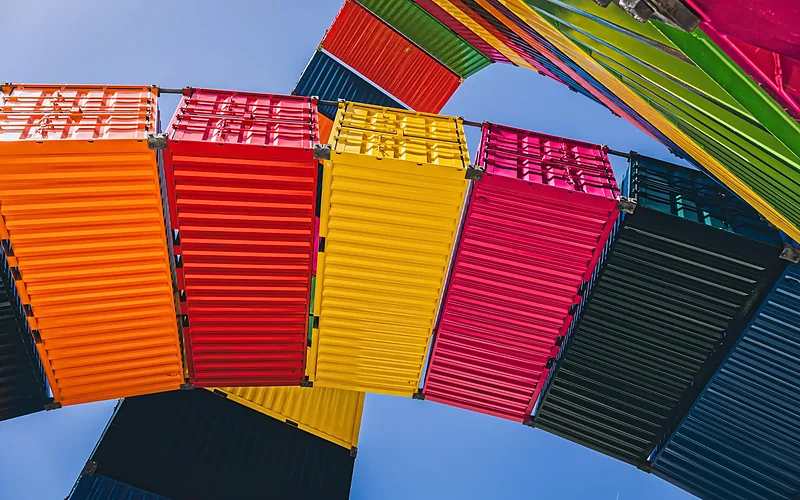
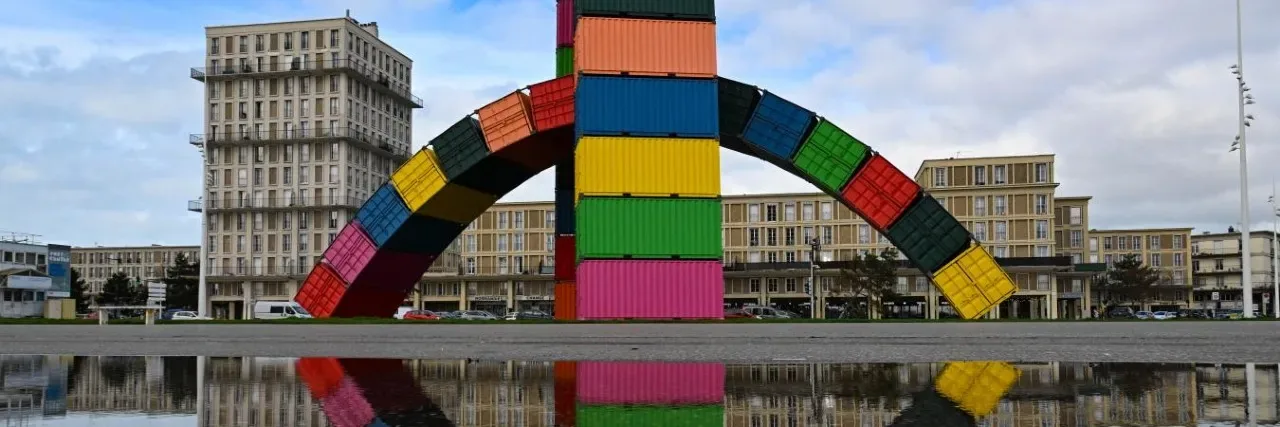
background image from: La catène de conteneurs au Havre. - Photo d’archives Paris-Normandie 

Committees

  • 20 countries
    1. En abordant la question sur la piraterie en Corne d’Afrique Orientale
    • Clémentine Bouev-Dombre
    • Nicolas Aubert

    International Maritime Organization [FR]

    Intermediate · English · 20 countries

    Topic

    En abordant la question sur la piraterie en Corne d’Afrique Orientale

    About the committee

    En ce début de novembre 2025, un battant pavillon maltais a été détourné par un groupe de pirates somaliens, qui ont ouvert le feu à l'aide de mitrailleuses et de roquettes avant d'aborder le navire. En réponse, de l’aide des navires de guerre de la force navale de l'UE a été demandé, prouvant les conséquences internationales des actions en mer d’Arabie. Cette attaque peut être considérée comme un signe d'une recrudescence de la piraterie dans la région. La Corne de l'Afrique demeure un point de passage stratégique, un lieu de transit pour les principales routes commerciales maritimes. Il serait donc essentiel d'assurer la sécurité de tous les navires qui y transitent. En outre, l'instabilité régionale, en particulier les conflits et les activités armées au Yémen et dans la mer Rouge au sens large, a modifié les routes maritimes et créé de nouvelles opportunités pour les pirates opérant au large de la Somalie et des côtes adjacentes. Ces sujets devraient aussi être abordés ou pris en compte au sein de la discussion. Dans le cadre de l'OMI, les États ont travaillé à l'élaboration de lignes directrices pour la protection des navires, le partage d'informations et le soutien à des accords régionaux tels que le Code de conduite de Djibouti afin de renforcer la gouvernance en matière de sécurité maritime. Le conseil de l'OMI se doit de débattre du soutien au développement côtier, trouver des moyens afin de lutter contre la pêche illégale, d’améliorer la surveillance des ports et des côtes et enfin de garantir des normes équitables en matière de poursuites et de détention des pirates présumés. Tout cela dans le but d'assurer la paix et la sécurité dans le commerce.

    Chairs

    Countries

  • 15 countries
    1. The Question of Foreign Intervention and Militarization of the Pacific

    • Camille Ostrowski
    • Natalia Oliveira

    Security Council [EN]

    Expert · English · 15 countries

    Topic

    The Question of Foreign Intervention and Militarization of the Pacific

    About the committee

    Colonial expansion and resource extraction has shaped foreign involvement in the Pacific historically. 19th and 20th century imperial power consolidated influence through territorial claims, protectorates and military outposts, embedding external control into the region’s political development. The Second World War militarized vast stretches of the Pacific, leaving behind a dense ruin of bases and treaties that aligned island states with distant power struggles. Decolonisation did not fully dismantle these structures. Instead, long-standing defence agreements, unresolved territorial disputes, new developing states, and remaining socio-environmental impacts of past military activity created a landscape still defined by unequal power dynamics and external actor dependence. Today, the Pacific has re-emerged as a state of strategic rivalry, with major powers expanding naval deployments, enhancing long-range missile capabilities, establishing new basing arrangements, and financing infrastructure across the region. Pacific Island states face increasing pressure to align with competing blocs. Contestation of EEZs, cyber surveillance networks and access agreements for military resources has intensified. Simultaneously, internal instabilities in some states allowed external policing or military interventions framed as capacity building, raising questions on sovereignty and proportionality. Within the UNSC mandate to maintain international peace and security, the council now must determine how to address the expanding presence and activities of foreign militaries in the Pacific while respecting the sovereignty and agency of regional states. Does external intervention constitute stabilisation or undue influence, and how does militarization affect regional structures? Ultimately, delegates must assess whether and how the UN can play a constructive part in a region where power competition increasingly shapes the security landscape.

    Chairs

    Countries

    How this committee type works
  • 18 countries
    1. Addressing Human and Organ Trafficking in Southeast Asia

    • Maryam Abdul
    • Swapnarka Arnan

    Human Rights Council [EN]

    Intermediate · English · 18 countries

    Topic

    Addressing Human and Organ Trafficking in Southeast Asia

    About the committee

    Across the bustling cities and remote villages of Southeast Asia, unseen networks prey on the most vulnerable. For decades, men, women, and children have been coerced, deceived, or abducted into a shadow world of forced labour and sexual exploitation, as well as the illegal organ trade. Today, Southeast Asia has one of the most complex and multi-layered trafficking landscapes, operating across borders. Organ trafficking persists through clandestine networks, often involving trafficked donors and complicit medical or logistical intermediaries. States in the region are confronted with under-resourced law enforcement, a lack of appropriate legislation, challenges in victim protection, and insufficient funding, while international actors and NGOs attempt to fill gaps in prevention and rehabilitation. As delegates of the UNHRC, you must evaluate how states and international organisations can effectively protect victims, prosecute offenders, and prevent trafficking while upholding human rights. However, the tension between national sovereignty and cross-border cooperation, with non-state actors, makes this task one that requires careful consideration. How to strengthen legal frameworks and enforcement mechanisms? How to improve victim identification and rehabilitation? And how to implement these while harmonising regional cooperation without undermining state autonomy?

    Chairs

    Countries

    How this committee type works
  • 19 countries
    1. CRISIS - Who Rules Westeros?
    • Tallulah McEnroe
    • Minha Lee

    Game of Thrones [EN]

    Intermediate · English · 19 countries

    Topic

    CRISIS - Who Rules Westeros?

    About the committee

    Immediately after the defeat of the White Walkers at Winterfell, the war for survival has ended, but the war for the Iron Throne has begun. With the Night King defeated, Westeros turns its full attention back to power. King’s Landing remains heavily fortified, while rival claimants across the realm prepare their final moves. The Great Houses are divided, their loyalties uncertain, and every alliance is fragile. Control of the seas, the food supply, and the main roads to the capital will determine who holds the kingdom. In this decisive moment, the fate of the Seven Kingdoms no longer depends on prophecy or blood alone, but on strategy, diplomacy, and timing. The question that now defines the realm is simple: Who Rules Westeros?

    Chairs

    Countries

    How this committee type works
  • 20 countries
    1. The War on Drugs in the Philippines
    • Kunwoo Kim
    • Uras Gonenc

    Association of Southeast Asian Nations [EN]

    Beginner · English · 20 countries

    Topic

    The War on Drugs in the Philippines

    About the committee

    In 2016, the Philippines began a campaign to combat illegal drugs, aiming to make communities safer and reduce crime. However, questions have been raised regarding its implementation, its effects on communities, its enforcement practices, and the respect of human rights. The dangers posed by the production, widespread distribution, and devastating consumption of illicit drugs represent a challenge that undermines public health, fuels organized crime, and destabilizes governance across Southeast Asia. The flow of methamphetamine from the Golden Triangle and the operation of clandestine laboratories threaten the social fabric of the entire region. Today's ASEAN gathering represents a crucial forum for solidarity and strategy. It is a critical opportunity to understand how member states can move beyond unilateral action and work together to combat the drug trade.

    Chairs

    Countries

  • 19 countries
    1. The question of International Development of Online Learning and Digital Literacy
    • Sonia Stephan
    • Julian Quintana

    Economic and Social Council [EN]

    Beginner · English · 19 countries

    Topic

    The question of International Development of Online Learning and Digital Literacy

    About the committee

    E-learning is today one of the fastest growing markets within the education industry with a 900% growth rate worldwide since the year 2000. Thanks to the development of MOOCs, free access to learning material is available to anyone who has access to a computer. All kinds of online learning platforms are increasing in popularity and information has never been more accessible today thanks to the internet. Because of this fast paced development, digital literacy has become primordial in today’s increasingly digitalised world, and e-learning may become an increasingly important solution to the development of access to education around the world. Quality education is the fourth aim of the United Nations Sustainable Development Goals. This is an issue of global responsibility: education is a human right and its international insurance and accessibility is primordial for a more sustainable future. The SDGs as a whole call on countries to “strengthen the means of implementation and revitalise the global partnership for sustainable development”. Today, international collaboration in education is necessary for various reasons; more children live in lower-income countries than those who live in upper-income nations, a ratio which is today reversed from what it was in the 1950s, meaning the majority of the world’s children are growing up in more resource-constrained countries and are in educational systems that are stretched beyond capacity. Poorer countries tend to have tighter education budgets because, although they dedicate a higher percentage of their government budgets to education than higher-income countries, it is often the case that the tax and revenue base is too small and unstable relative to needs. This means that the countries with the largest and fastest growing children proportions tend to have the least developed educational systems. Furthermore, there is a severe shortage of teachers. Finally, the world needs to see a growth in secondary and higher education, helping to boost economic growth and development in the long run and moving towards attaining a more sustainable future, as is called for by the UN SDGs. Through international cooperation, countries can universalise basic education, as they have started to do in the past, helping to rectify inequalities between countries of different levels of income and development indexes, so as to make education more accessible for all. The boosting of the education sector, through the reduction of inequalities, the implementation of new technologies and, cooperation, with the goal of boosting higher education, may well be the way towards a more sustainable, peaceful and prosperous world.

    Chairs

    Countries

    How this committee type works

Partner conferences

SPMUN 2025
Reims, France

View conference
MAINE MUN 2026

Angers, France

View conference
POITIERSMUN 2026

Poitiers, France

View conference
MEDMUN 2026

Menton, France

View conference

Organizers

Claire Divisia
Deputy USG for Logistics
Clémire Acelor
Deputy Secretary-General
Eva Golstein
USG for Academic Affairs
Keanu Lis
Deputy USG for Finance

Paloma Vollery
Deputy USG for Academic Affairs
Paul-Aurèle Allegrini
USG for Partnerships

Rebecca Yina Yao
Deputy USG for Academic Affairs
Rémi Villain--Hooge
USG for Logistics
Samuel Rea-Rankin
USG for Finance
Sarah Leeder
USG for Logistics
Theethad Thipsoda
USG for Communications
Wiktor Dżaman
Deputy USG for Communications
Zoé De Mones Del Pujol
Deputy USG for Communications

More MUN conferences

ConferencesFranceLHMUN 2026