SPMUN 2025

Sciences Pistes MUN

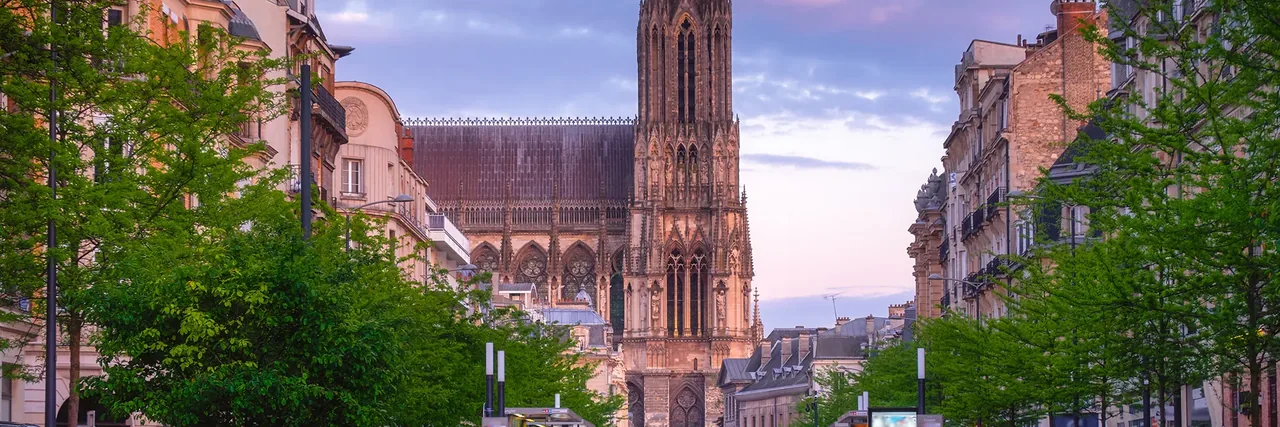
Nov 14–16, 2025 Reims, France

Sciences Pistes MUN

Conference

Reims, France·Europe

Nov 14–16, 2025

150 delegates expected

University students

In English and French

How it went

4.5867 ratings from delegates
Academics
4.60
Logistics
4.58
Socials
4.55

About

Blueprints of a Broken World: Building for a Future in an Age of Disruption

ENGLISH VERSION

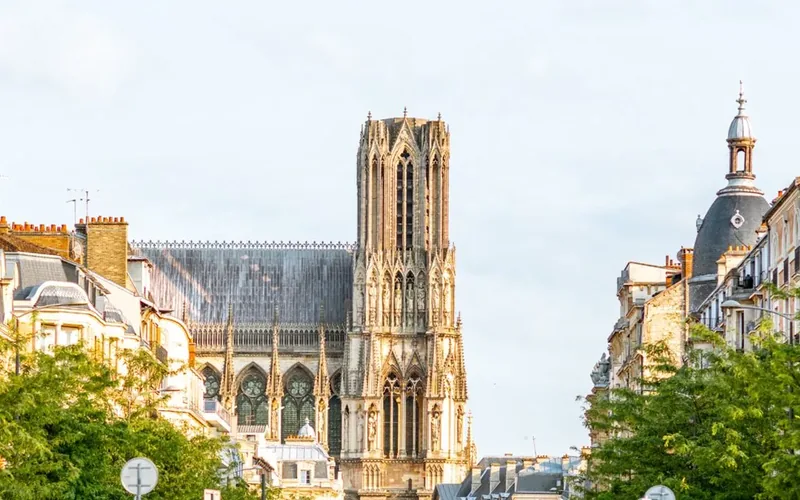
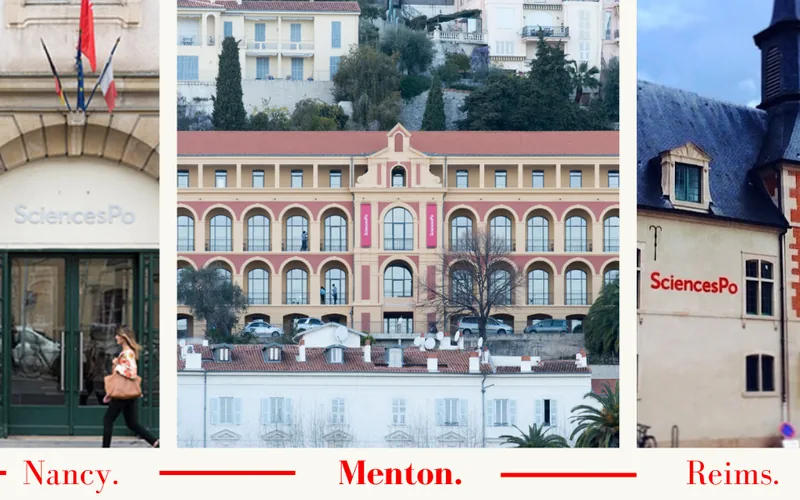
SPMUN returns for its sixth edition taking place in Reims from the 14th to the 16th of November. Bringing together students from all seven Sciences Po Paris campuses for a weekend of high-level simulation, strategic negotiation, and multilateral policy-making.

In a world shaped by ecological collapse, rising authoritarianism, global inequality, and sweeping digital transformations, this year’s theme challenges delegates not just to debate, but to design new frameworks for resilience and reconstruction- across culture, climate, security, and more. It’s a unique opportunity to engage deeply with global issues while engaging and befriending fellow Sciences Po students.

SPMUN 2025 will feature 10 committees, including three high-stakes crisis simulations that test delegates’ ability to think under pressure and respond to rapidly unfolding events. Covering regions from North Africa and the Middle East to Sub-Saharan Africa, Europe, Latin America, and Asia-Pacific, these committees will explore both contemporary dilemmas and historical turning points in English, French, and Spanish.

Important: This conference is open exclusively to Sciences Po Paris (all campuses) students. Applications outside SciencesPo will automatically rejected.

Once you application has been accepted, you can proceed with the payement, not before! (note that if you pay before being accepted and that you are not accepted due to a space issue, you will not be refunded 100% as we will not refund the MyMUN fees of 2-4euros approx.)
Once you are accepted and that you have paid, only then will you be assigned to a committee;. 

For more information please consult our Brochure SPMUN 2025

For help registering, please consult our 2022 Registration Help Manual

For any queries, please consult this email address: spmunreg@gmail.com 

If you need to be hosted in Reims by other SciencesPo students please fill out this form before the 1st of November. 


VERSION FRANÇAISE

SPMUN revient pour sa sixième édition, qui se tiendra à Reims du 14 au 16 novembre. L'événement rassemblera des étudiants issus des sept campus de Sciences Po Paris pour un week-end de simulation de haut niveau, de négociation stratégique et d’élaboration de politiques multilatérales.

Dans un monde marqué par l’effondrement écologique, la montée de l’autoritarisme, les inégalités mondiales et les transformations numériques à grande échelle, le thème de cette année invite les délégués non seulement à débattre, mais aussi à concevoir de nouveaux cadres de résilience et de reconstruction - qu’il s’agisse de culture, de climat, de sécurité, et plus encore. C’est une occasion unique de se plonger dans les grands enjeux internationaux tout en échangeant et en tissant des liens avec d'autres étudiants de Sciences Po.

SPMUN 2025 comptera 10 comités, dont trois simulations de crise à fort enjeu qui mettront à l’épreuve la capacité des délégués à réfléchir sous pression et à réagir à des événements en évolution rapide. Couvrant des régions allant de l’Afrique du Nord et du Moyen-Orient à l’Afrique subsaharienne, l’Europe, l’Amérique latine et la région Asie-Pacifique, ces comités exploreront à la fois des dilemmes contemporains et des tournants historiques, en anglais, français et espagnol.

Important : Cette conférence est exclusivement ouverte aux étudiants de Sciences Po Paris (tous campus). Toute candidature extérieure sera automatiquement rejetée.

Une fois que votre demande d'inscription a été acceptée, seulement à ce moment là devez-vous payer, pas avant! (veuillez notez que si vous payez avant d'être acceptée, et que nous ne pouvons accepter votre demande du à un nombre de places limités, vous ne serez remboursés à 100% car nous ne rembourserons pas les fais de MyMUN d'environ 2-4euros)
Un rôle vous sera attribué seulement une fois que votre demande est acceptée et que vous avez payé. 

Pour obtenir de l’aide pour l’inscription, veuillez consulter notre 2022 Guide aux Inscriptions. 

Pour plus d'indications concernant la conférence, veuillez consulter la Brochure SPMUN 2025 

Pour toute question, merci de contacter cette adresse : spmunreg@gmail.com

Si vous avez besoin d'être hébergé sur Reims par d'autres étudiants de SciencesPo, merci de bien vouloir remplir ce questionnaire avant le 1er Novembre. 
 

Committees

  • 15 countries
    1. Protecting Linguistic and Cultural Diversity in the MENA region in the Digital Age of the 21st century
    • Aloysius Lee
    • Bianca Barchiesi

    UNESCO (United Nations Educational, Scientific and Cultural Organisation) (EN)

    Beginner · English · 15 countries

    Topic

    Protecting Linguistic and Cultural Diversity in the MENA region in the Digital Age of the 21st century

    About the committee

    The Middle East and North Africa (MENA) is home to an extraordinary wealth of languages, cultures, and traditions. From Arabic dialects and Amazigh languages to Persian, Kurdish, and minority tongues, this diversity forms a crucial part of the region’s identity. Yet today, it is under threat. Globalisation, political instability, migration, and the dominance of a few global languages online have placed many of these traditions at risk of decline or disappearance. The digital age has accelerated this trend. Most online platforms and technologies privilege dominant languages such as English, Modern Standard Arabic, and French, often excluding smaller languages from meaningful representation. However, digital tools also present new opportunities for the preservation and promotion of cultural diversity—through digital archiving, content creation in local languages, online education, and cultural exchanges. This committee will examine how the MENA region can protect its linguistic and cultural diversity in the face of digital globalisation. Delegates will consider the role of national education systems, civil society, and international frameworks such as UNESCO’s Convention for the Safeguarding of the Intangible Cultural Heritage. Central questions include: How can governments and international bodies ensure equal access for marginalised languages in the digital sphere? How can digital platforms be encouraged to promote cultural inclusivity? And how can policies balance modernisation, innovation, and the preservation of heritage?

    Chairs

    Countries

    How this committee type works
  • 15 countries
    1. Encadrer l’usage militaire de l’intelligence artificielle: vers un traité sur les armes autonomes létales
    • Mayssa Haddouk
    • ines Saidi

    DISEC (Disarmament and International Security Committee) (FR)

    Expert · French · 15 countries

    Topic

    Encadrer l’usage militaire de l’intelligence artificielle: vers un traité sur les armes autonomes létales

    About the committee

    Le développement rapide de l’intelligence artificielle (IA) bouleverse profondément les stratégies et les capacités militaires. L’un des aspects les plus controversés est l’émergence des armes autonomes létales (AAL), capables de sélectionner et d’engager des cibles sans intervention humaine directe. Si certains États voient dans ces technologies un atout stratégique et un moyen de renforcer leur sécurité nationale, d’autres soulignent les dangers liés à la perte de contrôle humain, aux risques d’escalade incontrôlée et aux violations potentielles du droit international humanitaire. L’absence de cadre juridique global alimente les appels en faveur d’un traité international visant à interdire ou réguler l’utilisation militaire de l’IA. Les enjeux sont multiples : garantir un « contrôle humain significatif », concevoir des mécanismes de vérification crédibles dans un domaine hautement technologique, prévenir une nouvelle course aux armements, et concilier innovation scientifique avec les impératifs de sécurité collective. Les délégués seront invités à examiner des perspectives divergentes : faut-il interdire totalement les armes autonomes, à l’image des traités sur les armes chimiques ou biologiques, ou plutôt privilégier une régulation encadrant leurs usages et fixant des normes éthiques ? Comment prévenir la prolifération de ces armes auprès d’acteurs non étatiques ? Et comment s’assurer que les grandes puissances respecteront les engagements pris ? En répondant à ces questions, le comité devra affronter l’un des dilemmes sécuritaires les plus complexes et pressants du XXIᵉ siècle.

    Chairs

    Countries

    How this committee type works
  • 15 countries
    1. Combined Policy Committee on Atomic Energy, 1943 – The Creation of the Manhattan Project and the Dawn of the Nuclear Age
    • Joao Corbett
    • Anthony Park

    Scientific Advisory Council Specialized Agency (EN) - Historical Decisions Committee

    Expert · English · 15 countries

    Topic

    Combined Policy Committee on Atomic Energy, 1943 – The Creation of the Manhattan Project and the Dawn of the Nuclear Age

    About the committee

    In 1943, the United States, United Kingdom, and Canada formed the Combined Policy Committee on Atomic Energy to oversee the Manhattan Project, the secret program that would change warfare and geopolitics forever. Delegates must decide the direction of nuclear research during WWII, confront espionage threats, and debate whether the bomb should be used against Japan. The committee faces a clear divide: some push for immediate use to secure victory, others warn of catastrophic ethical and humanitarian consequences, while a few remain torn between scientific ambition and moral restraint. Beyond strategy, delegates must grapple with the hidden costs: the exploited labor of Oak Ridge “Calutron Girls,” Indigenous uranium miners, and the victims of the most catastrophic nuclear bomb of history. National interests also clash, all while postwar global control of nuclear power looms large. This is a rich and complex committee, requiring delegates to balance military necessity, scientific ethics, worker justice, and national prestige, knowing that their choices will echo far beyond 1945.

    Chairs

    Countries

    How this committee type works
  • 15 countries
    1. The question of reviewing the ongoing crisis in Kashmir
    • Eva Golstein
    • Franzcesca Chiara De La Cruz

    SPECPOL (Special Political and Decolonisation Committee) (EN)

    Expert · English · 15 countries

    Topic

    The question of reviewing the ongoing crisis in Kashmir

    About the committee

    In 1947, the partition of British India gave rise to one of the world’s most contested regions: Kashmir. While commonly referred to today as Kashmir, the area was known as Jammu and Kashmir, indicating the diversity of the former princely state, which included the Kashmir Valley, Jammu, and Ladakh. Claimed by both India and Pakistan, Kashmir has endured countless hardships that keep the region tense and unpredictable: wars, cross-border militancy, heavy militarisation, human rights abuses, persistent violence, and economic stagnation. The conflict stretches far beyond borders, with neither India nor Pakistan able to resolve it alone. UN efforts, such as monitoring the ceasefire line since 1948, have struggled to bring lasting peace. Rebellion, contested elections, and calls for a referendum have deepened divisions, while global powers remain uncertain how - or even whether - to assist find a solution. What is the future of Kashmir? Can peace ever be secured between two nuclear rivals, or will old wounds once again erupt into violence? This committee must decide whether Kashmir’s conflict stays frozen, leaving generations trapped in fear, or whether the UN and the global community can finally help move the region towards a future long denied. Language: English

    Chairs

    Countries

    How this committee type works
  • 15 countries
    1. Coopération économique face au regain du protectionnisme commercial
    2. Renforcement de la paix et de la sécurité internationales face à la fragmentation géopolitique
    • Pablo Rodriguez Robert
    • Julian Quintana

    G20 (EN)

    Intermediate · English · 15 countries

    Topics

    1. Coopération économique face au regain du protectionnisme commercial
    2. Renforcement de la paix et de la sécurité internationales face à la fragmentation géopolitique

    About the committee

    Unlike intergovernmental organizations established by multilateral treaties and characterized by a centralized structure, the G20 stands out for its inherently more informal mode of operation. It can thus be defined as an intergovernmental forum for economic, financial and, to some extent, political cooperation, within which the leaders of twenty industrialized and emerging states seek to collectively respond to various global challenges. The members of the G20 epresent nearly 90% of global GDP, 66% of the world’s population, 80% of global trade, and 80% of investment in research and development (Argentine Government). The Group was born as a result of the Asian financial crisis in 1999, and it was established after a meeting of Finance Ministers and central bank governors convened by the G7. Although it was created as a tool for economic cooperation and coordination in response to global economic crises, the G20 now also discusses and acts on issues such as trade, sustainable development, health, agriculture, energy, the environment, climate change, and the fight against corruption, among others. The two proposed topics are examples of large-scale challenges to be addressed by the international community at the level of heads of state. Both the commercial and economic threats to global growth, as well as security concerns, are urgent issues that the committee must address.

    Chairs

    Countries

  • 16 countries
    1. Ressources, Puissances et Peuple
    • Mathilde Le Blanc Braouézec
    • Helena Fernandez Garrido

    Commission spéciale des Nations Unies sur le Congo (Crise) (FR)

    Intermediate · French · 16 countries

    Topic

    Ressources, Puissances et Peuple

    About the committee

    Le futur de la République démocratique du Congo est plus qu’incertain. Le pays se trouve à l’intersection de crises humanitaires, environnementales et politiques qui se nourrissent entre elles. À l’est du pays, la guerre du Kivu fait rage. Griefs historiques, tensions ethniques, intérêts locaux, nationaux et internationaux et convoitise des ressources naturelles congolaises déchirent la région depuis des années. Pendant ce temps, les grandes multinationales de la tech en profitent. Elles sont accusées de pollution massive, d’exploitation de travailleurs et de financement de plusieurs milices qui continuent à terroriser les populations locales. Le parc national de Virunga est d’ailleurs fortement menacé de par la déforestation et la disparition de sa population de gorilles, espèce protégé. Comment la communauté internationale peut-elle aider la RDC à garder la souveraineté sur son territoire mais aussi protéger les droits humains des peuples indigènes et les parcs nationaux menacés?

    Chairs

    Countries

    How this committee type works
  • 15 countries
    1. Brushstrokes or Algorithms? The Place of AI in Art

    • Alexia-Nicole Diaconescu
    • Yamen Alhilawi

    World Intellectual Property Organization (WIPO) / Artistic Committee (EN)

    Beginner · English · 15 countries

    Topic

    Brushstrokes or Algorithms? The Place of AI in Art

    About the committee

    The widespread use of AI has flooded the artistic landscape with uncertainties. Once seen as a uniquely human endeavor, artistic expression is now being replicated – and sometimes surpassed – by algorithms trained on vast datasets of human-made works. This disruption raises cultural, ethical, and economic questions: can an AI-generated painting be considered “authentic”? Should artists be compensated when their work is used to train algorithms? And what happens to cultural heritage in a world where machines can mass-produce styles, images, and voices? In this committee, delegates will represent real artists, policymakers, and industry leaders at the heart of the debate. Some will defend traditional artistry and the rights of creators whose work has been stolen without consent, while others will argue for the democratization and accessibility that AI offers. The debate will be marked by sharp clashes: artists vs entrepreneurs, tech CEOs vs policymakers, cultural guardians vs economic opportunists. Following discussions on intellectual property rights, cultural preservation and AI regulation in creative industries, participants will chart a path for the future of art in the age of disruption.

    Chairs

    Countries

  • 15 countries
    1. Assurer des garanties de sécurité européennes après le cessez-le-feu en Ukraine, accompagner la reconstruction du pays et sécuriser les espaces européens frontaliers vulnérables à la menace multidimensionnelle russe.
    • Tristan Van Craeynest
    • Till Taurel

    Sommet de Génève - coalition des volontaires (FR)

    Beginner · French · 15 countries

    Topic

    Assurer des garanties de sécurité européennes après le cessez-le-feu en Ukraine, accompagner la reconstruction du pays et sécuriser les espaces européens frontaliers vulnérables à la menace multidimensionnelle russe.

    About the committee

    Le contexte du comité est le suivant : depuis le 24 février 2022, l’Ukraine est en guerre avec la Russie. Dans un futur proche, un cessez-le-feu fragile a été trouvé grâce à une médiation des États-Unis, soutenue par l’Union européenne. Ce cessez-le-feu prévoit notamment l’impossibilité pour l’Ukraine de rejoindre l’OTAN, en échange d’un arrêt temporaire des combats. Néanmoins, malgré l’apparente stabilité, les services de renseignement des différents pays impliqués rapportent des signes de remobilisation russe qui font craindre une reprise du conflit. Le sommet entre les différents participants doit donc trouver un accord solide afin de prolonger cette trêve et d’éviter une nouvelle escalade. Les objectifs affichés de ce sommet sont triples : premièrement, il s’agit d’obtenir des garanties de sécurité sur le respect du cessez-le-feu pour l’Ukraine. Deuxièmement, il est nécessaire d’accompagner la reconstruction du pays pour favoriser sa stabilité à long terme. Troisièmement, il faudra sécuriser les territoires européens frontaliers de la Russie, notamment les pays baltes et la Finlande, qui sont directement exposés aux pressions et attaques hybrides russes. Les négociations seront encadrées par des règles précises : chaque pays doit défendre ses intérêts nationaux et ne peut pas accepter de décisions contraires à ceux-ci, sauf en cas de compromis réaliste. Les compromis devront être validés par les chairs et intégrés, ou non, dans la déclaration finale.

    Chairs

    Countries

  • 15 countries
    1. Les réfugiés climatiques dans le droit international et leur reconnaissance
    • Romain Yborra
    • Cyliane Lechtanski

    Haut Commissariat des Nations unies pour les réfugiés (UNHCR) (FR)

    Intermediate · French · 15 countries

    Topic

    Les réfugiés climatiques dans le droit international et leur reconnaissance

    About the committee

    Le comité sur les réfugiés climatiques se penche sur l’un des défis les plus pressants du XXIe siècle : les déplacements forcés provoqués par le changement climatique. Ces migrations, déjà visibles à travers la montée du niveau des océans, l’intensification des catastrophes naturelles, la désertification ou encore l’insécurité alimentaire, mettent en lumière la vulnérabilité de millions de personnes à travers le monde. Pourtant, malgré l’ampleur croissante du phénomène, la notion de réfugié climatique ne bénéficie d’aucune reconnaissance juridique dans le droit international, ce qui limite aujourd’hui les possibilités de protection et d’assistance pour les populations concernées. Le travail du comité consiste à réfléchir aux réponses collectives qui pourraient être apportées face à cette situation. Les débats chercheront à interroger la possibilité d’élargir la définition du réfugié, à envisager des mécanismes innovants de solidarité internationale et à discuter du partage des responsabilités entre États, en tenant compte des émissions historiques des pays industrialisés et de la vulnérabilité particulière de nombreux États du Sud. Au croisement du droit, de l’humanitaire et de l’environnement, ce thème invite à repenser la gouvernance mondiale afin d’intégrer la question des déplacés climatiques dans une perspective de justice climatique et de sécurité humaine.

    Chairs

    Countries

    How this committee type works
  • 14 countries
    1. High-stakes Arctic standoff over sovereignty, trade routes, and environmental risks between Canada, the U.S., Russia, China, the EU.
    • Vivi Engebrigtsen
    • Antonio Jose Navarro Lim

    Arctic Council: Contention over the North West Passage (Crisis) (EN)

    Intermediate · English · 14 countries

    Topic

    High-stakes Arctic standoff over sovereignty, trade routes, and environmental risks between Canada, the U.S., Russia, China, the EU.

    About the committee

    As glaciers melt and new sea pathways become more accessible, the Arctic is emerging as a major geopolitical battleground. This is especially clear in the dispute over the Northwest Passage (NWP), where the once-impassable Canadian Arctic is now opening up into navigable waters. While Canada claims the NWP as internal waters, which would empower the country to have oversight and assign permits to those navigating within it, the U.S. and the EU instead argue that it is an international strait, which would have it opened up to free passage. The issue is complicated by the interests of Russia in a Northern Sea Route along with Arctic militarization, as well as China seeking access to shipping and resources to create a “Polar Silk Road”. While new trade routes will cut shipping times between Asia, Europe and North America, and energy, minerals and fisheries will be increasingly accessible in the Arctic, the region faces risks of oil spills, ecosystem damage, and threats to Indigenous communities. Later found to be encouraged by the administration, a U.S.-flagged container ship is found transiting through the NWP with a military crew. In protest, Canada dispatches its coastguard, leading to a tense standoff between the countries. Russia, seeing an opportunity to gain a stronghold within the Arctic, proposes security cooperation to Canada. Though China sees this as a beginning step in opening up the Arctic for its “Polar Silk Road”, in order to maintain its own territorial claims arguments, the government purports a neutral stance on the issue. An emergency gathering is called in the Arctic Council. In this Crisis, delegates must balance security and cooperation with the protection of national interests, global interests and environmental stewardship. This multivariate issue is quickly updating and of imminent concern, raising questions such as how tense issues might be solved through international discussion, how the NWP should be governed, how Indigenous perspectives can be included within the debate, and how environmental protection and sovereignty be balanced with global trade and economic development.

    Chairs

    Countries

    How this committee type works

Partner conferences

MEDMUN 2025
Menton, France

View conference
RIMUN XIV 2025

Reims, France

View conference
LHMUN 2025

Le Havre, France

View conference
POITIERSMUN 2025

Poitiers, France

View conference

Organizers

More MUN conferences

ConferencesFranceSPMUN 2025