RIMUN XIV 2025

Reims International MUN XIV

Apr 4–6, 2025 Reims, France

Reims International MUN XIV

Conference

Reims, France·Europe

Apr 4–6, 2025

300 delegates expected

High school and university students

In English and French

How it went

4.4587 ratings from delegates
Academics
4.29
Logistics
4.38
Socials
4.67

About

The End and Rebirth of History

ENGLISH VERSION

What if the story of the world didn’t define your future?

At RIMUN XIV 2025, we’re challenging the narrative. History has shaped civilizations for centuries, but now it’s time to ask: what happens when we move beyond it?

It is with great excitement that the Reims International Model United Nations (RIMUN) team invites you to the latest iteration of our annual conference: RIMUN XIV 2025.

From April 4th–6th, 2025, more than 300 university and high school students will gather on the Reims campus of Sciences Po Paris to debate, negotiate, and collaborate on global challenges. This year’s theme, “The End and Rebirth of History”dares participants to rethink the role of history in shaping our world and create solutions for a future untethered by the past.

Our committees, conducted in English, French, and Spanish, promise exciting and dynamic debates at the heart of Sciences Po Paris’s Reims Campus, home to one of France’s most prestigious institutions in the social sciences (QS 2024: 2nd in Political Science and International Relations).

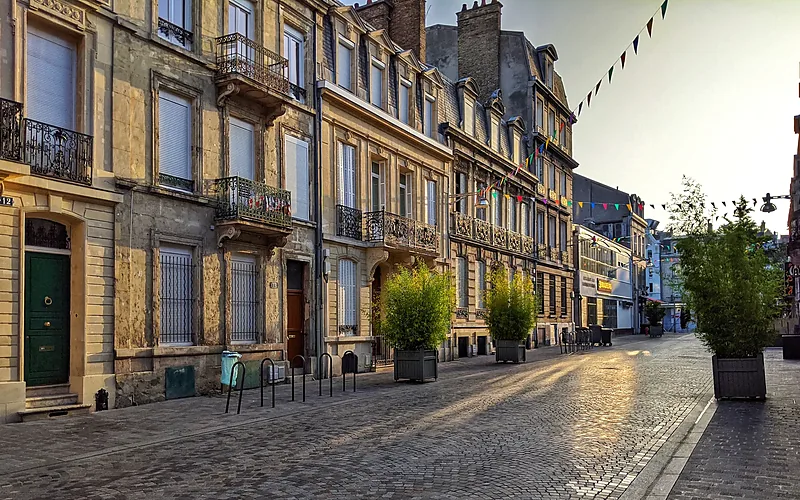
The conference will also include a gala on the evening of Saturday, April 5th, celebrating the culture and legacy of Reims, the historic City of Kings.

Key Information:

  • Dates: April 4–6, 2025
  • Location: Sciences Po Paris, Reims Campus
  • Accommodation: Not provided

More details will be released in the run up to the conference. If you have any inquiries, please write to us at rimun.reims@sciencespo.fr.

We cannot wait to see you in France's City of Kings!

Brochure in ENGLISH: https://www.canva.com/design/DAF2oUg6NTo/AGbYmGRz9NlrhG4h1tZFeg/view?utm_content=DAF2oUg6NTo&utm_campaign=designshare&utm_medium=link&utm_source=editor

Brochure en FRANÇAIS: https://www.canva.com/design/DAF2PInfvhs/4_97b_5oEDtOmYhqYnQPsg/view?utm_content=DAF2PInfvhs&utm_campaign=designshare&utm_medium=link&utm_source=editor

For help with MyMUN, consult our Registration Guide: https://docs.google.com/document/d/1e8f1g79bzjSAvDYL6BrzqULyne0thE1eQiwsrSEsY2E/edit?usp=sharing

In the case of any questions regarding refunds,, you may find our refund policy linked here: https://docs.google.com/document/d/11NJ5nuOEFFCkD_KvKucNwju7pUirXdoWgpRnBJtpJEw/edit?usp=sharing


If you are a minor (under 18), you must fill out the Minor Waiver Form by March 17th.

Minor Waiver LINK: https://docs.google.com/forms/d/e/1FAIpQLSd24qvyfdm4HF3Desj-LJR8RzAFkaCXqi_xR23cPCaKZQXFHA/viewform?usp=dialog


VERSION FRANÇAISE

Et si l'histoire du monde ne définissait plus votre avenir ?

À RIMUN XIV 2025, nous remettons en question la narration. L’histoire a façonné les civilisations pendant des siècles, mais il est temps de se demander : que se passe-t-il lorsque nous nous affranchissons de son influence ?

C’est avec un immense plaisir que l’équipe du Reims International Model United Nations (RIMUN) vous invite à la dernière édition de notre conférence annuelle : RIMUN XIV 2025.

Du 4 au 6 avril 2025, plus de 300 étudiants universitaires et lycéens se réuniront sur le campus de Sciences Po Paris à Reims pour débattre, négocier et collaborer autour des défis mondiaux. Cette année, le thème « La Fin de L’Histoire, La Réinvention des Recits  »invite les participants à repenser le rôle de l’histoire dans la construction de notre monde et à imaginer des solutions pour un avenir libéré des contraintes du passé.

Nos comités, organisés en anglais, français et espagnol, promettent des débats passionnants et dynamiques au cœur du campus de Sciences Po Paris à Reims, siège de l’une des institutions les plus prestigieuses de France en sciences sociales (QS 2024 : 2e en sciences politiques et relations internationales).

La conférence comprendra également un gala le samedi soir 5 avril, célébrant la culture et le patrimoine de Reims, la Ville des Rois.

Informations Clés :

  • Dates : 4 au 6 avril 2025
  • Lieu : Campus de Sciences Po Paris, Reims
  • Hébergement : Non fourni

Si vous rencontrez des problèmes pour soumettre vos candidatures en tant que délégué ou président en raison de messages d'erreur récurrents, veuillez contacter info@mymun.com. Nous vous prions de nous excuser pour tout désagrément que cela pourrait causer.

Pour toute aide concernant MyMUN, consultez notre guide d'inscription: https://docs.google.com/document/d/1e8f1g79bzjSAvDYL6BrzqULyne0thE1eQiwsrSEsY2E/edit?usp=sharing

Committees

  • 26 countries
    1. The Fall of the Berlin Wall Crisis (1989)
    • Nhan Phan
    • Eleni Protopapa

    UN Historical Security Council (EN)

    Beginner · English · 26 countries

    Topic

    The Fall of the Berlin Wall Crisis (1989)

    About the committee

    For the past 50 years, Europe has been divided by an iron current seperating the American aligned capitalist west and the Soviet aligned communist east. Protests have begun in Berlin against the communist dictatorship and the Berlin Wall (a symbol of oppresion) is being targeted. The potential fall of East Germany could result in the total collapse of the Soviet sphere. The UN security council has convened to determine a reaction to these developments with a goal of preventing future conflict and instablity. Will the Soviet Union decide to crush these revolts? or will Europe enter a new era free from divisons?

    Chairs

    Countries

    How this committee type works
  • 25 countries
    1. Crisis on the Redivision of Antarctica and the Future Cold War
    • Yamen Alhilawi
    • Kee Hung Giam

    Futuristic Antarctic Council (EN)

    Intermediate · English · 25 countries

    Topic

    Crisis on the Redivision of Antarctica and the Future Cold War

    About the committee

    The Second Cold War? The Cold, Cold War? Behold the intriguing and one-of-a-kind committee: Futuristic Antarctic Council of 2048. Confronted with the hypothetical situation by which the Antarctic Treaty unravels under insurmountable growing political and environmental pressures, global leaders and integral actors confront an impending crisis that could reshape the world order. Alas, Antarctica has become the new frontier in a complex build-up and unfolding of a potential second Cold War. Heads of State, environmental advocates, powerful representatives of industrial coalitions, and unique actors gather to navigate conflicting interests over territory, resources, and governance. As ice melts and nations push boundaries, delegates must grapple with the intricacies that lie with high-stake challenges: from safeguarding fragile ecosystems to averting militarization and managing separatist factions. In this race for influence, every decision dictates a change to the course of history and order. Will Antarctica remain a protected wilderness serving the interest of the many or become a battleground for power in search of the few that conquer?

    Chairs

    Countries

    How this committee type works
  • 25 countries
    1. The Problem of Space Demilitariasation
    • Skye Visser
    • Guillaume Trouvé

    General Assembly (FR)

    Beginner · French · 25 countries

    Topic

    The Problem of Space Demilitariasation

    About the committee

    This subject combines diplomacy as well as a small share of international law as delegates will have to engage with the treaty on Principles Governing the Activities of States in the Exploration and Use of Outer Space, including the Moon and Other Celestial Bodies. They will discuss the future nature of human's activities in space as well as their geopolitical implications.

    Chairs

    Countries

    How this committee type works
  • 25 countries
    1. The Preservation of World Heritage Sites from Terrorism
    • Mathilde Le Blanc Braouézec
    • Alice Watelet

    UNESCO (FR)

    Beginner · French · 25 countries

    Topic

    The Preservation of World Heritage Sites from Terrorism

    About the committee

    Welcome to the UNESCO Committee on Preserving World Heritage Sites from Terrorism. In a world where cultural heritage faces mounting threats from armed conflict and extremist attacks, this committee brings together government officials to address the imperativeness of protecting and preserving humanity's blueprint of shared heritage. With landmark sites in regions like the Middle East, Africa, and beyond under constant risk, delegates will navigate strategies under difficult conditions to best prevent the destruction and exploitation of irreplaceable artifacts and monuments. This committee challenges delegates to find innovative solutions that balance security, cultural preservation, and international cooperation. As delegates, you’ll have the unique opportunity to address a pressing global issue with far-reaching implications for cultural identity, memory, and resilience.

    Chairs

    Countries

    How this committee type works
  • 29 countries
    1. EU Refugee Crisis: Addressing Repatriation Policies
    • Sotirios Hatzipetros
    • Jimena Díaz Benitez

    European Council (EN)

    Intermediate · English · 29 countries

    Topic

    EU Refugee Crisis: Addressing Repatriation Policies

    About the committee

    This European Council committee addresses the issue of refugee repatriation policies by bringing together EU leaders and the United Kingdom with the objective of debating diverse perspectives to balance humanitarian obligations with national interests. Throughout the discussions, the delegates are invited to examine the European Union's role in fair and sustainable repatriation strategies and to propose pathways for integration while also addressing the potential impacts on regional security. As the bloc faces increasing migration pressures, this council aims to develop strategies that focus on stability and respect for human rights, in order to foster collaborative, multilateral and sustainable migration management solutions.

    Chairs

    Countries

    How this committee type works
  • 25 countries
    1. University Encampents, Sanctions, and Divestment
    • Alexia Espinoza Vlad
    • Helena Fernandez Garrido

    Inter-University Council (EN)

    Beginner · English · 25 countries

    Topic

    University Encampents, Sanctions, and Divestment

    About the committee

    Welcome to the Model UN committee addressing the 2024 global pro-Palestine encampments and protests at universities. As student movements gain unprecedented momentum worldwide, university presidents and their student representatives will convene to tackle the urgent and complex issues surrounding these protests. With thousands of students advocating for justice and awareness, the committee highlights the significant role that educational institutions play in shaping public discourse and social responsibility. This gathering will also include key figures such as the Mayor of New York City, emphasizing the broader implications of these protests on local communities and national policies. As delegates engage in critical discussions, they must seek collaborative solutions that honor student voices while addressing administrative concerns and community relations. The committee aims to foster dialogue, promote understanding, and ultimately find pathways to support peaceful advocacy, recognizing the profound impact of these movements on global human rights and justice.

    Chairs

    Countries

  • 25 countries
    1. Venezuelan Election Crisis
    • Joao Corbett
    • David-antonio Gheorghiu

    Maduro and Gonzalez's Cabinets (EN)

    Intermediate · English · 25 countries

    Topic

    Venezuelan Election Crisis

    About the committee

    Participate in one of the most consequential "elections" of 2024. Increasingly authoritarian since Hugo Chavez's election as President of the Republic, Venezuela has suffered from severe mismanagement, political corruption, and civic oppression. Various efforts have been made to remove the current ruling United Socialist party, including through mass riots and civil disobediance often leading to violent confrontation. The 2024 elections provide an opportunity to further delegitimize the Maduro regime and possibly bring a change of government. Will Maduro relinquish power peacefully? and can democracy finally come to Venezuela?

    Chairs

    Countries

    How this committee type works
  • 25 countries
    1. Crise Est-Timoraise de 1999
    • Jimena Vivero Porras
    • Mathilde Pol Loison

    Comité du désarmement et de la sécurité internationale (FR)

    Intermediate · French · 25 countries

    Topic

    Crise Est-Timoraise de 1999

    About the committee

    En 1999, le monde a assisté à une crise majeure au Timor oriental, une situation qui allait mettre à l’épreuve les forces de maintien de la paix et déstabiliser les puissances régionales, testant ainsi la détermination de la communauté internationale. Après avoir voté massivement en faveur de l’indépendance vis-à-vis de l’Indonésie, à la suite de décennies de conflits, les conséquences furent lourdes. La violence a explosé, des villages ont été incendiés, et des milliers de personnes ont fui, posant une question cruciale : la communauté internationale doit-elle intervenir, et si oui, comment ? En tant que délégués du DISEC, vous vous trouvez à un carrefour. Cette crise exige une diplomatie fine, mais aussi un équilibre délicat entre l’intervention et le respect de la souveraineté. Des forces de maintien de la paix doivent-elles être envoyées — et à quel prix ? Les pressions diplomatiques peuvent-elles suffire à atténuer l’effusion de sang, ou faudra-t-il aller plus loin ? Le sort du Timor oriental est entre vos mains. Jusqu’où êtes-vous prêts à aller pour protéger la paix ?

    Chairs

    Countries

    How this committee type works
  • 25 countries
    1. La crise de la chute de Kadhafi
    • Cecile Montocchio
    • Zoé Tournier

    Ligue Arabe (FR)

    Intermediate · French · 25 countries

    Topic

    La crise de la chute de Kadhafi

    About the committee

    Nous sommes en 2011 et la Libye est en ébullition. Alors que la main de fer de Mouammar Kadhafi, au pouvoir depuis 42 ans, s'efface, le monde arabe se trouve à un moment charnière. La chute de Kadhafi a déclenché le chaos en Afrique du Nord, marqué par des interventions étrangères et un vide de pouvoir qui risque de déstabiliser toute la région. Les réfugiés traversent les frontières, les groupes militants s'emparent du pouvoir et la Libye devient un champ de bataille pour l'influence régionale. Lors de cette session spéciale de la Ligue arabe, à laquelle participent des États occidentaux clés, les délégués sont confrontés à une série de questions complexes aux conséquences considérables : comment le monde arabe doit-il répondre à la crise ? Les puissances régionales peuvent-elles s'unir pour stabiliser la Libye, ou des intérêts étrangers vont-ils fracturer la réponse de la Ligue arabe ?

    Chairs

    Countries

    How this committee type works
  • 27 countries
    1. 2008 Subprime Mortgage Crisis
    • Markandeya Karthik
    • Helena Seibert

    IMF G20: Board of Governors (EN)

    Expert · English · 27 countries

    Topic

    2008 Subprime Mortgage Crisis

    About the committee

    Welcome to the IMF's Board of Governors committee, set in the tumultuous days following the collapse of Lehman Brothers in September 2008. As the global economy teeters on the brink of a severe recession, delegates will represent G20 nations alongside the European Union, African Union, ASEAN, and the World Bank, within the IMF's highest governing body, the Board of Directors, all grappling with the urgent need for coordinated financial solutions. This committee will focus on strategies to stabilize the international financial system, address the root causes of the subprime mortgage crisis, and mitigate its far-reaching effects on economies worldwide. Delegates will engage in intense negotiations to devise policy measures, establish emergency funding mechanisms, and promote economic recovery while navigating the complex interplay of national interests and global accountability. Together, they must forge a path toward resilience and reform in a rapidly changing economic landscape.

    Chairs

    Countries

  • 14 countries
    1. Yugoslavian War Crisis
    • Romain Rapuc
    • Julieta Betancourt

    NATO Military Committee 1991 - 2001 (EN/FR)

    Expert · English · 14 countries

    Topic

    Yugoslavian War Crisis

    About the committee

    Plunge yourself in one of the most important post world war crisis combining war, genocidal acts and strategic interests. Your diplomatic abilities will be pushed to the extreme as you will have to bargain and find solutions for peace as the war in carried out in front of your eyes. Indeed, this is a crisis committee weaving military and diplomatic roles. Thus we seek to reunite in the same room various domains that shape the international relations to provide you with the most thrilling and complete experience.

    Chairs

    Countries

    How this committee type works
  • 10 countries
    1. Dealing with the Rwandan Genocide
    • Natalia Salcedo
    • Perrine Capelli

    Gacaca Court Council (FR)

    Expert · French · 10 countries

    Topic

    Dealing with the Rwandan Genocide

    About the committee

    Après le génocide Rwandais de 1994, au cours duquel 500 000 à 800 000 Tutsis ont été tués par la majorité Hutue, le gouvernement a rétabli les tribunaux Gacaca pour traiter à la fois les meurtres et les viols à grande échelle et les crimes moins graves comme le vol et la destruction de biens. Gacaca, qui signifie « herbe courte » en Kinyarwanda, désignait à l'origine les rassemblements communautaires destinés à régler les différends locaux. En 2001, le gouvernement Rwandais a adapté cette tradition pour créer un nouveau système judiciaire destiné à juger les personnes soupçonnées de génocide. Les juridictions Gacaca ont traité près de 2 millions de cas entre 2005 et 2012, avec des peines allant jusqu'à 30 ans, en fonction de la gravité du crime. Les procès sont publics, en Kinyarwanda, et encouragent la participation de la communauté. Dans ce comité, les délégués auront l'occasion de simuler un tribunal Gacaca, ce qui leur permettra de mieux comprendre les défis liés à l'élaboration d'un véritable procès tout en équilibrant et en conciliant les différentes perspectives sur les événements du génocide.

    Chairs

    Countries

    How this committee type works
  • 28 countries

    "Journalism is the first draft of history", a phrase coined by Phillip Graham and since applied to the significance of the press as a tool for understanding the past and documenting the present. Recognising the significance of the free press, this edition of RIMUN invites delegates to embody the role of the journalist. Each delegate will be assigned to a committee, which for the duration of the weekend will be their journalistic focus, documenting crisis updates, resolutions, and speeches in real-time through breaking news articles, photography, and editorials. No formal debate will occur during committee, rather these delegates will serve as the eyes and ears of the conference, honing their journalistic craft and witnessing the unfolding debate. Journalism will be conducted in the language of the committee, so take care to register for a committee conducted in a language you are comfortable reporting in. Important note: there are no Chairs for this committee!

    Press Corps

    English · 28 countries

    About the committee

    "Journalism is the first draft of history", a phrase coined by Phillip Graham and since applied to the significance of the press as a tool for understanding the past and documenting the present. Recognising the significance of the free press, this edition of RIMUN invites delegates to embody the role of the journalist. Each delegate will be assigned to a committee, which for the duration of the weekend will be their journalistic focus, documenting crisis updates, resolutions, and speeches in real-time through breaking news articles, photography, and editorials. No formal debate will occur during committee, rather these delegates will serve as the eyes and ears of the conference, honing their journalistic craft and witnessing the unfolding debate. Journalism will be conducted in the language of the committee, so take care to register for a committee conducted in a language you are comfortable reporting in. Important note: there are no Chairs for this committee!

    Countries

    How this committee type works
  • 22 countries
    1. Le génocide Rohingya
    • Joana Le Louarn
    • Alexis Brian

    Haut Commissariat des Nations unies pour les réfugiés (FR)

    Intermediate · French · 22 countries

    Topic

    Le génocide Rohingya

    About the committee

    Le génocide des Rohingyas au Myanmar est une campagne permanente et dévastatrice de persécution et de violence contre la population musulmane des Rohingyas par l'armée du Myanmar (Tatmadaw) et les groupes nationalistes bouddhistes. Les violences ont atteint leur paroxysme en août 2017, lorsque plus de 700 000 Rohingyas ont fui vers le Bangladesh voisin. Nombre d'entre eux sont contraints de vivre dans des campements surpeuplés dans des conditions déplorables, avec un accès limité aux produits de première nécessité tels que la nourriture, les soins de santé et l'éducation, alors que les pays qui accueillent ces réfugiés luttent contre l'insuffisance des ressources pour répondre à leurs besoins. Lors de cette conférence, les délégués auront l'occasion de proposer des solutions innovantes pour prévenir le génocide à la base en engageant un dialogue avec les responsables du Myanmar et les représentants du gouvernement, ainsi qu'en développant des programmes visant à améliorer les conditions de vie des réfugiés rohingyas. Les délégués auront également l'occasion de représenter les deux côtés des crises de réfugiés : les pays confrontés à des persécutions similaires, comme le Soudan et l'Éthiopie, ainsi que les nations d'accueil, comme l'Ouganda et le Kenya, qui sont responsables de l'hébergement d'un grand nombre de personnes déplacées à l'intérieur du pays.

    Chairs

    Countries

    How this committee type works
  • 20 countries
    1. Comité d’introduction aux Nations Unies
    Cordee de la Reussite

    Beginner · English · 20 countries

    Topic

    Comité d’introduction aux Nations Unies
    About the committee

    À quoi sert l’Organisation des Nations Unies? Comment les décisions y sont-elles prises? Qu’est-ce que le Conseil de Sécurité? Quelles majeures décisions ont marquée l’histoire de l’ONU? Voici une poignée des questions auxquelles nous répondrons durant ce comité de découverte de l’ONU. Pas à pas, nous reviendrons sur les décisions emblématiques prises par l’organisme de sa création jusqu’à aujourd’hui, tout en vous familiarisant avec le fonctionnement des « Model United Nations », c’est-à-dire des simulations des Nations Unies. Chaque année, des centaines d'établissements d'enseignement de tous niveaux organisent ce type de conférence afin d'engager les jeunes personnes dans des débats et des conversations diplomatiques qui ressemblent à ceux qui se déroulent aux Nations Unies. Le format peut sembler quelque peu intimidant au début, et c’est pourquoi nous vous proposons un comité introductif qui vous inculquera à la fois des connaissances théoriques sur l’ONU, mais aussi des compétences qui vous seront utiles tout au long de vos parcours académiques et professionnels. Guidés par des étudiants de Sciences Po, vous apprendrez à débattre, convaincre tout en étant succinct, formuler des opinions, collaborer et rester à l’écoute des autres. Et qui sait, peut-être que l’an prochain, devenus de réels experts en MUNs, nous vous retrouverons dans les comités classiques de RIMUN!

    Countries

Past editions

  • 4editions since 2022
  • 4.43 average of 324 ratings
  • 4+in every rated edition

Partner conferences
Sciences Pistes MUN 2024

Menton, France

View conference

Organizers

More MUN conferences

ConferencesFranceRIMUN XIV 2025