Sciences Pistes MUN 2024

SPMUN

Nov 15–17, 2024 Menton, France

SPMUN

Latest edition: SPMUN 2025Nov 14–16, 2025

Conference

Menton, France·Europe

Nov 15–17, 2024

250 delegates expected

University students

In English and French

How it went

4.6079 ratings from delegates
Academics
4.49
Logistics
4.71
Socials
4.61

About

Defending Democracy: Institutions at Work

ENGLISH VERSION

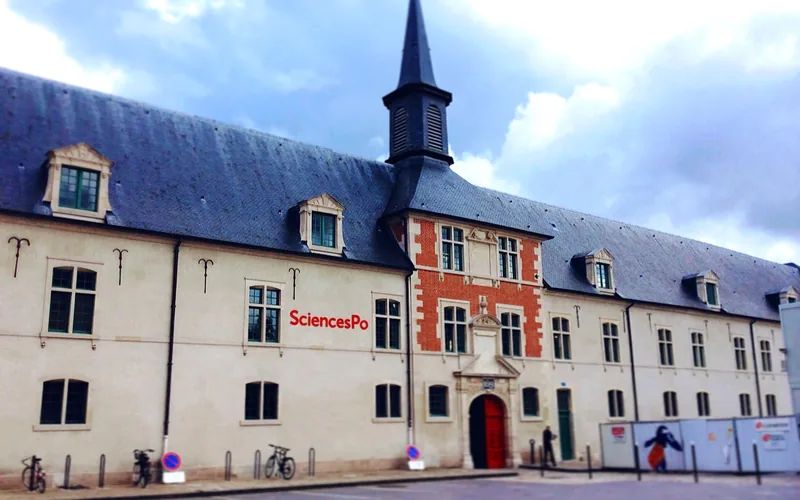
SPMUN is a Model UN conference organized by and for Sciences Po Paris students This year, it returns for its fifth edition, held in the beautiful city of Menton from November 15- 17. 

Chair applications are open from September 14th to October 27th, whilst delegate applications are open from September 21st to November 5th.

Important: This conference is open to Sciences Po Paris students only (all campuses). All outside applications will be rejected.

For help registering, please consult our 2022 Registration Help Manual | Si vous avez besoin d'aide pour vous inscrire, n'hésitez pas à consulter notre 2022 Guide aux Inscriptions.

Note: our email for any application or committee questions this year is spmunreg@gmail.com

For any questions on refunds, see our Payment and Refund policy statement here: https://docs.google.com/document/d/101vYP9KNGv5ZdPby_KC1Mj5JL363AgN_GNxt1I3cES4/edit?usp=sharing


VERSION FRANÇAISE

SPMUN est une conférence MUN (modèle des Nations Unies) organisée par et pour des étudiants de Sciences Po Paris. Cette année, SPMUN revient pour sa 5ème édition et se tiendra du 15 au 17 novembre dans la belle ville de Menton. 

Les candidatures pour devenir président de comité seront ouvertes du 14 septembre au 27 octobre. Les candidatures pour être délégué seront ouvertes du 21 septembre au 5 novembre.

Attention : Cette conférence est uniquement ouverte aux étudiants de Sciences Po Paris (tous campus). Toute candidature extérieure sera refusée.

Notre adresse électronique pour toute question concernant votre candidature ou comité cette année est spmunreg@gmail.com

Pour toute question sur les remboursements, consultez notre déclaration de politique de paiement et de remboursement ici : https://docs.google.com/document/d/101vYP9KNGv5ZdPby_KC1Mj5JL363AgN_GNxt1I3cES4/edit?usp=sharing


Committees

  • 18 countries
    1. La Guerra de España
    • Helena Fernandez Garrido
    • Patricio Andújar Salas

    League of Nations Council (SP)

    Intermediate · English · 18 countries

    Topic

    La Guerra de España

    About the committee

    España, agosto de 1936. Ya hace un mes que los generales africanistas se sublevaron en Marruecos y en todo el país. Resiste la República en la cornisa cantábrica y de Madrid hasta el levante. Son días de incertidumbre, de división, de miedo: se está jugando la suerte de una nación. El mundo posa la mirada sobre una España ensangrentada, buscando conclusiones adelantadas. Las fuerzas golpistas tienen el apoyo bélico del fascismo europeo, mientras que las democracias occidentales olvidan a la República. En Ginebra se suplica el amparo de la Sociedad de Naciones. Es la labor de este comité, una reunión del Consejo, el órgano con mayor fuerza de acción, de decidir la actitud de la comunidad internacional ante la guerra de España. ¿Será posible luchar contra la no intervención? ¿Acaso es esto lo deseable para Europa y el mundo? Este comité os invita a sumergiros en vuestro papel de diplomáticos y, considerando las variantes bélicas, geopolíticas y éticas, debatir por la paz, por el futuro del país y del continente.

    Chairs

    Countries

    How this committee type works
  • 18 countries
    1. Post-Colonialism in South Eastern Asia - The Cold War

    • Joao Corbett
    • Yamen Alhilawi

    Historical United Nations Security Council (EN)

    Intermediate · English · 18 countries

    Topic

    Post-Colonialism in South Eastern Asia - The Cold War

    About the committee

    Two months ago, on the seventh of May 1954 French colonial troops at Ðiện Biên Phủ surrendered to the Viet Minh, marking the end of French colonial rule in Vietnam. However, with this momentous occasion also arose a clear question: what happens next? The Vietnamese people have lived under the oppression of the French since 1862, and their revolutionary victory against the Gauls has upset a peaceful equilibrium in South East Asia – an equilibrium that is necessary for maintaining the Cold War cold, and communism at bay. How will post-colonialism in South Eastern Asia be handled under the auspices of the Cold War? This Historical United Nations Security Council will do its best to find out.

    Chairs

    Countries

    How this committee type works
  • 24 countries
    1. European Independence Movement Crisis
    • Natalia Salcedo
    • Sotirios Hatzipetros

    European Council (EN & FR)

    Expert · English · 24 countries

    Topic

    European Independence Movement Crisis

    About the committee

    In 1849, the French intellectual Victor Hugo called for the creation of the “United States of Europe” as he envisioned a peaceful and united tradeblock that the Maastricht Treaty officially founded in 1992. However, in today’s turbulent geopolitical scene, the European Council is challenged by a crisis that threatens its foundational structure: an increase of independence movements within member states. Indeed, the European Union knows two antithetical processes as its attempts to create a sense of integration are opposed by the rise of separatist desires and regions asking for independence while wishing to remain in the trade block. Catalonia, the Basque Country and Corsica, influenced by nationalism and rooted historical grievances, are currently at the forefront, advocating for secession. This committee will address the extensive implications of these movements as the weight of internal divisions challenges the sovereignty, financial stability, and overall future of the ongoing European project.

    Chairs

    Countries

    How this committee type works
  • 16 countries
    1. L'influence militaire française en Afrique
    • Romain Rapuc
    • Skye Visser

    African Union (FR)

    Beginner · French · 16 countries

    Topic

    L'influence militaire française en Afrique

    About the committee

    Le colonialisme français n'a connu aucune limite en Afrique. Même aujourd'hui, des décennies après la fin officielle de l'occupation française sur le continent, il est indéniable que la nation gauloise est un acteur majeur de la politique africaine, influençant les nations africaines à la fois directement et indirectement. Par le biais de liens économiques et politiques, les puissances de l'Hexagone parviennent à contrôler et à pousser les pays africains dans leur propre intérêt, ce qui entraîne souvent des pertes de souveraineté pour les nations africaines. La présence de l'armée française dans nombre de ses anciennes colonies en est un exemple. Cette présence est en soi extrêmement controversée, car elle apporte clairement des avantages (à la fois en termes de sécurité et d'économie) aux nations qui accueillent l'armée française, mais elle perpétue simultanément le néocolonialisme et peut être considérée comme empêchant l'indépendance réelle des ex-colonies. Rejoignez l'Union africaine, sans la présence de la France, pour débattre de cette question et parvenir à une conclusion sur l'avenir des Français en Afrique.

    Chairs

    Countries

    How this committee type works
  • 15 countries
    1. Migration: Human Rights at an European scale
    • Manon Mérillou
    • Paul Tiravy

    Parlement Européen (FR)

    Intermediate · French · 15 countries

    Topic

    Migration: Human Rights at an European scale

    About the committee

    Alors que l'Italie refuse d'accueillir les migrants en Méditerranée, que l'Allemagne rétablit des contrôles aux frontières avec ses pays voisins et que la Hongrie ne respecte pas les conventions internationales relatives aux minorités, l'Union européenne doit travailler sur une nouvelle directive pour façonner un meilleur cadre législatif. La Commission pour la directive sur les frontières et les droits de l'homme (CDFDH) vise à améliorer la législation européenne sur les frontières tout en respectant les normes internationales en matière de droits de l'homme. Dans l’idée de la Commission européenne, elle devrait interdire les refoulements illégaux, garantir des conditions de vie dignes dans les camps de réfugiés et favoriser l'intégration des migrants par le biais du développement professionnel. Elle devrait encourager également la coopération entre les États membres pour une gestion commune des frontières et établit des mécanismes pour prévenir et répondre à la violence sexuelle et sexiste sur les routes migratoires. Après, il ne s’agit que de l’avis de la commission, or vous êtes des délégués qui ont leur partis et les idéaux politiques donc vous devez les respecter ! On attend donc de vous que vous suiviez vos positions, participiez activement aux débats et proposiez des solutions constructives (ou inutiles !).

    Chairs

    Countries

  • 17 countries
    1. Addressing the Abu Ghraib Scandal: Human Rights Violations and Military Accountability

    • Eleni Dimitropoulou
    • Eva Golstein

    UN Human Rights Council (EN)

    Intermediate · English · 17 countries

    Topic

    Addressing the Abu Ghraib Scandal: Human Rights Violations and Military Accountability

    About the committee

    In 2004, the world was stunned by images and reports from Abu Ghraib prison in Iraq, exposing severe human rights violations committed by U.S. military personnel. The graphic evidence of abuse and torture ignited a global outcry and demanded an urgent response. This committee will delve into the violations, and determine what can be done to be in compliance with international law, as well as address the military accountability behind it. The dark truths behind the Abu Ghraib scandal, assessing the failures in accountability, and exploring the broader implications for international human rights law will be the beacons of this council, in order to guide the international community to ensure that such atrocities will be prevented in the future, and that justice is served for all concerned parties. The stakes are high, and the decision is in the hands of the UNHRC.

    Chairs

    Countries

    How this committee type works
  • 9 countries

    Le 23 août 2023, Yevgeny Prigozhin meurt dans un crash d’avion alors que tous les crimes qu’il aurait commis ont eu lieu dans des États Parties au Statut de Rome de la Cour pénale internationale. Impuni de ses crimes, venez ressusciter l’homme qui a fait trembler Vladimir Poutine, ancien directeur du groupe Wagner. Ce Comité spécial de la Cour pénale internationale (CPI) se veut rendre justice aux nombreuses plaintes contre le 'cuisinier de Poutine' qui ont été classées sans suite. Accusé de crimes contre l'humanité et de violations graves des droits humains, Prigozhin incarne le défi lancé à la communauté mondiale pour mettre fin à l'impunité des puissants. Explorez les méandres de cette affaire cruciale où vous découvrirez les premiers, chaque témoignage, chaque preuve qui pourrait redéfinir les normes de la justice internationale.

    • Raouda Annour
    • Emilie Pezet

    Cour Pénale Internationale (FR)

    Expert · French · 9 countries

    About the committee

    Le 23 août 2023, Yevgeny Prigozhin meurt dans un crash d’avion alors que tous les crimes qu’il aurait commis ont eu lieu dans des États Parties au Statut de Rome de la Cour pénale internationale. Impuni de ses crimes, venez ressusciter l’homme qui a fait trembler Vladimir Poutine, ancien directeur du groupe Wagner. Ce Comité spécial de la Cour pénale internationale (CPI) se veut rendre justice aux nombreuses plaintes contre le 'cuisinier de Poutine' qui ont été classées sans suite. Accusé de crimes contre l'humanité et de violations graves des droits humains, Prigozhin incarne le défi lancé à la communauté mondiale pour mettre fin à l'impunité des puissants. Explorez les méandres de cette affaire cruciale où vous découvrirez les premiers, chaque témoignage, chaque preuve qui pourrait redéfinir les normes de la justice internationale.

    Chairs

    Countries

    How this committee type works
  • 15 countries
    1. Discussing the escalating issue of piracy in the Strait of Mallaca
    • Swapnarka Arnan
    • Kunwoo Kim

    ASEAN (EN)

    Beginner · English · 15 countries

    Topic

    Discussing the escalating issue of piracy in the Strait of Mallaca

    About the committee

    "The Strait of Malacca is one of the world’s busiest and most strategic maritime chokepoints with over 100,000 vessels traversing this narrow strait annually. The strait’s strategic and commercial importance however makes it a hotspot for piracy and maritime crime, posing severe threats to regional security and economic stability. ASEAN Plus Three offers a unique and valuable platform to intensely debate and address the escalating issue of piracy in the Strait of Malacca. Delegates will be challenged to tackle this international issue through negotiating using the “ASEAN-way” of consensus-building as accorded by the 2008 ASEAN charter. Although the topic of international law and maritime security can be complex, delegates can benefit from many years of work done on this topic through the existing agreements and frameworks on this topic, while giving themselves the space to learn and negotiate while also challenging themselves to find new and innovative solutions to tackle this decades-long problem.

    Chairs

    Countries

  • 19 countries

    As the grandson of the great Ganghis Khan Möngke Khan acceded to the Mongolian throne in 1251, the “City of Wisdom”, Baghdad, quickly became a jewel to conquer. Held by the Abbasids, Baghdad was a treasure of knowledge, sought after by many wise men and experts alike. 7 years later, Möngke’s brother, Hulegu launches a siege and an attack on the city. As two of the biggest civilisations of the time clashed, the stakes of the many institutions at hand worried many. This crisis committee aims at exploring the intricacies of 13th Century geopolitics, where religion, culture and power interlinked to create delicate equilibriums between major empires. Delegates in this committee can expect to continue building on their negotiation and quick thinking skills through nuanced and dynamic debate.

    • Franzcesca Chiara De La Cruz
    • Paul Blanquart

    Siege of Baghdad 1258 (EN)

    Intermediate · English · 19 countries

    About the committee

    As the grandson of the great Ganghis Khan Möngke Khan acceded to the Mongolian throne in 1251, the “City of Wisdom”, Baghdad, quickly became a jewel to conquer. Held by the Abbasids, Baghdad was a treasure of knowledge, sought after by many wise men and experts alike. 7 years later, Möngke’s brother, Hulegu launches a siege and an attack on the city. As two of the biggest civilisations of the time clashed, the stakes of the many institutions at hand worried many. This crisis committee aims at exploring the intricacies of 13th Century geopolitics, where religion, culture and power interlinked to create delicate equilibriums between major empires. Delegates in this committee can expect to continue building on their negotiation and quick thinking skills through nuanced and dynamic debate.

    Chairs

    Countries

    How this committee type works
  • 15 countries

    Today, TikTok has become a widely utilized social media app with over 1 billion monthly users. However, countries like the United States have become increasingly concerned with sharing user data on the app for national security purposes. Join the Digital Democracy in TikTok committee to explore debates such as data privacy and digital censorship in the face of increasing social media usage. Will TikTok’s usage prevail, or will its limitation expand to other social media platforms? Can influencers, politicians, activists, and special interest groups alike sway the outcome of this committee?
    • Saloni Suri
    • Maria-Ioana Stănescu

    Digital Democracy in Tik Tok (EN)

    Beginner · English · 15 countries

    About the committee

    Today, TikTok has become a widely utilized social media app with over 1 billion monthly users. However, countries like the United States have become increasingly concerned with sharing user data on the app for national security purposes. Join the Digital Democracy in TikTok committee to explore debates such as data privacy and digital censorship in the face of increasing social media usage. Will TikTok’s usage prevail, or will its limitation expand to other social media platforms? Can influencers, politicians, activists, and special interest groups alike sway the outcome of this committee?

    Chairs

    Countries

  • 14 countries

    Depuis les élections anticipées de 2024, la France est en proie au chaos. La gauche et la droite s'affrontent pour prendre le dessus, ce qui a conduit à une impasse sur tous les projets de loi qu'ils ont tenté de faire passer. Juste avant que le président Emmanuel Macron n'annonce les prochaines élections présidentielles, il a déclaré l'abrogation de la constitution actuelle française et donc la fin de la Cinquième République, justifiant cette décision en déclarant que l'inefficacité du gouvernement français entravait le fonctionnement de la démocratie dans le pays. Il ne reste plus qu'une vacance du pouvoir et la nécessité d'instaurer une VIe République. Les deux camps parviendront-ils enfin à s'entendre pour reconstruire la colonne vertébrale démocratique de la nation ? Ou bien quelqu'un profitera-t-il de cette occasion pour s'emparer du pouvoir ? La démocratie et la coopération peuvent-elles prévaloir ? Ou est-ce le début d'une ère sombre pour la France ?

    • Charlotte Bodin
    • Chad Likeng

    6th Republic (FR)

    Intermediate · French · 14 countries

    About the committee

    Depuis les élections anticipées de 2024, la France est en proie au chaos. La gauche et la droite s'affrontent pour prendre le dessus, ce qui a conduit à une impasse sur tous les projets de loi qu'ils ont tenté de faire passer. Juste avant que le président Emmanuel Macron n'annonce les prochaines élections présidentielles, il a déclaré l'abrogation de la constitution actuelle française et donc la fin de la Cinquième République, justifiant cette décision en déclarant que l'inefficacité du gouvernement français entravait le fonctionnement de la démocratie dans le pays. Il ne reste plus qu'une vacance du pouvoir et la nécessité d'instaurer une VIe République. Les deux camps parviendront-ils enfin à s'entendre pour reconstruire la colonne vertébrale démocratique de la nation ? Ou bien quelqu'un profitera-t-il de cette occasion pour s'emparer du pouvoir ? La démocratie et la coopération peuvent-elles prévaloir ? Ou est-ce le début d'une ère sombre pour la France ?

    Chairs

    Countries

Past editions

  • 4editions since 2021
  • 4.43 average of 394 ratings
  • 4+in every rated edition

Organizers

More MUN conferences

ConferencesFranceSciences Pistes MUN 2024