
AmsterMUN 2026

Amsterdam Model United Nations

Nov 20–22, 2026 Amsterdam, Netherlands

Amsterdam Model United Nations

Applications closed Oct 30

Conference

Amsterdam, Netherlands·Europe

Nov 20–22, 2026

250 delegates expected

University students

In English

Applications

Closed
  • Delegates, Head delegatesAug 1 – Oct 30, 2026
  • ChairsMay 17 – Jun 12, 2026

About

Diplomacy Declassified

Join AmsterMUN 2026, where debate meets diplomacy!

Building on the success of our inaugural edition, AmsterMUN 2026 is the second international Model United Nations conference organised by SIB-Amsterdam, taking place in the heart of the Netherlands: Amsterdam, from November 20 to 22, 2026.

It will be a three-day conference where participants can practice negotiation, debate, and collaborative problem-solving on a range of pressing international issues. Everyone, from experienced to first-time delegates, is welcome, with committees and topics suited to every level.

The theme of AmsterMUN 2026 is Diplomacy Declassified, an invitation to explore the hidden mechanisms of diplomacy, from confidential negotiations and state secrets to security dilemmas and under-discussed global conflicts. We hope AmsterMUN 2026 will be a step towards preparing you to engage critically with these challenges and contribute to a more transparent, cooperative, and peaceful world.

Included for all participants:

  • Two socials to network and unwind after committees
  • Lunches and coffee breaks throughout the conference
  • A goodie bag full of swag
  • Access to the Roeterseiland Campus of the University of Amsterdam, one of the foremost educational institutions in the world
  • Outstanding academic quality ensured by our Academic Advisory Board of professional Amsterdam-based academics
  • Discounted accommodation options provided upon acceptance
  • An unforgettable experience
  • More perks to be announced…

The conference will start on Friday afternoon, November 20th, and conclude on Sunday afternoon, November 22nd.

The core values of AmsterMUN are: professionalism, learning through practice, academic excellence, respect and accessibility for all, addressing the common challenges of humanity, and doing all of this in a fun and rewarding way.

If you have any questions, please refer to our FAQ section first. If your issue isn’t resolved, you’re welcome to contact us via email.

Regarding refunds, once you have been assigned a position, we will not be offering any refunds. 

Committees

  • 20 countries
    1. Combatting Production and Trafficking of Synthetic Drugs in Latin America
    • Nazan ElHadidi
    • Edina Kahrimanovic

    UNODC

    Beginner · English · 20 countries

    Topic

    Combatting Production and Trafficking of Synthetic Drugs in Latin America

    About the committee

    The expansion of synthetic drug markets in Latin America has sparked several policy approaches to curb the trafficking and production of these substances. Many countries have responded with increased militarisation, border enforcement or aggressive interdiction approaches. These policies, however, carry great implications for regional stability, socioeconomic conditions in the area and due process in dealing with them. Whether to address the synthetic drug crisis through purely punitive policies and how to navigate the guarantee of human rights amidst weak inter-state cooperation will be problems faced by the delegates of this UNODC committee. The UNODC helps Member States addressing the world drug problem and combat transnational organised crime, cybercrime, and financial crime. The UNODC is ideal for beginner delegates.

    Chairs

    Countries

    How this committee type works
  • 20 countries
    1. Accountability and Limits in Border Militarization
    • Narmin Gurbanli
    • Lena Hadžić

    UNHCR

    Beginner · English · 20 countries

    Topic

    Accountability and Limits in Border Militarization

    About the committee

    Considering the large number of conflicts happening in the world and the migratory flows that have resulted, many states have responded by militarising their borders with the idea of preventing migrants and refugees from entering. Despite the goal of securitisation, it is undeniable that militarisation brings about severe human rights concerns. Pushback operations, denial of asylum, arbitrary arrests and detention; all of these aspects stemming from militarisation are against international and human rights law. This topic aims to push delegates to balance state sovereignty and non-refoulement obligations, where seemingly unacknowledged state action will be declassified, analysed, and addressed in the context of the protection of human rights. The UNHCR is mandated to aid and protect refugees, forcibly displaced communities and stateless people. The UNHCR is perfect for delegates who have just started their MUN journey.

    Chairs

    Countries

    How this committee type works
  • 20 countries
    1. Sudan's Shadow War: Addressing Foreign Backing of the SAF and RSF through AU Peace and Security Mechanisms

    • Raissa Sidat
    • Konstantina Kyriakidi

    African Union

    Beginner · English · 20 countries

    Topic

    Sudan's Shadow War: Addressing Foreign Backing of the SAF and RSF through AU Peace and Security Mechanisms

    About the committee

    The war began in April 2023 between the Sudanese Armed Forces (SAF) and the paramilitary Rapid Support Forces (RSF), rapidly escalating into one of the deadliest and most protracted conflicts globally. The UN High Commissioner for Human Rights reported that drone strikes killed over a thousand Sudanese civilians in just the first five months of 2026, with a 600 per cent increase in drone-related deaths from 2024 to 2025. As of early March 2026, more than 8.6 million people were internally displaced, and over 4 million had fled as refugees. Peace efforts have repeatedly stalled: the RSF rejected the PM's ceasefire proposal outright, and multiple ceasefires brokered by the US, Saudi Arabia, and the African Union have collapsed within hours or days. The AU has condemned RSF governance moves, and Sudan has explicitly called on the AU's Peace and Security Council to act on external interference. Still, no durable AU-led framework currently exists, leaving real room for delegates to design one. As one of the key regional institutions of the African continent, it is perfect for intermediate delegates.

    Chairs

    Countries

    How this committee type works
  • 20 countries
    1. Prison Labour: Reintegration, Exploitation?
    • Marta Ruseva
    • Tom Hemke

    ILO

    Beginner · English · 20 countries

    Topic

    Prison Labour: Reintegration, Exploitation?

    About the committee

    Most countries have publicly denounced slavery, as well as ratified UN resolutions against Slavery. Nevertheless, multiple NGOs have criticised a “loophole” in this system that is being abused. International law permits forced labour in prison. Some view labour in prison as a necessary recourse to maintain itself and as an opportunity for the prisoners for reintegration. On the other hand, forcing prisoners to work can also be viewed as an act of slavery. Therefore, the ILO should come together in this committee to tackle this issue and talk about its prior resolutions like the Forced Labour Convention, 1930 (No. 29), which exempted prison labour from the slavery restrictions. The International Labour Organisation is perfect for beginner delegates who are dedicated to advancing economic and social justice.

    Chairs

    Countries

  • 20 countries
    1. Combating dark web-enables trafficking in the western balkans

    • Seppe Grobben
    • Tillie Morris

    Interpol

    Intermediate · English · 20 countries

    Topic

    Combating dark web-enables trafficking in the western balkans

    About the committee

    How do dark web marketplaces and digital communication channels facilitate the trafficking of illegal drugs, firearms, stolen data, and persons through the Western Balkans? This topic looks at this region as a key transit hub connecting criminal networks and markets across Europe, and how it faces growing challenges from cyber-enabled organized crime. How can INTERPOL then strengthen intelligence sharing, digital investigations, border coordination, and joint operations with countries in the region, while building on existing initiatives? The INTERPOL facilitates worldwide police cooperation and crime control. This Committee is perfect for intermediate delegates.

    Chairs

    Countries

    How this committee type works
  • 20 countries
    1. Safeguarding the EU from undisclosed lobbying and foreign financial networks
    • David Raduta
    • Julia Konwent

    European Council

    Intermediate · English · 20 countries

    Topic

    Safeguarding the EU from undisclosed lobbying and foreign financial networks

    About the committee

    To date, EU's policy to improve transparency of lobbying influences has been widely criticized for its limited scope and weak enforcement. Repeated lobbying scandals have revealed a worrying influence of third-country agents over Europe's legislative system. Furthermore, this influence remains largely unchecked by existing policy. In this committee, delegates will get to decide on lobbying legislation amidst raising concerns for EU democratic institutions' independence from covert external influence. One of the principal institutions of the EU. The European Council is ideal for intermediate delegates.

    Chairs

    Countries

    How this committee type works
  • 22 countries
    1. The Manchurian Crisis (1931-1933)
    • Camila Camões
    • Tom Scheer

    League of Nations

    Intermediate · English · 22 countries

    Topic

    The Manchurian Crisis (1931-1933)

    About the committee

    On September 18, 1931, a small bomb exploded on the Japanese-controlled South Manchurian Railway near Mukden. Blaming Chinese saboteurs, Japanese troops used the event to launch an unauthorised invasion of Chinese Manchuria. By early 1932, Japan conquered the region and established the puppet state of Manchukuo, installing China's deposed last emperor, Puyi, as its nominal ruler. China appealed to the League of Nations for assistance under collective security principles. The League dispatched a commission led by Lord Lytton to investigate. Its report (published in October 1932) condemned Japan as an aggressor and refused to recognise Manchukuo. The League of Nations committee is ideal for intermediate delegates.

    Chairs

    Countries

    How this committee type works
  • 20 countries
    1. Historical UNSC: Iraq War 2003
    • Mahima Rajpal
    • Jana Radi

    UNSC

    Expert · English · 20 countries

    Topic

    Historical UNSC: Iraq War 2003

    About the committee

    In the aftermath of 9/11, the world found itself gripped by fear and uncertainty. The air was tense. When allegations of weapons of mass destruction in Iraq made the rounds, the tension reached a breaking point. The United States argued that the threat required pre-emptive action, while others questioned both the evidence and the legality of military intervention. The complexity of the situation was made evident when the ‚coalition of the willing’ was formed, fighting back against what some would now call a voice of reason. Caught in the middle was the United Nations Security Council: was authorising force within its mandate, or should diplomacy be given another chance? Relive the tension, the division and the decision in this historic UNSC. The UNSC is responsible for maintaining international peace and security. This committee is perfect for experienced delegates. The UNSC is responsible for maintaining international peace and security. This committee is perfect for experienced delegates.

    Chairs

    Countries

    How this committee type works
  • 30 countries
    1. Russian Civil War
    • Abishanka Kumar
    • Carl Sjölin Fagerlind
    • Julia Krzywicka
    • Michał Lecyk
    • Bobby Yu
    • 6 more

    Historical Crisis (Bicameral)

    Expert · English · 30 countries

    Topic

    Russian Civil War

    About the committee

    It’s early 1918, and the Bolshevik faction, led by Lenin and Trotsky, has seceded from the Russian Empire to install a dictatorship of the proletariat. The Whites, consisting of those loyal to the abdicated Tsar Nicholas II (who still lives at this point), democratic and republican forces and nationalists have been fighting since the October revolution to counter the communist threat. Weakened by the devastating consequences of the war to end war, the Whites now cling to whatever they have left to fight for the fate of the young Russian Republic… The historical crisis is ideal for experienced delegates.

    Chairs

    Countries

    How this committee type works
  • 15 countries
    1. Redacted
    • Nicolas Drew
    • Mihnea Pînzaru
    • Sophia Rathleff

    AdHoc

    Expert · English · 15 countries

    Topic

    Redacted

    About the committee

    Debate an issue presented to you on the spot, at the beginning of the first committee session. The Ad Hoc committee combines elements of a regular committee and a crisis committee and is ideal for experienced delegates.

    Chairs

    Countries

Partner conferences

MUNSA 2026
Barcelona, Spain

View conference
HDMUN 2026

Heidelberg, Germany

View conference
LeiMUN 2026

Leiden, Netherlands

View conference
BrusselsMUN 2025

Brussels, Belgium

View conference
UvAMUN 2026

Amsterdam, Netherlands

View conference
EuroMUN 2027

Maastricht, Netherlands

View conference
CBSMUN 2027

Copenhagen, Denmark

View conference
TIMUN 2027

Tilburg, Netherlands

View conference
PIMUN 2027

Paris, France

View conference
TEIMUN 2026

The Hague, Netherlands

View conference

Organizers

Alena Cooper
Secretary General

Castille Brousse Beslay
DSG & Head of Communications
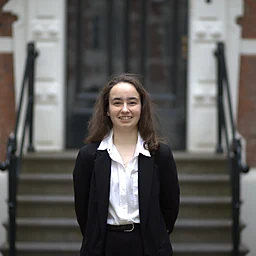
Dori Gnadig
USG of Academics
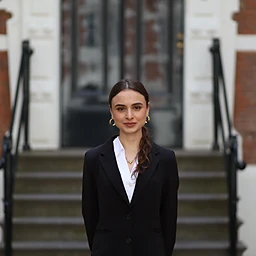
Lela Gavasheli
DSG & Chief of Staff

Maria Clara Santana
USG of Logistics
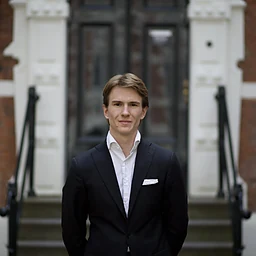
Matthew Kincl
USG of Academics

Victoria Hirsekorn
USG of Delegate Experience

More MUN conferences

ConferencesNetherlandsAmsterMUN 2026