
IașiMUN 2022

Iași Model United Nations

Nov 17–20, 2022 Iași, Romania

Iași Model United Nations

Conference

Iași, Romania·Europe

Nov 17–20, 2022

250 delegates expected

High school and university students

In English

How it went

5.003 ratings from delegates
Academics
5.00
Logistics
5.00
Socials
5.00

About

Fortune Favours the Bold.

IașiMUN seeks to create an international forum for youths to become the future leaders of the world, through first-hand experience in the intricate field of International Relations, and through the outstanding academic quality of the debates that will be taking place. As pioneers and future leaders of our countries, we strongly believe that the changes now we make will impact and shape the world we want to live in.

IașiMUN 2022 is set to be the biggest Model United Nations conference to have ever taken place in Romania. The XIVth edition of the conference aims to bring together over 200 passionate youths from across the world, in the hope to further integration between current and future leaders. An initiative birthed back in 2009, our conference will reunite 10 diverse committees, featuring the first complete General Assembly to be present at a Romanian Model United Nations conference.

A country of mystical stories and fairy tales, as well as Dracula-themed legends, Romania is an Eastern European country, just an hour and a half’s flight away from the heart of Europe. Join us in Iași, one of the country’s most picturesque cities and the home of Romania’s most celebrated authors!


Requirements in order to apply as a delegate:

  • High School or University Student;
  • Age 14-22;
  • No prior experience necessary;

Disclaimer: Experienced delegates will receive more difficult assignments (more advanced committees and/or more challenging countries).

Committees

  • 19 countries
    1. LaGrand (Germany v. United States of America)
    2. Legality of Use of Force (Serbia and Montenegro v. Belgium)
    • Bianca Chiriță
    • Alexandra Mutuzac

    The International Court of Justice

    Expert · English · 19 countries

    Topics

    1. LaGrand (Germany v. United States of America)
    2. Legality of Use of Force (Serbia and Montenegro v. Belgium)

    About the committee

    Topic A: On 2 March 1999, Germany filed in the Registry of the Court an Application instituting proceedings against the USA in a dispute concerning alleged violations of the Vienna Convention on Consular Relations of 24 April 1963. It was all concerning the pending execution of two German nationals for crimes committed in the US, who were in the eyes of Germany purposefully misinformed, in violation of the Vienna Convention of 1963. Germany held that the US should have offered adequate information to enable Germany to offer defence for the accused, and that their executions be stayed immediately. The Court did deliver an order that requested the USA to stop the execution, but the two were executed regardless. Therefore, it is up to you, prospective delegates, to prove either that the USA applied its domestics law accordingly, or that the USA breached the Vienna Convention of 1963 by the unlawful murder of german nationals. Topic B: On 29 April 1999, the Federal Republic of Yugoslavia filed in the Registry of the Court Applications instituting proceedings against Belgium, Canada, France, Germany, Italy, Netherlands, Portugal, Spain, United Kingdom and United States of America for alleged violations of their obligation not to use force against another State. This application is in regards to the war in Yugoslavia. The Court must deal with important questions of treaties and jurisdiction in this case, and it will be your job, prospective delegates, to establish who sits on the good part of history.

    Chairs

    Countries

    How this committee type works
  • 30 countries
    1. Diminishing Tobacco Presence and Use
    2. Scaling up Care for Mental, Neurological, and Substance use Disorders: mhGAP

    The World Health Organization

    Beginner · English · 30 countries

    Topics

    1. Diminishing Tobacco Presence and Use
    2. Scaling up Care for Mental, Neurological, and Substance use Disorders: mhGAP

    About the committee

    Topic A: While significant progress had been made over the last 50 years to reduce tobacco use and presence, it remains a daunting problem. Effective tobacco control occurs when a concerted effort is made to establish and financially maintain comprehensive tobacco control initiatives by increasing tobacco excise taxes, prohibiting smoking in public places, preventing tobacco use among young people, facilitating smoking cessation programs, and banning tobacco additives such as menthol flavoring. Prevention can take the form of policy-level measures, such as increased taxation of tobacco products; stricter laws (and enforcement of laws) regulating who can purchase tobacco products; how and where they can be purchased; where and when they can be used and restrictions on advertising and mandatory health warnings on packages. Over 100 studies have shown that higher taxes on cigarettes, for example, produce significant reductions in smoking, especially among youth and lower-income individuals. Will you, delegates, be ready to solve this important matter? Topic B: Globally, mental, neurological, and substance use disorders are pervasive and burdensome. The gap between what is urgently required and what is now available to alleviate the strain is still rather large. The WHO Mental Health Gap Action Programme (mhGAP) aims to expand care for mental, neurological, and drug use disorders in low- and middle-income countries, in particular. Since its beginning in 2008, mhGAP has been implemented in over 100 countries, allowing many people to be treated for depression, schizophrenia, and epilepsy, stopped from committing suicide, and assisted in leading normal lives - even in nations with limited resources. It is the collective responsibility of governments, health professionals, civil society, communities, and families, with the aid of the international community, to successfully scale up.

    Countries

    How this committee type works
  • 15 countries
    1. Discussing the Ongoing Mexican War on Drugs
    2. Assessing the Means of Conflict Prevention and Mediation

    • Francesca Rămășcanu
    • Ioana Albu

    The Security Council

    Expert · English · 15 countries

    Topics

    1. Discussing the Ongoing Mexican War on Drugs
    2. Assessing the Means of Conflict Prevention and Mediation

    About the committee

    For decades, Mexico has been ravaged by violence from deadly drug cartels: 90 000 people missing and hundreds of thousands murdered. The Mexican Drug War is the theatre of the global war on drugs, as led by the U.S federal government, an ongoing conflict between the Mexican government and various drug trafficking syndicates. They have been waging a deadly battle against them, but with limited success, therefore in 2006 the Mexican military intervened and the government declared its main objective was to dismantle these cartels and stop once and for all the violence. In 2011, Mexico called on the United Nations to help establish strict controls in producers and supplier countries on the high-powered weapons that feed the arsenals of traffickers. The Security Council has the responsibility to tackle this issue thoroughly and needs, once again, bold delegates that have what it takes! “Conflict prevention and mediation are important tools to reduce human suffering”- UN Secretary-General, Antonio Guterres. Currently, there are several worldwide disputes, ongoing wars and the risks of a nuclear conflict are higher than they have been in several decades. UN is working with various parties to conflict, together with partners for peace, in regions and countries across the world. It is mandatory to act early, to be united in order to successfully prevent crises from escalating. However, despite the efforts, enormous obstacles remain and non-State armed groups cause even greater chaos. When the Security Council can cooperate and speak with a strong common voice its decisions can have a decisive impact on the current situation. This is a call for you delegates, to join and come up with ideas that can make a difference!

    Chairs

    Countries

    How this committee type works
  • 17 countries
    1. Impromptu crisis
    • Silviu Ciorap
    • Bogdan Raicu

    The Crisis Committee

    Expert · English · 17 countries

    Topic

    Impromptu crisis

    Chairs

    Countries

    How this committee type works
  • 25 countries
    1. Suspending Human Rights Law Breacher States from the UNHRC
    2. Initiating Accountability for Cybernetic Warfare

    • Daria-Teodora Grădinaru
    • Karina Balaban

    The Legal Committee

    Intermediate · English · 25 countries

    Topics

    1. Suspending Human Rights Law Breacher States from the UNHRC
    2. Initiating Accountability for Cybernetic Warfare

    About the committee

    Topic A: Members of the HRC are obligated to uphold the highest standards in the promotion and protection of human rights and to fully cooperate with the United Nations' human rights mechanisms. The General Assembly ordered that members of the Human Rights Council uphold human rights and established standards and a procedure to protect the Council. Even though stringent standards have been established, nations like China, Russia, and Saudi Arabia continue to violate human rights systematically, and some Council members have considered it unacceptable that these nations should continue to be a part of the organization. The Legal Committee’s decision or inaction in this case of breacher states will determine whether the criteria for membership in the Human Rights Council established by the GA in 2006 are still relevant or are utterly devoid of meaning, as well as whether a member of the P5 must abide by international law or is granted complete impunity for violations of international human rights law, international humanitarian law, and the UN Charter itself. Topic B: In this day and age of rapid technological advancement, one of the most horrifying global problems has also changed with the times: war is no longer hands-on, but has taken a cybernetic form as well. Hostile actions in the informatic space include propaganda attacks, the spreading of viruses, and attempts to destroy communication infrastructure, for purposes of espionage and sabotage. Countries and international bodies such as the European or the African Union have attempted to develop ways to regulate cyber crimes, alongside the UN’s First Committee, but it has hardly been enough. With tensions growing in all parts of the world and criminals ranging from hacktivists to actual military personnel under the cover of anonymity, the specificity of the international legal framework needs to be a top priority. Will you help the Legal Committee in ensuring better protection against the horrors of modern-day war?

    Chairs

    Countries

    How this committee type works
  • 20 countries
    1. Establishing Rules for Fund and Personnel Management in inter Committee Collaboration
    2. Resolution Approval and Committee Consultations
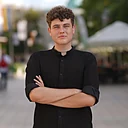
    • Alexandru Drăghia
    • Diana Cordun

    The Administrative and Budgetary Committee

    Intermediate · English · 20 countries

    Topics

    1. Establishing Rules for Fund and Personnel Management in inter Committee Collaboration
    2. Resolution Approval and Committee Consultations

    About the committee

    Have you ever wondered how it feels to tackle the issues between states regarding funds? Are you passionate about economics and workforce management? What about looking at the problems that could arise when broadening your perspective to an international one? Are you looking for a dynamic MUN experience? Do you want to get the chance to also look over other committees’ work and speak up from your country’s approach? Well, then the Administrative and Budgetary Committee is the one for you! Join us and get a hold of how it feels to administer funds and personnel on a higher level than you’ve ever imagined!

    Chairs

    Countries

  • 25 countries
    1. Addressing the Historical Impact on the Current Political and Global Relevance of: A. Arctic Exploration and Research
    2. B. Use of Nuclear Energy
    • Ilinca Padurariu
    • Mara Vintu

    The SPECPOL Committee

    Intermediate · English · 25 countries

    Topics

    1. Addressing the Historical Impact on the Current Political and Global Relevance of: A. Arctic Exploration and Research
    2. B. Use of Nuclear Energy

    About the committee

    Topic A: Known for its ambiguous national borders within the region, the Arctic has been a secondary theater for global conflict. Because of the excellent cooperation of the Arctic Council, this issue was not regarded as an urgent situation until recently. Global warming's consequences include the melting of the Arctic's land, revealing its rich resources such as oil and natural gas. Taking into consideration the potential of the fuels and the possible economic routes that can emerge because of the melted ice, this conflict can be approached from more points of view; from scientific research, to most importantly, the territorial and economic issues that can disrupt the peaceful cooperation between the Arctic states. The SPECPOL committee must find an efficient and fair solution to this matter, dividing and regulating the region while making sure that the resources are extracted responsibly. Topic B: The political polarisation of the 20th century and the struggle for power of the Second Warld War led to a continuous imbalance of influence over what now seems to be our chance to a future. Nuclear energy research has been the hot spot of debates regarding a greener future, but how has the past affected its current situation? The "head starts" of a few states in nuclear research ensured by initiatives such as the Manhattan Project, it's clear that the echo of the power poles of the Second World War still reverberates in the most important of research fields.

    Chairs

    Countries

    How this committee type works
  • 30 countries
    1. Rehabilitating Ex-convicts Before Their Integration to Society
    2. Improving the Conditions of the Poor and Increasing their Resilience to Climate Conditions
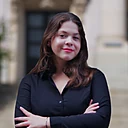
    • Mara Andronache
    • Alia Tanasoiu
    • Gabriela Grigoraș

    The SOCHUM Committee

    Beginner · English · 30 countries

    Topics

    1. Rehabilitating Ex-convicts Before Their Integration to Society
    2. Improving the Conditions of the Poor and Increasing their Resilience to Climate Conditions

    About the committee

    Topic A: After spending time incarcerated, people have a hard time making their way back into society. Rehabilitation is the process of re-educating and re-training offenders. It generally includes psychological approaches that target cognitive biases associated with specific types of crimes committed by specific offenders, but may also include broader education such as literacy and vocational training. Some countries focus on the principle of normalization and away from retribution to focus on rehabilitation, and others have taken no such action regarding ex-convicts. Topic B: During these times, the danger the poor people face is truly overlooked. Not only is it underestimated their difficulty to live, but it is extremely challenging for them to get out of their financial situation. This topic aims to solve this issue, helping them re-establish themselves, by encouraging delegates to find different approaches to this matter. Furthermore, this topic focuses on ameliorating the impact of climate, improving the quality of their residence, and assuring that they are protected from sudden storms, blizzards, and such events.

    Chairs

    Countries

    How this committee type works
  • 25 countries
    1. Assessing the Boundaries of State Intervention in the Economy During Periods of Crisis
    2. Setting up the Legal Framework in Developing Countries on the Matter of Lobbying from MNCs
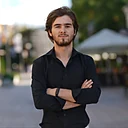
    • Eduard Șovan
    • Ioan Orosanu
    • Victor Roșca

    The ECOFIN Committee

    Beginner · English · 25 countries

    Topics

    1. Assessing the Boundaries of State Intervention in the Economy During Periods of Crisis
    2. Setting up the Legal Framework in Developing Countries on the Matter of Lobbying from MNCs

    About the committee

    Topic A: When states go through critical moments that pose a great threat to the well-functioning of the economy, it comes into question if and how much should the state interfere in the free market. On the one hand, establishing a price ceiling for commodities such as oil, grain, or coffee might ensure that prices will be kept affordable for the population. On the other hand, state intervention might even worsen the issue, causing shortages or lower quality of goods and services. It is going to be the duty of our delegates to decide upon a resolution that ensures market failure can be prevented even during the most severe times of crisis. Topic B: In their constant seeking for profit, multinational corporations resort to malicious measures to gain illegitimate advantages. One such kind of action is lobbying, through which the government officials or other key members in the running of the state are influenced into making decisions that favour some businesses or some business practices to the detriment of the well-being of the population. This sort of practice is especially efficient in developing countries with young democracies and economies dependent on the ''big boys''. The delegates need to set up a legal framework to protect these nations from abuse, but still make them appealing to MNCs.

    Chairs

    Countries

    How this committee type works
  • 30 countries
    1. Addressing the Potential Dangers of Armed Attacks Near Nuclear Power Plants
    2. Discussing the Implications of Foreign Military Presence
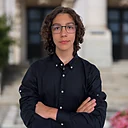
    • Teodor Ciorap
    • Ioana Tapalagă

    The DISEC Committee

    Intermediate · English · 30 countries

    Topics

    1. Addressing the Potential Dangers of Armed Attacks Near Nuclear Power Plants
    2. Discussing the Implications of Foreign Military Presence

    About the committee

    Topic A: Nuclear power plants represent both a blessing and a curse on humanity — hailed for the massive amounts of energy they provide, they have been proven to be a double-edged sword, with nuclear meltdowns heavily marking the 20th and 21st centuries. Even though they function in normal parameters most of the time, attacks in the nearby areas can represent immense hazards for the plants and the people inhabiting the zones. How can the effects and dangers of attacks around nuclear power plants be mitigated and potentially solved? Topic B: There is at least an example that should pop in your mind right as you read the title of this topic. From Afghanistan, to Iran or South Africa, all of them have been subject of intense debates regarding the implications of foreign intervention on their land. Whether approved by the host country, or simply established in the context of ongoing conflict, such presence has been seen either as the most direct and effective aid a certain party could receive, or just a pretext for gaining influence and power overseas. This topic is relevant especially in the case of the most powerful states, that have been involved in many wars worldwide throughout modern history. Such interventions could even be perceived as a threat to regional stability, either by neighboring countries or those who pursue certain interests. As such, we invite you to discuss this pressing issue of international concern, by coming up with solutions regarding the establishment of such presence, its subsequent activity and specific guidelines for its deployment.

    Chairs

    Countries

    How this committee type works

Partner conferences

IașiMUN 2018
Iași, Romania

View conference
WawMUN 2022

Warsaw, Poland

View conference
POLMUN 2022

Warsaw, Poland

View conference
MUNAYD UP 2023

Pretoria, South Africa

View conference
TADMUN 2023

Warsaw, Poland

View conference
MDMUN 2022

Chisinau, Moldova

View conference
KATMUN 2023

Katowice, Poland

View conference

More MUN conferences

ConferencesRomaniaIașiMUN 2022