RIMUN XV 2026

Reims International Model United Nations

Apr 10–12, 2026 Reims, France

Reims International Model United Nations

Conference

Reims, France·Europe

Apr 10–12, 2026

334 delegates expected

High school and university students

In English and French

How it went

4.5097 ratings from delegates
Academics
4.11
Logistics
4.59
Socials
4.77

About

Beyond the Order of Westphalia: Sovereignty at the edge of its borders

ENGLISH VERSION

The Peace of Westphalia : Shaping the Sovereign State System in Early Modern Europe

At RIMUN XV, we’re inviting delegates to reconsider sovereignty in its full contemporary complexity. 

It is with great excitement that the Reims International Model United Nations (RIMUN) team invites you to the latest iteration of our annual conference: RIMUN XV 2026. 

From April 10th–12th, 2026, more than 350 university and high school students will gather on the Reims campus of Sciences Po Paris to debate, negotiate, and collaborate on global challenges. This year’s theme, “Beyond the Order of Westphalia: Sovereignty at the edge of its borders”, challenges delegates to rethink one of the core concepts of international relations: sovereignty. How is sovereignty being reshaped at the very edge of its traditional limits?

Our committees, conducted in English and French, promise exciting and dynamic debates at the heart of Sciences Po Paris’s Reims Campus, home to one of France’s most prestigious institutions in the social sciences (QS 2025: 4th worldwide “Politics”).

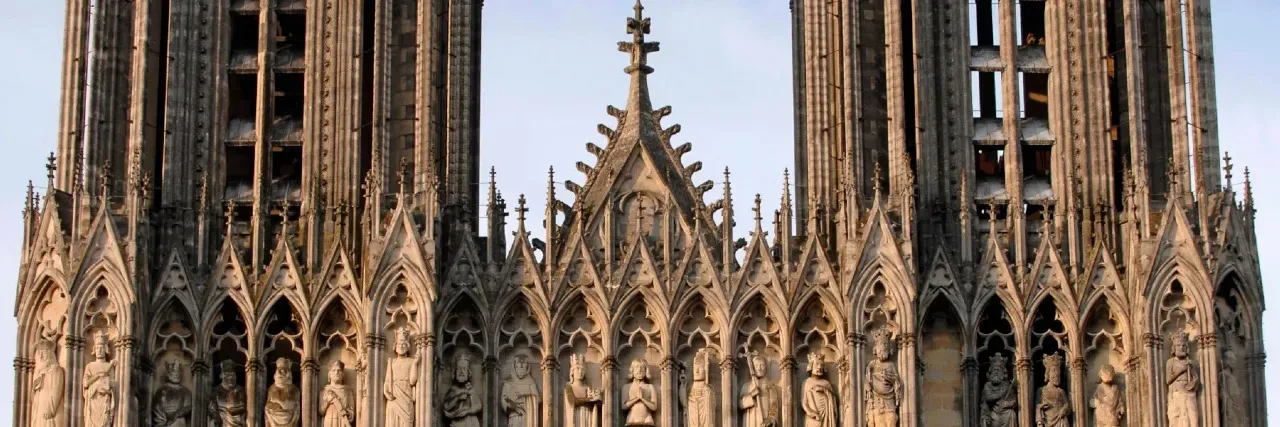
The conference will also include a gala on the evening of Saturday, April 11th, celebrating the culture and legacy of Reims, the historic City of Kings.

Key Information:

  • Dates: April 10-12, 2026
  • Location: Sciences Po Paris, Reims Campus
  • Accommodation: Not provided

More details will be released in the run up to the conference. If you have any inquiries, please write to us at rimun.reims@sciencespo.fr.

We cannot wait to see you in France's City of Kings!

note: when submitting your application please choose more than one committee in your preference. 

VERSION FRANÇAISE

Au-delà de l'Ordre westphalien: la souveraineté à la limite de ses frontières

À RIMUN XV, nous invitons les délégués à reconsidérer la souveraineté dans toute sa complexité contemporaine. 

C’est avec un immense plaisir que l’équipe du Reims International Model United Nations (RIMUN) vous invite à la dernière édition de notre conférence annuelle : RIMUN XV 2026.

Du 10 au 12 avril 2026, plus de 350 étudiants universitaires et lycéens se réuniront sur le campus de Sciences Po Paris à Reims pour débattre, négocier et collaborer autour des défis mondiaux. Cette année, le thème « Au-delà de l'Ordre westphalien: la souveraineté à la limite de ses frontières » invite les délégués à repenser l'un des concepts fondamentaux des relations internationales : la souveraineté. Comment la souveraineté est en train d'être redéfinie à la limite même de ses frontières traditionnelles?

Nos comités, organisés en français et en anglais, promettent des débats passionnants et dynamiques au cœur du campus de Sciences Po Paris à Reims, siège de l’une des institutions les plus prestigieuses de France en sciences sociales (QS 2025 : 4e mondiale en “politiques”).

La conférence comprendra également un gala le samedi 11 avril au soir, célébrant la culture et le patrimoine de Reims, la Ville des Rois.

Informations Clés :

  • Dates : 10 au 12 avril 2026
  • Lieu : Campus de Sciences Po Paris, Reims
  • Hébergement : Non fourni

Si vous rencontrez des problèmes pour soumettre vos candidatures en tant que délégué ou président en raison de messages d'erreur récurrents, veuillez contacter info@mymun.com. Nous vous prions de nous excuser pour tout désagrément que cela pourrait causer.

note: lors de votre inscription, merci de choisir plus d'un comité dans vos préférences 

KEY DOCUMENTS: 

Brochure in English 

Brochure en Français

For help with MyMUN, consult our Registration Guide

In the case of any questions regarding refunds, here is our refund policy. 

If you are a minor (under 18), you must fill out the Minor Waiver Form by March 17th.

Minor Waiver LINK: to be dropped (signed and completed) on the mymun application or sent to this email: rimun.reims@sciencespo.fr https://docs.google.com/document/d/1wydThdZVmYBfycNCL80yieZlQSy5xJrynZJzH5CZ_5k/edit?usp=sharing 


Committees

  • 18 countries
    1. UN Crisis on Bab el Mandeb and Global Trade Disruptions
    • Jack Michael Lyon
    • Pei-Ying Chuang

    UNSC - UN Special Committee on International Shipping and Conflict Zones

    Intermediate · English · 18 countries

    Topic

    UN Crisis on Bab el Mandeb and Global Trade Disruptions

    About the committee

    The Bab el Mandeb is one of the most strategic choke points in the world, connecting the Red Sea to the Gulf of Aden and carrying nearly 12 percent of global trade and most Suez Canal traffic. Today, this vital corridor has become a battleground where coastal states, regional powers and armed groups fight for influence and sovereignty over international waters. Houthi attacks, blocked cargo routes and stranded shipwrecks have thrown global commerce into disarray, forcing shipping giants to reroute around Africa and causing massive financial losses across energy, insurance and trade markets. With billion dollar stakes, clashing geopolitical interests and the threat of a global supply chain crisis, the Bab el Mandeb has become a dramatic test of maritime freedom and international stability, offering a unique chance to explore how the fate of world trade is shaped in one narrow stretch of sea.

    Chairs

    Countries

    How this committee type works
  • 20 countries
    1. Internal Sovereignty within the US
    • Eilat Herman
    • Emma Hu

    Crisis: Futuristic Specialized Committee: Democratic 2028 presidential primary

    Intermediate · English · 20 countries

    Topic

    Internal Sovereignty within the US

    About the committee

    Under Donald Trump’s second term the question of internal sovereignty has become increasingly central: who is allowed to shape a nation’s governance and who can citizens trust to manage domestic affairs? With heightened partisan tensions, intensified pressure on federal agencies and ongoing clashes among Democratic leaders, the role of the runner up in the Democratic primary has taken on greater significance. Which figure can most effectively challenge a Republican candidate whose support base has grown more disciplined and socially mobilized in the coming 2028 Presidential elections? The discussion is no longer only about policy differences but about the very capacity of political actors to safeguard the integrity of America’s internal decision making.

    Chairs

    Countries

    How this committee type works
  • 18 countries
    1. The Birth of Sovereignty
    • Mathilde Le Blanc Braouézec
    • Daniella Negrão

    Committee for the Peace of Westphalia

    Beginner · English · 18 countries

    Topic

    The Birth of Sovereignty

    About the committee

    This historical committee transports delegates to the very birth of sovereignty: the negotiations of the Peace of Westphalia of 1678. After decades of war, political actors began to ask themselves how they could coexist, how much authority could they claim and how much they were willing to concede? What are the limits to their power? The talks of Münster and Osnabrück offer the perfect scenario to explore how competing visions of order, religion, autonomy and security collided and how a new international order emerged from compromise. Delegates will create an international system in which the allocation of authority depends not on fixed principles but on the choices political actors make in an unstable and violent environment.

    Chairs

    Countries

  • 19 countries
    1. La bataille pour le Nil Bleu : comment le climat et la compétition façonnent l’avenir de la Corne de l’Afrique
    • Noé Renard
    • Angèla Quentin

    Groupe d'experts du PNUE sur les conflits liés aux ressources et les pressions climatiques dans le bassin du Nil

    Intermediate · English · 19 countries

    Topic

    La bataille pour le Nil Bleu : comment le climat et la compétition façonnent l’avenir de la Corne de l’Afrique

    About the committee

    Le Grand barrage de la Renaissance éthiopienne est devenu l’épicentre d’un conflit croissant autour de l’eau, de l’énergie et de la survie dans la Corne de l’Afrique. Alors que l’Éthiopie s’empresse d’exploiter le Nil Bleu pour produire de l’énergie renouvelable et soutenir son développement national, l’Égypte et le Soudan avertissent qu’une diminution du débit pourrait mettre en péril les systèmes alimentaires, les écosystèmes et des millions de moyens de subsistance en aval. Le différend ne porte plus seulement sur un barrage, mais sur le contrôle d’une artère vitale partagée dans une région déjà mise à rude épreuve par le changement climatique, les sécheresses et une croissance démographique rapide. Ce comité examine comment les nations défendent leur accès à des ressources essentielles, comment les pressions environnementales redéfinissent la diplomatie, et comment la lutte autour du Nil pourrait remodeler la stabilité dans la Corne de l’Afrique.

    Chairs

    Countries

    How this committee type works
  • 20 countries
    1. Qui doit posséder l’espace digital ? Souveraineté numérique, liberté des médias et avenir d’un Internet ouvert .
    • Madina Diarra
    • Tanguy Zongo

    Forum sur la Gouvernance de l’Internet (FGI)

    Beginner · English · 20 countries

    Topic

    Qui doit posséder l’espace digital ? Souveraineté numérique, liberté des médias et avenir d’un Internet ouvert .

    About the committee

    Dans un monde où l’espace digital est devenu un terrain d’expression, d’information et de pouvoir, la question de savoir qui doit contrôler Internet est plus vive que jamais. Alors que certains États cherchent à affirmer leur souveraineté numérique en établissant leurs propres frontières virtuelles, d’autres défendent l’idée d’un Internet libre, ouvert et transnational. Cette tension renvoie directement à la célèbre Déclaration d’indépendance du cyberespace de John Perry Barlow, qui affirmait que le cyberespace devait rester un domaine autonome, libéré des autorités étatiques traditionnelles, où l’individu exerce pleinement sa liberté d’expression. Aujourd’hui, face à la censure, à la désinformation, à la sécurité numérique et à la concentration des grandes plateformes, ce comité se penchera sur la gouvernance de l’espace digital et sur l’équilibre fragile entre liberté médiatique, souveraineté nationale et protection des citoyens.

    Chairs

    Countries

  • 20 countries
    1. The regulation of food and agricultural norms
    • Jadyn Zechariah
    • Violette Louzier

    United Nations Coffee Break

    Beginner · English · 20 countries

    Topic

    The regulation of food and agricultural norms

    About the committee

    Coffee break time! Peek behind the curtain of United Nations negotiations and participate in a lobby event on the future of the food industry. As the global population keeps on growing and farmland becomes more scarce due to climate change, access to nutritious food is more important than ever. Food lobbies are working overtime to make sure countries go along with their interests, even if that means leaders going against their population’s interest… During this “unofficial” debate time, strike deals, write contracts, and attempt to assert your sovereignty to secure a proper future.

    Chairs

    Countries

  • 16 countries
    1. Determining the Legitimacy and Future of Sovereignty in Westeros.
    • Helena Fernandez

    Game of Thrones - Council of the Seven Kingdoms

    Beginner · English · 16 countries

    Topic

    Determining the Legitimacy and Future of Sovereignty in Westeros.

    About the committee

    MUST HAVE WATCHED THE SHOW/READ THE BOOKS As the Seven Kingdoms fracture under rival claims, foreign invasions, and the threat of an inhuman army marching from the far North, the question of who holds legitimate sovereignty has become impossible to ignore. With Daenerys Targaryen landing in Westeros, Jon Snow hailed as King in the North, and Cersei Lannister tightening her grip on the Iron Throne, the realm faces its most profound crisis of political order since Aegon’s conquest. To prevent total collapse, the Citadel has convened an unprecedented Great Council, summoning key rulers, claimants, and advisers to adjudicate the future of Westerosi governance. The discussion now extends beyond rival dynastic claims: delegates must decide whether legitimacy comes from birthright, conquest, popular support, prophecy, or survival itself, and whether the very concept of sovereignty can endure in a realm where loyalty is fragile, alliances are temporary, and extinction looms beyond the Wall.

    Chair

    Countries

    How this committee type works
  • 20 countries
    1. Évaluer la Belt and Road Iniative et ses implications pour le développement des infrastructures, la souveraineté et les cadres de partenariat durable
    • Elisa Cabaret
    • Mathilde Pol Loison

    Conseil économique et social des Nations Unies (ECOSOC)

    Intermediate · French · 20 countries

    Topic

    Évaluer la Belt and Road Iniative et ses implications pour le développement des infrastructures, la souveraineté et les cadres de partenariat durable

    About the committee

    Alors que les Routes de la Soie de la Chine redessine les routes commerciales mondiales et les réseaux d’infrastructures, les préoccupations concernant la viabilité de la dette, le contrôle étranger d’actifs stratégiques et les implications à long terme pour la souveraineté nationale deviennent de plus en plus centrales. Ce comité a donc décidé de se réunir en session spéciale afin d’examiner l’impact de la Belt and Road Iniative sur les trajectoires de développement, d’évaluer les risques et les opportunités du financement transnational des infrastructures, et de déterminer comment les institutions mondiales et les États partenaires peuvent garantir que la coopération économique ne se transforme pas en dépendance stratégique. La discussion dépasse désormais la seule croissance économique, invitant les délégués de ce comité à évaluer l’équilibre entre besoins de développement, influence géopolitique et préservation de la capacité souveraine de décision.

    Chairs

    Countries

    How this committee type works
  • 19 countries
    1. China after Mao: Recovering from the legacy of the cultural revolution.
    • Mahika Sharma
    • Solene DeGaynor

    Chinese Communist party: recovering from the legacy of the cultural revolution.

    Intermediate · English · 19 countries

    Topic

    China after Mao: Recovering from the legacy of the cultural revolution.

    About the committee

    This committee explores the CCP’s struggle to rebuild authority and define the meaning of sovereignty in the uncertain months following Mao Zedong’s death in 1976. The Party faced a landscape shaped by the excesses of the Cultural Revolution, weakened institutions, and a society fractured by ideological conflict, all while the arrest of the Gang of Four opened a path toward political recalibration. Delegates will debate how leaders attempted to restore coherence within the Party, reassert control over national policy, and navigate the early rise of Deng Xiaoping’s reformist vision. This committee examines how China sought to protect its autonomy at a moment when internal instability and external expectations threatened to redefine the boundaries of its sovereign power. The discussion encourages delegates to consider how sovereignty is reshaped not only through foreign pressures, but also through profound domestic reckoning

    Chairs

    Countries

  • 20 countries
    1. Tackling American Imperialism in Latin America
    • Ava Bradley
    • Kayla Delgado

    United Nations Inquiry Commission on the Legacy of Operation Condor (UN-ICLOC)

    Intermediate · English · 20 countries

    Topic

    Tackling American Imperialism in Latin America

    About the committee

    This crisis committee will focus on Operation Condor, the coordinated campaign of political repression and intelligence-sharing among South American military dictatorships during the 1970s and 1980s. Delegates will navigate a fast-paced simulation in which they must determine the future trajectory of their countries, balancing pressure from the United States and allied anti-communist forces against domestic priorities and national sovereignty. The committee will examine the ethical, political, and strategic dilemmas posed by covert operations, exploring how external influence can undermine democratic institutions, restrict civil liberties, and shape regional alignments. Delegates will be challenged to make high-stakes decisions that reflect both geopolitical pressures and internal political calculations, creating a dynamic environment where every action has far-reaching consequences.

    Chairs

    Countries

  • 18 countries
    1. Le redécoupage des frontières européennes
    • Nolan Bouvry
    • Gabriel Guerreau

    Reconstitution historique du Congrès de Vienne de 1815

    Intermediate · English · 18 countries

    Topic

    Le redécoupage des frontières européennes

    About the committee

    Remontez le temps et incarnez les diplomates de l'époque ! Napoléon vient d'être vaincu et les puissances européennes se trouvent dans une impasse : comment reconstruire les frontières que les armées de Napoléon ont piétinées ? Au cours d'une série de réunions diplomatiques internationales, les diplomates discuteront et s'accorderont sur une nouvelle configuration possible de l'ordre politique et constitutionnel européen. En tant qu'artisans de la paix, vous devrez décider comment punir la France pour son arrogance tout en veillant à instaurer une harmonie durable sur le continent. Mais attention ! Des sentiments nationalistes effroyables, qui menacent vos empires séculaires, montent en puissance ! Comment allez-vous vous assurer de renforcer votre souveraineté nationale parmi toutes les autres ?

    Chairs

    Countries

    How this committee type works
  • 20 countries
    1. Repenser les découpages coloniaux et leurs impacts sur la souveraineté africaine
    • Maxence Garnier
    • Nelle Cantaloube

    Historique: Conférence de Berlin, 1885

    Intermediate · English · 20 countries

    Topic

    Repenser les découpages coloniaux et leurs impacts sur la souveraineté africaine

    About the committee

    Ce comité reconstitue la Conférence de Berlin de 1884-1885, convoquée par le chancelier Otto von Bismarck pour fixer les règles encadrant l’expansion européenne en Afrique. Les puissances présentes y ont défini les modalités de revendication territoriale et d’accès commercial, tout en s’appuyant sur un discours humanitaire destiné à légitimer leurs ambitions. Cette conférence a finalement consolidé la domination européenne en imposant l’idée qu’un territoire ne pouvait être revendiqué qu’à travers une présence administrative effective, principe qui a accéléré l’occupation du continent et marginalisé toute voix africaine. Dans un cadre MUN, ce comité invite les délégués à analyser ces dynamiques de pouvoir et à réfléchir à leur héritage contemporain. Il inclura également des représentants de peuples colonisés afin de donner une place active aux acteurs historiques qui furent les principales victimes des décisions prises.

    Chairs

    Countries

    How this committee type works
  • 15 countries

    What happens to sovereignty when the world is watching? Who controls state’s narratives? The Press Corps stands at the intersection of storytelling and state formation, where journalists shed light on the choices and contradictions that formal diplomacy sometimes tries to obscure. By following the debates that unfold across committees and translating them into narratives the world can understand, they highlight how transparency and public scrutiny subtly reshape the authority states claim to hold. In a time where information moves freely and no government can fully control its own image, the Press Corps reminds us that sovereignty is no longer just about power on paper, but it’s also about the stories that shape global perception. Qu'advient-il de la souveraineté lorsque le monde entier a les yeux rivés sur elle ? Qui contrôle les discours officiels des États ? Le corps de presse se trouve à la croisée des chemins entre la narration et la formation des États, où les journalistes mettent en lumière les choix et les contradictions que la diplomatie officielle tente parfois d'occulter. En suivant les débats qui se déroulent au sein des commissions et en les traduisant en récits compréhensibles par le monde entier, ils soulignent à quel point la transparence et le contrôle public remodèlent subtilement l'autorité que les États prétendent détenir. À une époque où l'information circule librement et où aucun gouvernement ne peut contrôler entièrement sa propre image, le corps de presse nous rappelle que la souveraineté ne se résume plus à un pouvoir sur le papier, mais qu'elle concerne également les récits qui façonnent la perception mondiale.

    • Alexia-Nicole Diaconescu

    Press corps (EN & FR)

    English · 15 countries

    About the committee

    What happens to sovereignty when the world is watching? Who controls state’s narratives? The Press Corps stands at the intersection of storytelling and state formation, where journalists shed light on the choices and contradictions that formal diplomacy sometimes tries to obscure. By following the debates that unfold across committees and translating them into narratives the world can understand, they highlight how transparency and public scrutiny subtly reshape the authority states claim to hold. In a time where information moves freely and no government can fully control its own image, the Press Corps reminds us that sovereignty is no longer just about power on paper, but it’s also about the stories that shape global perception. Qu'advient-il de la souveraineté lorsque le monde entier a les yeux rivés sur elle ? Qui contrôle les discours officiels des États ? Le corps de presse se trouve à la croisée des chemins entre la narration et la formation des États, où les journalistes mettent en lumière les choix et les contradictions que la diplomatie officielle tente parfois d'occulter. En suivant les débats qui se déroulent au sein des commissions et en les traduisant en récits compréhensibles par le monde entier, ils soulignent à quel point la transparence et le contrôle public remodèlent subtilement l'autorité que les États prétendent détenir. À une époque où l'information circule librement et où aucun gouvernement ne peut contrôler entièrement sa propre image, le corps de presse nous rappelle que la souveraineté ne se résume plus à un pouvoir sur le papier, mais qu'elle concerne également les récits qui façonnent la perception mondiale.

    Chair

    Countries

    How this committee type works
  • 15 countries
    1. CRISIS: The Give and Go of Escalation: Able Archer and Project RYAN
    • Jamie Day
    • Arthur Bossard

    JCC: Standoff's End – Paranoia Behind the Veil, 1983: Supreme Headquarters Allied Powers Europe

    Expert · English · 15 countries

    Topic

    CRISIS: The Give and Go of Escalation: Able Archer and Project RYAN

    About the committee

    In the pre-dawn darkness of November 8th, 1983, Exercise Able Archer reaches its climax as NATO's command structure simulates an escalating Cold War confrontation with unprecedented realism, live DEFCON changes, dummy warheads, radio blackouts, heads of government participating directly. But something has gone catastrophically wrong. Soviet intelligence services, already operating under Operation RYaN (a paranoid hunt for evidence of an imminent American nuclear strike), have begun interpreting the exercise as cover for an actual NATO assault. In Moscow, General Secretary Andropov—gravely ill and confined to a clinic—receives KGB assessments that NATO is arming its missiles for a preemptive strike. In the Kremlin war room, Soviet field commanders in East Germany receive orders to load nuclear warheads onto combat aircraft. Simultaneously, in Brussels and the Pentagon, NATO officials watch Soviet mobilization with escalating alarm, unsure whether Moscow's military movements are defensive reactions or preparation for invasion. Communications between superpowers have become frantic and misconstrued; a mistranslated cable, a false radar blip, or a general's misinterpreted order could trigger the chain reaction toward nuclear exchange. As dawn breaks on November 8th, both committees must navigate the next 72 hours when the exercise ends and reality reasserts itself. Delegates must decide whether to escalate the very dynamics that brought the world to the brink, attempt urgent de-escalation despite collapsed trust, or gamble on restraint while field commanders await orders to launch nuclear weapons. The NATO Strategic Command has convened in emergency session at Supreme Headquarters Allied Powers Europe (SHAPE) in Mons, Belgium, where defense ministers and military commanders now face an unprecedented situation. Soviet field forces are mobilizing in response to Exercise Able Archer, but NATO officials remain uncertain whether this is a mirror-image panic or genuine preparation for war. The committee must navigate a catastrophic dilemma. The exercise is scheduled to conclude on November 11th, but Soviet military movements suggest Moscow may believe an attack is imminent. Every decision risks either catastrophic misunderstanding (if NATO escalates DEFCON in response, confirming Soviet fears) or strategic vulnerability (if NATO maintains exercise posture while facing genuine Soviet mobilization). Terminating the exercise is not an option. Moscow's mobilization will not stop because a NATO general calls off a drill. The world does not pause for de-escalation. It only moves forward toward war or away from it. The delegates must determine whether to maintain the exercise to avoid appearing to capitulate to Soviet pressure while risking catastrophic miscalculation, or execute a carefully calibrated military response that demonstrates NATO resolve without triggering Soviet preemption. Time is running out. Field commanders await orders. The line between exercise fiction and wartime reality has collapsed.

    Chairs

    Countries

    How this committee type works
  • 15 countries
    1. CRISIS: The Give and Go of Escalation: Able Archer and Project RYAN
    • Anthony Park
    • Emma Girard

    JCC: Standoff's End – Paranoia Behind the Veil, 1983: The Kremlin War Room

    Expert · English · 15 countries

    Topic

    CRISIS: The Give and Go of Escalation: Able Archer and Project RYAN

    About the committee

    In the pre-dawn darkness of November 8th, 1983, Exercise Able Archer reaches its climax as NATO's command structure simulates an escalating Cold War confrontation with unprecedented realism—live DEFCON changes, dummy warheads, radio blackouts, heads of government participating directly. But something has gone catastrophically wrong. Soviet intelligence services, already operating under Operation RYaN (a paranoid hunt for evidence of an imminent American nuclear strike), have begun interpreting the exercise as cover for an actual NATO assault. In Moscow, General Secretary Andropov—gravely ill and confined to a clinic—receives KGB assessments that NATO is arming its missiles for a preemptive strike. In the Kremlin war room, Soviet field commanders in East Germany receive orders to load nuclear warheads onto combat aircraft. Simultaneously, in Brussels and the Pentagon, NATO officials watch Soviet mobilization with escalating alarm, unsure whether Moscow's military movements are defensive reactions or preparation for invasion. Communications between superpowers have become frantic and misconstrued; a mistranslated cable, a false radar blip, or a general's misinterpreted order could trigger the chain reaction toward nuclear exchange. As dawn breaks on November 8th, both committees must navigate the next 72 hours when the exercise ends and reality reasserts itself—delegates must decide whether to escalate the very dynamics that brought the world to the brink, attempt urgent de-escalation despite collapsed trust, or gamble on restraint while field commanders await orders to launch nuclear weapons. The Soviet High Command Committee assembles in the Kremlin's war room as alarming intelligence cascades in from KGB Chairman Chebrikov: NATO's Able Archer exercise appears to be a cover for an imminent nuclear strike, with American bombers potentially being armed at this very moment. General Secretary Andropov, incapacitated by illness and receiving only fragmentary intelligence, must somehow coordinate a response while the military apparatus, convinced that NATO's exercise is a deception operation preceding an attack, demands authorization to move Soviet nuclear forces to attack-ready status. The committee faces impossible choices: authorize warhead loading and submarine deployments, risking NATO interpretation as preparation for preemption and triggering NATO escalation; maintain current alert status while Soviet field commanders in East Germany increasingly report NATO attack preparations; or attempt urgent back-channel communication with Washington to determine NATO's true intentions, though any signal of Soviet hesitation could be interpreted as weakness and accelerate NATO's strike timeline. Every option carries catastrophic consequences. Every delay increases pressure from hardline military commanders convinced that NATO is executing Operation RYaN's predictions. The delegates must decide whether to act out of fear or restraint when paranoia has become institutionalized and control over field commanders is already slipping.

    Chairs

    Countries

    How this committee type works
  • 20 countries
    1. Le cas du groupe Wagner
    • Marilyne halpern
    • Aaron Sidibé

    Crise: CSNU sur l’ingérence étrangère et les opérations mercenaires en Afrique de l'Ouest

    Expert · English · 20 countries

    Topic

    Le cas du groupe Wagner

    About the committee

    Depuis 2017, le groupe paramilitaire russe Wagner s’est implanté dans plusieurs États d’Afrique de l’Ouest et du centre, notamment au Mali, au Burkina Faso et en République centrafricaine, en offrant un soutien militaire direct à des régimes fragilisés par des coups d’État ou des insurrections armées. En échange, Wagner obtient un accès privilégié aux ressources naturelles (or, diamants, concessions minières), une influence politique considérable et un alignement diplomatique avec Moscou.Cette présence bouleverse profondément les équilibres régionaux. D’une part, elle fragilise la souveraineté nationale : certaines décisions sécuritaires, minières et diplomatiques sont désormais influencées, voire contrôlées, par un acteur mercenaire opaque. D’autre part, elle reconfigure la compétition géopolitique : la Russie renforce son implantation, tandis que les puissances occidentales , en particulier la France et l’Union européenne, voient leur influence diminuer, et leurs partenariats stratégiques remis en question.

    Chairs

    Countries

    How this committee type works
  • 20 countries
    1. Destruction des artefacts culturels en temps de guerre

    • Anastasia Kunetz
    • Ethel Banbanaste

    UNESCO : Artefacts Culturels

    Beginner · English · 20 countries

    Topic

    Destruction des artefacts culturels en temps de guerre

    About the committee

    Dans un monde de plus en plus fragmenté et polarisé, le patrimoine culturel a pris une importance sans précédent. Il est parfois utilisé comme un outil de manipulation ou de coercition pour déformer les traditions et les croyances en période d'incertitude liée à la guerre, d'autres fois comme une forme de punition pour contraindre les populations locales à la soumission et à la docilité. Qui devrait décider de la préservation du patrimoine culturel dans le chaos de l'instabilité politique ? Qui a le droit de détruire et de réécrire l'histoire ? Comment les États peuvent-ils être tenus responsables de leurs manifestations violentes à l'encontre des communautés autochtones locales si les structures qui donnent un sens à leur vie sont compromises ? Les voix autochtones peuvent-elles être réduites au silence et leur histoire effacée ? Quelles réparations devraient être accordées pour « compenser » les conséquences dévastatrices ? Comment garantir la tolérance culturelle et religieuse dans un contexte politique instable ?

    Chairs

    Countries

    How this committee type works

Partner conferences

MUNICP Reims 2026
Reims, France

View conference
ScotMUN 2026

Edinburgh, United Kingdom

View conference
AMIMUN 2026

Noida, India

View conference
ESPOMUN 2026

Lille, France

View conference
SPIMUN - Sciences Po International MUN 2026
Paris, France

View conference
SPLIMUN 2026

Lille, France

View conference
ONUcly 2026

lyon, France

View conference

Organizers

Arthur Caravaca
General Secretary and Head of Partnerships

Bérénice Perrin
Vice President and Head of Registrations
More MUN conferences

ConferencesFranceRIMUN XV 2026