NAMUN 2027

North American Model United Nations

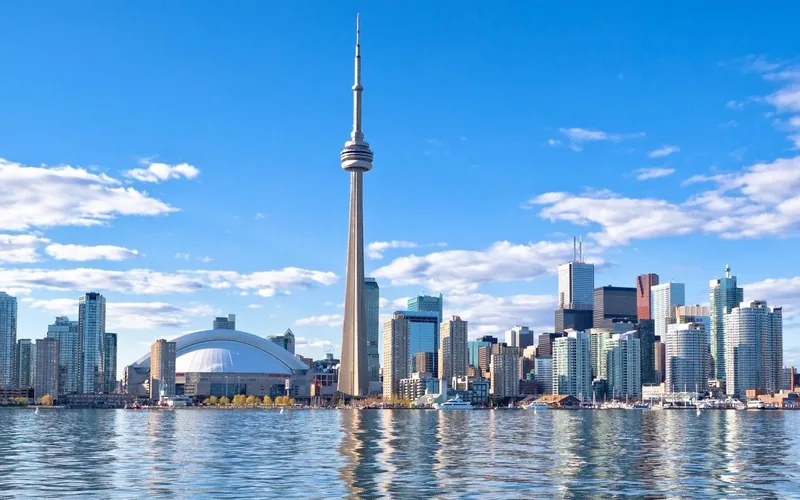
Feb 18–20, 2027 Toronto, Canada

North American Model United Nations

Closes Feb 16, 2027

Conference

Feb 18–20, 2027

400 delegates expected

University students

In English

Applications

Open
Sep 9, 2026 – Feb 16, 2027Same dates for every role
  • Delegates
  • Head delegates
  • Faculty advisors

About

Building the World of Tomorrow

It is our honour to invite you to the 42nd edition of the North American Model United Nations (NAMUN), held from February 18–20, 2027, at the historic University of Toronto.

Founded in 1985, NAMUN is Canada’s longest-running university-level Model United Nations conference, known for its commitment to excellence in diplomacy, debate, and innovation. Every year, NAMUN brings together hundreds of delegates from across the globe to participate in three days of immersive committee sessions, thought-provoking discussions, and unforgettable social events, all in the heart of downtown Toronto.

Our dedicated staff work year-round to curate an enriching conference experience, whether through carefully crafted committees, engaging crisis simulations, or community-building opportunities that go beyond the committee room. At NAMUN, we aim to foster not only skillful diplomacy but also lasting friendships and meaningful conversations.

Registration Timeline

  • Early Bird Registration: September 9, 2026 - October 21, 2026
  • Regular Registration: October 22, 2026 - December 24, 2026
  • Late Registration: December 25, 2026 - January 24, 2027

If you have any questions or encounter issues with registration, payment, or any general questions, don’t hesitate to reach out to us at external@namun.org. 

All payments are due on January 24, 2027.

Financial Aid Program

Our financial aid program, as in previous years, may consist of a reduction in delegate fees, delegation fees, and processing fees on a case-by-case basis. Eligibility for this program is determined by a comprehensive review of the application by NAMUN 2027’s Financial Aid Committee. We encourage all interested delegates and delegations to take advantage of this program by applying before the closing date of December 24, 2026.

To apply for financial support, we kindly ask interested individual delegates or delegation representatives to complete the following form here.

Please carefully review the Financial Aid application form before applying. A reminder that you must be already registered for NAMUN to apply for financial aid. Ensure you read the Terms and Conditions.

Refund Policy 

NAMUN 2027 will issue a full refund upon request prior to December 24th, 2026. From December 25th, 2026 to January 24th, 2027, refunds will constitute 50% of the original purchase. Any refund requests submitted after January 24th will not be accepted. In accordance with our Delegate Equity Policy, in case of sickness or other extreme circumstances, please contact our Director of Equity, Amani Altaf, at equity@namun.org as soon as possible with a doctor's note proving your condition.

Please note that all refunds will not include the 7% fee required to cover our use of myMUN.

Visa Policy

Due to legal constraints, NAMUN cannot issue invitation letters for the 2027 conference.

Equity Policy

At NAMUN, we believe that every delegate deserves an equal opportunity to participate, contribute, and succeed, regardless of their background, experience, etc. We strive to create an environment that values diversity, promotes inclusivity, and ensures fair representation for all delegates. By fostering a culture of equity, we aim to ensure everyone has a meaningful, compassionate, and fair experience at the conference. At NAMUN 2027, we are committed to creating a safe space for all delegates to express themselves freely, without fear of harassment, discrimination, or marginalization. If you have any questions or concerns, please email the Director of Equity, Amani Altaf, at equity@namun.org.

Weather Cancellation Policy

Please note that NAMUN 2027 will take place as scheduled from February 18 to February 20, 2027, and we will not be able to offer refunds to delegations that choose not to attend the conference due to weather-related circumstances.

Committees

    1. Subtopic A: Safeguarding Endangered and Indigenous Languages
    2. Subtopic B: Artificial Intelligence and the Right to Education

    United Nations Educational, Scientific and Cultural Organization (UNESCO)

    Beginner · English

    Topics

    1. Subtopic A: Safeguarding Endangered and Indigenous Languages
    2. Subtopic B: Artificial Intelligence and the Right to Education

    About the committee

    Some things are lost quietly, a language with its last speaker, a mind that no longer has to think for itself. As globalization thins the world's tongues and AI arrives in classrooms, UNESCO faces the same question in two forms, what is worth preserving in human memory and human cognition, and what disappears the moment we stop tending it. This committee asks delegates to decide what we keep, and what we let a machine replace. Subtopic A: Safeguarding Endangered and Indigenous Languages A language does not die by decree, it dies with its last generation of speakers. Roughly 40% of the world's 7,000+ indigenous languages are endangered, leading to the Decade of Indigenous Languages (2022-2032). A language is never only words, and its last speaker takes an unread library with them. Delegates should weigh national cohesion vs. minority rights and archiving vs. living speakers, fund mother-tongue education, and ask whether a language can be rescued by policy, or only by those who keep using it. Subtopic B: Artificial Intelligence and the Right to Education Every education system was forced a technology it did not ask nor had rules for. UNESCO found fewer than 10% of 450+ institutions had any AI policy, shortly publishing guidance on AI. The deeper divide is cognition, not policy. Researchers found students using AI showed weakest brain activity and little recall, a cognitive debt with a reverse Flynn effect of falling scores, all while AI slop crowds the internet. Delegates must weigh personalized learning vs. dependence, and decide whether education should adapt or set its terms with technology.

    Countries

    How this committee type works
    1. Subtopic A: Governing Fentanyl, Nitazenes, and the Precursor Chemical Trade
    2. Subtopic B: Combatting Cybercrime and Protecting Privacy

    United Nations Office on Drugs and Crime (UNODC)

    Intermediate · English

    Topics

    1. Subtopic A: Governing Fentanyl, Nitazenes, and the Precursor Chemical Trade
    2. Subtopic B: Combatting Cybercrime and Protecting Privacy

    About the committee

    The world's crime conventions were written for a slower age, for physical plants and borders. Today the threats are chemical and digital, moving faster than any policy, from synthetic opioids that reinvent themselves after every ban to cybercrime that crosses every border at once. This committee asks delegates to govern crimes that recognize no frontier, without handing states new power to abuse the citizens they claim to protect. Subtopic A: Governing Fentanyl, Nitazenes, and the Precursor Chemical Trade The 1961 and 1971 conventions were written for plants, but today's crisis is chemical: fentanyl precursors moving from labs through cartels, nitazenes 500 times stronger than morphine in exported supplies. Chemistry now moves faster than diplomacy, with traffickers sourcing elsewhere and synthesizing their own. Delegates must weigh international cooperation, harm reduction vs. enforcement, treaty reform vs. faster scheduling, and ask how a rigid system adapts to a crisis that reinvents itself. Subtopic B: Combatting Cybercrime and Protecting Privacy For years there was no global cybercrime treaty, only regional patchworks like the Budapest Convention that much of the world never joined. Hanoi changed that, where 72 states signed the 2025 UN Convention against Cybercrime, but the win is complicated. Experts warn its vague definition and thin safeguards provide a surveillance tool for governments. Delegates should navigate enforcement vs. privacy, data sovereignty vs. cross-border cooperation, and ask whether one set of rules can govern borderless crime without empowering state overreach.

    Countries

    How this committee type works
    1. Subtopic A: Contested Islands and the Limits of Maritime Law
    2. Subtopic B: Sea-Level Rise and the Continuity of Statehood

    Sixth Committee (Legal)

    Intermediate · English

    Topics

    1. Subtopic A: Contested Islands and the Limits of Maritime Law
    2. Subtopic B: Sea-Level Rise and the Continuity of Statehood

    About the committee

    International law draws its authority from lines, on maps, along coasts, between what a state may claim and what it may not. Those lines are now pushed from both ends, redrawn by nations that reject the rulings they lose and erased by seas that swallow the land beneath them. This committee asks delegates to decide what a baseline, a border, and a binding judgment are worth when the world stops respecting them. Subtopic A: Contested Islands and the Limits of Maritime Law July 2026 marks 10 years since the South China Sea Arbitral Award, which found no legal basis for historic rights beyond UNCLOS, yet China still calls it null and void. Other disputes never reach a tribunal; Korea holds Liancourt Rocks while Japan campaigns on retaking them, and Russia, Canada, and Denmark file overlapping Arctic shelf claims over one ridge. Delegates should weigh compulsory jurisdiction vs. state consent, rock vs. island, binding rulings vs. no enforcement, and ask what a ruling is worth when the loser simply declines it. Subtopic B: Sea-Level Rise and the Continuity of Statehood International law assumes a state has territory, and no one has answered what happens when the sea takes it. Pacific Islands Forum leaders and AOSIS insist their maritime zones and statehood stand regardless of the water, and the ILC considered whether baselines are ambulatory, retreating with the coast and dragging the EEZ inland, or stay fixed forever, splitting small island states against maritime powers eyeing redrawn zones. Delegates should preserve entitlements and statehood, address displaced populations, and ask whether a state can exist once there is nowhere left to stand.

    Countries

    How this committee type works
    1. Subtopic A: Civil Aviation in Contested & Closed Airspace
    2. Subtopic B: Decarbonizing International Aviation and the CORSIA Reckoning

    International Civil Aviation Organization (ICAO)

    Expert · English

    Topics

    1. Subtopic A: Civil Aviation in Contested & Closed Airspace
    2. Subtopic B: Decarbonizing International Aviation and the CORSIA Reckoning

    About the committee

    Every flight begins from a simple assumption, that the sky above a nation belongs to it. The Chicago Convention of 1944 wrote that principle into law, but it is now buckling, caught between states that close, spoof, and weaponize their airspace and a warming planet that aviation can no longer ignore. This committee asks delegates to defend a system built for cooperation now that sovereignty itself, and the climate, have become the threat. Subtopic A: Civil Aviation in Contested & Closed Airspace The Chicago Convention built civil aviation on state sovereignty, but it is now the threat. Airspace closures have redrawn flight paths, conflicts have choked flight corridors, and GNSS spoofing throws aircraft off their own navigation, showing how easily a state can weaponize its skies. Delegates must weigh global reliability and safety against sovereignty, build frameworks for conflict-zone risk assessment and GNSS resilience, and ask when a flight of 550 souls outweighs policy. Subtopic B: Decarbonizing International Aviation and the CORSIA Reckoning The Paris Agreement neglected civil aviation, referring the problem to ICAO. Its answer? CORSIA, an offset scheme turning mandatory in 2027. The catch is Sustainable Aviation Fuel, expensive and barely existing at scale, where inequitable access could ground airlines before they reach the skies. The EU already prohibits “unsafe” airlines from its airspace, and nothing stops the same for carriers short of CORSIA. Delegates should negotiate who pays, set SAF financing and credibility standards, and ask whether CORSIA is good enough.

    Countries

    1. How to maintain affordable and reliable universal postal service in remote, rural, isolated, and crisis-affected communities.
    2. Developing a UPU policy framework establishing universal-service standards, financing mechanisms, and continuity requirements for remote and crisis-affected areas.

    Universal Postal Union (UPU): Maintaining Universal Postal Service in Remote, Rural and Crisis-Affected Areas

    Beginner · English

    Topics

    1. How to maintain affordable and reliable universal postal service in remote, rural, isolated, and crisis-affected communities.
    2. Developing a UPU policy framework establishing universal-service standards, financing mechanisms, and continuity requirements for remote and crisis-affected areas.

    About the committee

    The Universal Postal Union (UPU) is the United Nations specialized agency responsible for coordinating the international postal system and establishing the rules that allow postal networks across different countries to operate together. At NAMUN, delegates will address a fundamental challenge facing this global network: how to maintain affordable and reliable universal postal service in remote, rural, isolated, and crisis-affected communities. Postal services remain essential infrastructure, particularly where residents depend on them for government correspondence, documents, medicines, financial services, parcels, and access to the expanding cross-border e-commerce economy. Yet declining letter volumes, high transportation costs, difficult geography, natural disasters, conflict, and fragile infrastructure can make universal-service obligations increasingly expensive to maintain. Delegates will determine what minimum standards should govern the availability, affordability, accessibility, frequency, and quality of postal services. They will also consider how the costs of serving low-volume or geographically difficult regions should be calculated and financed, while balancing universal access with the financial sustainability of designated postal operators. Finally, the committee will examine resilience measures, including business-continuity planning, emergency delivery arrangements, infrastructure redundancy, and disaster recovery. The committee will work toward a UPU policy framework establishing universal-service standards, financing mechanisms, and continuity requirements for remote and crisis-affected areas.

    Countries

    How this committee type works
    1. Indonesia, Kazakhstan and Colombia

    Human Rights Council (HRC): States Under Review

    Intermediate · English

    Topic

    Indonesia, Kazakhstan and Colombia

    About the committee

    The Human Rights Council (HRC) is the United Nations’ principal intergovernmental body responsible for promoting and protecting human rights worldwide. For NAMUN, the committee will simulate the Universal Periodic Review (UPR), the UN’s State-led peer-review mechanism through which the human-rights record of every UN Member State is periodically examined. Rather than debating an abstract human-rights theme, delegates will evaluate one State’s record, assess progress on previous commitments, identify continuing challenges, and negotiate concrete recommendations for future action. NAMUN may conduct the UPR of Indonesia, Kazakhstan, or Colombia, each offering a distinct and substantive review. Indonesia raises questions concerning freedom of religion or belief, expression and media freedom, and human-rights conditions in the Papuan provinces. Kazakhstan allows delegates to examine institutional reform, including safeguards against torture and excessive force, freedoms of assembly and association, political participation, and judicial independence. Colombia connects human rights with peace implementation, examining protection for human-rights defenders and community leaders, internal displacement and land restitution, rural security, and the rights of Indigenous and Afro-Colombian communities. Delegates will question the State under review, scrutinize implementation gaps, and negotiate precise and achievable recommendations. The committee will conclude with a UPR outcome recording recommendations and whether the reviewed State supports or notes them.

    Countries

    How this committee type works
    1. Preventing the Spillover of Armed Group Activity into Coastal States

    United Nations Security Council (UNSC): Peace and Security in West Africa

    Expert · English

    Topic

    Preventing the Spillover of Armed Group Activity into Coastal States

    About the committee

    The United Nations Security Council (UNSC) holds primary responsibility for maintaining international peace and security and possesses some of the UN system’s most consequential diplomatic and coercive tools. At NAMUN, delegates will confront an increasingly important preventive-security challenge: the spillover of armed-group activity and transnational criminal networks from the Sahel into coastal West African States. Rather than responding to a single established war, the committee asks whether—and how—the Security Council should act before regional instability develops into a broader crisis. Delegates will examine the growing interaction between armed groups, illicit trafficking networks, fragile border regions, local grievances, and weaknesses in State institutions. Particular attention will be given to strengthening early-warning capabilities and cooperation with UNOWAS, ECOWAS, and other regional actors. The Council must consider how border security, intelligence and information-sharing, and measures against illicit financing can be improved without unnecessarily disrupting legitimate trade, asylum access, cross-border communities, or local livelihoods. The committee will also debate longer-term preventive measures, including civilian protection, accountable security institutions, justice systems, local governance, and community-based prevention. Delegates will ultimately negotiate a Security Council resolution establishing a credible regional prevention framework, defining assistance priorities, strengthening coordination with regional organizations, and creating mechanisms for monitoring and reporting on emerging threats.

    Countries

    How this committee type works
  • The International Court of Justice (ICJ) is the principal judicial organ of the United Nations and is responsible for resolving legal disputes submitted by States and issuing advisory opinions on questions of international law. Unlike conventional Model UN committees, the ICJ operates as a court: participants examine evidence, interpret treaties and customary international law, consider previous judgments, and develop legal arguments rather than negotiate political resolutions. At NAMUN, the ICJ would simulate proceedings concerning a selected international legal dispute. Participants would assess questions of jurisdiction, State responsibility, applicable international law, and the remedies available to the parties. The simulation would culminate in a reasoned judgment addressing the principal legal questions before the Court.

    International Court of Justice (ICJ)

    Expert · English

    About the committee

    The International Court of Justice (ICJ) is the principal judicial organ of the United Nations and is responsible for resolving legal disputes submitted by States and issuing advisory opinions on questions of international law. Unlike conventional Model UN committees, the ICJ operates as a court: participants examine evidence, interpret treaties and customary international law, consider previous judgments, and develop legal arguments rather than negotiate political resolutions. At NAMUN, the ICJ would simulate proceedings concerning a selected international legal dispute. Participants would assess questions of jurisdiction, State responsibility, applicable international law, and the remedies available to the parties. The simulation would culminate in a reasoned judgment addressing the principal legal questions before the Court.

    Countries

    How this committee type works
    1. Integrated Crisis Committee
    2. Elected Government

    Intelligence Crisis 1972: Reforming Pakistan’s Future - Elected Government

    Expert · English

    Topics

    1. Integrated Crisis Committee
    2. Elected Government

    About the committee

    Intelligence is an essential, but misunderstood component of statecraft, particularly in developing, post-colonial states. Pakistan currently has one of the most sophisticated intelligence services in the world. However, this was not always the case as the development of its intelligence prowess really took place after the 1971 War in which it lost its most populated province, East Pakistan, which later became Bangladesh. The loss of this war is due to intelligence failures, situational misjudgements, and poor decision making by political and military leaders. In the 1970s, Pakistan’s “national security state” and intelligence apparatus started to take shape. It also faced various crises like declining civil-military relations, the collapse of order and trust in state institutions, economic issues, growing separatism, and threats from foreign adversaries. Delegates must solve these internal issues, protect Pakistan from internal and external threats, and develop its intelligence capabilities. However, with massive divisions between institutional, personal, and societal interests and different groups wanting to gain power for themselves, the path to reconstruction is fractured and groups will be acting against each other. Thus, can Pakistan rebuild itself without facing more mishaps and manage these mismatched interests? Who will come out on top to dominate Pakistani politics All rooms partake in their individual plans/quests to re-define Pakistani society after the war.

    Countries

    How this committee type works
    1. Joint Crisis Committee
    2. French Republic

    The French Revolutionary Wars - French Republic

    Intermediate · English

    Topics

    1. Joint Crisis Committee
    2. French Republic

    About the committee

    The year is 1792, and the streets of the new French Republic echo with the roar of revolution. As the monarchy teeters on the brink of collapse, foreign powers watch with growing unease—and growing ambition. Austria, bound by blood to Marie Antoinette, has begun massing troops along France’s eastern frontier, issuing veiled threats of invasion should harm come to the royal family. Whispers of war swirl through Paris as tensions escalate. The revolutionaries, defiant and determined, refuse to bow to foreign pressure. When Austria and Prussia refuse to stand down, France teeters on the edge of a wider conflict. With alliances shifting and ideology on the march, the world holds its breath. The committee will begin just moments before France’s official declaration of war—giving delegates the power to ignite the first strike. As Europe prepares for a clash between monarchy and republicanism, will the old world crumble under the weight of new ideals—or will it strike back with brutal force?

    Countries

    1. Single Crisis Committee

    Star Trek: Council of the United Federation of Planets – Aftermath of the Dominion War (Regular)

    Expert · English

    Topic

    Single Crisis Committee

    About the committee

    The year is 2375, and the Alpha Quadrant stands scarred by the most devastating conflict in its history. After years of brutal warfare, the Dominion War has finally come to an end. The United Federation of Planets and the Dominion have signed a fragile peace, but victory has come at an enormous cost. Entire worlds lie in ruins, economies are shattered, and old alliances have been tested to their breaking point. Former enemies are now expected to negotiate across the same table, even as suspicion, resentment, and grief linger from the war. In the Federation Council Chambers on Earth, representatives from the Federation's member worlds gather alongside delegates from the Cardassian Union, the Breen Confederacy, and the Dominion to determine what peace will look like. Some seek reconciliation and reconstruction, while others pursue reparations, justice, or strategic advantage. Behind every speech lies a political agenda, and behind every handshake, the possibility of betrayal. With competing visions for the future of the quadrant and the balance of power hanging in the balance, a single diplomatic failure could undo everything the war achieved. Delegates will assume the roles of political leaders, ambassadors, military officials, and advisors from across the Alpha and Gamma Quadrants. As the galaxy takes its first uncertain steps toward peace, will diplomacy prevail over decades of mistrust, or will old wounds reopen and plunge the quadrant back into war?

    Countries

    1. Single Crisis Committee

    Ad Hoc

    Intermediate · English

    Topic

    Single Crisis Committee

    About the committee

    To Be Continued...

    Countries

    1. Joint Crisis Committee
    2. The First Coalition (Austria, Prussia, Britain, Spain, Dutch Republic)

    The French Revolutionary Wars - The First Coalition (Austria, Prussia, Britain, Spain, Dutch Republic)

    Intermediate · English

    Topics

    1. Joint Crisis Committee
    2. The First Coalition (Austria, Prussia, Britain, Spain, Dutch Republic)

    About the committee

    The year is 1792, and the streets of the new French Republic echo with the roar of revolution. As the monarchy teeters on the brink of collapse, foreign powers watch with growing unease—and growing ambition. Austria, bound by blood to Marie Antoinette, has begun massing troops along France’s eastern frontier, issuing veiled threats of invasion should harm come to the royal family. Whispers of war swirl through Paris as tensions escalate. The revolutionaries, defiant and determined, refuse to bow to foreign pressure. When Austria and Prussia refuse to stand down, France teeters on the edge of a wider conflict. With alliances shifting and ideology on the march, the world holds its breath. The committee will begin just moments before France’s official declaration of war—giving delegates the power to ignite the first strike. As Europe prepares for a clash between monarchy and republicanism, will the old world crumble under the weight of new ideals—or will it strike back with brutal force?

    Countries

    1. Integrated Crisis Committee
    2. Military and Inter-Services Intelligences (ISI)

    Intelligence Crisis 1972: Reforming Pakistan’s Future - Military and Inter-Services Intelligences (ISI)

    Expert · English

    Topics

    1. Integrated Crisis Committee
    2. Military and Inter-Services Intelligences (ISI)

    About the committee

    Intelligence is an essential, but misunderstood component of statecraft, particularly in developing, post-colonial states. Pakistan currently has one of the most sophisticated intelligence services in the world. However, this was not always the case as the development of its intelligence prowess really took place after the 1971 War in which it lost its most populated province, East Pakistan, which later became Bangladesh. The loss of this war is due to intelligence failures, situational misjudgements, and poor decision making by political and military leaders. In the 1970s, Pakistan’s “national security state” and intelligence apparatus started to take shape. It also faced various crises like declining civil-military relations, the collapse of order and trust in state institutions, economic issues, growing separatism, and threats from foreign adversaries. Delegates must solve these internal issues, protect Pakistan from internal and external threats, and develop its intelligence capabilities. However, with massive divisions between institutional, personal, and societal interests and different groups wanting to gain power for themselves, the path to reconstruction is fractured and groups will be acting against each other. Thus, can Pakistan rebuild itself without facing more mishaps and manage these mismatched interests? Who will come out on top to dominate Pakistani politics All rooms partake in their individual plans/quests to re-define Pakistani society after the war.

    Countries

    How this committee type works
    1. Integrated Crisis Committee
    2. Civil Society and Provincial Actors

    Intelligence Crisis 1972: Reforming Pakistan’s Future - Civil Society and Provincial Actors

    Expert · English

    Topics

    1. Integrated Crisis Committee
    2. Civil Society and Provincial Actors

    About the committee

    Intelligence is an essential, but misunderstood component of statecraft, particularly in developing, post-colonial states. Pakistan currently has one of the most sophisticated intelligence services in the world. However, this was not always the case as the development of its intelligence prowess really took place after the 1971 War in which it lost its most populated province, East Pakistan, which later became Bangladesh. The loss of this war is due to intelligence failures, situational misjudgements, and poor decision making by political and military leaders. In the 1970s, Pakistan’s “national security state” and intelligence apparatus started to take shape. It also faced various crises like declining civil-military relations, the collapse of order and trust in state institutions, economic issues, growing separatism, and threats from foreign adversaries. Delegates must solve these internal issues, protect Pakistan from internal and external threats, and develop its intelligence capabilities. However, with massive divisions between institutional, personal, and societal interests and different groups wanting to gain power for themselves, the path to reconstruction is fractured and groups will be acting against each other. Thus, can Pakistan rebuild itself without facing more mishaps and manage these mismatched interests? Who will come out on top to dominate Pakistani politics All rooms partake in their individual plans/quests to re-define Pakistani society after the war.

    Countries

    How this committee type works

Organizers

Christopher Rhee
Secretary-General
Hannah Wei-Ai Ly
Director-General of External Affairs

Ivy Chen
Treasurer

Safiyyah Salman
Deputy Secretary-General, Content

More MUN conferences

ConferencesCanadaNAMUN 2027