NAMUN 2026

North American Model United Nations

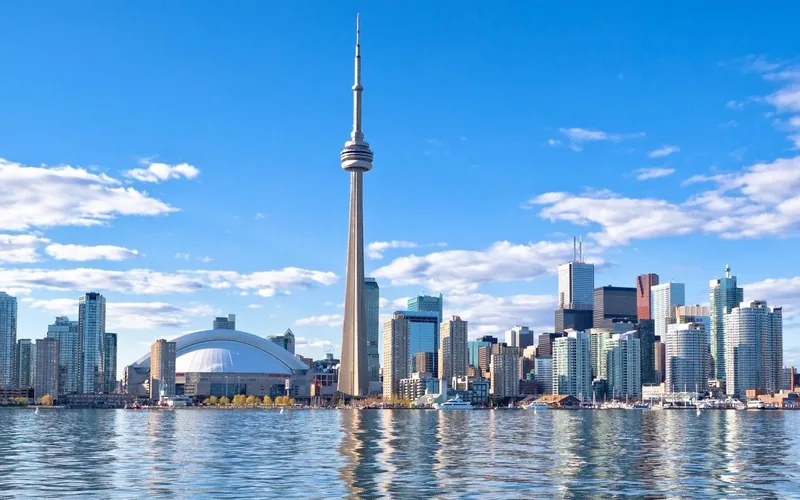
Feb 19–21, 2026 Toronto, Canada

North American Model United Nations

Conference

Feb 19–21, 2026

400 delegates expected

University students

In English

How it went

3.6711 ratings from delegates
Academics
3.64
Logistics
3.27
Socials
4.09

About

Carrying the Legacy Forward

It is our honour to invite you to the 41st edition of the North American Model United Nations (NAMUN), held from February 19–21, 2026, at the historic University of Toronto.

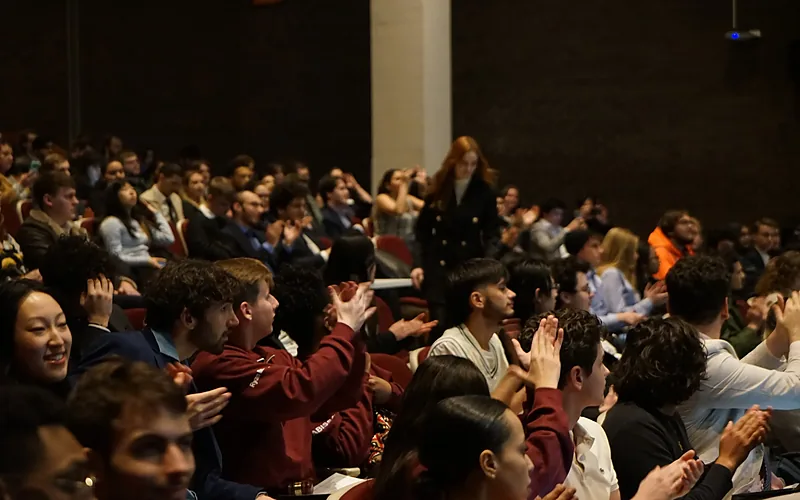
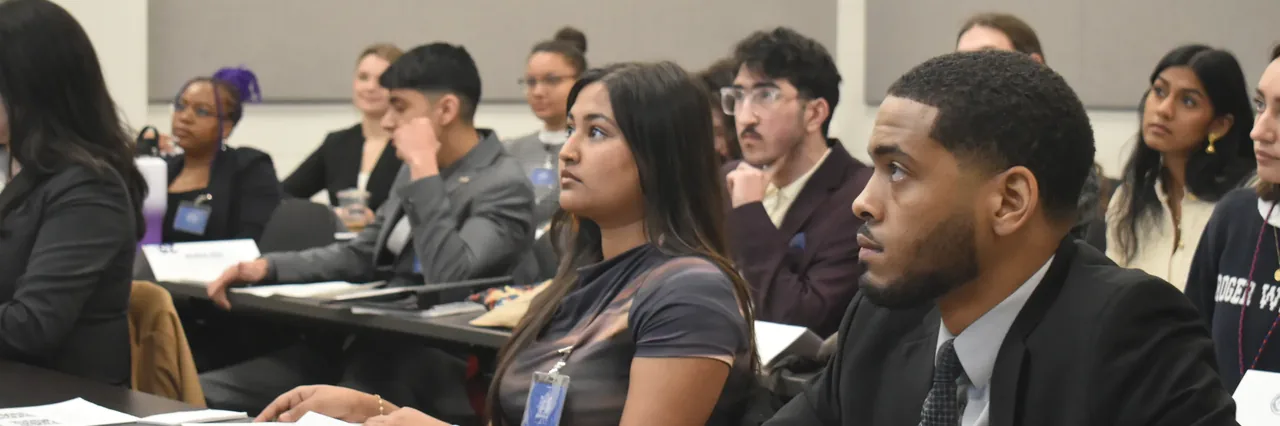
Founded in 1985, NAMUN is Canada’s longest-running university-level Model United Nations conference, known for its commitment to excellence in diplomacy, debate, and innovation. Every year, NAMUN brings together hundreds of delegates from across the globe to participate in three days of immersive committee sessions, thought-provoking discussions, and unforgettable social events, all in the heart of downtown Toronto.

Our dedicated staff work year-round to curate an enriching conference experience, whether through carefully crafted committees, engaging crisis simulations, or community-building opportunities that go beyond the committee room. At NAMUN, we aim to foster not only skillful diplomacy but also lasting friendships and meaningful conversations.

Registration Timeline

  • Early Bird: September 10, 2025 - October 23, 2025
  • Regular: October 24, 2025 - December 24, 2025
  • Late: December 25, 2025 - January 25, 2026

If you have any questions or encounter issues with registration, payment, or any general questions, don’t hesitate to reach out to us at external@namun.org. 

All payments are due on January 25, 2026

Financial Aid Program

Our financial aid program, as in previous years, may consist of a reduction in delegate fees, delegation fees, and processing fees on a case-by-case basis. Eligibility for this program is determined by a comprehensive review of the application by NAMUN 2026’s Financial Aid Committee. We encourage all interested delegates and delegations to take advantage of this program by applying before the closing date of December 24, 2025.

To apply for financial support, we kindly ask interested individual delegates or delegation representatives to complete the following form (here).

Please carefully review the Financial Aid application form before applying. A reminder that you must be already registered for NAMUN to apply for financial aid. Ensure you read the Terms and Conditions.

Refund policy 

NAMUN 2026 will issue a full refund upon request prior to December 24th, 2025. From December 24th, 2025 to January 25th, 2026 refunds will constitute 50% of the original purchase. Any refund requests submitted after January 25th will not be accepted. In accordance with our Delegate Equity Policy, in case of sickness or other extreme circumstances, please contact our Equity Director at equity@namun.org as soon as possible.

Please note that all refunds will not include the 7% fee required to cover our use of mymun.

Equity Policy 

At NAMUN, we believe that every delegate deserves an equal opportunity to participate, contribute, and succeed, regardless of their background, experience, etc. We strive to create an environment that values diversity, promotes inclusivity, and ensures fair representation for all delegates. By fostering a culture of equity, we aim to ensure everyone has a meaningful, compassionate, and fair experience at the conference. At NAMUN 2026, we are committed to creating a safe space for all delegates to express themselves freely, without fear of harassment, discrimination, or marginalization. If you want to know more about our updated delegate equity policy and methods of contacting the Equity Team, please refer to https://linktr.ee/namun.equity. 

Weather Cancellation Policy 

Please note that NAMUN 2026 will take place as scheduled from February 19 to February 21, 2026, and we will not be able to offer refunds to delegations that choose not to attend the conference due to weather-related circumstances.


Committees

  • 28 countries
    1. Subtopic A: Emergency Response
    2. Subtopic B: Long-Term Reform

    UN Economic and Financial Committee (UNECOFIN)

    Beginner · English · 28 countries

    Topics

    1. Subtopic A: Emergency Response
    2. Subtopic B: Long-Term Reform

    About the committee

    The global economy is facing turmoil following the sudden collapse of Lehman Brothers in October of 2008. What had initially begun as a housing market correction has escalated into a full-scale financial meltdown, exposing the vulnerability of a globalized financial system which is built on complex derivatives, inflated credit, and weak regulatory oversight. Taking place at the height of the crisis, this committee calls upon member states to formulate both an immediate response and a long-term strategy to prevent such a collapse from occurring in the future. Subtopic A: Emergency Response Delegates are tasked with addressing the urgent collapse of global markets, responding to global panic, failing financial institutions, and a global credit crunch. The focus is on coordinating stimulus packages, stabilizing banks and currencies, and strengthening the IMF and World Bank to act as international safety nets. It is also crucial to consider emergency employment protections and measures in order to prevent economic collapse in vulnerable nations. Subtopic B: Long-Term Reform As the crisis begins to stabilize, the committee shifts focus to systemic reform with discussions centering on the regulation of financial instruments such as derivatives and restructuring of the IMF and World Bank. Delegates will work to design mechanisms for crisis prevention and consider the creation of a Financial Stability Council under the UN with a focus on protecting developing nations from disproportionate financial fallout and reconsidering the global reliance on a single reserve currency.

    Countries

    How this committee type works
  • 30 countries
    1. Subtopic A: Protectionism, Strategic Goods, and Economic Sovereignty
    2. Subtopic B: Reforming Global Trade Institutions and Aligning Trade with Sustainability Goals

    UN Commission on International Trade Law (UNCITRAL)

    Beginner · English · 30 countries

    Topics

    1. Subtopic A: Protectionism, Strategic Goods, and Economic Sovereignty
    2. Subtopic B: Reforming Global Trade Institutions and Aligning Trade with Sustainability Goals

    About the committee

    In the light of renewed economic nationalism spurred by the Trump Administration’s “Liberation Day”, global trade is undergoing a seismic shift. Newly imposed tariffs, retaliatory measures, and strategic decoupling—particularly between the United States and China—have resulted in uncertainty in global markets. This committee aims to tackle the evolution of international trade law to address the new global economic order. Subtopic A: Protectionism, Strategic Goods, and Economic Sovereignty The committee will explore the surge in economic nationalism and its consequences on the global economy. Delegates will examine trade policies targeting strategic sectors such as semiconductors, rare earth minerals, agricultural goods, and electric vehicles, considering how nations can maintain economic sovereignty while preserving supply chains. With a focus on addressing the “Liberation Day” tariffs recently imposed by the United States, delegates will be expected to debate potential pathways for deescalation, dispute resolution, and/or reciprocal policy measures. Subtopic B: Reforming Global Trade Institutions and Aligning Trade with Sustainability Goals Delegates will discuss the future of multilateral institutions such as the WTO, whose dispute resolution functions have faltered under mounting geopolitical tensions. The committee will also focus on the integration of climate policy into trade frameworks–including the legality and equity of carbon border adjustment mechanisms—and how international trade agreements may promote environmental responsibility. Delegates are encouraged to explore how new trade partnerships, regional agreements, and diversified supply chains can contribute to improved global trade stability.

    Countries

  • 27 countries
    1. Subtopic A: Labour Exploitation and Corporate Accountability
    2. Subtopic B: Consumerism and Environmental Impacts

    UN Social, Humanitarian, and Cultural Committee (SOCHUM)

    Beginner · English · 27 countries

    Topics

    1. Subtopic A: Labour Exploitation and Corporate Accountability
    2. Subtopic B: Consumerism and Environmental Impacts

    About the committee

    In 2013, the Rana Plaza garment factory in Bangladesh collapsed, killing over 1,100 workers for global clothing brands. As such, the global fast fashion industry has come under increased scrutiny for its devastating human and environmental impacts. From underpaid garment workers in unsafe factories to the overwhelming waste produced as a result of overconsumption, fast fashion embodies the dark side of globalization. In the present, the industry continues to grow, driven by low-cost labor and consumer demand, while the environmental and human costs increase. This committee will examine the structural inequalities and environmental harm embedded within the global fashion supply chain. Subtopic A: Labour Exploitation and Corporate Accountability Delegates will examine the widespread human rights abuses taking place within the garment industry, including forced/child labour, lacking safety protection, and gendered exploitation. Key focuses include enforcing transparency across supply chains, the role of multinational corporations, and exploring ideas for a UN regulatory framework on labour practices. Subtopic B: Consumerism and Environmental Impacts As the environment faces degradation as a result of fast fashion practices including water pollution and overproduction as well as the ruse of synthetic microplastics, delegates will discuss the impacts of consumer culture, advertising, and global inequality in fueling unsustainable consumption. With a focus on curbing environmental damage, the committee will explore circular economy models and international mechanisms to address these issues.

    Countries

    How this committee type works
  • 35 countries
    1. Subtopic A: Emergency Containment and Mitigating Radioactive Fallout
    2. Subtopic B: Establishing Global Nuclear Safety and Oversight Mechanisms

    UNGA Emergency Special Session on Nuclear Safety and Energy

    Beginner · English · 35 countries

    Topics

    1. Subtopic A: Emergency Containment and Mitigating Radioactive Fallout
    2. Subtopic B: Establishing Global Nuclear Safety and Oversight Mechanisms

    About the committee

    The international community has been gripped by fear and confusion in the immediate aftermath of the catastrophic Chernobyl nuclear disaster in April of 1986. The explosion of Reactor 4 has released radioactive material throughout Europe while Soviet secrecy has hindered international containment efforts. This emergency committee session is tasked with the coordination of a global response to contain the disaster, the development of a global framework for nuclear safety, and developing the future of nuclear energy. Subtopic A: Emergency Containment and Mitigating Radioactive Fallout The committee must focus on immediately limiting the spread of radioactive contamination including the coordination of medical aid to affected populations, the establishment of exclusion and monitoring zones, and strategies for decontamination. Additionally, delegates must navigate issues of sovereignty and secrecy while providing international scientific and logistical support to the Soviet Union and surrounding regions. Subtopic B: Establishing Global Nuclear Safety and Oversight Mechanisms Looking beyond immediate issues, the committee seeks to address the long-term need for international oversight of nuclear energy. Delegates will consider the creation or strengthening of international safety standards as well as early-warning systems and inspection protocols. Debates may discuss expanding the powers of the IAEA, developing new international treaties, and whether nuclear energy development should be promoted or restricted in nations where infrastructure and regulatory systems may be lacking.

    Countries

    How this committee type works
  • 25 countries
    1. Addressing and preventing gender-based violence
    2. Creating free and fair elections to establish a stable and sovereign government
    3. Sustainably rebuilding the economy

    UN Security Council (UNSC) - Crisis in Haiti

    Intermediate · English · 25 countries

    Topics

    1. Addressing and preventing gender-based violence
    2. Creating free and fair elections to establish a stable and sovereign government
    3. Sustainably rebuilding the economy

    About the committee

    For decades, Haiti has experienced severe crises, marked by gender-based violence, food insecurity, and poverty, that have spread across social, political, and economic sectors of the country, creating unstable and vulnerable conditions. This issue has been exacerbated by several environmental disasters such as the 2021 earthquake and of course, COVID-19. The rapid succession of these natural disasters have made rebuilding and stabilizing Haiti a difficult task with almost 1 million people displaced as a result of these disasters. Moreover, the overwhelming presence of gangs and gang violence in Haiti has made it extremely difficult to establish a stable government in Haiti, as over 80% of the capital – Port-au-Prince – is under the control of a gang coalition called “Viv Ansanm”. In 2024, attacks from this coalition crippled the country, and although a transitional government was established, the government has since then formally requested the Security Council to send in a peacekeeping force. This committee will discuss how the Security Council may sustainably intervene in Haiti to help establish a stable and sovereign state – this may be achieved by sending a peacekeeping mission or by other means.

    Countries

    How this committee type works
  • 21 countries
    1. Addressing political instability
    2. Determining the role of international naval forces and its correlation with the resurgence of piracy
    3. Developing a judicial process to prosecute pirate

    International Maritime Organization (IMO) - Piracy in the Gulf of Aden

    Intermediate · English · 21 countries

    Topics

    1. Addressing political instability
    2. Determining the role of international naval forces and its correlation with the resurgence of piracy
    3. Developing a judicial process to prosecute pirate

    About the committee

    Somali-based piracy has been a persistent issue in the Gulf of Aden and in the Indian Ocean. Their presence is a response to various stressors and factors including the collapse of Somalia’s central government, a lack of economic opportunities, and a lack of law enforcement. The International Maritime Organization has played a significant role in attempts to resolve this issue, and for a period of time in the 2010s, piracy did reduce. This reduction was due to the IMO’s role in establishing the Djibouti Code of Conduct, a regional agreement which promotes regional cooperation through training and information sharing. In addition, the IMO also facilitated and collaborated with naval coalitions and provided assistance to Somalia, Djibouti, and Yemen to develop coast guard legal systems, training personnel, and improving infrastructure. Despite the IMOs efforts, recent events such as political instability in Somalia and Yemen, illegal fishing, and arms trafficking are facilitating a resurgence in piracy. The IMO now has an opportunity to rework the Djibouti Code of Conduct to create a more long-lasting and flexible initiative that can withstand the ever-changing political climate. To do so, the backroom will work in a more advisory capacity to allow delegates to evaluate the success of their directives throughout the conference.

    Countries

  • 26 countries
    1. Evaluating the current impact of the Narmada Project and working backwards to either improve or maintain such results
    2. How to best allocate World Bank funds to achieve maximum results
    3. How much oversight should the World Bank have over the projects it funds

    World Bank - The Narmada Valley Development Project

    Intermediate · English · 26 countries

    Topics

    1. Evaluating the current impact of the Narmada Project and working backwards to either improve or maintain such results
    2. How to best allocate World Bank funds to achieve maximum results
    3. How much oversight should the World Bank have over the projects it funds

    About the committee

    In 1978, India asked the World Bank for help in funding its Narmada Valley Development Project, which consisted of building a complex of dams along the Narmada River to provide potable water, irrigation, and hydroelectric power for people living within the region. In 1985, the World Bank agreed to help finance the construction of the Sardar Sarovar dam and provided $450 million. However, controversy arose concerning the dam as there were significant costs associated with its construction, including the displacement of indigenous peoples and a high environmental impact. A coalition of NGOs called the Save Narmada Movement lobbied for alternatives that would have a less negative impact. Due to such pressure, the World Bank withdrew its funding from the project in 1993. Despite the World Bank’s withdrawal, the Indian government was able to complete its construction of the Narmada Project in 2017, without ever addressing the concerns that NGOs advocated against. This committee will go back to the 1980s, when the Save Narmada Movement was lobbying for a more sustainable project to be built. Delegates will work to balance the interests of the Indian government with humanitarian and environmental interests while the backroom acts as critics of these initiatives from the perspective of activists and NGOs. Delegates should focus also on answering the following question, “How can the World Bank leverage its power to ensure that a project such as the Narmada dam is built sustainably?”

    Countries

  • 20 countries
    1. Topic 1: Armed Activities on the Territory of the Congo (D.R.C. v. Uganda)
    2. Topic 2: Military and Paramilitary Activities in and against Nicaragua (Nicaragua v. United States of America)

    International Court of Justice (ICJ)

    Intermediate · English · 20 countries

    Topics

    1. Topic 1: Armed Activities on the Territory of the Congo (D.R.C. v. Uganda)
    2. Topic 2: Military and Paramilitary Activities in and against Nicaragua (Nicaragua v. United States of America)

    About the committee

    Topic 1: Armed Activities on the Territory of the Congo (D.R.C. v. Uganda) The Second Congo War was one of the most intense conflicts since World War II, encompassing multiple states and non-state actors across Central Africa. It led to the filing of what today is known as Armed Activities on the Territory of the Congo (Democratic Republic of Congo v. Uganda). In this thrilling landmark case, the Democratic Republic of the Congo accused Uganda of unlawful invasion, occupation, human rights violations, and the plunder of its natural resources, even citing Uganda’s seizure of the Inga hydroelectric dam as causing massive civilian suffering. Uganda maintained the argument that its actions were primarily based in self-defense and efforts towards regional stabilisation. The International Court of Justice’s 2005 judgment and 2022 reparations ruling confronted core questions: the limits of self-defense in international charters, the meaning of sovereignty during regional conflict, and state accountability for humanitarian violations. For NAMUN delegates, this case offers a rare opportunity to engage deeply with the interdisciplinary issues of conflict, reparations, resource seizure, domination, even aviation and diplomatic law, and international responsibility. From assessing the seizure of a dam to arguing for the right to invade a sovereign nation, delegates will have the chance to cultivate careful legal reasoning and nuanced diplomacy, to argue for either Uganda or the D.R.C. in one of the UN’s most complex legal cases known today. How far can self-defense be extended as a legal argument, when insurgents cross borders? What does this prosecution look like in court? The opening for reparations will encourage delegates to take a step beyond a simple verdict in court, encouraging them to envision reparations as solution oriented assets, prioritising the development and civillians of the D.R.C., or Uganda, today. //Topic 2: Military and Paramilitary Activities in and against Nicaragua (Nicaragua v. United States of America) Military and Paramilitary Activities in and Against Nicaragua (Nicaragua v. United States of America) has always been a debated case in international law. An intense clash that pitted a small Central American nation, Nicaragua, against the main superpower at the peak of the Cold War. Filed in 1986, Nicaragua charged the United States with the accusation of waging an unlawful proxy war: mining its harbors, funding and training the Contras, and violating its sovereignty in direct defiance of the UN Charter and customary international law. Washington countered with claims of collective self-defense, ideological necessity against communism, and the protection of democracy in the Western Hemisphere. The International Court of Justice’s judgment contemplated: What are the limits of force under Article 2(4)? How far does the right of self-defense under Article 51 extend? And what happens when a colonial power like the United States refuses to appear before an International Court or comply with its orders? This case offers electric opportunities for delegates to explore the interdisciplinary topics of international law, humanitarian law, mining law, sovereignty, ideological resistance, and more. It invites delegates to interpret covert operations conducted by the CIA, proxy warfare and exploration of evidence between ships records to contra fund. The fragility of international norms is as urgent today as in the 1980s, and delegates will craft legal arguments, navigate high-stakes diplomacy and the consequences, while balancing strategic interest. Joining this case is diving directly between law and power, where your reasoning and creativity tilts the scales of global justice here at NAMUN.

    Countries

    How this committee type works
  • 14 countries
    1. Integrated Crisis Committee
    2. Spain

    The Empire’s Last Stand: Spanish-American War of 1898 - Spain

    Expert · English · 14 countries

    Topics

    1. Integrated Crisis Committee
    2. Spain

    About the committee

    For more than 400 years, the Spanish Empire had sovereignty over many regions in the New World, including the Philippines and most of Latin America. The Empire’s reach lasted until the early 19th century, when most of the colonies fought for their independence gradually. Through it all, Spain was able to keep a hold on Cuba, Puerto Rico, Guam, and the Philippines with increasing difficulty as the years went by. Tensions have now heightened at the end of the 19th century, and the tides are changing. It is time for the end of the Empire. The United States has entered the conflict between Spain and the colonies following the sinking of an American Boat in Havana Harbour. With other economic and international intentions, the rising superpower is set on ridding the Western hemisphere and other colonies of European powers, and establishing their own international presence. At the same time, the Colonies are gearing up for rebellion, with the Cuban War of Independence and the Philippine Revolution brewing for quite some time. The Spanish, Americans, and Colony Revolutionaries will be faced with important decisions regarding warfare, international politics, and culture. Who will come out on top to determine the fate of the last islands that the Empire had held on to for so long? Independence might follow, or perhaps we will see the establishment of a new Empire.

    Countries

    How this committee type works
  • 12 countries
    1. Joint Crisis Committee
    2. Federal Government bloc

    FEMA: The San Andreas Fault - Federal Government bloc

    Expert · English · 12 countries

    Topics

    1. Joint Crisis Committee
    2. Federal Government bloc

    About the committee

    On the Pacific Coast, people often joke grimly about “The Big One”, the inevitable 7+ magnitude earthquake long predicted to come roaring out of the San Andreas Fault. But on February 20, 2026, inevitability struck with unforgiving force. A massive quake ripped along the spine of California, plunging major urban hubs into chaos and leveling critical infrastructure in mere moments. Roads buckled, power grids collapsed, and communication networks went dark. Now, with millions affected and time running out, the Federal Emergency Management Agency (FEMA), under the Department of Homeland Security, must coordinate with local governments, state officials, the National Guard, and scientific experts to mount one of the largest domestic disaster responses in U.S. history. But with a politically fractured landscape between federal and state powers, public and private interests, and urban and rural divides, every decision carries weight. Mistrust runs deep, resources are limited, and not every player agrees on what “recovery” looks like. Delegates will step into the roles of FEMA officials, National Guard officers, leading scientists, and representatives from state, municipal, and federal governments. This crisis will follow two sides of the story: the Federal Government’s response and the State-Municipal response, each respective room weighing political leverage with altruism. With lives hanging in the balance and a fractured society staring back from the rubble, the question is not only how to respond, but who will lead, who will be blamed, and who will be left behind. As the earth tears California apart, will the nation’s leaders find common ground with their State-Municipal counterparts? Or will the aftershocks, both political and literal, threaten to fracture the United States itself?

    Countries

  • 24 countries
    1. Single Crisis Committee

    First Contact

    Expert · English · 24 countries

    Topic

    Single Crisis Committee

    About the committee

    It has been fifteen years since humanity crossed a final frontier and planted its flag on Mars in 2035. What began as a unified scientific mission has since unraveled into a patchwork of competing interests with nations vying for dominance, corporations carving out territory, and settlers demanding autonomy. The Martian colony, once a symbol of global cooperation, now teeters on the edge of fragmentation, as regular commercial interplanetary transport blurs the line between Earth’s influence and Mars’ independence. Then, the signal arrives. Intercepted by a Martian deep-space array, the transmission is unmistakably not of human origin. Encoded in 55 languages eerily familiar as the very ones launched aboard Voyager 1 and 2 decades ago, the message is chilling in its simplicity: “Welcome to the Community. Beware of your neighbours.” The world and beyond erupts into chaos. Who sent the message? What is the "Community"? And more alarmingly, who are the "neighbours"? Questions spiral faster than answers can form. As panic and speculation grow, the United Nations convenes an emergency summit of the Security Council, joined by leading scientists, private space agencies, Martian politicians, and corporate stakeholders. The stakes have never been higher. Some urge caution and diplomacy, others demand military readiness. Some call for transparency, others for secrecy and control. In a time of fractured alliances and privatized space power, can humanity present a unified front? or will old divisions doom it before First Contact even begins? The committee begins at the moment the message is decrypted. What happens next is up to those in the room. This committee will consist of one room.

    Countries

  • 19 countries
    1. Single Crisis Committee

    Ad Hoc

    Expert · English · 19 countries

    Topic

    Single Crisis Committee

    About the committee

    Coming soon...

    Countries

  • 15 countries
    1. Integrated Crisis Committee
    2. United States of America

    The Empire’s Last Stand: Spanish-American War of 1898 - USA

    Expert · English · 15 countries

    Topics

    1. Integrated Crisis Committee
    2. United States of America

    About the committee

    For more than 400 years, the Spanish Empire had sovereignty over many regions in the New World, including the Philippines and most of Latin America. The Empire’s reach lasted until the early 19th century, when most of the colonies fought for their independence gradually. Through it all, Spain was able to keep a hold on Cuba, Puerto Rico, Guam, and the Philippines with increasing difficulty as the years went by. Tensions have now heightened at the end of the 19th century, and the tides are changing. It is time for the end of the Empire. The United States has entered the conflict between Spain and the colonies following the sinking of an American Boat in Havana Harbour. With other economic and international intentions, the rising superpower is set on ridding the Western hemisphere and other colonies of European powers, and establishing their own international presence. At the same time, the Colonies are gearing up for rebellion, with the Cuban War of Independence and the Philippine Revolution brewing for quite some time. The Spanish, Americans, and Colony Revolutionaries will be faced with important decisions regarding warfare, international politics, and culture. Who will come out on top to determine the fate of the last islands that the Empire had held on to for so long? Independence might follow, or perhaps we will see the establishment of a new Empire.

    Countries

    How this committee type works
  • 14 countries
    1. Integrated Crisis Committee
    2. Colonies

    The Empire’s Last Stand: Spanish-American War of 1898 - Colonies

    Expert · English · 14 countries

    Topics

    1. Integrated Crisis Committee
    2. Colonies

    About the committee

    For more than 400 years, the Spanish Empire had sovereignty over many regions in the New World, including the Philippines and most of Latin America. The Empire’s reach lasted until the early 19th century, when most of the colonies fought for their independence gradually. Through it all, Spain was able to keep a hold on Cuba, Puerto Rico, Guam, and the Philippines with increasing difficulty as the years went by. Tensions have now heightened at the end of the 19th century, and the tides are changing. It is time for the end of the Empire. The United States has entered the conflict between Spain and the colonies following the sinking of an American Boat in Havana Harbour. With other economic and international intentions, the rising superpower is set on ridding the Western hemisphere and other colonies of European powers, and establishing their own international presence. At the same time, the Colonies are gearing up for rebellion, with the Cuban War of Independence and the Philippine Revolution brewing for quite some time. The Spanish, Americans, and Colony Revolutionaries will be faced with important decisions regarding warfare, international politics, and culture. Who will come out on top to determine the fate of the last islands that the Empire had held on to for so long? Independence might follow, or perhaps we will see the establishment of a new Empire.

    Countries

    How this committee type works
  • 12 countries
    1. Joint Crisis Committee
    2. State-Municipal bloc

    FEMA: The San Andreas Fault - State-Municipal bloc

    Expert · English · 12 countries

    Topics

    1. Joint Crisis Committee
    2. State-Municipal bloc

    About the committee

    On the Pacific Coast, people often joke grimly about “The Big One”, the inevitable 7+ magnitude earthquake long predicted to come roaring out of the San Andreas Fault. But on February 20, 2026, inevitability struck with unforgiving force. A massive quake ripped along the spine of California, plunging major urban hubs into chaos and leveling critical infrastructure in mere moments. Roads buckled, power grids collapsed, and communication networks went dark. Now, with millions affected and time running out, the Federal Emergency Management Agency (FEMA), under the Department of Homeland Security, must coordinate with local governments, state officials, the National Guard, and scientific experts to mount one of the largest domestic disaster responses in U.S. history. But with a politically fractured landscape between federal and state powers, public and private interests, and urban and rural divides, every decision carries weight. Mistrust runs deep, resources are limited, and not every player agrees on what “recovery” looks like. Delegates will step into the roles of FEMA officials, National Guard officers, leading scientists, and representatives from state, municipal, and federal governments. This crisis will follow two sides of the story: the Federal Government’s response and the State-Municipal response, each respective room weighing political leverage with altruism. With lives hanging in the balance and a fractured society staring back from the rubble, the question is not only how to respond, but who will lead, who will be blamed, and who will be left behind. As the earth tears California apart, will the nation’s leaders find common ground with their State-Municipal counterparts? Or will the aftershocks, both political and literal, threaten to fracture the United States itself?

    Countries

Past editions

  • 4editions since 2023
  • 3.88 average of 36 ratings

Organizers

Audrey Lu
External Affairs Coordinator
Hannah Wei-Ai Ly
Director-General External Affairs

Ivy Chen
Treasurer

Maggie Hung
External Affairs Coordinator

More MUN conferences

ConferencesCanadaNAMUN 2026