Your assignment arrives. A country you've maybe never thought about, a topic you're still wrapping your head around, a room full of strangers in suits, and three days to get through it. For anyone new to Model UN, the build-up to that first conference is a strange mix of excitement and low-grade panic.
This model united nations guide exists to close that gap. It won't turn you into a seasoned delegate overnight, but it will walk you through everything you actually need: how to find a conference, how to prepare without burning out, what to expect when you walk through the door, and how to hold your own once debate begins. If you're still figuring out what MUN is in the first place, start with What is Model UN? and come back here once you're ready to act.
Ready? Let's go from zero to first conference.
Finding your first conference
The first step is finding somewhere to go, and this is easier than it used to be. Model UN conferences run year-round all over the world: at universities, in schools, in city conference centres, and increasingly online. Some are intimate events with two hundred delegates; others fill a hotel with two thousand. Both are fine for a first time, though a mid-sized event tends to give you more room to learn without being completely lost in the crowd.
The fastest way to browse what's out there is mymun.com, which lists conferences by region, date, and committee type. You can filter by whether a conference is beginner-friendly, see which topics are on the agenda, and apply directly through the platform. Once you're accepted, the same platform handles your delegation paperwork, so there's no chasing organisers over email.
A few things worth checking before you apply:
- Committee size. Smaller committees (20 to 40 delegates) mean more speaking time per person, which is genuinely helpful when you're finding your feet.
- Committee type. A General Assembly or ECOSOC committee follows familiar parliamentary procedure and is the standard starting point. Crisis committees are faster and more improvisational; they're fun, but they're a steeper learning curve. Save them for your second conference if you want a gentler introduction.
- Beginner notes. Many conferences flag themselves as welcoming first-timers, or offer training sessions the evening before debate opens. Look for those.
Apply to one. Just one. The temptation to hedge your bets and apply to three is understandable, but one conference, properly prepared for, is worth more than three you scrambled through.
Before the conference
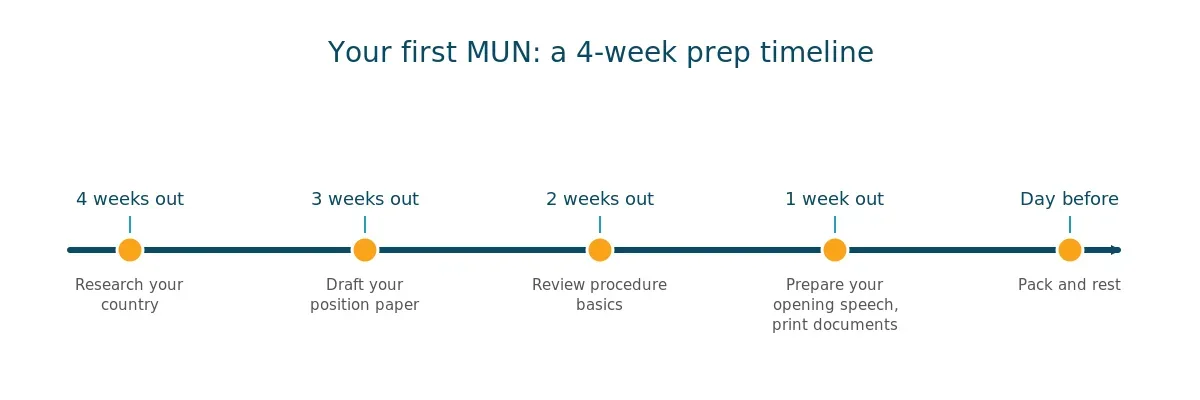
The gap between signing up and walking into the committee room is where first-time delegates win or lose their experience. Preparation doesn't mean memorising every UN resolution ever passed on your topic. It means arriving with enough grounding to engage confidently.
Understand your country. You'll be assigned a country to represent, and your first job is to understand where that country actually stands. What are its relationships with neighbouring states? What blocs or alliances does it belong to? Has it historically supported or opposed action on your topic? This is more interesting than it sounds, and it changes how you approach every conversation in the room. Our guide to MUN country research gives you a step-by-step method, including the best free sources and how to use AI tools without falling into the trap of trusting them uncritically.
Write your position paper. Most conferences ask for one, and even if yours doesn't, writing one is the best preparation available. A position paper forces you to crystallise your country's stance into clear language: what the problem is as your country sees it, what your country has done or said about it, and what kind of solution you'd support. The act of writing it turns vague research into arguments you can actually deploy. Read the full guide to writing a position paper before you start.
Know the basics of procedure. You don't need to be an expert before day one, but knowing roughly what a General Speakers' List is, what a moderated caucus does, and how a working paper becomes a resolution will stop you looking completely bewildered in the first session. The rules of procedure guide covers this in detail; even skimming the first half before your conference will help.
If your delegation is using MUN Command through mymun, this is also where it becomes useful: you can coordinate research with teammates, share notes on your country's positions, and keep your position paper draft somewhere your advisor can see and comment on it.
What to expect on the day
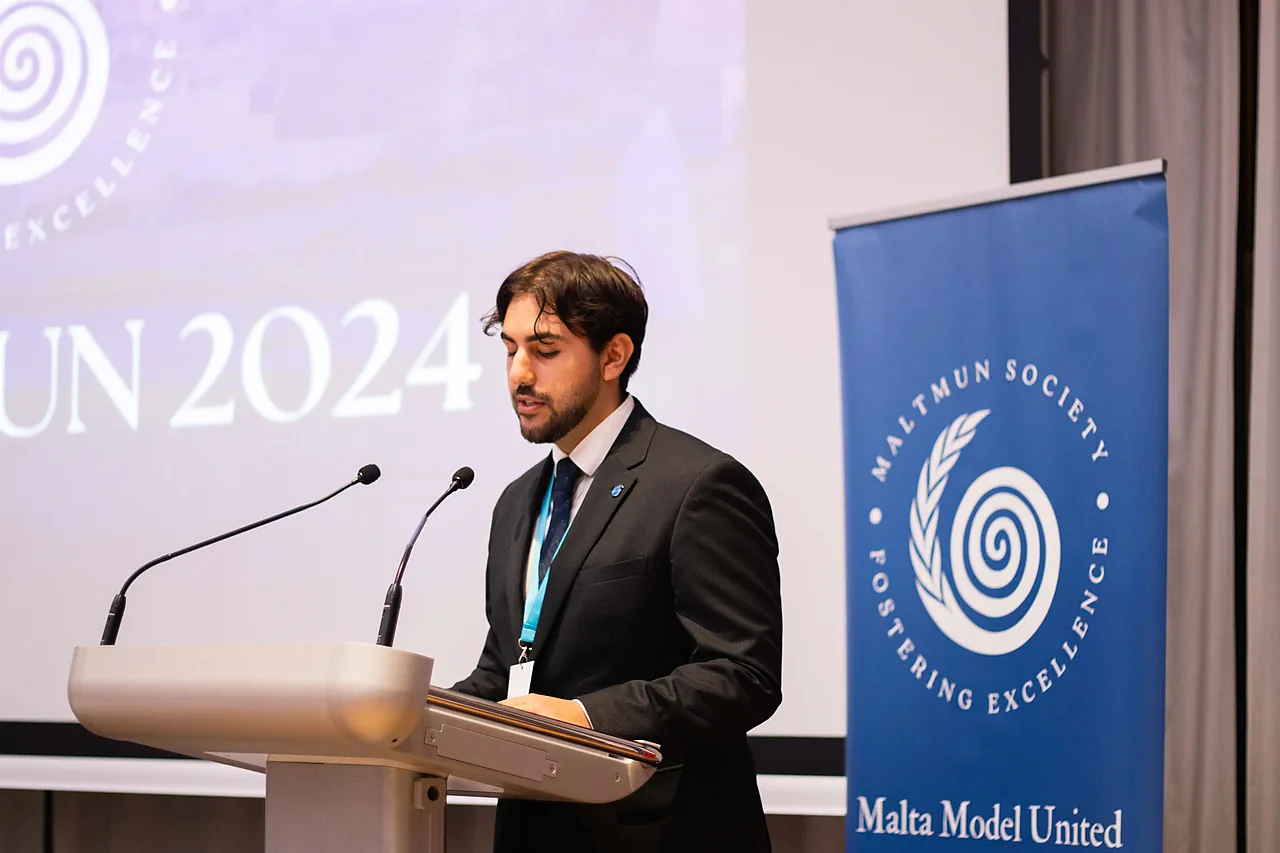
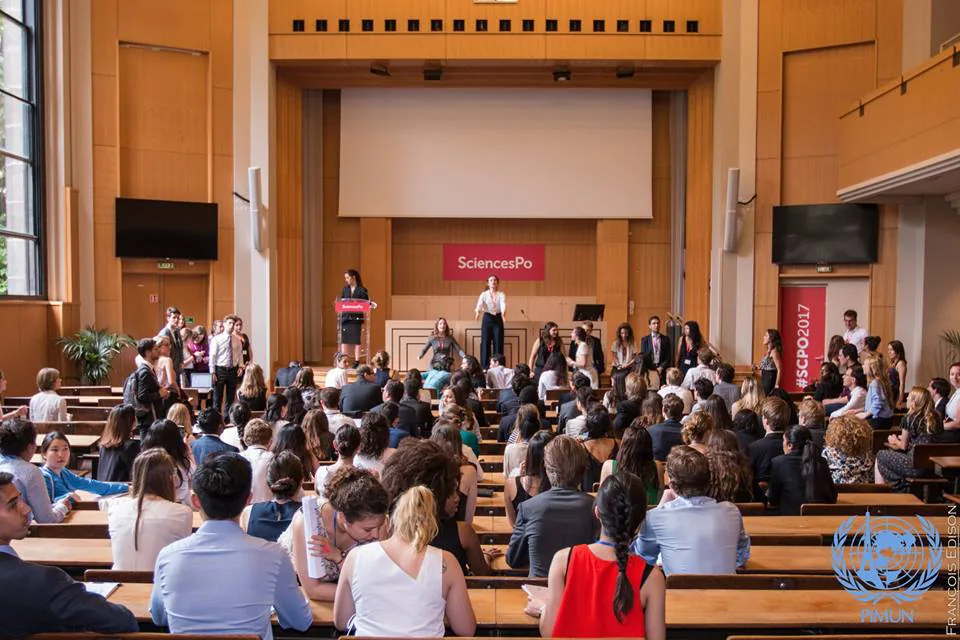
The first morning of a MUN conference usually starts with an opening ceremony: a welcome from the Secretary-General, sometimes a keynote speaker, sometimes a few words from a university dean or a local official. It's part formality, part atmosphere-setter. Enjoy it.
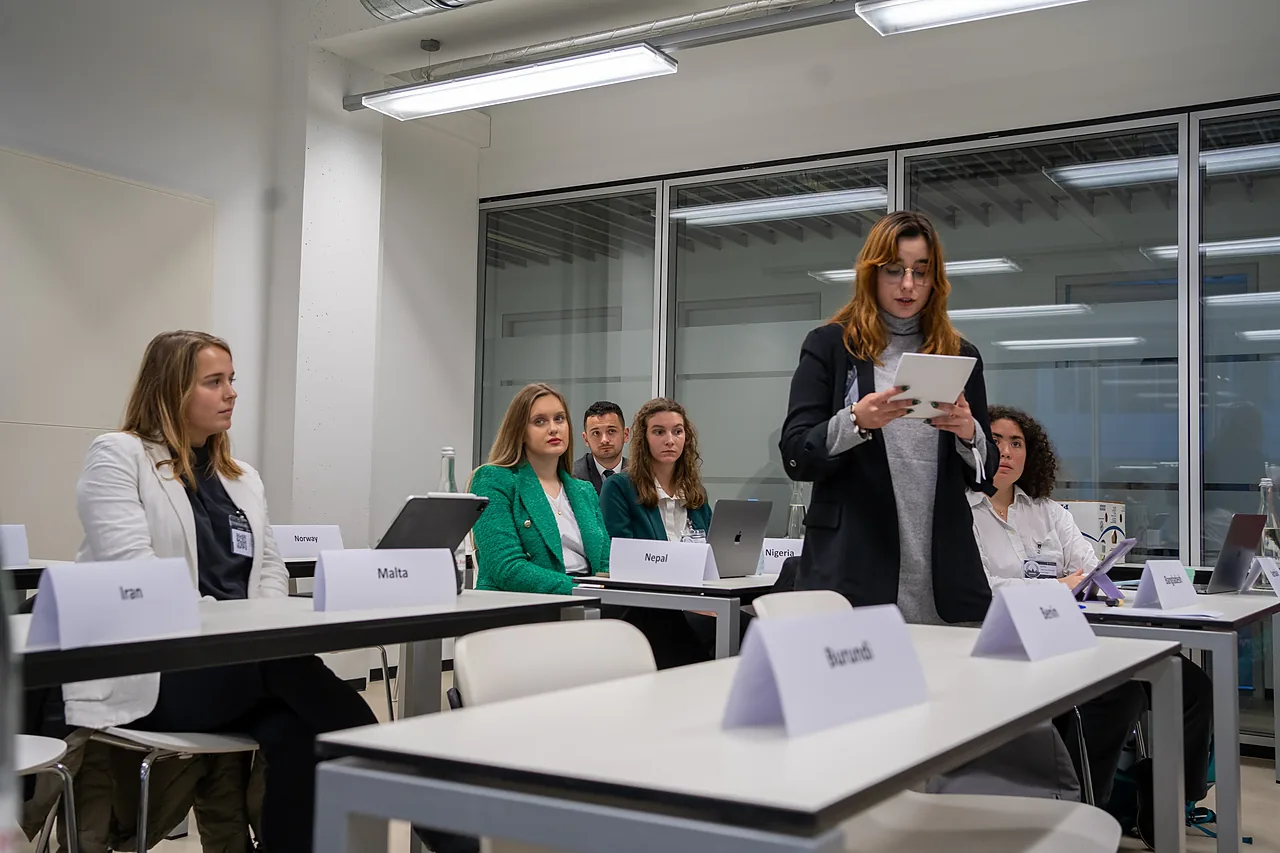
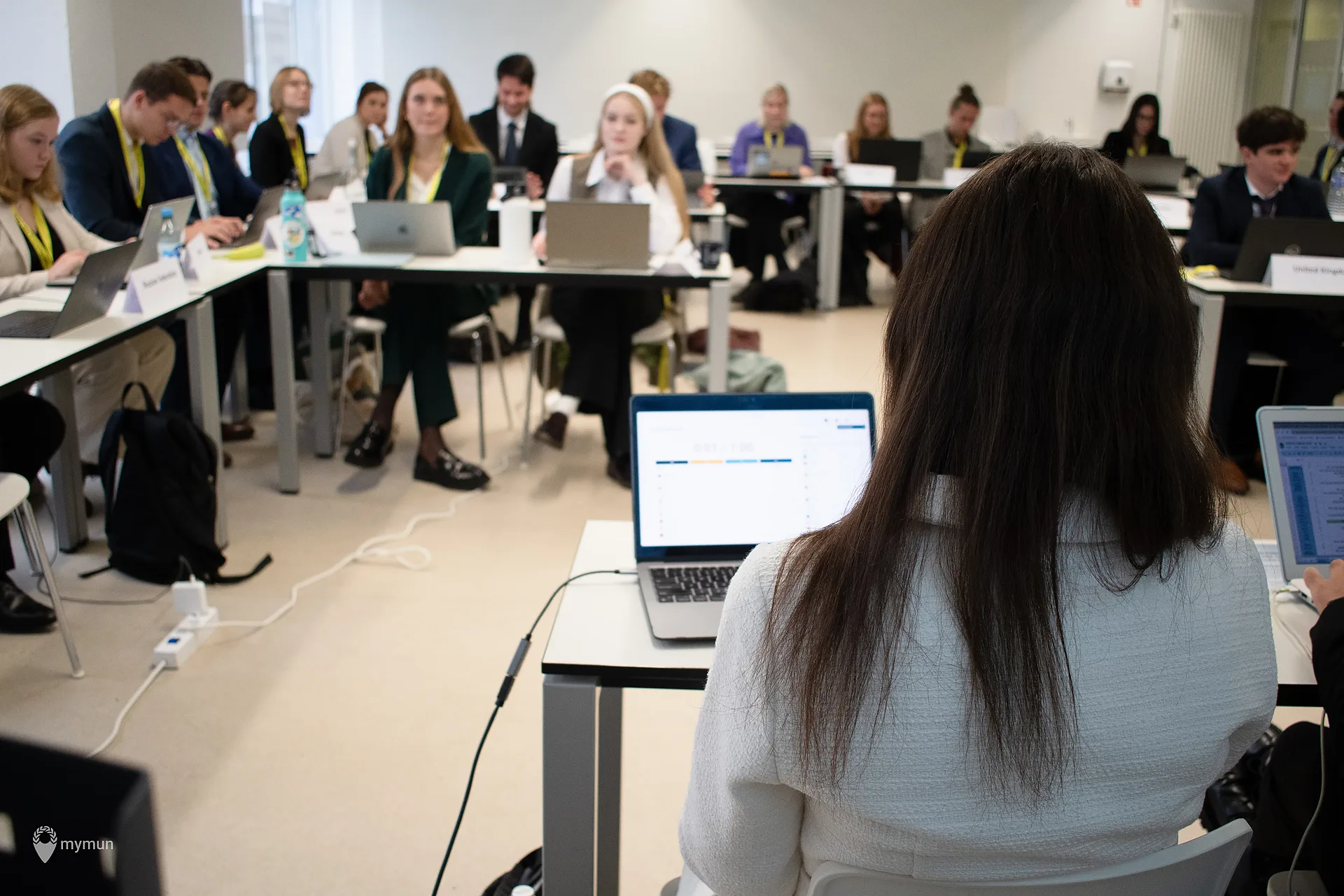
After that, committees open. You'll find your room, take your assigned seat (or pick one, depending on the conference), and put your placard in front of you. The chair will call the conference to order, take the roll call (each country answers "present" or "present and voting," a distinction that matters for abstentions later), and open the speakers' list.
A few practical things worth knowing:
Dress code. Western business formal is the default unless the conference says otherwise: a suit or smart trousers and a blazer for men, a suit, dress, or smart trousers and blouse for women. When in doubt, overdress slightly. You'll feel more confident, and conferences take the dress code seriously.
The schedule. Committees typically run for six to eight hours a day, broken up by lunch and short breaks. The first day is almost always slower, as delegates feel each other out and the formal debate finds its rhythm. By the second morning, alliances form fast.
The nerves. Everyone is nervous. The delegate who looks most composed at the placard in front of you has the same knot in their stomach. The first time you raise your placard to be added to the speakers' list, your heart will beat a bit faster. That's completely normal, and it fades after the first speech.
The debate, step by step
MUN debate moves between two modes, and understanding the rhythm helps enormously.
The General Speakers' List (GSL) is the backbone of formal debate. Delegates speak one at a time, for a set time (usually sixty to ninety seconds), to the full committee. These speeches are where you lay out your country's position, respond to what you've heard, and make the case for your ideas. The list stays open throughout the conference; getting on it early is a good habit.
Moderated caucuses are proposed by delegates and voted on by the committee. The chair sets a total time and a speaking time per delegate, and the floor opens for shorter, more focused exchanges on a specific subtopic. This is where debate gets sharper and more interactive.
Unmoderated caucuses are where the real deal-making happens. Formal procedure pauses, delegates leave their seats, and the room turns into a negotiation floor. Blocs form, draft language gets written on notepads, and compromises get tested. Don't stand at the edge of the room during an unmod. Walk over to the delegations you want to work with, introduce yourself (it's completely normal), and start talking.
Working papers are the early drafts of what will eventually become a resolution. They're informal, incomplete, and often messy, but getting your country's language into a working paper early is one of the most effective things you can do. Working papers that gather enough co-signatories get debated as draft resolutions, which are voted on at the end of the conference.
The rules of procedure guide goes much deeper on all of this. For your first conference, the main thing is to keep moving: don't wait for permission to engage. Raise your placard, walk up to someone during unmod, ask a question, sign a working paper.
Speaking with confidence
The first speech is the hardest one. After that, it gets easier every single time.
For your opening speech, the structure that works best is simple: a hook that frames the issue from your country's perspective, a clear statement of your country's position, and a call to the committee to act (or not act) in a specific direction. Keep it tight. A sixty-second speech that makes one argument crisply beats a rambling two-minute speech every time. The dedicated guide to writing a MUN opening speech walks through this structure with an annotated example.
On delivery: speak slower than feels natural, make eye contact with different parts of the room, and don't read your speech word for word if you can avoid it. Delegates who look up from their notes tend to sound more authoritative even when they're saying the same thing. If public speaking still feels daunting, Public Speaking 101 covers the fundamentals in a practical way.
One genuinely useful habit: after each session, notice what other delegates did that worked. A well-constructed argument, a confident opening, a clever procedural motion. You'll absorb more from watching a good speaker for ten minutes than from most advice you'll read.
Writing and passing resolutions
By the second day of most conferences, the committee's energy shifts from debate toward resolution-writing. This is where preparation pays off. Delegates who have researched their positions and talked to potential allies during unmods are the ones whose language ends up in the final text.
A MUN resolution has a specific format: preambulatory clauses (beginning with words like "Noting," "Recognising," "Deeply concerned") that frame the issue, and operative clauses (beginning with action verbs like "Urges," "Calls upon," "Establishes") that describe what the resolution actually proposes. Getting the language right is a skill, but it's learnable.
More important than format is coalition-building. A resolution that passes needs enough votes. That means finding other delegations whose countries would plausibly support your approach, co-authoring language that works for all of you, and being willing to soften a clause here and there to bring a hesitant bloc on board. This is the part that actually mirrors real diplomacy, and it's the part most delegates find most satisfying.
For a deeper look at what separates a solid resolution from a winning performance, From 0 to Best Delegate is worth reading before your conference.
Etiquette and socials
MUN has a social dimension that first-timers often don't expect, and it's one of the genuinely good things about it.
In committee, address other delegates as "the delegate of [country]" during formal debate, not by name. Refer to yourself in the third person when speaking. Pass notes to friendly delegations during formal debate rather than whispering. Be genuinely civil to delegates you disagree with in committee, the same ones you'll want to find at dinner later.
Outside the committee room, the culture is warm and social. Most conferences have a delegate mixer or social event in the evenings, and these are worth showing up to even if you're tired. The connections you make at a first conference frequently outlast the conference itself. The MUN Socials Guide covers what to expect and how to make the most of the off-committee hours.
How mymun and MUN Command support you
mymun isn't just where you find and apply to conferences. Once you're registered and your delegation is set up, the platform handles a lot of the administrative work that used to fall through the cracks.
Through MUN Command, delegates and advisors can manage the full delegation in one place: track who's registered, share research resources, collect position papers before the deadline, and coordinate travel and accommodation. For advisors running a school or university delegation, it replaces a pile of spreadsheets and a long email thread.
For individual delegates, the practical value is simpler: your conference information, application status, and delegation communications live in one place rather than scattered across inboxes. And if you're going to your first conference alone rather than as part of an organised delegation, mymun's conference listings give you everything you need to find an event that accepts independent delegates.
If you want to browse conferences right now, mymun.com is the place to start.
How to stand out (and have fun)
The honest answer is that the delegates who stand out at their first conference are not the ones who already know everything. They're the ones who engage fully: who speak early even when nervous, who walk up to strangers during unmod, who draft something and circulate it even if it's imperfect, who stay curious about other delegates' positions rather than just defending their own.
The awards at the end of a conference are genuinely nice to win. But they're a byproduct of doing the real thing well, not a goal to optimise for on their own. The delegates who obsess over winning tend to peak early and plateau. The ones who treat every conference as a chance to get better tend to improve fast and have more fun doing it.
A few things that help in practice:
- Be generous with co-authorship. Invite other delegates to sign onto your working paper early. You'll build goodwill and a coalition at the same time.
- Read the background guide. The conference background guide tells you a lot about the direction the chairs want debate to go. Most delegates skim it. Read it properly.
- Come back to your position paper. In the heat of debate it's easy to drift. Your position paper is a useful anchor.
- Talk to the chairs after sessions. Not to lobby for awards, but to ask questions. Chairs have usually been through exactly where you are, and most of them enjoy the conversation.
- Consider crisis committees for your second or third conference. They're a different experience, faster and more improvisational, and they develop a different set of skills. The MUN crisis committee guide explains the format well if you're curious.
Most of all: enjoy the strange, particular feeling of representing a country that isn't yours, in a room full of people who chose to spend their weekend doing this. That shared intensity is what makes MUN genuinely unlike anything else. Your first conference is the start of something, not just an event to get through.

Go find your conference. The room is waiting.