IDYMUN 2026

International Diplomatic Youth Model United Nations (IDYMUN)

May 16–17, 2026 Online

International Diplomatic Youth Model United Nations (IDYMUN)

Conference

Online

May 16–17, 2026

1,000 delegates expected

High school and university students

In English

How it went

3.7822 ratings from delegates
Academics
3.86
Logistics
3.68
Socials
3.77

About

Where diplomacy meets young people


IDYMUN 2026: International Youth Diplomatic Model United Nations

Welcome to IDYMUN 2026, the International Youth Diplomatic Model United Nations—a premier global online conference designed for school and university students to experience international diplomacy through immersive and realistic simulations. Scheduled for May 16–17, 2026, this fully virtual conference will be conducted on Google Meet in collaboration with mymun.com, bringing together young leaders from across the world to debate, deliberate, and develop solutions for pressing global issues.

IDYMUN 2026 is led by Secretary-General Vrattesh Anand along with Secretaries-General Advaith Chandra Maroju and L. Sai Dhanwin, who collectively aim to create a high-impact diplomatic platform that blends academic rigor with real-world policy thinking. The leadership team is committed to ensuring an intellectually stimulating environment where delegates can refine their skills in negotiation, public speaking, and critical analysis. The conference is expected to host over 300 delegates, ensuring diverse participation and high-energy debate across committees.

IDYMUN 2026 features five dynamic and carefully designed committees, each focusing on real-world issues that demand global attention. The Security Council will address urgent matters of international peace and security, including conflict resolution, peacekeeping operations and veto dynamics. The Human Rights Council will focus on safeguarding fundamental freedoms, refugee crises, and humanitarian protection. The Disarmament and International Security Committee will explore arms control, cyber warfare, terrorism, and emerging global threats on a large-scale platform. The IPL Auction Committee, chaired by Secretary-General Vrattesh Anand, introduces a unique simulation blending strategy, economics, and sports diplomacy, where delegates experience the competitive dynamics of franchise-based decision-making. The Lok Sabha will simulate the Indian parliamentary system, allowing delegates to debate national policies and governance issues in an authentic political environment.

Registration for IDYMUN 2026 is open globally and free of cost, welcoming participants from diverse academic backgrounds. Applications for delegates and executive board positions are open from January 31 to May 9, 2026. Applications for head delegates, faculty advisors, and observers are open from February 1 to May 9, 2026. Registrations can be completed through mymun.com, with participants eligible for certificates, awards, and recognition.

IDYMUN 2026 is built on the philosophy of “Diplomacy Beyond Borders,” aiming to empower young individuals with the skills of leadership, negotiation, and global awareness. The conference believes that understanding global systems is the first step toward transforming them.

Join IDYMUN 2026 and become part of a global movement shaping the diplomats of tomorrow.

Committees

  • 47 countries
    1. Protection of Indigenous Communities from Corporate Exploitation

    • Kunsh Mathur
    • Vishnupriya Pillai
    • Areez Mehdi

    Human Rights Council

    English · 47 countries

    Topic

    Protection of Indigenous Communities from Corporate Exploitation

    About the committee

    Committee Description: UNHRC The United Nations Human Rights Council (UNHRC) is the principal international body responsible for the promotion and protection of human rights across the globe. Established in 2006, the Council operates as a subsidiary organ of the United Nations General Assembly and serves as a vital platform for addressing violations, advancing human rights norms, and fostering accountability among member states. With representation from diverse regions, UNHRC enables constructive dialogue on pressing global issues ranging from civil and political rights to economic, social, and cultural rights. The Council functions through mechanisms such as the Universal Periodic Review (UPR), special rapporteurs, and independent investigations, allowing it to monitor human rights situations and recommend corrective actions. While it does not possess direct enforcement powers, its resolutions and reports significantly influence international opinion, policymaking, and diplomatic engagement. The UNHRC plays a crucial role in amplifying marginalized voices, advocating for vulnerable populations, and ensuring that human dignity remains central to global governance. In a rapidly globalizing world, the Council increasingly addresses complex and intersectional challenges, including corporate accountability, environmental justice, and the rights of indigenous peoples. It emphasizes cooperation, dialogue, and sustainable solutions, making it one of the most dynamic and impactful committees in any Model United Nations simulation. Agenda Description: Protection of Indigenous Communities from Corporate Exploitation The protection of indigenous communities from corporate exploitation represents one of the most urgent and under-addressed human rights challenges of the modern era. Indigenous peoples, who constitute a small percentage of the global population, are custodians of vast cultural heritage and natural resources. However, they are disproportionately affected by large-scale corporate activities such as mining, deforestation, infrastructure development, and resource extraction, often carried out without their free, prior, and informed consent. Across regions like the Amazon Rainforest, Southeast Asia, and parts of Africa, multinational corporations have expanded operations into indigenous territories, leading to displacement, environmental degradation, and the erosion of traditional ways of life. These activities frequently result in violations of fundamental human rights, including the rights to land, livelihood, culture, and self-determination. Weak governance structures, corruption, and inadequate legal protections further exacerbate the vulnerability of these communities. International frameworks such as the United Nations Declaration on the Rights of Indigenous Peoples emphasize the necessity of protecting indigenous rights and ensuring their participation in decision-making processes. However, the gap between international commitments and ground realities remains significant. Corporate entities often prioritize economic gains over ethical considerations, while states may struggle to balance development objectives with human rights obligations. This agenda requires delegates to critically examine the role of both state and non-state actors in safeguarding indigenous communities. Key issues include enforcing corporate accountability, strengthening legal mechanisms to protect land rights, ensuring environmental sustainability, and promoting inclusive development models that respect indigenous autonomy. Additionally, the agenda calls for innovative solutions such as mandatory human rights due diligence, transparent corporate practices, and stronger international oversight. The debate also extends to broader questions of globalization and equity—how can economic progress be achieved without compromising the rights and identities of indigenous populations? Delegates must navigate competing interests, including national sovereignty, economic development, and human rights protection, to propose balanced and effective solutions. Ultimately, this agenda highlights the need to move beyond rhetoric toward actionable change, ensuring that indigenous communities are not merely protected, but empowered as equal stakeholders in shaping their futures.

    Chairs

    Countries

    How this committee type works
  • 15 countries
    1. Escalation of Tensions in the South China Sea

    • Hansikaa ..
    • Joshua Kiran Khandoji
    • Manan Jindal

    Security Council

    English · 15 countries

    Topic

    Escalation of Tensions in the South China Sea

    Chairs

    Countries

    How this committee type works
  • 195 countries
    1. Addressing the Prolonged Conflict in Yemen with Focus on Arms Proliferation

    • Rupsha Ahmed
    • archit deshpande

    DISEC

    English · 195 countries

    Topic

    Addressing the Prolonged Conflict in Yemen with Focus on Arms Proliferation

    About the committee

    Committee Description: DISEC The Disarmament and International Security Committee (DISEC), the First Committee of the United Nations General Assembly, serves as the principal global forum for addressing issues related to international peace, security, and disarmament. With universal membership, DISEC provides a platform where all UN Member States can deliberate on pressing security concerns, ranging from the proliferation of conventional weapons to emerging threats in modern warfare. Its mandate focuses on promoting arms control, reducing global military tensions, and encouraging cooperative security mechanisms among nations. Unlike the Security Council, DISEC does not possess enforcement powers; however, its significance lies in shaping international norms, fostering dialogue, and recommending frameworks that guide global security policy. The committee plays a crucial role in addressing both traditional threats—such as armed conflicts and weapons proliferation—and evolving challenges including non-state actors, illicit arms networks, and asymmetric warfare. Through diplomacy, negotiation, and consensus-building, DISEC aims to create sustainable solutions that uphold global stability and prevent the escalation of conflict. Topic Description: Addressing the Prolonged Conflict in Yemen with Focus on Arms Proliferation The conflict in Yemen stands as one of the most devastating and complex crises of the 21st century, evolving from an internal political struggle into a multifaceted proxy war involving regional and international actors. Since 2014, the rise of the Houthi movement and the subsequent intervention of a Saudi-led coalition have transformed Yemen into a battleground marked by intense military operations, geopolitical rivalries, and widespread instability. At the core of this conflict lies the critical issue of arms proliferation, which has significantly intensified both the scale and duration of violence. The continuous flow of weapons—ranging from small arms to advanced missile systems—has empowered both state and non-state actors, undermining efforts toward peace and political resolution. External actors have played a substantial role in supplying arms, often driven by strategic interests, thereby fueling the proxy dimensions of the war. Moreover, Yemen’s longstanding position as a hub for illicit trade, combined with weak governance and porous borders, has facilitated the widespread circulation of weapons across the region. This has not only prolonged the internal conflict but has also contributed to regional insecurity, particularly in the Red Sea and surrounding areas. The humanitarian consequences of this arms-driven conflict are catastrophic. Yemen is widely regarded as one of the world’s worst humanitarian crises, with a vast majority of its population in urgent need of aid, alongside widespread destruction of infrastructure and civilian suffering. The proliferation of weapons has exacerbated violations of international humanitarian law, including indiscriminate attacks on civilians and critical infrastructure. Within this context, DISEC is tasked with addressing key challenges such as regulating international arms transfers, strengthening enforcement of arms embargoes, preventing the supply of weapons to non-state actors, and promoting accountability among global powers. Delegates must navigate the complex interplay of sovereignty, security interests, and humanitarian obligations to propose realistic and effective solutions. Ultimately, this agenda demands a balance between strategic disarmament efforts and the urgent need for peacebuilding, making it a highly engaging and impactful topic for deliberation.

    Chairs

    Countries

    How this committee type works
  • 10 countries · 3 delegates each
    1. AUCTIONING OF PLAYERS AND MANAGERS
    2. CRISIS MIGHT BE A PLAYER INJURY OR DISAGREEMENT AND SCANDALS
    • Sarvajith Mr
    • Dheeshwanth Ramesh
    • vrattesh Anand

    IPL auction

    English · 10 countries · 3 delegates each

    Topics

    1. AUCTIONING OF PLAYERS AND MANAGERS
    2. CRISIS MIGHT BE A PLAYER INJURY OR DISAGREEMENT AND SCANDALS

    About the committee

    Committee Description: IPL Auction Committee The Indian Premier League (IPL) Auction Committee is a dynamic and fast-paced simulation-based committee that replicates the high-stakes player auction process of one of the world’s most commercially successful and competitive cricket leagues. Unlike traditional Model United Nations committees that focus on diplomacy and policy-making, this committee blends strategy, negotiation, financial management, and sports intelligence, creating an engaging and interactive experience for participants. In this committee, delegates take on the roles of franchise owners, team managers, analysts, and league officials, representing teams such as Mumbai Indians, Chennai Super Kings, and Royal Challengers Bangalore. Each delegate is tasked with building a competitive squad through a simulated auction process, adhering to budget constraints, squad composition rules, and strategic requirements. The objective is not merely to purchase the best players, but to create a balanced and winning team by considering factors such as player form, fitness, role specialization, and team synergy. The IPL Auction Committee operates in a highly competitive and time-sensitive environment, where quick decision-making, persuasive bidding tactics, and financial discipline are crucial. Delegates must continuously evaluate player value, anticipate the strategies of rival franchises, and adapt their approach in real-time. The presence of limited budgets adds an additional layer of complexity, forcing participants to prioritize their choices and make calculated risks. Furthermore, the committee introduces elements of uncertainty and realism, such as player injuries, last-minute withdrawals, and strategic surprises, which mirror real-world auction dynamics. This ensures that delegates remain engaged and responsive throughout the session. Negotiations, informal alliances, and tactical disruptions are encouraged, making the committee both intellectually stimulating and highly entertaining. Beyond the auction itself, the committee may also deliberate on broader aspects of league management, including fair play regulations, salary caps, player retention policies, and the inclusion of emerging talent. This allows participants to explore the administrative and governance side of franchise cricket, adding depth to the overall experience. Ultimately, the IPL Auction Committee offers a unique platform that combines sports management with strategic thinking, making it ideal for both cricket enthusiasts and newcomers. It emphasizes skills such as critical analysis, negotiation, teamwork, and adaptability, ensuring a vibrant and memorable committee experience that stands apart from conventional MUN formats.

    Chairs

    Countries

  • 67 countries
    1. A point of view on operation SINDOOR and elimination fo terrorist acts in India with regard to the recent 2025 DELHI blast
    • Zahra Bandukwala
    • Rujuta Jawadekar

    Lok Sabha

    English · 67 countries

    Topic

    A point of view on operation SINDOOR and elimination fo terrorist acts in India with regard to the recent 2025 DELHI blast

    About the committee

    The Lok Sabha serves as the lower house of the Parliament of India and represents the voice of the people in shaping national policy, legislation, and governance. As the primary legislative body, it plays a central role in deliberating upon matters of national importance, including internal security, counter-terrorism, and the protection of citizens. In a simulated committee setting, delegates assume the roles of Members of Parliament representing various political parties, each bringing distinct ideological perspectives, regional priorities, and policy approaches. The committee environment is dynamic and often intense, marked by debates, interventions, and strategic negotiations, reflecting the realities of Indian parliamentary proceedings. Delegates are expected to engage in informed discussion, defend their party’s stance, and work toward viable policy outcomes while balancing political interests with national security concerns. The agenda focuses on presenting a comprehensive point of view on Operation Sindoor and the broader effort to eliminate terrorist activities within India, particularly in light of the recent Delhi blast. Terrorism continues to pose a significant threat to national stability, public safety, and economic progress. Incidents such as the Delhi blast highlight vulnerabilities in urban security systems and underscore the evolving nature of terrorist networks, which increasingly rely on decentralized operations, technological tools, and cross-border linkages. Operation Sindoor, in this context, can be understood as a strategic and coordinated effort aimed at strengthening intelligence capabilities, enhancing counter-terrorism operations, and ensuring rapid response mechanisms to prevent and respond to such attacks. The discussion requires delegates to critically analyze existing security frameworks, including intelligence sharing, law enforcement coordination, and the role of central and state agencies in maintaining internal security. It also opens up debate on preventive measures such as surveillance, border management, and counter-radicalization strategies, while raising important questions about the balance between national security and civil liberties. Delegates must consider how policies can be strengthened to address both immediate threats and long-term challenges, including the prevention of radicalization and the disruption of terror financing networks. Furthermore, the agenda encourages examination of political accountability and governance, particularly in ensuring that security lapses are addressed effectively and transparently. It also highlights the importance of cooperation between different levels of government, as well as engagement with international partners where necessary. The role of technology, including data analytics and digital monitoring, becomes increasingly relevant in identifying threats and preventing attacks before they occur. Ultimately, this agenda aims to foster a nuanced and solution-oriented discussion that goes beyond reactive measures, focusing instead on building a resilient and secure framework capable of protecting citizens while upholding democratic values. Delegates are expected to propose practical and forward-looking solutions that address the root causes of terrorism and strengthen India’s capacity to respond to emerging security challenges.

    Chairs

    Countries

    How this committee type works
  • 26 countries

    SPARE CHAIRS ( ONLY CHAIR APPLICATIONS)

    Intermediate · English · 26 countries

    Countries

Partner conferences

DGMUN 2026

HYDERABAD, India

View conference

Organizers

Ardovi Chatterjee
DIRECTOR GENERAL

Devansh Kapoor
USG OF REGISTRATIONS & DELEGATE AFFAIRS
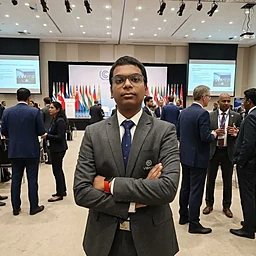
Vrattesh Anand
Secretary General

vrattesh Anand
CHAIR OF IPL AUCTIONS

More MUN conferences

ConferencesOnlineIDYMUN 2026