Conference
Haarlem, Netherlands·Europe
Mar 31 – Apr 2, 2023
600 delegates expected
High school students
In English
About
Twenty-sixth edition April 2023!
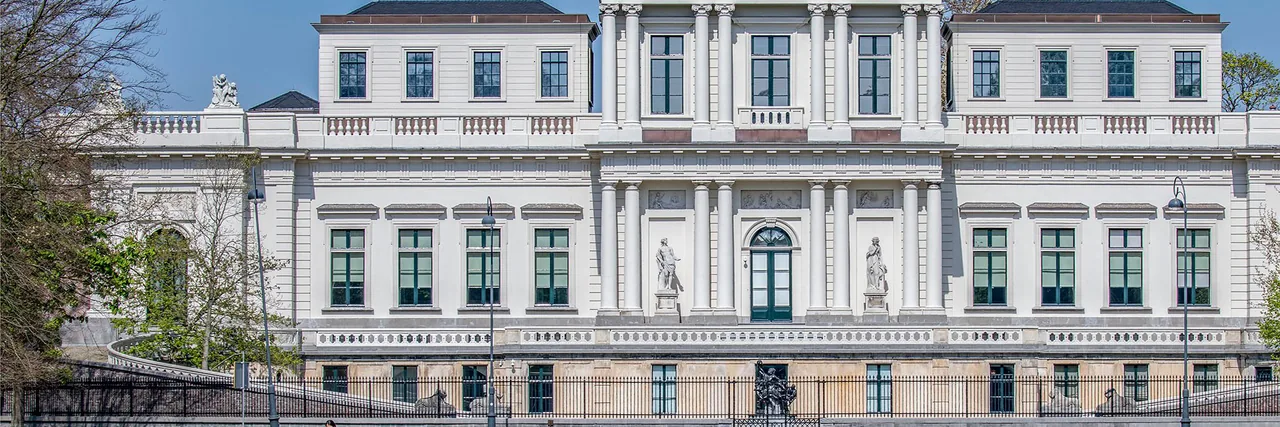
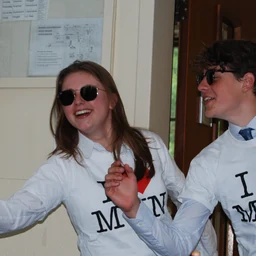
Haarlem Model United Nations is a non-profit organisation run by students of the Stedelijk Gymnasium Haarlem. For over twenty years, we have organised a conference that is attended by about 600 students from all over the world.
All our applications are now open! Visit our site for all the information.
“Model United Nations, also known as Model UN or MUN, is an educational simulation in which students can learn about diplomacy, international relations, and the United Nations. MUN involves and teaches researching, public speaking, debating, and writing skills, in addition to critical thinking, teamwork, and leadership abilities.” – Wikipedia
During a MUN conference, students will roleplay delegates to the United Nations and simulate UN committees. The participants will be assigned countries, or occasionally a non-governmental organisation /other political entity, to represent in various committees, councils and assemblies, similar to the ones of the real United Nations. The delegates are responsible for taking on the views of the country or organisation they are representing, and it is up to them to make sure they keep that policy.
Delegates will solve the issues on the agenda by lobbying, followed by making resolutions. Once a resolution has been submitted, it will be debated by the committee and can be amended. This can be done by the delegates, who send in amendments to add, change or strike clauses. The amendments will then in turn be debated and will be voted upon afterwards. Once the debating time for the resolution has elapsed, the committee will vote on the resolution as a whole.
No ‘real’ actions will be taken as a result of the produced resolutions. However, a MUN conference can serve as a great learning opportunity and a MUN-weekend can also be a lot of fun as there is the possibility to become friends with interesting people from all over the world.
Committees
(Ad Hoc) The United Nations Security Council is one of the six principal organs of the United Nations, established in 1945. Like the UN as a whole, the Security Council was created following the events of World War II to address the failings of another international organization, the League of Nations, in maintaining world peace. In the beginning, the UN was mostly disabled by the Cold War division between the US and USSR and their respective allies. The first meeting of the SC was held on the 17th of January 1946. It is the responsibility of the Security Council to maintenance international peace and security. The Security Council of 2018 consists of the following member states: Bolivia, China, Côte d’Ivoire, Equatorial Guinea, Ethiopia, France, Kazakhstan, Kuwait, Russian Federation, the Netherlands, Peru, Poland, Sweden, the United Kingdom and the United states. The SC has five permanent members (China, Russian Federation, France, United Kingdom and The United States of America) and ten non-permanent members, elected by the General Assembly for a two-year term. Meetings are called at any given time when the need arises. The Security Council determines the existence of a threat to the peace or act of aggression. It calls upon the parties to a debate to settle it by peaceful means. The Security Council can utilize the enforcement of sanctions or even authorize the use of force to preserve or restore international peace and security. The Security Council is a double delegation Ad Hoc-committee, in which every member state has one vote, but in which the P5 (China, Russian Federation, France, United Kingdom and The United States of America) have veto powers.
(Non ad-Hoc) The Human Rights Council is an inter-governmental body within the United Nations system responsible for strengthening the promotion and protection of human rights around the globe and for addressing situations of human rights violations and make recommendations on them. It has the ability to discuss all thematic human rights issues and situations that require its attention throughout the year. It meets at the UN Office at Geneva. The Council was created by the United Nations General Assembly on 15 March 2006 by resolution 60/251. Its first session took place from 19 to 30 June 2006. One year later, the Council adopted its "Institution-building package" to guide its work and set up its procedures and mechanisms.
(Non ad-hoc) The Economic and Social Council is at the heart of the United Nations system to advance the three dimensions of sustainable development – economic, social and environmental. It is the central platform for fostering debate and innovative thinking, forging consensus on ways forward, and coordinating efforts to achieve internationally agreed goals. It is also responsible for the follow-up to major UN conferences and summits. The UN Charter established ECOSOC in 1945 as one of the six main organs of the United Nations. ECOSOC links a diverse family of UN entities (Organigram) dedicated to sustainable development, providing overall guidance and coordination. The entities include regional economic and social commissions, functional commissions facilitating intergovernmental discussions of major global issues, and specialized agencies, programmes and funds at work around the world to translate development commitments into real changes in people’s lives. Reforms over the last decade, particularly General Assembly resolution 68/1, have strengthened ECOSOC’s leading role in identifying emerging challenges, promoting innovation, and achieving a balanced integration of the three pillars of sustainable development—economic, social and environmental. ECOSOC is charged with giving special attention to coordinated follow-up on major UN conferences and summits. "Building on its coordination role within the UN system, ECOSOC is a gateway for UN partnership and participation by the rest of the world. It offers a unique global meeting point for productive dialogues among policymakers, parliamentarians, academics, foundations, businesses, youth and 3,200+ registered non-governmental organizations."
(Non Ad Hoc) The General Assembly of the United Nations consists of all 193 member nations and therefore occupies a central position as the chief deliberative, policymaking and representative organ. In the GA, all member nations have equal representation. Its powers are to oversee the budget of the United Nations, appoint the non-permanent members to the Security Council, receive reports from other parts of the United Nations and make recommendations in the form of General Assembly Resolutions. The GA meets in annual sessions, lasting from September to December. When the GA votes on very serious issues, a two-third majority of those present and voting is needed. Each member nation has one vote. The GA votes on many resolutions, which are generally symbolic statements covering an array of world issues. Most General Assembly resolutions, while symbolic of the sense of the international community, are not enforceable as a legal or practical matter as the General Assembly lacks enforcement powers with respect to most issues. There are also a lot of subsidiary organs established. With the close of the general debate, the Assembly begins consideration of the substantive items on its agenda. Due to the great number of questions it is called upon to consider, the Assembly allocates items relevant to its work among its six Main Committees, which discuss them, seeking where possible to harmonize the various approaches of States, and then present to a plenary meeting of the Assembly draft resolutions and decisions for consideration. The six main committees are: First Committee (Disarmament and International Security Committee) is concerned with disarmament and related international security questions; Second Committee (Economic and Financial Committee) is concerned with economic questions; Third Committee (Social, Humanitarian and Cultural Committee) deals with social and humanitarian issues; Fourth Committee (Special Political and Decolonization Committee) deals with a variety of political subjects not dealt with by the First Committee, as well as with decolonization; Fifth Committee (Administrative and Budgetary Committee) deals with the administration and budget of the United Nations; and Sixth Committee (Legal Committee) deals with international legal matters. At HMUN, we simulate the First, the Second, the Third and the Fourth Committee.
(Non Ad Hoc) The General Assembly of the United Nations consists of all 193 member nations and therefore occupies a central position as the chief deliberative, policymaking and representative organ. In the GA, all member nations have equal representation. Its powers are to oversee the budget of the United Nations, appoint the non-permanent members to the Security Council, receive reports from other parts of the United Nations and make recommendations in the form of General Assembly Resolutions. The GA meets in annual sessions, lasting from September to December. When the GA votes on very serious issues, a two-third majority of those present and voting is needed. Each member nation has one vote. The GA votes on many resolutions, which are generally symbolic statements covering an array of world issues. Most General Assembly resolutions, while symbolic of the sense of the international community, are not enforceable as a legal or practical matter as the General Assembly lacks enforcement powers with respect to most issues. There are also a lot of subsidiary organs established. With the close of the general debate, the Assembly begins consideration of the substantive items on its agenda. Due to the great number of questions it is called upon to consider, the Assembly allocates items relevant to its work among its six Main Committees, which discuss them, seeking where possible to harmonize the various approaches of States, and then present to a plenary meeting of the Assembly draft resolutions and decisions for consideration. The six main committees are: First Committee (Disarmament and International Security Committee) is concerned with disarmament and related international security questions; Second Committee (Economic and Financial Committee) is concerned with economic questions; Third Committee (Social, Humanitarian and Cultural Committee) deals with social and humanitarian issues; Fourth Committee (Special Political and Decolonization Committee) deals with a variety of political subjects not dealt with by the First Committee, as well as with decolonization; Fifth Committee (Administrative and Budgetary Committee) deals with the administration and budget of the United Nations; and Sixth Committee (Legal Committee) deals with international legal matters. At HMUN, we simulate the First, the Second, the Third and the Fourth Committee.
(Non Ad Hoc) The General Assembly of the United Nations consists of all 193 member nations and therefore occupies a central position as the chief deliberative, policymaking and representative organ. In the GA, all member nations have equal representation. Its powers are to oversee the budget of the United Nations, appoint the non-permanent members to the Security Council, receive reports from other parts of the United Nations and make recommendations in the form of General Assembly Resolutions. The GA meets in annual sessions, lasting from September to December. When the GA votes on very serious issues, a two-third majority of those present and voting is needed. Each member nation has one vote. The GA votes on many resolutions, which are generally symbolic statements covering an array of world issues. Most General Assembly resolutions, while symbolic of the sense of the international community, are not enforceable as a legal or practical matter as the General Assembly lacks enforcement powers with respect to most issues. There are also a lot of subsidiary organs established. With the close of the general debate, the Assembly begins consideration of the substantive items on its agenda. Due to the great number of questions it is called upon to consider, the Assembly allocates items relevant to its work among its six Main Committees, which discuss them, seeking where possible to harmonize the various approaches of States, and then present to a plenary meeting of the Assembly draft resolutions and decisions for consideration. The six main committees are: First Committee (Disarmament and International Security Committee) is concerned with disarmament and related international security questions; Second Committee (Economic and Financial Committee) is concerned with economic questions; Third Committee (Social, Humanitarian and Cultural Committee) deals with social and humanitarian issues; Fourth Committee (Special Political and Decolonization Committee) deals with a variety of political subjects not dealt with by the First Committee, as well as with decolonization; Fifth Committee (Administrative and Budgetary Committee) deals with the administration and budget of the United Nations; and Sixth Committee (Legal Committee) deals with international legal matters. At HMUN, we simulate the First, the Second, the Third and the Fourth Committee.
A committee simulating the organisation International Court of Justice (ICJ).
Past editions

More MUN conferences
NetherlandsMUN conferences in Netherlands EuropeMUN conferences in Europe March 2023MUN conferences in March 2023 High school MUNMUN conferences for high school students
ConferencesNetherlandsHMUN 2023