RhodesMRC - UNIED 2026

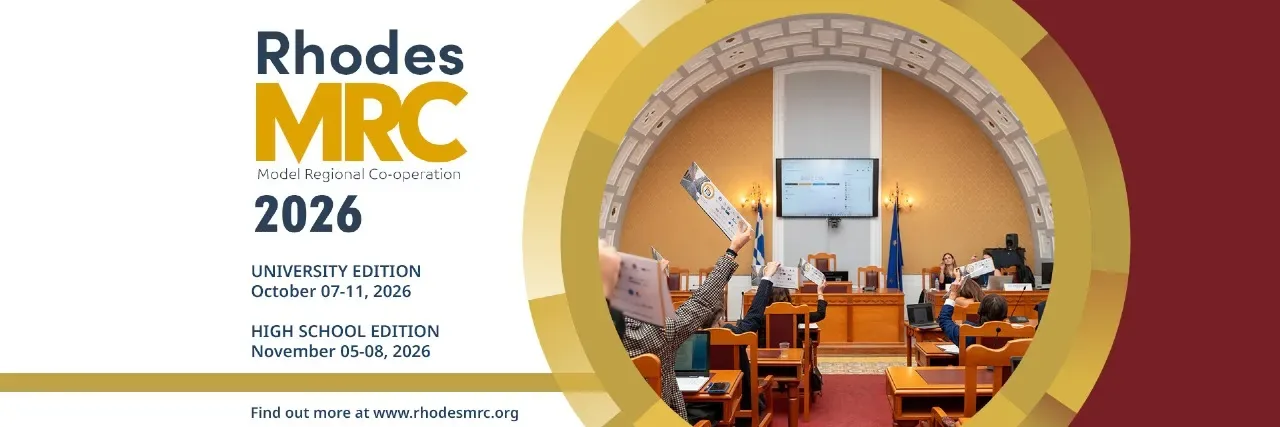
Rhodes Model Regional Co-operation - University Edition

Oct 7–11, 2026 Rhodes, Greece

Rhodes Model Regional Co-operation - University Edition

Conference

Rhodes, Greece·Europe

Oct 7–11, 2026

250 delegates expected

University students

In English

About

Advancing Diplomacy Through Regional Cooperation

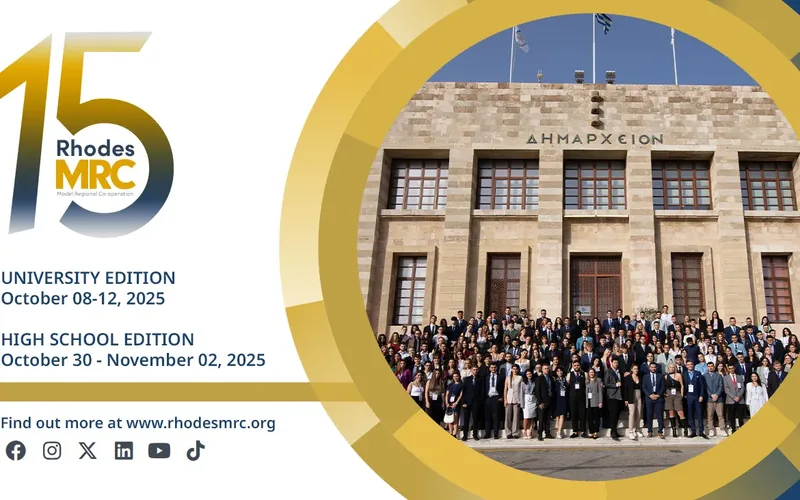
Welcome to Rhodes Model Regional Co-operation (RhodesMRC) 2026 – University Edition.

RhodesMRC 2026 will take place from 7 to 11 October 2026 in the historic city of Rhodes, Greece. Building on the success of previous editions, the Secretariat is delighted to welcome students from around the world to an academically rigorous and professionally structured diplomatic simulation.

RhodesMRC is an international conference dedicated to regional cooperation, multilateral diplomacy, and conflict resolution. It serves as a platform for high-level debate and negotiation, bringing together delegates, chairs, academics, and practitioners to engage with contemporary global and regional challenges. Through realistic simulations and carefully designed agendas, participants are encouraged to think critically, negotiate constructively, and experience diplomacy beyond traditional Model UN formats.

Set in one of the Mediterranean’s most iconic locations, RhodesMRC combines intensive committee work with cultural exchange and community-building, offering a unique academic and social experience. Participants are invited to approach diplomacy with professionalism, empathy, and strategic thinking, while developing skills in public speaking, negotiation, and policy-making.

Applications are open to university students and young professionals worldwide. Delegates may apply individually or as part of organized delegations, with affiliated organizations benefiting from simplified procedures and additional privileges. 

Please refer to our website for instructions on applications.


Committees

    1. Crisis in the Middle East

    Middle East Peace Conference (MEPC)

    Expert · English

    Topic

    Crisis in the Middle East

    About the committee

    The Middle East Peace Conference (MEPC) is an ad hoc diplomatic summit, simulated exclusively at RhodesMRC, bringing together the world’s most powerful leaders to address escalating tensions and crises in the Middle East. Convened with the participation of the heads of state or government of the UN Security Council’s permanent members, key stakeholders from the Middle East and the Arab world, and other influential actors, the conference seeks to manage long-standing conflicts through high-level dialogue and negotiation. With a focus on security, sovereignty, and regional stability, this forum challenges participants to navigate rapidly evolving crises and to articulate a shared political understanding reflecting collective efforts toward peace and stability in the Middle East.

    Countries

    1. Strengthening NATO’s Open Door Policy and Strategic Engagement in the Western Balkans

    North Atlantic Treaty Organization (NATO)

    Expert · English

    Topic

    Strengthening NATO’s Open Door Policy and Strategic Engagement in the Western Balkans

    About the committee

    The North Atlantic Treaty Organization (NATO) is a military alliance established in 1949 to ensure collective defense and security among its member states. Comprised of 32 countries from North America and Europe, NATO operates under the principle that an attack against one member is considered an attack against all. It promotes military cooperation, crisis management, and deterrence while adapting to emerging threats such as cyber warfare and terrorism. NATO also engages in peacekeeping missions and partnerships worldwide. Headquartered in Brussels, the alliance remains a cornerstone of transatlantic security, fostering stability and unity among democratic nations.

    Countries

    How this committee type works
    1. From Partnership to Membership: Reassessing the Eastern Partnership in the Context of Ongoing EU Accession Processes

    European Council (EUCO)

    Expert · English

    Topic

    From Partnership to Membership: Reassessing the Eastern Partnership in the Context of Ongoing EU Accession Processes

    About the committee

    The European Council (EUCO) is a key institution of the European Union that sets its overall political direction and priorities. Composed of the heads of state or government of EU member countries, along with the President of the European Council and the President of the European Commission, it shapes major policies and decisions. Unlike the Council of the EU, it does not pass laws but provides strategic guidance on issues such as economic policy, foreign affairs, and security. Based in Brussels, the European Council plays a crucial role in responding to crises, fostering unity, and guiding the future of the EU.

    Countries

    How this committee type works
    1. Information and Communication Technology (ICT) and Artificial Intelligence in the era of geopolitical instability: the role of OSCE’s strategy in conflict prevention

    Organization for Security and Co-operation in Europe (OSCE)

    Intermediate · English

    Topic

    Information and Communication Technology (ICT) and Artificial Intelligence in the era of geopolitical instability: the role of OSCE’s strategy in conflict prevention

    About the committee

    The Organization for Security and Cooperation in Europe (OSCE) is the world’s largest regional security organization, promoting stability, peace, and democracy across its 57 participating states in North America, Europe, and Asia. Established in 1975 as the Conference on Security and Cooperation in Europe (CSCE), it evolved into the OSCE in 1995. The organization focuses on conflict prevention, arms control, human rights, and election monitoring. It operates through field missions and specialized institutions, fostering dialogue and cooperation. With a comprehensive approach to security, the OSCE addresses political, military, economic, environmental, and human rights challenges across its member states.

    Countries

    1. Strengthening Public Trust: Reinforcing Anti-Corruption Measures in Governance and Business

    Organization for Economic Cooperation and Development (OECD)

    Intermediate · English

    Topic

    Strengthening Public Trust: Reinforcing Anti-Corruption Measures in Governance and Business

    About the committee

    The Organization for Economic Cooperation and Development (OECD) is an international organization that promotes economic growth, stability, and social well-being across its 38 member countries. Founded in 1961 and headquartered in Paris, the OECD provides a platform for governments to collaborate on policy solutions to global economic challenges. It focuses on areas such as trade, education, taxation, and innovation, using research and data-driven analysis to shape effective policies. By fostering dialogue and setting international standards, the OECD helps countries improve governance, combat corruption, and promote sustainable development, ultimately aiming to build stronger, fairer, and more prosperous economies.

    Countries

    1. Strengthening Maritime Connectivity and Capabilities: Positioning the Mediterranean as a Global Hub

    Union for the Mediterranean (UfM)

    Beginner · English

    Topic

    Strengthening Maritime Connectivity and Capabilities: Positioning the Mediterranean as a Global Hub

    About the committee

    The Union for the Mediterranean (UfM) is an intergovernmental organization that fosters cooperation between 43 countries from Europe, the Middle East, and North Africa. Established in 2008 and headquartered in Barcelona, the UfM promotes regional stability, economic integration, and sustainable development. Its initiatives focus on key areas such as climate action, energy, education, gender equality, and economic growth. By encouraging dialogue and joint projects, the UfM strengthens partnerships between EU and non-EU countries, addressing common challenges and promoting peace and prosperity in the Mediterranean region. It serves as a platform for regional cooperation, reinforcing political and economic ties.

    Countries

    1. Generational Participation: Strengthening Youth Engagement in Democratic Processes
    Council of Europe (CoE)

    Beginner · English

    Topic

    Generational Participation: Strengthening Youth Engagement in Democratic Processes
    About the committee

    The Council of Europe (CoE) is an international organization dedicated to promoting human rights, democracy, and the rule of law across its 46 member states. Founded in 1949 and headquartered in Strasbourg, it is separate from the European Union but works closely with it. The organization’s most notable achievement is the European Convention on Human Rights, enforced by the European Court of Human Rights. It also addresses issues such as media freedom, corruption, and cultural cooperation. Through legal standards, monitoring mechanisms, and advisory bodies, the Council of Europe plays a crucial role in safeguarding fundamental rights and democratic values in Europe.

    Countries

Partner conferences

ThessISMUN 2026
Thessaloniki, Greece

View conference
Thracing On MIC 2025

Komotini, Greece

View conference

Organizers

Alexandra Moutropoulou
Secretary-General

Alexandros Mouratidis
Under-Secretary-General for Crisis

Anna Pouliou
Under-Secretary-General for Delegations & Outreach
Artemia Kritikou
Deputy Secretary-General
Dimitrios Lolitsas
Dep. Head of the Organizing Committee
Dimitris Evangelou
Under-Secretary-General for Committees
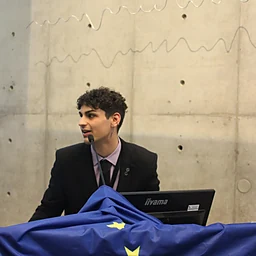
Efthimis Kounalakis
Academic Affairs Officer

Evangelia Eleni Karageorgi
Under-Secretary-General for Delegations & Outreach
Michael Kavuklis
Head of the Organizing Committee
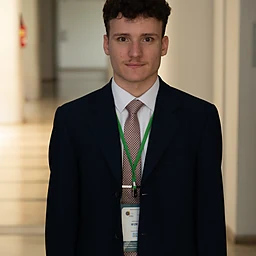
Sotirios Anastasopoulos
Under-Secretary-General for Committees

More MUN conferences

ConferencesGreeceRhodesMRC - UNIED 2026