PENTAMUN Chapter One 2026

PENTAMUN Chapter One

Nov 20–21, 2026 Online

PENTAMUN Chapter One

Closes Nov 13 · 8 days left

Conference

Online

Nov 20–21, 2026

200 delegates expected

High school and university students

In English and Turkish

Applications

Open
Oct 18 – Nov 13, 2026Same dates for every role
  • Delegates
  • Head delegates
  • Chairs
  • Observers

About

Our official website is https://Sites.google.com/view/pentamun

Distinguished Delegates,Guests and Participants. Welcome to the Penta Model United Nations Chapter One.

As PENTAMUN Chapter One we came to the understanding that global issues, developing leadership skills and opening the door to the world of diplomacy. Leadership and diplomatic skills is playing a pivotal role in the 21st century.

The Penta Model UN Conferences are not just any plain conference that happens once and gets dismissed. Penta Model UN Conferences are seasonal events organized by a staff of real Academic and Executive background


Date📅:20-21 November

Communication📩:acikeloguz8@gmail.com

Conference Type: Online

Committees

  • 35 countries
    1. Protecting Human Rights Against Biometric Surveillance and the Mass Collection of Personal Data

    UNHRC

    Beginner · English · 35 countries

    Topic

    Protecting Human Rights Against Biometric Surveillance and the Mass Collection of Personal Data

    About the committee

    Introduction to the Committee: The United Nations Human Rights Council (UNHRC) is an intergovernmental body inside the United Nations that works to promote and protect rights across the world, no matter the borders. Since 2006, the UNHRC has dealt with human rights violations, and created a space for multilateral cooperation to make the human rights frameworks stronger around the world. The UNHRC has 47 Member States. These Member States are chosen by the United Nations General Assembly for a period of three years. By passing resolutions, holding debates, and using various methods, the UNHRC examines human rights issues and urges Member States to uphold their human rights obligations. Introduction to the Committee Topic: Protecting Human Rights Against Biometric Surveillance and the Mass Collection of Personal Data The development of technologies like facial recognition, fingerprint databases, iris scanning and other biometric systems brings forward new problems for the protection of personal data. Although these technologies are an essential aid in many fields – especially in security and identification –their unregulated use could create huge threats to privacy, freedom of expression and protection against discrimination. Collecting and storing mass amounts of personal and biometric data also brings up questions about consent, data security, government surveillance and the possibility of misuse of sensitive information. Therefore, this committee will focus on how Member States can balance security concerns and technological needs while still keeping their responsibility to protect an individual person's rights and freedoms. Delegates should consider legal frameworks, safety measures and responsible ways to use biometric technologies and mass data collection. They must also think about the legal, technological and social situations that each Member State has, while developing potential solutions.

    Countries

    How this committee type works
  • 23 countries
    1. Washington Summit on Financial Markets and the World Economy(2008)

    Group 20(G20)

    Intermediate · English · 23 countries

    Topic

    Washington Summit on Financial Markets and the World Economy(2008)

    About the committee

    The Washington Summit on Financial Markets and the World Economy (15 November 2008) of G20 Heads of State and Government was the first time they met to deal with the most severe crisis in the international financial system since the Great Depression and to agree far-reaching reforms to prevent the recurrence of such a crisis in the future. As the Summit was held, financial markets around the world were freezing up; big financial institutions had collapsed or were bailed out by governments; and economic growth in advanced and emerging economies was slowing down after peaking in 2007. The crisis revealed serious vulnerabilities in the global financial system that had not been addressed adequately by the existing mechanisms for promoting stability and growth in the world economy. The Summit allowed the leaders of the world's main advanced and emerging economies to make common cause in confronting the challenge and set out principles for reform which, if implemented, would ensure that the world economy was more resilient and better prepared to deal with future crises. The principles cover: enhancing transparency and accountability in financial markets, sound regulation of the markets, integrity in markets, strengthening international cooperation, and reform of international financial institutions, including more representation for emerging market and developing countries. An Action Plan was adopted to translate the principles into action, with the finance ministers developing specific recommendations for consideration at the next Summit. Delegates in this committee are invited to deliberate within the context and framework of the issues and concerns at the time of the 2008 Summit and to grapple with both the immediate challenge of responding to the crisis and the longer-term issues of reform of the world economy and the role of the G20 in this process. The decisions taken at the Summit will shape the agenda for the work of the G20 in the years ahead and in particular of the subsequent summits in London and Pittsburgh.

    Countries

  • 39 countries
    1. The Turkish War of Independence(30 August 1922)

    HCC

    Expert · Turkish · 39 countries

    Topic

    The Turkish War of Independence(30 August 1922)

    About the committee

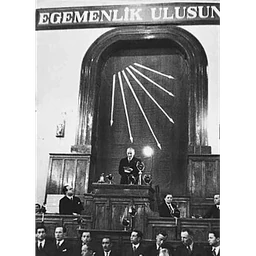
    The calendars read October 30, 1918. With the signing of the Armistice of Mudros, which brought World War I to an end, the Ottoman Empire had been dissolved. Under Article 7 of the armistice, the Ottoman Empire was required to surrender its heavy weapons, and the Allied Powers would have the right to occupy any strategic point should a situation arise that threatened their security. All railroads and the Taurus Tunnels would be placed under the control of the Allied Powers. Control of all radio, telegraph, and telephone lines, except for government communications, would pass to the Allied Powers, and a commission would be established. According to Article 24, should any unrest arise in the six provinces of Eastern Anatolia (Vilayeti-i Sitte: Erzurum, Van, Harput, Diyarbakır, Sivas, Bitlis), the Allied Powers would be able to occupy these areas. In such a case, preparations were underway to establish an independent Armenian minority in the eastern region. Even before the ink on the Treaty had dried, French troops had occupied Iskenderun and Mosul. Italy had occupied Adana and Antalya, Greek occupation forces had taken control of Izmir, and the Allied Powers had placed Istanbul under their protection. On May 15, 1919, the Greek occupation of Izmir and acts of violence against the people—including the burning of supplies and the destruction of property—had roused the Turkish people to action. With the support of the Allied Powers, the Greek and Armenian communities in eastern Anatolia had begun efforts to establish their own independent states. At that time, Mustafa Kemal Atatürk assumed the post of Inspector General of the 9th Army on May 19, 1919, and set sail for Samsun to take up his duties there. This is regarded as one of the first steps toward independence and national resistance. Four months earlier, the Paris Peace Conference had been convened, where the Allied Powers had discussed and competed over how many parts the Ottoman Empire’s territorial integrity would be divided into and how much each would receive; this had increased the distrust among the Allied Powers and intensified the conflicts between them. At the Erzurum Congress (July 23 – August 7, 1919), the decisions adopted declared that the homeland is an indivisible whole within its national borders and territory, and mandates and protectorates (colonial activities) were rejected. The Sivas Congress convened on September 4, and the Anatolian and Rumelia Societies for the Defense of Rights united under a single umbrella to make their voices heard in Anatolia; mandate and protectorate were categorically rejected. To make their voices heard, they published a newspaper titled *İrade-i Milliye*. Through the Amasya Talks, the Istanbul Government officially and legally recognized the Delegation (the leadership of the National Struggle) for the first time. It was decided to convene the Chamber of Deputies. Following these talks, on December 27, 1919, the Delegation and Mustafa Kemal Atatürk set out for Ankara. The reason for holding the talks in Ankara was that the railroads there had not been occupied, and it seemed to be the best location for monitoring their operations. In accordance with the agreement reached in Amasya, Mustafa Kemal Atatürk was elected as the deputy for Erzurum in nationwide elections. The Assembly convened in Istanbul. Mustafa Kemal did not go to Istanbul for security reasons, but he asked the deputies who did go to form a group in the Assembly in support of the national struggle. On January 28, 1920, during a secret meeting in Istanbul, the Missak-i Milli borders were drawn alongside the Ottoman borders, and the independence of the Turkish borders was declared to the international community. On March 16, 1920, in Istanbul, the Allied Powers stormed the Chamber of Deputies established by Abdulhamid II, arrested some deputies, and exiled them to Malta. Following the intervention of Sultan Mahveddin and Damat Ferit Pasha, the Assembly was closed on April 11, 1920. Meanwhile, the advance into the interior of Anatolia continued. When the stage was set, the newly established Grand National Assembly assumed its historic mission. However, the political climate within the Assembly was unstable; prominent figures and intellectuals from both the right-wing and left-wing factions in Anatolia mounted strong opposition within the Assembly, and indeed, the first left-wing group, the Green Army, was formed that same month. Right-wing and Islamist groups have also begun to form their own factions. In addition, there are criticisms emerging from the faction of the Committee of Union and Progress that continues to exist. The newly established Turkish Communist Party (TKP) in Baku and Enver’s initiatives hinting at a desire to return from exile represent external challenges. Only time will tell who will achieve that grand goal of saving the state and transforming it according to their own vision or whether it can truly be achieved at all.

    Countries

    How this committee type works
  • 40 countries
    1. Clean Energy and Climate Action

    UNIDO

    Beginner · English · 40 countries

    Topic

    Clean Energy and Climate Action

    About the committee

    The United Nations Industrial Development Organization (UNIDO) is a specialized agency of the United Nations that promotes and accelerates sustainable industrial development. The organization seeks to promote economic growth, innovation and poverty reduction through inclusive industrial policies. As part of UNIDO representatives will address agenda item “Clean Energy and Climate Action” in order to see the critical link between industrial development and global sustainability. Today, industry accounts for almost one third of global greenhouse gas emissions, putting UNIDO in the forefront of efforts to decouple economic growth from environmental degradation. Representatives will negotiate practical measures to decarbonize industry, increase access to renewable energy and promote the transfer of clean technology to developing countries

    Countries

  • 15 countries
    1. 2024 Season UEFA Champions League

    FIFA

    Expert · English · 15 countries

    Topic

    2024 Season UEFA Champions League

    About the committee

    Agenda Item:2024 Season UEFA Champions League Distinguished delegates, welcome to the FIFA (Fédération Internationale de Football Association) committee. Welcome to the 2024 Champions League 32 teams 125 matches countless moments of heartbreak, drama, and miracles all on the road to London. In this committee, while simulating competitive matches and striving to reach the pinnacle of world football in London you will simultaneously encounter economic, political, and at times wholly unexpected crises .In this committee you will see that football is never just football, and you will gain a new perspective.Remember this is the Champions League only the best can survive and only one of the best can win. Good luck

    Countries

Partner conferences

TremorMUN 2026

Riyadh, Saudi Arabia

View conference

Organizers

Alparslan Günay
Deputy-Secreraty-General

More MUN conferences

ConferencesOnlinePENTAMUN Chapter One 2026