ISB MUN 2026

International School of Bucharest Model United Nations

Apr 2–5, 2026 Bucharest, Romania

International School of Bucharest Model United Nations

Conference

Bucharest, Romania·Europe

Apr 2–5, 2026

200 delegates expected

High school and university students

In English

Applications

Closed
  • ObserversFeb 17 – Mar 26, 2026
  • Faculty advisorsFeb 1 – Mar 25, 2026
  • Delegates, Head delegatesFeb 10 – Mar 18, 2026

About

Currently at its 4th edition, ISB MUN is an independent, student-run, UNICEF-affliated project that stands out as a beacon of financial inclusivity and global representation in the realm of Model United Nations. Founded with the firm belief that financial constraints should never be a barrier to participation, ISB MUN ensures that delegates from all economic backgrounds have the opportunity to engage in this enriching experience.

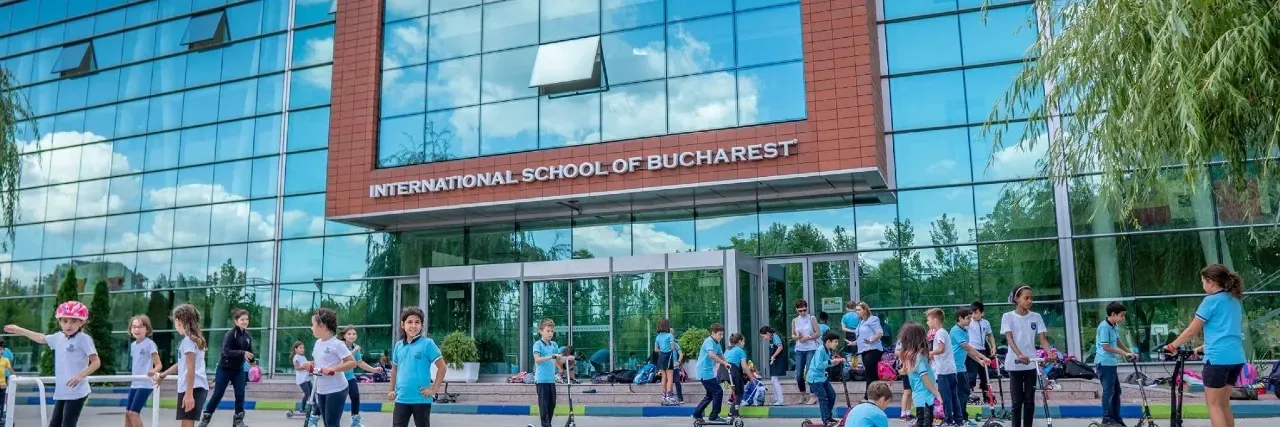
Located in the historic and vibrant city of Bucharest, Romania, ISB MUN prides itself on being the most globally inclusive MUN conference in the region. Annually held in February, the conference gathers a diverse array of students from various corners of the world, fostering a melting pot of cultures, ideas, and perspectives.

ISB MUN's mission extends beyond academic excellence in simulating United Nations proceedings. It is deeply committed to charitable causes, channeling its resources and efforts towards impactful social projects. This commitment to charity is woven into the fabric of the conference, making it not just a platform for debate and diplomacy, but also a force for positive change in the community. As a student-run initiative, ISB MUN empowers young leaders, offering them a platform to hone their skills in leadership, negotiation, and diplomacy. The organization's structure promotes autonomy and innovation among its members, allowing students to shape the conference's direction and impact.

ISB MUN is more than just a Model United Nations conference. It is a testament to the power of youth in driving change, a symbol of financial inclusivity, and a celebration of global diversity, all within the historical and cultural backdrop of Bucharest.

Committees

  • 17 countries
    1. Combating Threats to International Peace and Security Arising from Military Action in Republic of Venezuela Following the Capture of President Nicolás Maduro

    Security Council

    Expert · English · 17 countries

    Topic

    Combating Threats to International Peace and Security Arising from Military Action in Republic of Venezuela Following the Capture of President Nicolás Maduro

    About the committee

    The onset of 2026 saw a dramatic escalation in the long-standing political crisis in Venezuela after a major military action resulted in the capture and removal of President Nicolás Maduro. On January 3, 2026, United States military forces conducted strikes on targets in Caracas and other locations in Venezuela, capturing Maduro and transferring him to U.S. custody to face criminal charges. U.S. leaders framed the operation as a law-enforcement mission aimed at combating alleged narcotics trafficking and transnational organized crime, stressing it was not intended as a war against the Venezuelan people. The use of force, however, sparked a sharp and polarized reaction across the globe. Many countries and regional blocs condemned the intervention as a violation of Venezuela’s sovereignty and international law, warning that unilateral military actions risk undermining the principles of the United Nations Charter and setting dangerous precedents for global security. Latin American neighbors such as Brazil, Mexico, and Colombia voiced alarm at what they described as an assault on regional peace and a threat to stability in the Western Hemisphere. Major powers, including China, Russia, and Iran, also criticized the operation, labeling it aggression and warning of broader repercussions. Within the United Nations Security Council, member states were divided. Supporters of the action argued it could pave the way for restoring democratic governance and rule of law in Venezuela, while opponents insisted that respect for state sovereignty and the non-use of force are foundational to international peace and security. Secretary-General António Guterres and other diplomats underscored the need for any resolution to adhere to established legal frameworks and multilateral norms.

    Countries

    How this committee type works
  • 20 countries
    1. Assessing social and environmental implication of recent global trade and agreement

    Economic and Social Council

    Beginner · English · 20 countries

    Topic

    Assessing social and environmental implication of recent global trade and agreement

    About the committee

    The topic of the Economic and Social Council is: Assessing social and environmental implication of recent global trade agreements. Recent trade agreements have reshaped global economic relations, with implications that extend beyond simple market access to encompass social, environmental, and developmental concerns. The EU-Mercosur Trade Agreement, signed to strengthen economic ties between the European Union and South American Mercosur countries, exemplifies both the promise and the challenge of modern trade liberalization. Mercosur states, including Brazil, Argentina, Paraguay, and Uruguay, stand to gain increased export opportunities, particularly in agriculture and commodities, yet these gains have raised questions regarding the environmental impact of expanded production, including deforestation in the Amazon, and the social consequences for small-scale farmers and indigenous communities. The context of the agreement has been further complicated by the re-emergence of protectionist trade policies, notably the tariffs imposed by the United States under President Donald Trump. These tariffs disrupted global supply chains and created uncertainty for exporters, prompting both the European Union and Mercosur countries to seek stronger trade ties as a buffer against economic instability. The interplay between these policies and the Mercosur agreement highlights the tensions between short-term economic advantage and long-term sustainable development, particularly for nations and communities that may be disadvantaged by shifts in global trade flows.

    Countries

    How this committee type works
  • 20 countries
    1. The Role of Illicit Arms Black Markets in Arming Non-State Actors and Undermining International Security

    Disarmament and International Security Committee

    Intermediate · English · 20 countries

    Topic

    The Role of Illicit Arms Black Markets in Arming Non-State Actors and Undermining International Security

    About the committee

    The proliferation of illicit arms black markets and their role in arming non-state actors is a pressing global issue with security, political, humanitarian, and regional stability implications. Illicit trafficking networks exploit weak border controls, poorly secured national stockpiles, corruption, and post-conflict power vacuums to divert weapons into illegal circulation. These weapons are then acquired by militias, insurgent groups, criminal-armed networks, and other non-state actors. Trafficking methods range from smuggling across porous borders and falsified end-user certificates to covert maritime routes and arms-for-resources exchanges. Once in circulation, illicit weapons fuel prolonged conflicts, intensify violence against civilians, undermine peace processes, and destabilize entire regions. This topic calls for delegates to explore comprehensive strategies that address the root causes of arms diversion, strengthen international cooperation and accountability, and enhance preventive disarmament measures.

    Countries

    How this committee type works
  • 16 countries
    1. Topic: Adressing the discrimination faced by the Kurdish population in the context of culture and tradition

    Social, Humanitarian, and Cultural Committee

    Beginner · English · 16 countries

    Topic

    Topic: Adressing the discrimination faced by the Kurdish population in the context of culture and tradition

    About the committee

    The Kurds are the largest stateless ethnic group in the world, with a history shaped by shifting borders and political repression. Before World War 1, Kurdish communities lived border-free between the Ottoman and Persian Empires. After the Ottomans lost the war, international treaties made empty promises of an independent Kurdistan across Kurdish-inhabited regions of modern Turkey, Iran, Iraq, Syria, and Armenia. This promise collapsed during the Turkish War of Independence. Subsequent treaties restored much of Turkey’s territory and excluded Kurdistan, ending the first attempt at Kurdish statehood. In Turkey, Kurds were denied political rights, labeled “Mountain Turks,” and prohibited from using their language or expressing their culture. Repression extended beyond Turkey. In Iraq, the Ba’ath regime’s Anfal campaign in the 1980s involved forced displacement and genocide against Kurds. In Iran and Syria, Kurdish political participation and cultural expression were heavily restricted. In Syria, many Kurds were denied citizenship, leaving them stateless and without basic rights. Today, conditions have improved in some areas. In Turkey, Kurdish language use, media, and cultural expression are now permitted. However, Kurds continue to face discrimination, lack constitutional recognition, and remain without a sovereign state. The Kurdish issue remains a complex international challenge, rooted in historical promises, regional politics, and the difficulty of reconciling Kurdish self-determination with existing state borders.

    Countries

    How this committee type works
  • 20 countries
    1. Addressing nuclear testing in former colonial territories

    Special Political and Decolonization Committee

    Intermediate · English · 20 countries

    Topic

    Addressing nuclear testing in former colonial territories

    About the committee

    Addressing nuclear testing in former colonial territories is a critical SPECPOL topic that examines the long-term political, environmental, and humanitarian consequences of nuclear tests conducted during the 20th century. Seeing as these former colonies continue to face radioactive contamination, public health crises and displacement of indigenous populations, the major powers must either assume responsibility or deny any accountability. As such, this topic area touches upon historical responsibility, environmental remediation, victim assistance, transparency of archival data, and international legal obligations. Not only that, but delegates must face the glaring question: should former colonies remain dependent on their former colonisers for aid or should a potentially fairer system be put in place?

    Countries

    How this committee type works
  • 21 countries
    1. Addressing the impact on public health of the over prescription of medically used opioid drugs

    World Health Organization

    Beginner · English · 21 countries

    Topic

    Addressing the impact on public health of the over prescription of medically used opioid drugs

    About the committee

    The over prescription of medically used drugs, particularly opioids, has become a significant public health challenge, deeply affecting sectors ranging from healthcare to the socio economic landscape. What often begins as medication “designed to ease the pain” can quickly escalate into dependence when drugs are prescribed too frequently, in high doses, or without proper monitoring. As tolerance develops, individuals may require increasingly larger amounts to achieve the same effect. When prescriptions become harder to obtain, many turn to stronger or illicit substances. This places an unprecedented burden on healthcare systems, especially hospitals and rehabilitation centres, which face rising numbers of overdose cases, long term treatment needs, and complications linked to chronic drug usage. As a result, healthcare costs increase for both individuals and public institutions, straining resources and limiting access to care. Beyond physical health, the mental health consequences are equally concerning. Dependence on prescription drugs can worsen existing conditions such as anxiety and depression or trigger new ones and make individuals struggling with addiction face social isolation, stigma, and emotional distress.

    Countries

    How this committee type works
  • 25 countries
    1. Addressing Political Polarization and the Rise of Political Violence in the United States

    United States Senate

    Expert · English · 25 countries

    Topic

    Addressing Political Polarization and the Rise of Political Violence in the United States

    About the committee

    In the United States, political polarization between Republicans and Democrats has intensified over recent decades, contributing to declining trust in democratic institutions and increasing ideological extremism. This division has been amplified by partisan media, social media echo chambers, and inflammatory political rhetoric, leading to the radicalization of individuals and groups across the political spectrum. In recent years, politically motivated threats and acts of violence targeting elected officials, government buildings, and election workers have emerged as a serious domestic concern, raising questions about national security, civil liberties, and democratic stability. As polarization deepens, lawmakers face the challenge of addressing political violence while upholding constitutional protections such as freedom of speech, assembly, and political expression. The issue forces debate over the role of government, media, platforms, and political leadership in preventing extremism without undermining democratic rights.

    Countries

  • 20 countries
    1. Advanced-Level Debate (Topic Classified) ​ HINT: REDACTED ​

    Ad-Hoc Committee

    Expert · English · 20 countries

    Topic

    Advanced-Level Debate (Topic Classified) ​ HINT: REDACTED ​

    About the committee

    For this edition, the topic of the Ad-Hoc Committee is classified and will only be released shortly before the conference. The Ad-Hoc Committee is one of the most dynamic and exciting formats in Model United Nations. Unlike regular committees with pre-assigned topics, an Ad-Hoc Committee presents its agenda only shortly before the conference, requiring delegates to think quickly, adapt on the spot, and work together to produce actionable and realistic solutions.

    Countries

Partner conferences

FDRMUN 2025

Bucharest, Romania

View conference

Organizers

Dudu Alexandra
Conference manager

More MUN conferences

ConferencesRomaniaISB MUN 2026