ILIMUN 2024

ILERI International MUN

Feb 9–11, 2024 Lyon, France

ILERI International MUN

Latest edition: ILIMUN 2025Mar 20–23, 2025

Conference

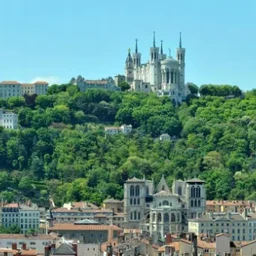
Lyon, France·Europe

Feb 9–11, 2024

100 delegates expected

High school and university students

In English

How it went

4.3323 ratings from delegates
Academics
4.17
Logistics
4.43
Socials
4.39

About

It is an honor for ILERI MUN to host the second edition of the ILERI International MUN in Lyon.

You will have the opportunity to debate with delegates from all over the world and live wonderful experiences in Lyon during a weekend.

This year, ILERI Lyon invites you to take part to one of our four committees!

If you are interested in European matters, take part in our Model of European council in French AND English, where you will discuss about "Strengthening military power and cooperation between European states".

You have a strategic mind? The take part in our Council of the arctic where we will discuss a new sharing of the Arctic after the ice melts.

To help maintain peace around the subject of water, take part in our committee of the United Nations Environment Program.

If you are already headed to the future, you could take part to our futuristic committee about space and colonization of a new planet.


During the Weekend you will take part to:

One of two conference
discussion in your committees about a specific subject 
Free Breakfast and coffee breaks
An opening ceremony 
a night out at a bar

The charitable associations of ILERI will be selling midday meals on Saturday and Sunday.

Next round of assignments  December 10th, next round to be determined. 

If you need any further informations please contact us at ilerimunlyon@outlook.fr


Committees

  • 27 countries
    1. Renforcer la puissance et la coopération militaire entre les états européens
    2. Strengthening military power and cooperation between European states
    • Armand Avizanda Perelló-Santandreu
    • Eléonore Novario

    MEC (Model of European Council), French and English

    Beginner · English · 27 countries

    Topics

    1. Renforcer la puissance et la coopération militaire entre les états européens
    2. Strengthening military power and cooperation between European states

    Chairs

    Countries

    How this committee type works
  • 21 countries
    1. Introducing a new sharing of the Arctic after the ice melts
    • Ilana Mailly
    • Ilya Khodorkovsky

    Council of the Arctic

    Intermediate · English · 21 countries

    Topic

    Introducing a new sharing of the Arctic after the ice melts

    About the committee

    Since 2007, the Arctic has once again become a strategic territory for the great powers, for various issues. Today, the countries claiming territories in the Arctic are: the USA, Canada, Russia, Denmark (with Greenland), Norway. The Arctic Council also includes Iceland, Sweden and Finland, and other European and Asian states are interested in these issues. It is a territory overflowing with resources: according to a study by the US Geological Survey (2008): the Arctic zone contains 22% of the world's undiscovered hydrocarbon reserves, more than 10% of the world's oil reserves, almost 30% of natural gas reserves as well as rare minerals (nickel, zinc, uranium, etc.) As global warming accelerates the melting of ice, accessibility to resources becomes increasingly simple. Therefore, many countries claim and are interested in this region and these resources. However, it is important to keep in mind that this melting of ice is a real ecological disaster. Also, the melting of the ice creates an opening of new Arctic maritime routes such as: the Northeast Passage, which attracts the attention of world powers. These shorter routes between Europe and Asia offer major economic benefits in terms of trade and transport. Geopolitical issues crystallize around the control of these strategic passages, raising questions of sovereignty and security. What are the claims of countries of the Arctic Circle ? Each country claims territories to gain access to multiple resources in order to achieve energy independence / hegemony. Russia : claims to extend its continental shelf in the Arctic, highlighting the "Lomonossov Ridge" (an underwater geological structure) as being linked to the Siberian continental shelf. Canada : territorial claims based on the extension of its Arctic continental shelf, particularly in the North Pole region. Canadian claims raise questions of sovereignty over the increasingly accessible Northwest Passage. Denmark : Territorial claim to parts of the Arctic through Greenland (autonomous Danish territory). Danish claims are based on the extension of the island's continental shelf, notably in relation to the "Lomonossov Ridge ». Norway : Claims for the extension of its continental shelf in the Barents Sea. These claims are relatively accepted, but the region remains a point of discussion due to competing interests. USA : Claims to territorial rights based on Alaska. Although the USA has not ratified UNCLOS, it has submitted claims in line with these principles, seeking to extend its continental shelf in the Chukotka Sea.

    Chairs

    Countries

  • 37 countries
    1. Targeting the stabilisation of the Haitian crisis
    • Baptiste Cervoni
    • Alia Guedira

    United Nations Human Rights Council

    Intermediate · English · 37 countries

    Topic

    Targeting the stabilisation of the Haitian crisis

    About the committee

    Haiti is an island in the Greater Antilles, it is the first independent country in Latin America. The crisis in Haiti is anchored in a complex geopolitical context, marked by long history of political instability, natural disasters and socio-economic challenges economic. The country, located on the island of Hispaniola, has regularly faced difficulties linked to the weakness of government institutions, corruption and precarious living conditions. Major players in this crisis include the Haitian government, often faced with internal political tensions, international organizations such as the UN and the OAS engaged in peacekeeping missions, as well as the international community, notably the United States and the European Union, having strategic interests in regional stability. Portrayals of the crisis vary, with international media often putting focus on poverty, political violence and natural disasters. However, the Haitian population itself presents diverse perspectives, ranging from aspirations to political stability to the demand for social and economic justice. Critical issues related to stabilization include the need to establish stability sustainable policy through institution building, economic development focused on the reconstruction of infrastructure and the creation of jobs, the guarantee of internal security in the face of challenges posed by criminal groups, and the response to immediate humanitarian needs such as access to drinking water, education and healthcare health. Thus, the stabilization of Haiti requires a holistic approach, involving cooperation international, strengthening of local institutions and particular attention to basic needs of the population. This complex process aims to create the conditions conducive to a more stable and prosperous future for the Haitian people.

    Chairs

    Countries

    How this committee type works
  • 41 countries
    1. Access to Water in the world
    • Clothilde Mazurier
    • Jean françois latyr Niane

    United Nations Environment Programme

    Intermediate · English · 41 countries

    Topic

    Access to Water in the world

    About the committee

    According to UNICEF and WHO, 1 in 3 people do not have access to clean water. Today, nearly 2.2 billion people do not have access to water and 4.5 billion of them do not have a safely managed sanitation system. According to Action Against Hunger, “Access to water is an indicator representing the share of the population with reasonable access to an adequate quantity of drinking water. Water, one of the most important resources for humans, is a resource that risks disappearing. The Earth only has 2.5% fresh water. This lack of water is the source of a number of tensions and wars on the international stage, on all continents. Ethiopia, a historic monument of Africa, enjoys a particularly favorable geographical environment. Through the construction of dams, it disrupts the free circulation of waterways, thus having repercussions on other countries such as Sudan or Egypt, which will obviously not remain silent in the face of this situation. These problems are not confined to African countries, because these issues are also exported to South America (Chile and Argentina), Asia (Vietnam and China) as well as Asia Minor where Turkey and Iraq are fighting over the dam. from Iliau. However, access to drinking water is not recognized as a fundamental right. This poses ethical problems and reinforces tensions within States and even individuals. Farmers, consumers of 70% of water withdrawals according to the FAO, also struggle to obtain water. This is the case in the Darfur region of Sudan where climate change is exacerbating tensions between farmers and herders. The United States consumes a lot of water in many areas including food and almond production. All of these conflicts are the consequence of water that is destined to disappear. In France and in many other countries, restrictions linked to drought are put in place in the summer in order not to make the situation worse; these restrictions will become tougher over the years. To deal with this, the World Water Council was established in 1996 in Marseille and affects 52 countries including 5 continents. This Council made it possible to democratize the problem and to awaken the United Nations to a new problem. Following this, in 2010, the General Assembly adopted a historic revolution which recognizes that "the right to safe drinking water and sanitation is a human right, essential to the full enjoyment of life and to the exercise of all human rights. On the other hand, the United Nations conference on water in 2023 allowed the adoption of an action program concerning water which received more than 700 commitments. The EU has even committed to providing access to water to 70 million people by 2030.

    Chairs

    Countries

    How this committee type works

More MUN conferences

ConferencesFranceILIMUN 2024