Conference
Online
Nov 22, 2026
60 delegates expected
High school and university students
In English
Position papers due Nov 20
Applications
Open- DelegatesNov 7–22, 2026Open
- ObserversNov 13–22, 2026Open
About
Master the Past. Direct the Future.
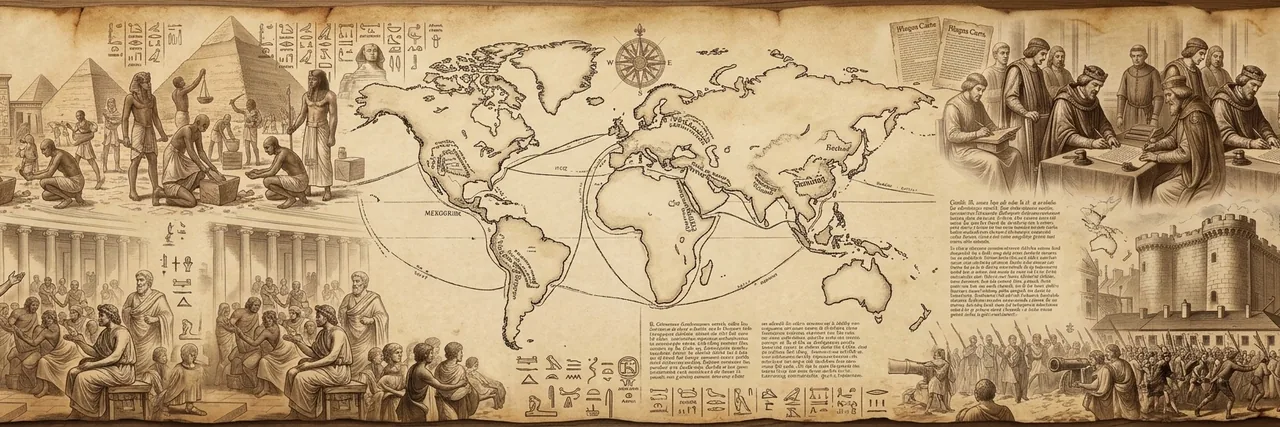
HistoryMUN II is a premier specialized Model United Nations conference designed to test the limits of diplomacy, historical scholarship, and parliamentary strategy. Moving away from reactive crisis mechanics, HistoryMUN places delegates directly into the high-stakes, non-crisis parliamentary and diplomatic chambers that defined world history.
Here, history is not a static script—it is an active negotiation.
Conference Framework & Educational Philosophy
At HistoryMUN, delegates operate strictly within the intellectual, technological, and tactical boundaries of their respective eras. Success requires abandoning hindsight bias and mastering the actual legal frameworks, economic constraints, and strategic imperatives of the past.
Across three non-crisis historical bodies, delegates will engage in rigorous procedural debate, policy drafting, and factional coalition-building:
- The Great Sejm (1788–1792): Balancing noble privileges (Golden Liberty) against executive modernization, urban civil rights, and state survival under the shadow of imperial collapse.
- The Attack on Pearl Harbor (1941): Reconciling inter-service strategic priorities, carrier air fleet logistics, fuel constraints, and target selection on the eve of global war.
- The Peace of Westphalia (1644–1648): Negotiating the constitutional sovereignty of the Reichsstände, religious land rights under the Normaljahr, and the birth of modern international law.
Conference Awards
HistoryMUN recognizes participants who demonstrate exceptional scholarship, oratorical excellence, and procedural leadership across specialized award tiers:
- Best Historian – The highest delegate honor, awarded for combining deep historical scholarship with masterful committee leadership and era-authentic diplomacy.
- Most Outstanding Historian – Conferred upon the delegate who displays superior mastery of historical policy, geopolitical strategy, and factional coalition building.
- Honorable Historian – Recognizing delegates who demonstrate impressive historical awareness, consistent research depth, and strong floor contributions.
- Best Archivist – Awarded to the delegate whose position paper and resolution drafting showcase the highest standard of academic research and primary source integration.
- Statesman's Voice – Conferred upon the delegate demonstrating superior rhetorical mastery, eloquence, and persuasive poise during formal debate.
- Sovereign Chair – Conferred upon the Chair who commands the chamber with absolute authority, procedural perfection, and diplomatic composure.
Official Schedule
Timezone: Philippine Standard Time (PST / GMT+8)
- 6:00 PM – 6:10 PM | Opening Ceremony
- 6:10 PM – 7:45 PM | Committee Sessions (Part 1)
- 7:45 PM – 7:55 PM | Conference Recess
- 7:55 PM – 8:50 PM | Committee Sessions (Part 2)
- 8:50 PM - 9:10 PM | Conference Recess
- 9:10 PM - 11:20 PM | Committee Sessions (Part 3)
- 11:20 PM - 11:40 PM | Conference Recess & Deliberations
- 11:40 PM – 12:00 MN | Closing Ceremony & Awarding
Delegates are expected to be present in their respective committee rooms promptly at 6:00 PM GMT+8. Please ensure all research documents and working materials are prepared prior to the commencement of Part 1.
We look forward to an evening of exceptional scholarship, diplomacy, and debate.
Master the Past. Direct the Future.
Committees
- Constitutional Reform, Military Expansion, and Preserving Sovereignty Against Imperial Encroachment
 Ajwa Abdullah
 Hank Ali
- Resolving Sovereignty, Territorial Demarcation, and Religious Rights in the Holy Roman Empire
 Sowmiya Gowrishankar
 Natchathra .B
- The Diplomatic Impasse, Trade Embargoes, and Strategic Escalation in the Pacific Theater
 Ann (H.C.) Lim
 Saanvii Bharmoria

Past editions
- All editions
- Academics
- 4.4
- Logistics
- 4.1
- Socials
- 4.4
 HistoryMUN 2026
Organizers
Alexander L. Lam
Secretary-General
More MUN conferences
OnlineOnline MUN conferences November 2026MUN conferences in November 2026 High school MUNMUN conferences for high school students University MUNMUN conferences for university students
ConferencesOnlineHistoryMUN II 2026