
Conference
Lansing, MI, United States·North America
Feb 25–27, 2027
150 delegates expected
High school students
In English
About
High School Model UN in Lansing, Michigan · Member of COMMUN
We Work With Every School to Make the Conference Happen
SIMUN is run by the Great Lakes Invitational Conference Association (GLICA), a volunteer-run nonprofit. GLICA is a member of COMMUN, the Coalition of Michigan Model UNs, which brings together the Model UN conferences in Michigan. We work with every school to make the conference happen for its students, one delegation at a time. Your faculty advisor has a direct line to the Secretary-General from the first question to the closing session: help with school approval paperwork, a letter of invitation for visa purposes once your registration is approved, rooming in the conference hotel, and any accommodation a student needs. If something stands in the way of your delegation coming, tell us, and we will look for a way.
Model UN in Its Traditional Form
Delegates represent their assigned country's policy, not their own opinions, prepare before they arrive, and debate in person, as model assembly delegates have since the 1920s. GLICA's own conferences grew out of the Model United Nations Assembly that Eastern Michigan University students first held in 1966. It opened to high schools in 1971, and in 1973 its student organizers took it independent and founded GLICA. Today we keep laptops and phones out of committee, and no generative AI is used for position papers or any conference work. Delegates come prepared, and GLICA's free guides to position papers, procedure, and resolutions (glica.org/resources/) help them get there. Position papers are required for awards. Our chairs follow a "no wallflowers" approach, bringing every delegate into debate and caucus. First-time delegates are welcome, and our chairs invite them to speak.
A Small Conference in Michigan's Capital
SIMUN is a three day high school conference built around specialized United Nations bodies and international organizations, held every February in Lansing, the capital of Michigan, home to the State Capitol and a short drive from Michigan State University. Every session and activity is in the conference hotel, where delegates also stay. All sessions are in English. It is also relatively low cost, with every fee posted openly on glica.org: a modest delegate fee and shared rooms at a group rate.
Who Can Attend
High school delegations led by a faculty advisor. Delegations from abroad apply here on mymun. Schools in the United States register at glica.org/simun. Every application is reviewed by the Secretary-General, and no one is accepted automatically. GLICA sends an invoice after registration closes. Nothing is paid on mymun.
What to Expect at SIMUN
- Committees: UNESCO, the International Food Safety Authorities Network, the International Labour Organization, and the Historical Security Council, a crisis committee set in June 1999. Committees run from 15 delegates in the Security Council to about 40 in the other three, with one delegate per country. Not every country offered will be assigned, so committees are often smaller.
- Thursday, February 25: registration 4:00 to 7:00 p.m. in the AC Hotel lobby, dinner on your own, Opening Session at 7:00 p.m., committees 8:00 to 11:00 p.m.
- Friday, February 26: committees 9:00 a.m. to 9:30 p.m., with lunch about 12:00 p.m. and dinner about 5:30 p.m., then delegate activities in the evening: card and board games, trivia, snacks, and soft drinks.
- Saturday, February 27: committees 8:30 a.m. to 12:00 p.m., lunch, then the Closing Session with awards, ending at 2:00 p.m.
- For advisors: an advisor lounge each day, a meet and greet Thursday evening, and an advisor meeting Friday. Advisors are welcome to sit in on committees.
- Good to know: business attire (a suit is not required). Delegates may dress casually, but appropriately, on Saturday. Curfew is usually midnight, in delegates' own rooms. Every delegate follows GLICA's Code of Conduct. Each delegation brings at least one adult responsible for its students throughout the conference, overnight included. The full schedule is at glica.org/simun/schedule (tentative until the conference).
Dates and Deadlines
- Conference: February 25–27, 2027
- Registration closes: January 11, 2027
- Delegate drop deadline: January 25, 2027
- Hotel room block cutoff: January 25, 2027
- Position papers: open February 4, 2027, due February 19, 2027, at 11:59 p.m. Eastern
Visas and Travel
Delegations from abroad use the same registration deadlines as everyone else. If your delegates need a U.S. visa, please contact GLICA through the Contact Us form at https://glica.org/contact-us/?about=conference-question&conf=simun as early as possible, ideally by December 11, 2026, so we can work out a timeline with you. Please check early whether your delegates need a visa to visit the United States. Citizens of Visa Waiver Program countries usually travel with an approved ESTA instead of a visa, and Canadian citizens generally do not need a visa to visit. Travelers from other countries need a visitor visa, which requires an interview at a U.S. embassy or consulate, and wait times at some posts run several months. Check current wait times at travel.state.gov before you apply, and leave enough time for the visa process.
Once the Secretary-General approves your delegation's registration, GLICA can send the faculty advisor a letter of invitation, signed by the Secretary-General, within two business days. The letter confirms your approved registration only. It is not a visa, and GLICA cannot guarantee one or influence any visa decision. Visa appointments can take weeks or months, so delegations that need a visa should apply as early as possible.
Nearest airports: Capital Region International Airport (LAN) in Lansing, about 7 miles (15 to 20 minutes by car) from the conference hotel, and Detroit Metropolitan Airport (DTW), about 90 minutes away by car. Delegations arrange their own transportation in Lansing, such as CATA buses, rideshare, or a rental van. GLICA provides no vehicles, but we're happy to help your delegation find transportation options.
Fees
Delegate fee: $55 per delegate staying at the conference hotel, or $80 per delegate not staying at the hotel. Delegations from schools outside the United States are expected to stay at the conference hotel and book through GLICA's room block. Hotel charges are separate from the delegate fee. The conference hotel is the AC Hotel & Hyatt House Lansing in Lansing, MI. Hotel rooms are booked and paid directly with the hotel at GLICA's group rate: $162 a night for a double queen room (up to four people) or $109 for a king room (up to two), before tax. Rates and booking steps are at glica.org/simun/costs-and-hotel/, and the hotel booking link will be posted there when available. Book by January 25, 2027.
Hotel and Meals
Delegations are expected to stay in the conference hotel. GLICA holds a room block at a group rate, and delegations book their rooms directly with the hotel. GLICA does not sell travel or accommodation packages. GLICA provides no meals, so plan for three a day. The hotel's breakfast is free. Nearby places to eat: glica.org/simun/where-to-eat/
Certificates
Every delegate receives a certificate of participation signed by the Secretary-General. GLICA is an independent nonprofit and is not affiliated with or endorsed by the United Nations.
Contact
Faculty advisors can reach GLICA through the Contact Us form: https://glica.org/contact-us/?about=conference-question&conf=simun
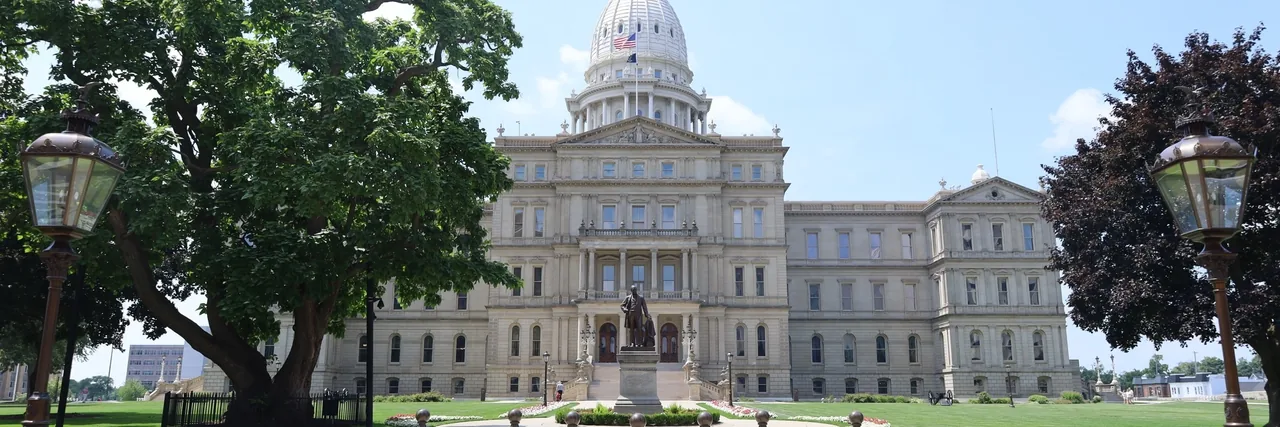
Banner photo: "Michigan State Capitol exterior 2025a" by Antony-22, CC BY-SA 4.0, via Wikimedia Commons, cropped.
Committees
- Independence of East Timor
- Situation in Sierra Leone
- Developing Equitable Access to Sport
- Protecting Higher Education Institutions in Conflict Zones
- Heavy Metal Contamination in Food
- Responding to Foodborne Illnesses
- Maintaining Workers' Rights in Algorithmically Managed Workplaces
- Transitioning Away from the Informal Economy




Partner conferences



 GLIMUN Michigan 2026
 GLIMSC Michigan 2027
 OneMUN 2027

More MUN conferences
United StatesMUN conferences in United States North AmericaMUN conferences in North America February 2027MUN conferences in February 2027 High school MUNMUN conferences for high school students
ConferencesUnited StatesSIMUN Michigan 2027