
About
Defend Democracy - Under Fire
Presented by Continuum
In an era defined by hybrid warfare, strategic ambiguity, and rapidly evolving military technology, the North Atlantic Treaty Organization stands at a critical crossroads. Traditional deterrence models are being tested by cyber operations, space-based threats, proxy conflicts, and internal political fractures within the Alliance itself.
This NATO-focused Model United Nations conference is designed as a high-intensity simulation of alliance-level decision-making under pressure. Delegates will represent key NATO bodies and member states, engaging in realistic debates on collective defense, crisis response, military coordination, and alliance cohesion. Emphasis will be placed on strategic realism, accountability, and the complex trade-offs between security, escalation, and political unity.
Committees are structured to reflect actual NATO institutions, encouraging delegates to move beyond speeches and into substantive negotiation, policy formation, and crisis management. Whether navigating grey-zone conflicts, emerging defense technologies, or internal disagreements among allies, participants will be challenged to think like policymakers responsible for real-world consequences.
This conference prioritizes quality over scale, offering a rigorous, fast-paced environment for delegates seeking an advanced and intellectually demanding MUN experience.
CHECK IT OUT - https://sites.google.com/view/natosmun-continuum/home
Committees
- Parliamentary oversight of NATO military operations and defense spending
- Democratic resilience, disinformation, and internal political fragmentation within NATO states
- Expanding NATO partnerships and managing relations with non-member powers
 Aoun Mohammed
 Hafiz Abdul Rehman
 Debunk Saha
- Strengthening cooperation and trust among NATO member states in times of rising global tensions
- Addressing emerging security challenges such as cyber threats and misinformation
- Improving coordination between political decision-making and military preparedness within NATO
 Hedra Jagadeesan
 Hashmi-al-Haseeb Faisal
 Gopesh Dev
- Strengthening nuclear safety, command oversight, and risk-reduction mechanisms within NATO
- The role of nuclear deterrence in maintaining alliance security amid evolving global threats
- Arms control challenges and confidence-building measures between nuclear and non-nuclear states
 Raghava Chawla
 S.Durga Vaishnavi
 Aahana Bisoi
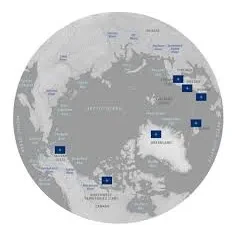
- Militarization of the Arctic and NATO force posture in high-latitude regions
- Securing Arctic sea lanes, undersea cables, and critical infrastructure
- Climate change as a security multiplier in Arctic defense planning
 Prakhar Biswas
 Ruhaan Sardana
- Protecting NATO satellite networks from anti-satellite weapons, cyber interference, and orbital congestion
- Escalation management and deterrence in space following hostile actions against allied space assets
- Integrating space operations with air, cyber, and conventional military planning
 Netra Sree
 Shree Mukhopadhyay
 Yashika Sharma
The Rapid Response Council simulates NATO’s high-level military coordination during fast-moving security crises. Delegates represent states with significant operational capabilities and must make timely decisions on force deployment, coordination, and crisis management while considering political constraints, alliance cohesion, and escalation risks. This committee rewards precision, realism, and disciplined strategic thinking.
 Krisha Bhattacharjee
 Arihaan Jain
Past editions

 EUsMUN 2026
Organizers

Arihaan jain
NATO Secretary General
More MUN conferences
OnlineOnline MUN conferences April 2026MUN conferences in April 2026 High school MUNMUN conferences for high school students University MUNMUN conferences for university students
ConferencesOnlineNATOsMUN 2026