MainMUN 2025

MainMUN

Mar 6–9, 2025 Frankfurt am Main, Germany

MainMUN

Conference

Frankfurt am Main, Germany·Europe

Mar 6–9, 2025

300 delegates expected

High school and university students

In English

How it went

4.50109 ratings from delegates
Academics
4.50
Logistics
4.40
Socials
4.57

About

"Shaping the future together—pioneering a brighter tomorrow"

We are thrilled to announce that MainMUN is back for its 21st edition! After successfully hosting delegates from around the globe over the years, we are excited to welcome you from 06 to 09 March 2025 to Frankfurt am Main.

The decisions we make today shape the future of tomorrow. At MainMUN, we are proud to be part of a community that values reflection and debate on our collective future. We invite delegates from all corners of the world to join us in the financial hub of Germany.

During our four-day conference, you will have the chance to participate in stimulating debates within eight committees including Press and NGO, ranging from beginner to advanced levels, and engage in dynamic crisis simulations. Beyond the formal sessions, you will also experience the vibrant city of Frankfurt am Main and enjoy our social events, including a delegate dance on Saturday evening.

Join us in March 2025 to shape a brighter future together!

Committees

  • 32 countries
    1. NATO Engagement in the Mediterranean Area
    • Paula Benz
    • Gregor Beck

    NATO

    Expert · English · 32 countries

    Topic

    NATO Engagement in the Mediterranean Area

    About the committee

    The North Atlantic Treaty Organization (NATO) was founded in 1949 by twelve European and North American countries. Originally, it was set up as a military alliance to deter the Soviet Union and to ensure the security of the member states. Following the end of the Cold War, the Alliance expanded, gaining new members and adopting a broader political role. Nevertheless, NATO's military significance has remained central throughout its history. At the moment there are 32 countries that are members of NATO. The NATO calls itself a defensive alliance, and the principle of collective defence remains a central aspect even 75 years after ist founding. Collective defence means that an attack on one member state is considered an attack on all, and every member state contributes to the defence. The principle was only invoked once, following the events of the 11th of September 2001 in the United States of America (USA). Today, NATO serves both a political and military function, fostering political alliances among member states and collaborating with other countries and multilateral organizations, such as the United Nations. In addition to its defense role, NATO has increasingly taken on peacekeeping missions and has been central to various international conflicts. Crisis Explanation The MainMUN 2025 Crisis Committee is the North Atlantic Treaty Organization (NATO). MainMUN is a Model United Nations simulation with an interconnected approach and a crisis simulation. Delegates in the NATO crisis committee will have to coordinate their countries policy throughout the conference and will interact with the other delegates of their country in the other committees to establish a consistent country policy. As the head delegate of your country delegation, you can issue instructions to the country’s delegates in the other committees including the Security Council. The decisions and instructions are solely up to the delegates and will shape the direction of the MainMUN 2025. Therefore, the head delegates have a significant impact and influence on the work done in the other committees. The committee will follow the regular MainMUN Rules of Procedure for committees. In addition to those, the committee will also adhere to a second set of Rules of Procedure which are crisis specific and will be provided to delegates separately. These will explain how the system of directives works and how the members of the crisis committee can use them to perform specific actions during the conference. The committee will be monothematic but news of other important matters which will need to be debated during the conference can arise any time. Meaning, delegates should prepare for their country’s policies in a broad manner and not just topic specific. Because just like the “real world”, you never know what is going to happen tomorrow.

    Chairs

    Countries

    How this committee type works
  • 15 countries · 2 delegates each
    1. Sanctions and Their Impact on Global Security
    2. Regional and International Cooperation on Illicit Trade in South America
    • Phil Kievel
    • Alissa Lingnau

    Security Council

    Expert · English · 15 countries · 2 delegates each

    Topics

    1. Sanctions and Their Impact on Global Security
    2. Regional and International Cooperation on Illicit Trade in South America

    About the committee

    After the two World Wars, in June 1945, Chapter V of the United Nations Charter established the United Nations Security Council (UNSC) as the primary and permanent authority of the United Nations (UN) system charged with the maintenance of international peace and security. The UNSC, which is composed by fifteen members, five permanent members (the People's Republic of China, France, the Russian Federation, the United Kingdom, and the United States of America)-the five victorious powers of World War II, that are granted with a veto power -and ten non-permanent (temporary) members, elected for two-year terms by the General Assembly (GA), encourages international peace and security. The main purpose is to prevent war by settling disputes between nations. Whenever peace is threatened, the Security Council meets. The Charta of the United Nations commits that all member states are obligated to comply with council decisions. The Security Council’s powers include the establishment of peacekeeping operations, the establishment of international sanctions, and the authorization of military action through Security Council resolutions; it is the only UN body with the authority to issue binding resolutions to member states. But along with this power comes a high responsibility. Therefore, the Security Council is the most powerful body in the United Nations. At the MainMUN conference, delegates of the SC should be aware that debates are often intensely political in nature. It is therefore important to balance the need for a resolution with the heated rhetoric of international politics.

    Chairs

    Countries

    How this committee type works
  • 38 countries
    1. Ensuring Access to Reproductive Health and Rights
    2. Supporting Indigenous Women’s Rights and Cultural Heritage
    • Deniz Akay
    • Ibtissam Baba

    Commission on the Status of Women

    Intermediate · English · 38 countries

    Topics

    1. Ensuring Access to Reproductive Health and Rights
    2. Supporting Indigenous Women’s Rights and Cultural Heritage

    About the committee

    The Commission on the Status of Women (CSW) is a global intergovernmental body, with 45 Member States dedicated to promoting gender equality and the empowerment of women. The Economic and Social Council (ECOSOC) originally created the CSW in 1946 ensuring that international gender equality rules are applied correctly and women's rights are promoted. The Member States of the CSW are elected by ECOSOC and serve on a rotational basis where members serve four-year terms. These positions are not permanent, as Member States rotate in and out based on the elections held by ECOSOC. In addition to establishing international standards for gender equality and tackling new concerns, including war and climate change, CSW is tasked with advancing women's rights in political, economic, social, and educational spheres. Drafting recommendations on reducing gender-based inequalities, assessing international progress on gender equality, fostering stakeholder interaction, and forming alliances to promote gender-responsive development, especially in accordance with SDG 5 (Gender Equality), are some of its primary responsibilities. The CSW holds annual two-week sessions in the New York United Nations Headquarters, where Member States, civil society, and other stakeholders assess the present development of gender equality, share best practices, and develop policy recommendations. CSW currently puts its focus on combating violence against women, advancing women’s economic empowerment, especially with regard to the COVID-19 pandemic, promoting leadership opportunities, and addressing the gendered impacts of climate change.

    Chairs

    Countries

    How this committee type works
  • 47 countries
    1. Protecting the Right to Privacy in the Age of Artificial Intelligence
    2. Ensuring the Human Right to Health and Well-Being in Conflict Zones
    • Lilly Spahr
    • Nicolas Geschwinde

    Human Rights Council

    Beginner · English · 47 countries

    Topics

    1. Protecting the Right to Privacy in the Age of Artificial Intelligence
    2. Ensuring the Human Right to Health and Well-Being in Conflict Zones

    About the committee

    The Human Rights Council is an inter-governmental body within the United Nations system and a subsidiary body of the General Assembly. The Council is made up of 47 United Nations Member States, which are elected by the General Assembly for a period of three years, and holds responsibility for the promotion and protection of all human rights around the globe. Its foundation in 2006 was the result of a reform process in the UN and represented the replacement of the Commission on Human Rights (CHR). Since then, it has been addressing situations of human rights violations and making recommendations on them. Located in Geneva, Switzerland, its duty entails responding to urgent human rights situations by addressing issues regarding accountability and liability for violations of international human rights and humanitarian law as well as serving as a general forum for debate and dialogue on all human rights issues. In order to strengthen its efforts, the Human Rights Council cooperates with non-governmental organizations, national human rights organizations as well as other civil society actors. Each year, the HRC holds regular sessions, with each annual series of sessions being referred to as “cycle”, and, at any time, a special session may be requested if an acute human rights violation or a similarly urgent event occurs. Another important function the HRC is entrusted with is the Universal Periodic Review (UPR) mechanism, which is conducted in order to ensure the UN Member States’ conformity with human rights. Each Member State of the UN has to submit to the periodic review to assess the fulfillment of its human rights obligations, with each review cycle taking about four years to complete.

    Chairs

    Countries

    How this committee type works
  • 37 countries
    1. Climate Change and Its Impact on Food Security
    2. Enhancing Digital Infrastructure and Cybersecurity
    • Nathalie Ferko
    • Julian Beck
    • Sarah Greifeld

    African Union

    Intermediate · English · 37 countries

    Topics

    1. Climate Change and Its Impact on Food Security
    2. Enhancing Digital Infrastructure and Cybersecurity

    About the committee

    The African Union (AU) is a continental union of 55 member countries. Morocco rejoined the AU in January 2017 after leaving in 1984 over a dispute regarding Western Sahara. Founded in 2002, the AU succeeded the Organisation of African Unity (OAU) established in 1963. The AU's main goals are to achieve greater unity among African countries, accelerate socio-economic integration, and eradicate colonialism and apartheid remnants. The AU has grown into a significant organization addressing ecological, social, financial issues, and conflicts through its Peace and Security Council. Its structure resembles that of the European Union. Agenda 2063 is the AU's strategic framework for transforming the continent over 50 years. Adopted in 2015, it aims for an integrated, prosperous, and peaceful Africa, driven by its citizens and influential globally. Agenda 2063 focuses on infrastructure development, youth empowerment, women's rights, and sustainable development. Flagship projects include the African Continental Free Trade Area (AfCFTA), high-speed train networks, and the African Space Agency. The simulated council will be the AU's Executive Council, operating at the foreign minister level and cooperating closely with the Assembly of Heads of State and Government. The Executive Council prepares for Assembly meetings, drafts decisions, and oversees the implementation of AU decisions. It covers policy areas such as trade, agriculture, humanitarian policy, and social security. The Council meets twice a year to set the AU's budget and discuss predetermined topics. The broad impact across Africa and the legally binding regulations make the Executive Council's work significant and exciting.

    Chairs

    Countries

    How this committee type works
  • 95 countries
    1. Promoting Global Efforts for Forest Conservation and Sustainable Deforestation
    2. Strengthening International Cooperation in Development Aid
    • Raphael Varossieau
    • Elena Xenia Mühl
    • Vesselina Sadovska

    General Assembly

    Beginner · English · 95 countries

    Topics

    1. Promoting Global Efforts for Forest Conservation and Sustainable Deforestation
    2. Strengthening International Cooperation in Development Aid

    About the committee

    The General Assembly (GA) is one of the six principal organs and the main consultative body of the United Nations (UN). Established in 1945 under the Charter of the United Nations, its first session was conducted by 51 states on the 10th of January 1946 in the Central Hall of Westminster, London. Since the 14th of July 2011, with South Sudan as the most recent member state of the UN, it comprises all 193 members of the United Nations. The General Assembly is the only UN body in which all member states can actively participate and benefit from the right to vote upon decisions. Therefore, it represents a unique forum for discussion, embracing the wealth of international issues taking place in the world. It plays a major role in the codification of international law and in setting international policy standards. In order to deal with those complex issues, the Assembly meets officially each year from September until December. In the case of severe situations or of situations that require urgency, the member states convene whenever necessary. Although its decisions do not have a binding character for governments, the documents released by the GA represent the opinion and the will of the world community and thus offer powerful support for initiating economic, political, social, legal or humanitarian actions. In most cases, a simple majority is required in order to pass a resolution. For important issues regarding world peace and security, the election of the Security Council and Economic and Social Council members, or budgetary questions, a two-thirds majority is mandatory. A resolution may also be adopted without a formal vote, if all states achieve consensus on an issue. The president of the GA, who is elected by the forum each year, can propose such a process after consulting with each delegation. While the Security Council is the only UN body entitled to handle problems regarding peace and security and only its resolutions are legally binding, the GA may also take action on this topic in times when the SC is blocked because of the veto power of the Permanent Five (P5) members. According to its resolution 377 (V) “Uniting for Peace”, the GA can recommend collective measures to its member states in order to restore or maintain international peace and security. Besides the delegations of member states, other actors may also participate as observers at GA sessions. These actors are non-member states and entities, such as The Holy See and the State of Palestine, and International Organizations like The African Union, The League of Arab States, The European Union and others. In order to work effectively, the GA has subsidiary organs. The six main Committees of the GA are issue-oriented: First Committee (Disarmament and International Security Committee) Second Committee (Economic and Financial Committee) Third Committee (Social, Humanitarian and Cultural Committee) Fourth Committee (Special Political and Decolonization Committee) Fifth Committee (Administrative and Budgetary Committee) Sixth Committee (Legal Committee) These subsidiary organs work on special agenda issues in order to gather all different state approaches and present their recommendations in form of a draft resolution to the next plenary meeting of the Assembly for its consideration and adoption. Besides the main Committees, the GA is further divided into Boards, Commissions, Councils and Panels, Working Groups and others. At MainMUN there won’t be a separation of sub-committees in the General Assembly. Thus, we will discuss topics from two different subsidiary organs in our committee.

    Chairs

    Countries

    How this committee type works
  • 4 countries · 3 delegates each

    Since the establishment of the United Nations in 1945, NGOs interact with them in many different ways. As the United Nations states itself: “NGOs contribute to a number of activities including information dissemination, awareness raising, development education, policy advocacy, joint operational projects, participation in intergovernmental processes and in the contribution of services and technical expertise.” In Article 71 of the United Nations Charter, the Economic and Social Council (ECOSOC), layed the cornerstone for the cooperation of the United Nations and NGOs. This is further enhanced in E/RES/1996/31, which defines among others the consultative status of NGOs at ECOSOC. This consultative status is an inimitability within the United Nations and allows non-governmental organisations to interact directly with ECOSOC and its subsidiary bodies. The status of an NGO at ECOSOC and its subsidiary bodies is split up in three forms: 1. the general consultative status, 2. Special consultative status, 3. Roster status. For this simulation, all NGOs simulated at MainMUN 2025 are given the general consultative status in all committees. The consultative status allows NGOs the access of all bodies.
    • Dvir Aviam
    • Hamza Qamar

    NGO

    Beginner · English · 4 countries · 3 delegates each

    About the committee

    Since the establishment of the United Nations in 1945, NGOs interact with them in many different ways. As the United Nations states itself: “NGOs contribute to a number of activities including information dissemination, awareness raising, development education, policy advocacy, joint operational projects, participation in intergovernmental processes and in the contribution of services and technical expertise.” In Article 71 of the United Nations Charter, the Economic and Social Council (ECOSOC), layed the cornerstone for the cooperation of the United Nations and NGOs. This is further enhanced in E/RES/1996/31, which defines among others the consultative status of NGOs at ECOSOC. This consultative status is an inimitability within the United Nations and allows non-governmental organisations to interact directly with ECOSOC and its subsidiary bodies. The status of an NGO at ECOSOC and its subsidiary bodies is split up in three forms: 1. the general consultative status, 2. Special consultative status, 3. Roster status. For this simulation, all NGOs simulated at MainMUN 2025 are given the general consultative status in all committees. The consultative status allows NGOs the access of all bodies.

    Chairs

    Countries

  • 3 countries · 4 delegates each

    Journalists play a vital in role in providing checks and balances for the UN, as they process and prepare the diplomatic debates for public consumption. Press delegates at the MainMUN 2025 slip into the very same role as representatives of several distinct press agencies: Their task is to report on the happenings of MainMUN according to the goals and guidelines of their agencies. For that, Press delegates can join the committees in their debate, work the debates into press articles, and interview delegates on their country’s stances.
    • Alexia Cam Marquez

    Press

    Intermediate · English · 3 countries · 4 delegates each

    About the committee

    Journalists play a vital in role in providing checks and balances for the UN, as they process and prepare the diplomatic debates for public consumption. Press delegates at the MainMUN 2025 slip into the very same role as representatives of several distinct press agencies: Their task is to report on the happenings of MainMUN according to the goals and guidelines of their agencies. For that, Press delegates can join the committees in their debate, work the debates into press articles, and interview delegates on their country’s stances.

    Chair

    Countries

    How this committee type works

Partner conferences
elbMUN 2024
Dresden, Germany

View conference
LyonMUN 2025

Lyon, France

View conference

Organizers

Alena Heise
Secretary General
Christian Baier
Head of Academics
Lilly Spahr
Delegate Service
Max Wolf
Head of Media and Marketing
Melina Diedolph
Delegate Service
Nathalie Ferko
Team Member
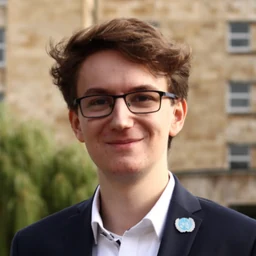
Nicolas Geschwinde
Head of Delegate Experience
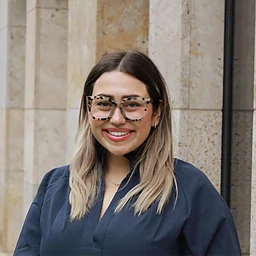
Yasemin Aydin
Head of Events & Logistics

More MUN conferences

ConferencesGermanyMainMUN 2025