MainMUN 2023

Main Model United Nations

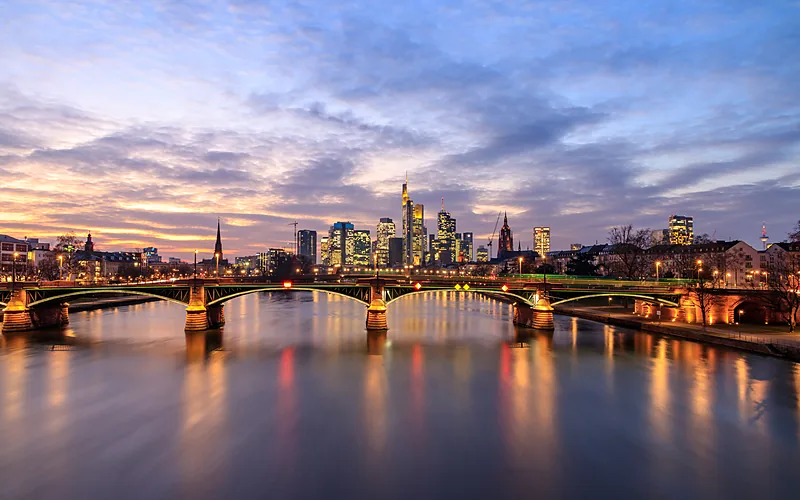
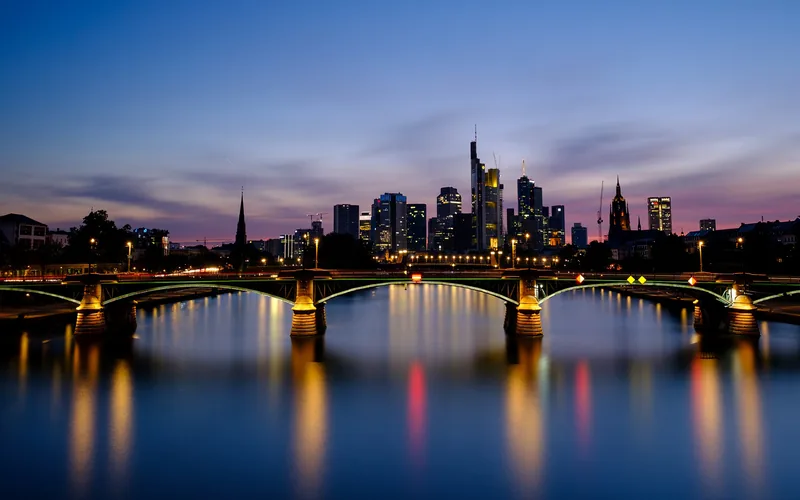
Mar 2–5, 2023 Frankfurt, Germany

Main Model United Nations

Conference

Frankfurt, Germany·Europe

Mar 2–5, 2023

250 delegates expected

High school and university students

In English

How it went

4.3187 ratings from delegates
Academics
4.32
Logistics
4.33
Socials
4.25

About

SDGs-Leave no one behind

Main Model United Nations is an international MUN conference with about 200 participants. MainMUN 2023 will be held in Frankfurt. It will feature a conference-wide crisis, where delegates have the chance to react to crisis events in real time and influence actions of the country that they are representing. Therefore, delegates will coordinate their country's policies across committees and must work together with other delegates to achieve successful results. Last but not least, delegates will have the chance to get to know each other during amazing social events in the evenings.


Visit our website mainmun.de or our social media channels to stay up to date!

Committees

  • 35 countries
    1. Combating Human Rights Violations Against Minorities
    2. Eradicating Exploitative Working Conditions for Incarcerated People
    • Nicolas Geschwinde
    • Camilo Esteban Hernandez Gonzalez

    Human Rights Council (HRC)

    Intermediate · English · 35 countries

    Topics

    1. Combating Human Rights Violations Against Minorities
    2. Eradicating Exploitative Working Conditions for Incarcerated People

    About the committee

    The Human Rights Council is an inter-governmental body within the United Nations system and a subsidiary body of the General Assembly. The Council is made up of 47 United Nations Member States, which are elected by the General Assembly for a period of three years, and holds responsibility for the promotion and protection of all human rights around the globe. Its foundation in 2006 was the result of a reform process in the UN and represented the replacement of the Commission on Human Rights (CHR). Since then, it has been addressing situations of human rights violations and making recommendations on them. Located in Geneva, Switzerland, its duty entails responding to urgent human rights situations by addressing issues regarding accountability and liability for violations of international human rights and humanitarian law as well as serving as a general forum for debate and dialogue on all human rights issues. In order to strengthen its efforts, the Human Rights Council cooperates with non-governmental organizations, national human rights organizations as well as other civil society actors. Each year, the HRC holds regular sessions, with each annual series of sessions being referred to as “cycle”, and, at any time, a special session may be requested if an acute human rights violation or a similarly urgent event occurs. Another important function the HRC is entrusted with is the Universal Periodic Review (UPR) mechanism, which is conducted in order to ensure the UN Member States’ conformity with human rights. Each Member State of the UN has to submit to the periodic review to assess the fulfillment of its human rights obligations, with each review cycle taking about four years to complete

    Chairs

    Countries

    How this committee type works
  • 67 countries
    1. Establishing Sustainable Food Systems
    2. Big Data for Sustainable Development
    • Jacob Krüger
    • Alena Heise

    General Assembly (UNGA)

    Beginner · English · 67 countries

    Topics

    1. Establishing Sustainable Food Systems
    2. Big Data for Sustainable Development

    About the committee

    Compromised of all member states the UN General Assembly (UNGA) is the main policy making body of the organisation. As such, it provides a unique forum of multilateral discussion if the full spectrum of international issues covered by the Charter of the United Nations. Each of the 193 Member States of the United Nations have the same right to an equal vote. Apart from policy making, the UNGA also makes following key decisions for the UN: -Appointing the Secretary General on the recommendation of the Security Council -Electing non-permanent members of the Security Council -Approving the UN budget Meeting in regular sessions from September to December and thereafter when required, the UNGA discussed specific issues through dedicated agenda items or sub-items, which lead to the adoption of the resolutions. All resolutions passed by the General Assembly are recommendations to the Member States, thus not being legally binding. Nonetheless, the resolutions passed in the General Assembly can encourage action if a wide coalition supports and implements its recommendations, therefore also placing pressure on other Member States. In order to improve its overall efficiency, six subsidiary bodies were created by the General Assembly. Each Member State may send one representation to each of the six committees. Additionally, Member States may also assign advisors, technical advisors, experts or people of equal status, but only one person may attend the General Assembly or its subsidiary bodies. The following are the subsidiary committees: -The First Committee: Disarmament and International Security -The Second Committee: Economic and Financial -The Third Committee: Social, Humanitarian and Cultural -The Forth Committee: Special Political and Decolonisation -The Fifth Committee: Administrative and Budgetary -The Sixth Committee: Legal The SDGs were set up by the UNGA in 2015 and are intended to be achieved by 2030. They are included in the UNGA Resolution called the 2030 Agenda and were developed to succeed the Millenium Development Goals. In 2017 the goals were made more actionable by a UN Resolution of the General Assembly, identifiyingspecific targets for eachgoal, along with indicators that are being used to measure each target. The year by which each target should be achieved it between 2020 and 2030, however some goals have no deadline and many targets were strongly impacted by the consequences of Covid -19.

    Chairs

    Countries

    How this committee type works
  • 36 countries
    1. Ensuring Access to and Legality of Reproductive Health Care and Reproductive Rights
    2. Representation of Women in Higher Education Faculty and Executive Positions
    • Bo Sixt Finckh
    • Marc Kerstan

    UN Women

    Intermediate · English · 36 countries

    Topics

    1. Ensuring Access to and Legality of Reproductive Health Care and Reproductive Rights
    2. Representation of Women in Higher Education Faculty and Executive Positions

    About the committee

    UN Women as a committee is still very young. Together with the United Nations Entity for Gender Equality and the Empowerment of Women, it was founded in July 2010 by the United Nations General Assembly (resolution 64/289). By introducing this new committee, the UN member states created a major breakthrough to reach the goals set by the United Nations considering gender equality and the empowerment of women. The newly founded UN Women combines the work of the four previously existing parts of the United Nations that worked on global issues concerning gender equality and women’s empowerment. These were: “Division for the Advancement of Women (DAW)”, “International Research and Training Institute for the Advancement of Women (INSTRAW)”, “Office of the Special Adviser on Gender Issues and Advancement of Women (OSAGI)” and “United Nations Development Fund for Women (UNIFEM)”. UN Women works with governments, as well as other private and public institutions and entities to ensure gender equality. The committee pursues this goal by working on legislation and policies, but also on creating additional programs and services to support women ́s and girl ́s development. UN Women ́s main roles are: • to act as a support system for intergovernmental debates concerning policies and norms. • to provide assistance in implementing the aforementioned standards and policies by offering technical and financial aid. • to regulate and monitor the UN system ́s efforts to achieve gender equality and promote accountability. The 2030 Agenda for Sustainable Development serves as a guiding document that UN Women applies to its efforts to implement gender-responsive solutions. The Strategic Plan for the year 2018 - 2021 outlines UN Women ́s objectives to achieving their goals in the near future.

    Chairs

    Countries

    How this committee type works
  • 29 countries
    1. Peacekeeping in the Sahel Region
    2. Integrating Youth into Peacebuilding
    • Lilly Spahr
    • Ruby Brady

    Peacebuilding Commission (PBC)

    Beginner · English · 29 countries

    Topics

    1. Peacekeeping in the Sahel Region
    2. Integrating Youth into Peacebuilding

    Chairs

    Countries

  • 15 countries · 2 delegates each
    1. The Situation in Central Africa
    • Ann Katrin Korb
    • Gregor Beck

    Security Council (SC)

    Expert · English · 15 countries · 2 delegates each

    Topic

    The Situation in Central Africa

    About the committee

    After the two World Wars, in June 1945, Chapter V of the United Nations Charter established the United Nations Security Council (UNSC) as the primary and permanent authority of the United Nations (UN) system charged with the maintenance of international peace and security. The UNSC, which is composed by fifteen members, five permanent members (the People's Republic of China, France, the Russian Federation, the United Kingdom, and the United States of America)- the five victorious powers of World War II, that are granted with a veto power - and ten non-permanent (temporary) members, elected for two-year terms by the General Assembly (GA), encourages international peace and security. The main purpose is to prevent war by settling disputes between nations. Whenever peace is threatened, the Security Council meets. The Charta of the United Nations commits that all member states are obligated to comply with council decisions. The Security Council’s powers include the establishment of peacekeeping operations, the establishment of international sanctions, and the authorization of military action through Security Council resolutions; it is the only UN body with the authority to issue binding resolutions to member states. But along with this power comes a high responsibility. Therefore, the Security Council is the most powerful body in the United Nations. At the MainMUN conference, delegates of the SC should be aware that debates are often intensely political in nature. It is therefore important to balance the need for a resolution with the heated rhetoric of international politics.

    Chairs

    Countries

    How this committee type works
  • 15 countries · 2 delegates each
    1. Streamlining the International Actions Against Human Slavery
    • Sarah Greifeld
    • Sebastian Renke

    International Criminal Police Organization (ICPO–Interpol)

    Expert · English · 15 countries · 2 delegates each

    Topic

    Streamlining the International Actions Against Human Slavery

    About the committee

    The International Criminal Police Organization is an intergovernmental organization with 195 member states, which supports local police entities. Through sharing and accessing data on crimes and criminals, Interpol seeks various forms of support for its member states. The groundwork for the formation of the organization was laid in 1914, when police representatives and lawyers from 24 different countries met to discuss different techniques for identification and catching fugitives in Monaco at the first International Criminal Police Congress. Back then, the representatives voiced their priorities which are still relevant today: connection of police, communication between countries to quickly locate criminals, a common language, training in forensic science and investigative training, identification of criminals, standardizing records, and extradition. In 1923, after the First World War, Johannes Schober, at the time President of the Vienna Police, reignited the idea of a joint police body. The International Criminal Police Commission was thus established in September 1923 in Vienna. Today, the General Secretariat coordinates all of Interpol’s day-to-day activities in order to fight various crimes. The Secretariat is run by the Secretary General and staffed with police members as well as civilians. Its headquarters are in Lyon, France while a global complex for innovation is in Singapore and several office branches are located throughout the world. As Interpol acts as an intergovernmental organization, there are National Central Bureaus (NCB) in each country that serve as the main point of interaction between the members and the secretariat while Interpol’s governing body is the General Assembly. To communicate more efficiently, Interpol interacts with its member countries through the communications system called I-24/7, which also allows for access to databases and real-time services, even in remote locations. Interpol serves different purposes. Among its main tasks are the management of 19 police databases, investigative support and works in specialized crime areas. Among its crime programs are: 1. Counter-Terrorism to assist member countries with identification schemes of individuals, networks and affiliates 2. Organized and emerging crime: targeting and disrupting international criminal networks 3. Cybercrime: ensure that cyberspace is safe for all supporting member states. As crimes become increasingly internationalized, the work of Interpol is crucial in terms of coordination to ensure a global security architecture.

    Chairs

    Countries

    How this committee type works
  • 4 countries · 2 delegates each
    • Milona Goitom
    • Betül Özkan

    NGO

    Intermediate · English · 4 countries · 2 delegates each
  • 3 countries · 3 delegates each
    • Sofie Sharaf

    Press Agency

    Intermediate · English · 3 countries · 3 delegates each

Partner conferences

elbMUN 2023

Dresden, Germany

View conference

Organizers

Alena Heise
Delegate Service
Julian Beck
Secretary General
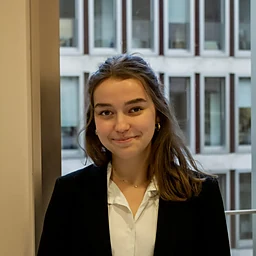
Lilly Spahr
Delegate Service
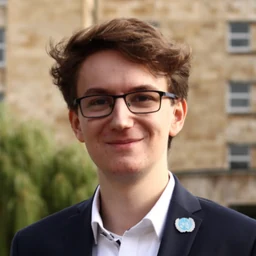
Milona Goitom
Delegate Service

Nathalie Ferko
Faculty Advisor
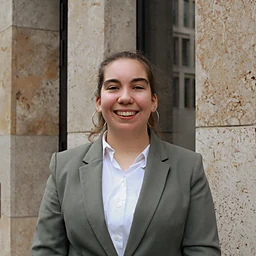
Nicolas Geschwinde
Delegate Service
Paula Benz
Secretary General
More MUN conferences

ConferencesGermanyMainMUN 2023