MainMUN 2024

Main Model United Nations

Feb 22–25, 2024 Frankfurt, Germany

Main Model United Nations

Conference

Frankfurt, Germany·Europe

Feb 22–25, 2024

300 delegates expected

High school and university students

In English

How it went

4.5298 ratings from delegates
Academics
4.70
Logistics
4.39
Socials
4.45

About

Empowering Voices in a Diverse World

Welcome to MainMUN Conference 2024!

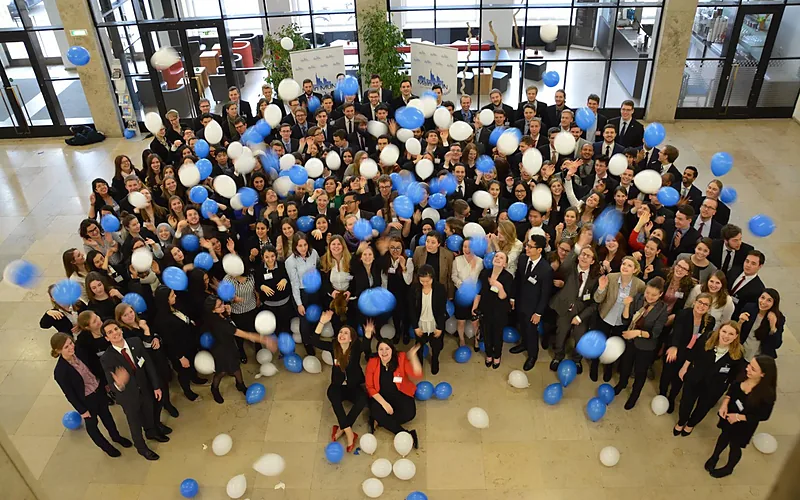
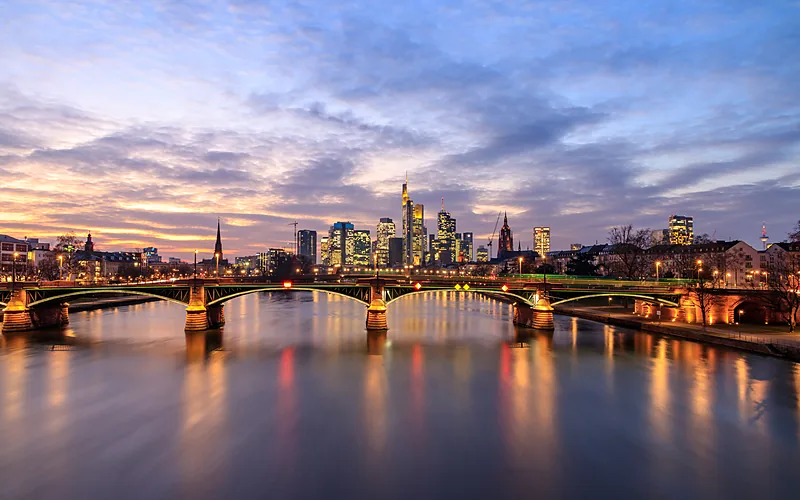
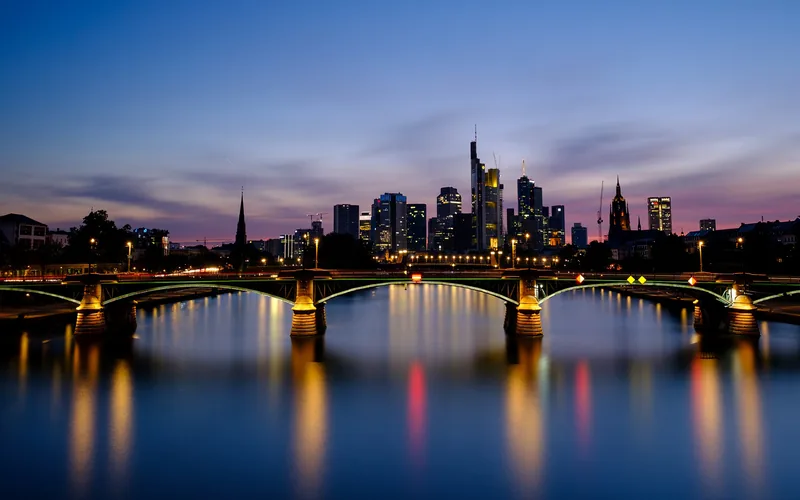
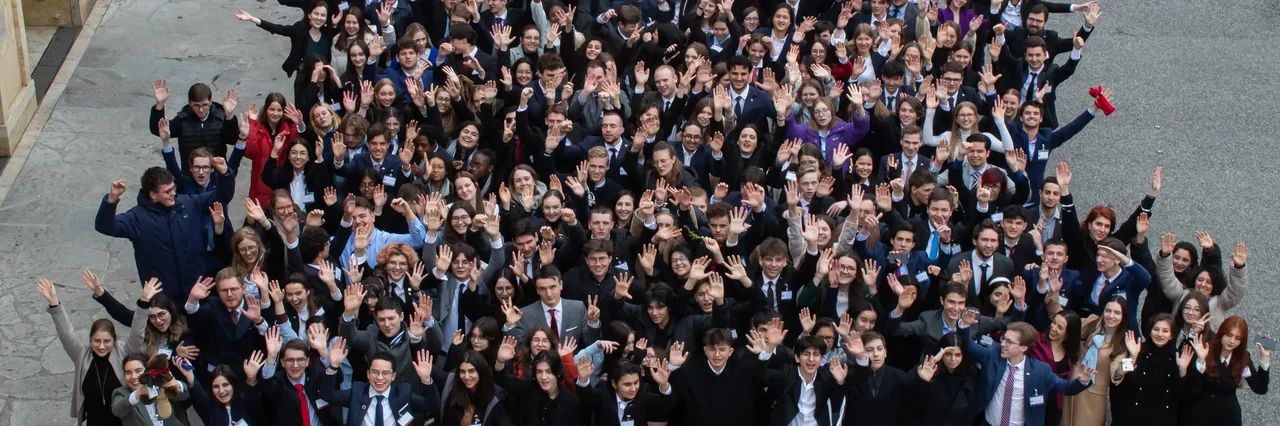
🌍✨ Prepare for an outstanding conference! 🤝🌐 MainMUN brings together passionate students from around the world to debate significant issues in realistic UN committees. Our conference fosters critical thinking, negotiation skills, and intercultural understanding, where diplomacy meets action, and current crisis events shape the flow of the debate. Join over 250 delegates from around the world at MainMUN 2024, set against the vibrant backdrop of Frankfurt! 🗺️🎉

🔥 A conference-wide crisis that thrusts you into the heart of real-time decision-making has been a core part of MainMUN for several years now. 📣⚡️ React to unfolding events and coordinate your nations decision-making. As a delegate, you hold the power to shape your country's narrative, ensuring that your voice resonates on the global stage.

Delegates synchronize policies across committees and coordinate with their co-delegates. In the intricate dance of diplomacy, collaboration is key. Forge alliances, bridge gaps, and find partners in places you did not expect. 🌐 🤝

🚀 As the sun sets, the adventure continues! Engage in our social programme with our prestigious delegates dance or take your chance and visit the European Central Bank in our pre-programme. 🌟

Join us at MainMUN 2024 and become part of a diverse group of delegates. ✍️

🔗 Ready to embark on this journey? Stay in the loop by visiting our website at mainmun.de and following our social media channels!!

The countdown to MainMUN 2024 has begun! 📆🌟

Committees

  • 31 countries · 2 delegates each
    1. Preventing Conflict and Promoting Stability in Fragile States
    • Phil Kievel
    • Gregor Beck

    Foreign Minister Summit

    Expert · English · 31 countries · 2 delegates each

    Topic

    Preventing Conflict and Promoting Stability in Fragile States

    About the committee

    A state's stability is an essential factor contributing to the general well-being of its citizens. Stability is influenced by several critical factors, including but not limited to control of the state territory, monopoly on the legitimate use of force, authority in decision making and provision of public services. Fragile states often suffer from corruption, lack of citizen's support for the government, economic decline and internal conflicts. The Fragile States Index 2023, published by Fund For Peace, rates state stability from "very sustainable" to "very high alert". 55 states are listed under high warning, alert, high alert and very high alert. Only 65 countries worldwide are considered stable or better. Fragile states can threaten their citizens and international security, as internal conflicts might affect neighbouring states and a state's international relations. Promoting state stability, therefore, is paramount to reducing global tensions. Several UN's Sustainable Development Goals (SDGs) directly or indirectly address state stability. The task of delegates of the Foreign Ministers Summit at MainMUN will be to find common ground on measures to prevent conflicts and promote state stability around the globe. Delegates will face the difficult task of debating this important issue while also having to react to numerous crisis events that might affect the international community during the conference. Be aware that topics of debate in the Foreign Ministers Summit can shift quickly as a crisis unfolds. Careful preparation and an excellent general knowledge of international can help you in your discussions.

    Chairs

    Countries

  • 15 countries · 2 delegates each
    1. The Situation in Yemen (Since 2014)
    2. The Situation in the Sudan
    • Ansh Mehta
    • Julian Tombarge

    Security Council

    Expert · English · 15 countries · 2 delegates each

    Topics

    1. The Situation in Yemen (Since 2014)
    2. The Situation in the Sudan

    About the committee

    The United Nations Security Council (UNSC) is one of the six principal organs of the United Nations (UN) and is charged with ensuring international peace and security, recommending the admission of new UN members to the General Assembly, and approving any changes to the UN Charter. The UNSC consists of fifteen members, of which five are permanent and have a veto power: China, France, the Russian Federation, the United Kingdom, and the United States.

    Chairs

    Countries

    How this committee type works
  • 62 countries
    1. Overlooked and Forgotten? Strengthening the Conditions of Internally Displaced People.
    2. Combatting Illicit Drug Trade
    • Raphael Varossieau
    • Ann Katrin Korb

    General Assembly

    Beginner · English · 62 countries

    Topics

    1. Overlooked and Forgotten? Strengthening the Conditions of Internally Displaced People.
    2. Combatting Illicit Drug Trade

    About the committee

    Compromised of all Member States, the General Assembly (GA) is the primary policy-making body of the United Nations. As such, it provides a unique forum for multilateral discussion of the full spectrum of international issues covered by the Charter of the United Nations. Each of the 193 Member States of the United Nations has the same right to an equal vote.

    Chairs

    Countries

    How this committee type works
  • 27 countries
    1. Addressing the Accelerated Melting of Arctic Ice and its Consequences
    2. Preserving the Rights, Welfare, and Active Engagement of Indigenous Communities in the Decision-making Processes Pertaining to their Arctic Lands and Resources
    • Nathalie Ferko
    • Sofie Sharaf

    Arctic Council

    Intermediate · English · 27 countries

    Topics

    1. Addressing the Accelerated Melting of Arctic Ice and its Consequences
    2. Preserving the Rights, Welfare, and Active Engagement of Indigenous Communities in the Decision-making Processes Pertaining to their Arctic Lands and Resources

    About the committee

    The Arctic Council is an intergovernmental forum dedicated to addressing various issues related to the Arctic region. Established in 1996, it consists of eight member states: Canada, The Kingdom of Denmark (including Greenland and the Faroe Islands), Finland, Iceland, The Kingdom of Norway, The Russian Federation, The Kingdom of Sweden, and the United States of America. The Council serves as a platform for these countries to collaborate on matters such as environmental protection, sustainable development, indigenous rights, and scientific research in the Arctic. Additionally, six indigenous organizations have permanent participant status in the Council, allowing them to contribute to discussions and decisions. The Arctic Council's non-binding nature promotes cooperative efforts and information sharing among its members, playing a vital role in the sustainable management of the unique challenges and opportunities posed by the rapidly changing Arctic environment. The uniqueness of the Arctic Council lies in its distinctive composition and collaborative approach, which bring together both states and indigenous groups to address the complex challenges of the Arctic region. This inclusive framework acknowledges the interconnectedness of environmental, social, and cultural aspects of Arctic governance.

    Chairs

    Countries

  • 3 countries · 3 delegates each

    The International Press Corps is a special committee in MUN where delegates assume the role of journalists from news agencies instead of countries in the UN. Their job is to cover the committees instead of debate in them. Press delegates will get to experience the entirety of the conference rather than one committee. Instead of writing opening statements and debating between mods and unmods, Press journalists write articles, conduct interviews with other delegates, observe the debate that unfolds in the committee, and share what transpires with the rest of the conference. Press Corps is an important and crucial committee in a Model UN conference because, just like in real life, Press journalists have the power to shape the conference, influence the committees, and even change resolutions.

    • Oriyan Yakobi
    • Emily Fella

    Press

    Intermediate · English · 3 countries · 3 delegates each

    About the committee

    The International Press Corps is a special committee in MUN where delegates assume the role of journalists from news agencies instead of countries in the UN. Their job is to cover the committees instead of debate in them. Press delegates will get to experience the entirety of the conference rather than one committee. Instead of writing opening statements and debating between mods and unmods, Press journalists write articles, conduct interviews with other delegates, observe the debate that unfolds in the committee, and share what transpires with the rest of the conference. Press Corps is an important and crucial committee in a Model UN conference because, just like in real life, Press journalists have the power to shape the conference, influence the committees, and even change resolutions.

    Chairs

    Countries

    How this committee type works
  • 4 countries · 4 delegates each
    • Vesselina Sadovska
    • Milona Goitom

    NGOs

    Beginner · English · 4 countries · 4 delegates each
  • 62 countries
    1. Sustainable Use of Nucelar Energy
    2. Security Safety Standards of Nuclear Power Plants in Crisis Regions
    • Julian Beck
    • Paula Benz

    IAEA

    Beginner · English · 62 countries

    Topics

    1. Sustainable Use of Nucelar Energy
    2. Security Safety Standards of Nuclear Power Plants in Crisis Regions

    About the committee

    Founded in 1957, the International Atomic Energy Agency (IAEA) was established with the purpose of peaceful cooperation regarding Atomic Energy. Only 12 years prior, the world saw the horrors of an Atomic Bomb. The IAEA is responsible for nuclear technology within the United Nations system, whether used for civil applications or building a destructive force. Mostly, it cares about civil use, atomic energy and educates about the atom. In 2005, the organisation was awarded the Nobel Peace Prize for the continuous work that went into preventing non-peaceful use of nuclear energy. A vital part of keeping the world peaceful are the obligations the IAEA has under the Non-Proliferation Treaty (NPT), as it controls that Members of the NPT do not acquire the capacity to develop nuclear weapons. The IAEA has the responsibility to establish peaceful cooperation regarding atomic energy. Through its activities relevant to energy security, human health, food security and safety, water resource management and industrial applications, it helps attain the Sustainable Development Goals (SDGs). Lastly, the IAEA also helps develop capacities for the safe, secure and peaceful use of nuclear energy.

    Chairs

    Countries

  • 36 countries
    1. Bridging the Digital Divide: The Role of the Global Digital Compact for Economic Advancement
    2. Ensuring Global Debt Sustainability: Economic Resilience and Development in an Interconnected World
    • Alissa Lingnau
    • Nicolas Geschwinde

    ECOSOC

    Intermediate · English · 36 countries

    Topics

    1. Bridging the Digital Divide: The Role of the Global Digital Compact for Economic Advancement
    2. Ensuring Global Debt Sustainability: Economic Resilience and Development in an Interconnected World

    About the committee

    The United Nations Economic and Social Council (ECOSOC) is one of the six main organs of the United Nations and was established in 1946 based on Article 7 of the UN Charter. With its seat in New York City, the ECOSOC consists of 54 Member States since 1971 and is concerned with different tasks of the economic and social areas. Moreover, the ECOSOC is the principal body for coordination, policy review, policy dialogue and recommendations on economic, social, environmental issues and for implementation of the internationally agreed development goals. The ECOSOC has its legitimacy and its competences based on Article 61-72 of the UN Charter and engages the realisation of research on international affairs regarding to the areas of economy, welfare, culture, education and health, it makes reports of those tasks and can craft recommendations to increase the respect of human rights and their implementation.

    Chairs

    Countries

    How this committee type works
  • 30 countries
    1. Improving the Access to Justice for Vulnerable Groups
    2. Strengthening International Cooperation to Prevent and Prosecute Cyber Crime
    • Lina Schmitt
    • Christian Baier

    CCPCJ

    Intermediate · English · 30 countries

    Topics

    1. Improving the Access to Justice for Vulnerable Groups
    2. Strengthening International Cooperation to Prevent and Prosecute Cyber Crime

    About the committee

    The Commission on Crime Prevention and Criminal Justice (CCPCJ) is the main policy making body of the United Nations (UN) on these issues. It was founded in 1992 by the Economic and Social Council (ECOSOC) Resolution 1992/1 as one of two commissions of ECOSOCs UN Office on Crime and Drugs. ECOSOC Resolution 1992/22 (Chapter VI, Clause 1) identified four main pillars for CCPCJs work: 1. “National and transnational trime” 2. “Criminal law in the protection of the environment” 3. “Crime prevention in urban areas, juvenile and violent criminality” 4. “Efficiency, fairness, and improvement in the management and administration of criminal justice and related systems” Today, the commission is holds annual sessions as well as various formats to exchange ideas and best practices, notably among the expert community. It consists of 40 members, distributed by regional groups, who are elected by the ECOSOC for a 3-year-term. The Commission adopts draft resolutions, which are then adopted by the ECOSOC. CCPCJ also hosts the UN Congress on Crime Prevention and Criminal Justice, a high-level forum on these topics, which last took place in 2021 in Japan and reoccurs every 5 years. It is particularly relevant in the fulfillment of Sustainable Development Goal 16 (“Peace, Justice and Strong Institutions”).

    Chairs

    Countries

    How this committee type works

Partner conferences

LyonMUN 2024
Lyon, France

View conference
elbMUN 2024

Dresden, Germany

View conference

Organizers

Alena Heise
Head of Academics
Lilly Spahr
Head of Delegate Service
Max Wolf
Marketing

Maya-Halime Dasan
Head of Crisis

Nathalie Ferko
Faculty Advisor

Nicolas Geschwinde
Delegate Service
Yasemin Aydin
Back office

More MUN conferences

ConferencesGermanyMainMUN 2024