
CourtMUN 2024

Court and Law Model United Nations Workshop

Sep 28–29, 2024 Online

Court and Law Model United Nations Workshop

Conference

Online

Sep 28–29, 2024

200 delegates expected

High school and university students

In English

Applications

Closed
  • Delegates, Head delegates, Faculty advisors, ObserversJul 1 – Sep 7, 2024
  • ChairsJul 1 – Aug 31, 2024

About

Diplomats of Justice

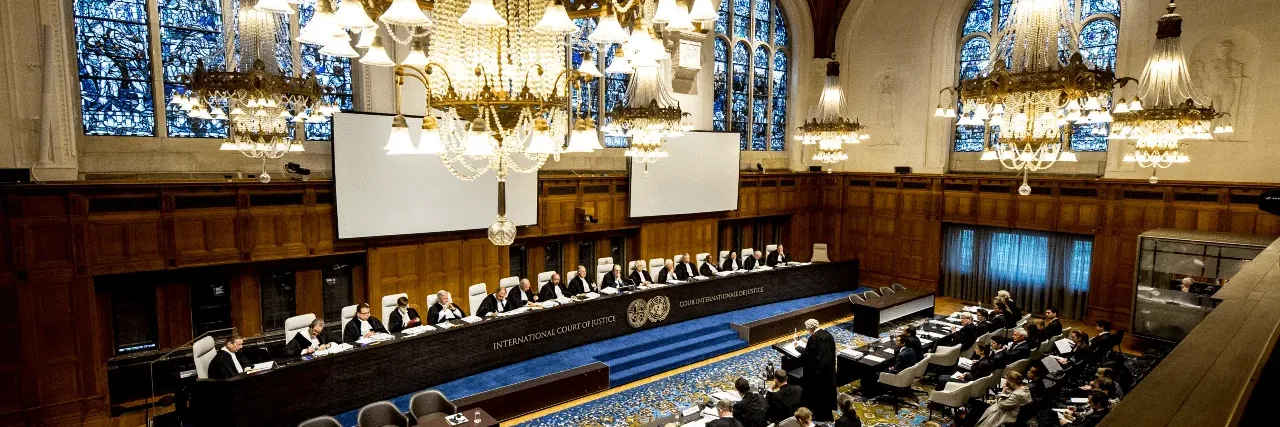
A conference which is focused on law implementations and court committees. 

Committees

  • 19 countries
    1. Talpis v. Italy
    • sıla türkan

    ECHR

    Intermediate · English · 19 countries

    Topic

    Talpis v. Italy

    About the committee

    In March 2017 the European Court of Human Rights condemned Italy for the violation of Articles 2, 3, and 14 of the European Convention on Human Rights (ECHR) in the Talpis v. Italy decision. This was a case of domestic violence that tragically culminated in the death of the applicant’s own son. For the first time, the Court condemned Italy, in a domestic violence case, for having discriminated against the applicant as a woman

    Chair

    Countries

    How this committee type works
    1. Oscar Wilde Trials

    The Central Criminal Court of England and Wales

    Expert · English

    Topic

    Oscar Wilde Trials

    Countries

    How this committee type works
  • 19 countries
    1. Prosecutor v. Kaczynski

    ICC (crisis court)

    Expert · English · 19 countries

    Topic

    Prosecutor v. Kaczynski

    About the committee

    “The Industrial Revolution and its consequences has been a disaster for the human race” Theodore John Kaczynski was born in Chicago on May 22, 1942, to working-class parents Wanda Theresa (née Dombek) and Theodore Richard Kaczynski. His family was of Polish-American origin who later became atheists. He pursued a life of a genius; graduated from Harvard with a full scholarship after being accepted at the ripe age of 16, completed a PhD at the University of Michigan and became an assistant professor of mathematics at Berkeley. Though after engaging in intellectual professors and an experiment about brainwashing, his ideas grew out to be one of the most radical forms of living among today's ideologies. He decided to spread his beliefs through his handmade bombs which were made in primitive and unseen ways. In all ways, he is not your usual serial killer, easily understood from his main mission: spreading his ideas. He has a number of 16 bombings, 23 injured and 3 kills. The way he would proceed with his bombings was as bizarre as his personality, usually sending them via post offices. He targeted universities and airlines which gave him the nickname ‘’Unabomber’’. According to official records, the Unabomber was the case with the most budget and spending in FBI cases. The case lasted for 17 years carried by a team of 150 with 50 million US dollars spent. The investigators had little to no evidence before Kaczynski sent his manifesto to the New York Times. His manifesto named ‘’Industrial Society and its Future’’ was sent alongside a message from his typewriter. Unabomber promised to stop his terror acts as long as his manifesto was published. The Unabomber investigation squad analysts realized that a relative or a friend of the Unabomber might recognize the patterns of communication. After his brother David Kaczynski reached out to authorities pointing out the similarities between his brother's letters and the manifesto. The FBI got a search warrant for a small 3x4 meter house in Montana. They arrested Theodore Kaczynski in place after finding materials that could possibly be used for bomb making alongside some 400.000 pages of handwritten texts. In the United States Court of Appeals, you will be judging the “Unabomber”. As the smartest person in the room with an IQ of 167 it is believed that he could easily get himself clean from the courtroom. Because of that, almost every single person, even Kaczynski’s own family in the courtroom has one mission: declare Kaczynski as insane or convict him to the capital punishment.

    Countries

    How this committee type works
  • 47 countries
    1. Legal Framework Regarding the Treatment of Prisoners

    LEGAL

    Beginner · English · 47 countries

    Topic

    Legal Framework Regarding the Treatment of Prisoners

    About the committee

    The 6th General Assembly committee in the United Nations

    Countries

    How this committee type works
  • 12 countries
    1. Trump v. Anderson

    Supreme Court of the United States

    Intermediate · English · 12 countries

    Topic

    Trump v. Anderson

    About the committee

    Trump v. Anderson, 601 U.S. 100 (2024) is a landmark U.S. Supreme Court case regarding whether individual states can determine eligibility for federal office under Section 3 of the Fourteenth Amendment or not. The case arises after the Colorado Supreme Court disqualified former President Donald Trump from the 2024 presidential ballot, citing his involvement in the January 6 Capitol attack as insurrection.

    Countries

    How this committee type works

Organizers

Atakan Duman
Deputy Secretary General
Zeynep Irmak Gür
Secretary General

More MUN conferences

ConferencesOnlineCourtMUN 2024