About
Beyond the Eclipse, a New Perspective.
BIAMUN IV – Ecliptic Mirage (Females Only)
The fourth edition of the British International Academy Model United Nations conference will take place from January 14–16, 2027, at Landmark Amman Hotel in Amman, Jordan. BIAMUN IV is an all-girls conference welcoming delegates aged 13–19 from Jordan and abroad. This year’s theme, “Ecliptic Mirage,” draws inspiration from a solar eclipse to ask how our understanding of global affairs changes when part of the picture is obscured.
Conference Overview
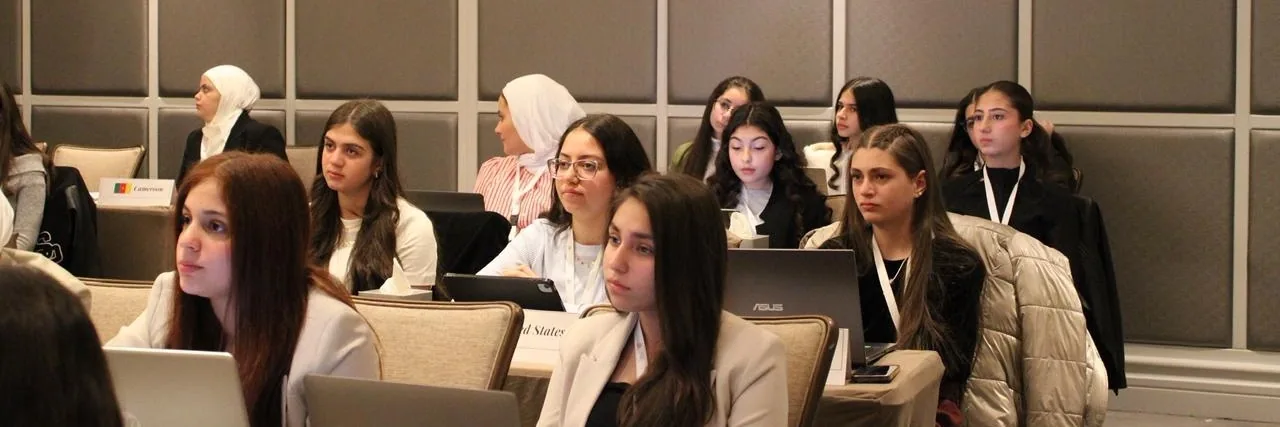
Over three days, delegates will step into the roles of diplomats, legal advocates, and historical decision-makers. Across six committees, they will examine evidence, defend their positions, negotiate with others, and make decisions under pressure.
Theme Significance
During a solar eclipse, the Moon briefly obscures the Sun, changing what we can see. “Ecliptic Mirage” brings that idea into committee. Delegates will consider whose perspectives shape the debate, what information may be missing, and how new evidence can change the course of a negotiation.
Committees and Topics
- General Assembly Fourth Committee (GA4 · SPECPOL) — Examining international political issues, including the worldwide impact of atomic radiation.
- UN Women — Exploring how policy can advance gender equality, protect women’s rights, and expand women’s participation in public life.
- United Nations Security Council (UNSC) — Responding to threats to international peace and security through negotiation and collective action.
- International Criminal Court (ICC) — Examining evidence and legal arguments in simulated proceedings on international criminal responsibility.
- Historical Arab League (اللجنة العربية التاريخية) — Revisiting historical diplomacy and political rivalries, including the Siege of Vienna, in an Arabic-language committee.
- Special Committee · Russian Revolution — Navigating shifting alliances and political upheaval in a historical crisis simulation. Committee topics will remain confidential ahead of the conference.
Who Should Attend
BIAMUN IV welcomes young women aged 13–19 who are curious about global affairs, law, history, or diplomacy. First-time delegates will receive guidance as they prepare and participate, while experienced delegates can deepen their research, debate, and negotiation skills.
Our Mission
- Give young women a space to speak with confidence and take on leadership roles.
- Develop practical skills in research, public speaking, negotiation, and collaboration.
- Encourage delegates to question assumptions and engage seriously with perspectives different from their own.
Committees
The Special Political and Decolonization Committee (SPECPOL, also known as the Fourth Committee, is one of the six main committees of the United Nations General Assembly. It deals with questions of decolonization and self-determination, including the status and future of territories that have yet to attain full self-government. It also reviews UN peacekeeping operations and special political missions and discusses issues such as the rights of Palestinians in the occupied territories, UN assistance to Palestine refugees, and international cooperation on the peaceful use of outer space. Member states debate these issues and negotiate draft resolutions for consideration by the General Assembly.
UN Women is the United Nations entity dedicated to advancing gender equality and protecting the rights of women and girls worldwide. Its work focuses on expanding women’s participation in leadership and decision-making, improving access to economic opportunities, and ending violence against women and girls. It also promotes women’s involvement in peace negotiations, conflict prevention, and humanitarian response. UN Women works with governments, civil society, and other UN bodies to develop international standards and put them into practice through laws, policies, and programs.
The Historical Arab League (اللجنة العربية التاريخية) is an Arabic-language committee that simulates diplomacy in a historical setting. Delegates represent states and powers of the period, debating issues such as territorial disputes, shifting alliances, and rival claims to political authority. They negotiate from the perspective of their assigned delegation, taking into account the interests, relationships, and information available at the time. Through debate and negotiation, delegates explore how leaders built coalitions, responded to crises, and decided when to compromise.
The United Nations Security Council (UNSC) is the UN body with primary responsibility for maintaining international peace and security. Its 15 members discuss armed conflicts, threats to civilians, and disputes that could escalate into wider crises. The Council can call for ceasefires, support diplomatic negotiations, impose sanctions, and authorize UN peacekeeping operations. It can also adopt decisions that UN member states are required to carry out under the UN Charter. Each of its five permanent members can veto a substantive decision, making negotiation central to the Council’s work.
The Russian Revolution Special Committee is a historical crisis simulation set during the political upheaval that transformed Russia in 1917. Delegates take on the roles of figures from the period, each with their own loyalties, priorities, and vision for Russia’s future. As new developments unfold, delegates must decide whom to trust, negotiate with rival factions, and respond to events with the information available to them at the time. Their decisions can reshape alliances and influence how the crisis unfolds.
The International Criminal Court (ICC) is a permanent court established under the Rome Statute to investigate and try individuals accused of genocide, war crimes, crimes against humanity, or the crime of aggression. It acts as a court of last resort, stepping in when national authorities are unwilling or unable to genuinely investigate or prosecute a case within its jurisdiction. During a trial, the prosecution and defense present evidence, question witnesses, and make legal arguments. The judges determine whether the prosecution has proven the charges beyond a reasonable doubt.
Past editions
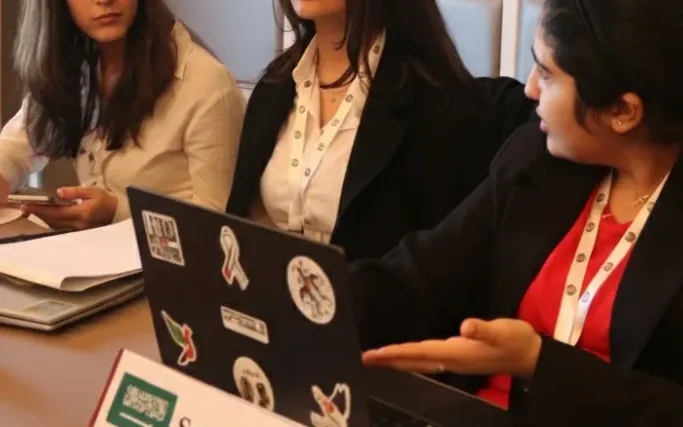

Organizers

Hala Al Shurbaji
Secretary General
More MUN conferences
JordanMUN conferences in Jordan AsiaMUN conferences in Asia January 2027MUN conferences in January 2027 High school MUNMUN conferences for high school students
ConferencesJordanBIAMUN IV 2027