Applications closed Oct 31
Conference
Applications
Closed- Delegates, Head delegatesJul 19 – Oct 31, 2026
- Faculty advisorsJul 18 – Oct 31, 2026
- ChairsMay 20 – Jun 15, 2026
About
A Fusion of Horizons: Dialogue Across Divides in a Fragmented, Multipolar World
In a world increasingly defined by fragmentation and the emergence of multipolarity, the divides that shape international relations – political, cultural, and ideological – are becoming ever more pronounced. As global challenges grow more complex, the prospect of simple consensus appears increasingly elusive.
Yet division does not preclude understanding. Rather, it reveals the conditions under which understanding must be pursued.
The notion of a “fusion of horizons,” drawn from the philosophy of Hans-Georg Gadamer, suggests that meaning emerges not from uniformity, but from engagement across difference. Perspectives shaped by distinct histories and experiences do not merely collide; they interact, challenge one another, and, in doing so, create the possibility for deeper insight.
In today’s international arena, conflicts are rarely confined to material interests alone. They are equally rooted in competing interpretations of legitimacy, identity, and order. Diplomacy, therefore, is not only the negotiation of outcomes, but an ongoing process of dialogue through which these differences are confronted and, at times, reconciled.
At CUIMUN, delegates are invited to embrace this complexity across a diverse selection of committees. Within NATO, they will navigate the competing strategic priorities of an alliance operating in an increasingly contested security environment; in ECOSOC, they will confront the economic and social inequalities that transcend borders while deepening divisions between them; and in the OSCE, they will pursue cooperation amid conflicting understandings of security, sovereignty, and regional order. The ICJ will require participants to consider how international law can mediate disputes between states and transform competing claims into reasoned judgment, while the Historical Crisis Committee will transport delegates to the Third Crusade, a period shaped by religious conviction, political rivalry, cultural encounter, and shifting alliances.
Across these committees, participants will face issues that demand more than compromise – they require the capacity to listen, question assumptions, interpret unfamiliar perspectives, and reconsider entrenched positions.
In doing so, delegates take part in a process that extends beyond simulation: the effort to navigate division not by erasing difference, but by engaging with it. It is within this space – between perspectives – that the foundations for new forms of cooperation are forged.
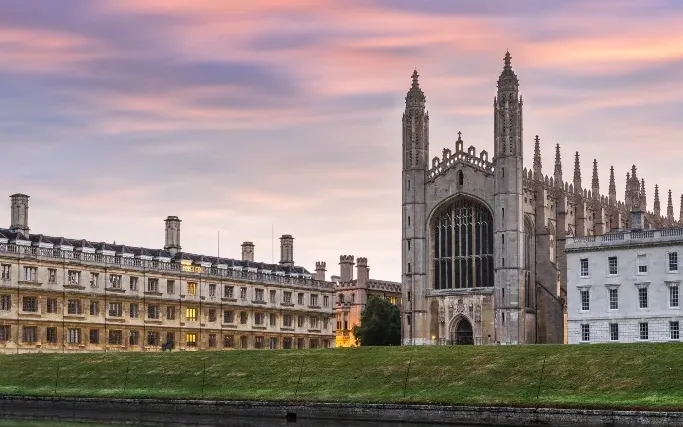
In that spirit, you are cordially invited to the city of Isaac Newton, Charles Darwin, and Stephen Hawking – a place where horizons truly fuse.
Committees
- Missiles over Poland: Article 4 Consultations and Strengthening NATO's Integrated Air and Missile Defence (IAMD)
 Lionel Mach-Hour
 Julian Auert
- The Third Crusade
 Mihnea Pînzaru
- Governing Sand and Dust Storms: From Fragmentation to Coordination in a Transboundary Crisis
- The Concealed Economy: Assessing, Redistributing, and Financing Uncompensated Care Labour as a Global Development Necessity
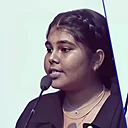 Srijanita Maurya
 Camille Imbert
- Addressing the Transnistria Conflict in Light of Moldova's EU Accession
 Arnaud Piollat-Gaudart
 Juliane Trabandt
 Thomas Hansen
- Immunities and Criminal Proceedings – Equatorial Guinea v. France (2016)
 Ekaterina Chasovnikova

Past editions
Partner conferences




 KULMUN 2026
 BayernMUN - MUN in the heart of Europe 2027
 LSEMUN 2026
 EuroMUN 2026
 OxIMUN 2026
 UCLMUN XII 2026
 SIMUN 2027
Organizers
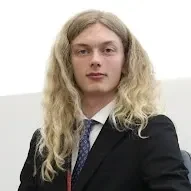
Alvin Engström
Secretary-General

Arne Dinort
USG Academics

Harry Bancroft
USG Delegate Affairs

Juan Jose Gomez-Aguirre
USG Finance
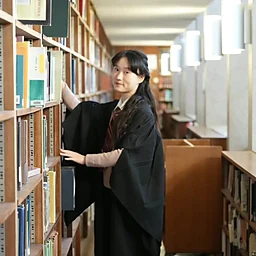
Lucy Zhang
USG Academics
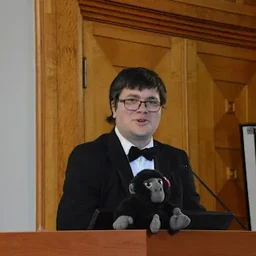
Mihnea Pînzaru
Crisis Director
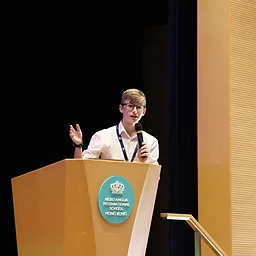
Rylan Holt
Deputy Secretary-General
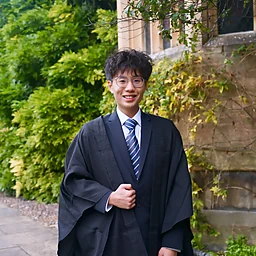
Ted Yip
Conference Advisor
More MUN conferences
United KingdomMUN conferences in United Kingdom EuropeMUN conferences in Europe November 2026MUN conferences in November 2026 University MUNMUN conferences for university students
ConferencesUnited KingdomCUIMUN 2026