SUDWAR 2023

WarCogs first edition

Nov 4, 2023 54 Bd Desgranges, 92330 Sceaux 10h-17h, France

WarCogs first edition

Conference

54 Bd Desgranges, 92330 Sceaux 10h-17h, France·Europe

Nov 4, 2023

30 delegates expected

University students

In English

How it went

4.345 ratings from delegates
Academics
4.40
Logistics
4.20
Socials
4.40

About

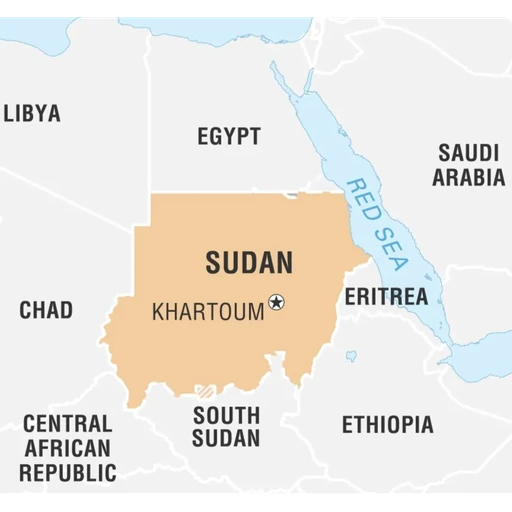
Sudan, Warlords at Odds

In 2019, the Sudanese people thought that the removal of dictator Omar al-Bashir would usher in an era of political renewal. But it was not to be.

Instead, it was the start of a new era of oppression and human rights abuses under the transitional government of regular army general Al-Burhan.

As the regional actors move closer to Sudan to seize control of the Red Sea and prevent a civilian independent government from emerging, the transitional government became even more fragile. Hemeti, leader of the strongest pro-government Arab militia in the region, the Rapid Support Forces, could no longer stand Al-Burhan's monopolisation of power as the general of the regular armed forces of Sudan.

On 15 April 2023, civil war broke out between the two generals.

Welcome to war soldier, today you immerse yourself in one of the many conflicts that are tearing Africa apart.

May you keep your ethics


***


SudWar, Sudan, Warlords at Odds, is the first edition of a wargame produced by the Strategy Departement from the FDNU, a wargame that we call “WarCogs”.

WarCogs is both a wargame and a MUN, whose purpose is to provide fun and to teach the students about the complexity of modern warfare for a day. You may see it as an educational game to explore war, to increase your decision-making skill, to explore possible futures awaiting the diplomatic world, and to bring you the possibility to think about your nation's strategic stances. It is a wargame because the players embody generals preparing and commanding armies during war times at the strategic scale, and it is a MUN because it’s about another side of international relations : the use of the military. Here up to 30 students won’t be delegates of their nations, but the armed wings of their politicians. They will follow directives of their leader and develop military strategies around them. Diplomacy is solely run by some staff members, but it does not mean players will never have a word to say to them. 

Due to its purpose of bringing insights about modern warfare, all WarCogs editions are set either in a prospective fiction, in the near future, either in the current present. Here we're going to talk about the present conflict in Sudan. A list of events planned by the staff will unfold during the game. The players are gathered in teams of 5 high military officers for each of the main actors chosen for the edition. All actions taken by the players may create new unpredictable events that might alter the ones planned by the staff.

WarCogs 1st edition, Sudan, Warlords at Odds, is centered around Sudan. Even though is mostly about the civil war between the two generals, the conflicts existing around the world and those to come impacting the world great powers, notably the Ukrainian conflict, Taiwan and China tensions, Israël and Gaza, Iran civil unrest, Jihadist insurgencies, and every other one the players will bring into the game. It is important to understand that the wargame is not linear, and that unforeseen actions will arise, forcing the players to be on a constant alert about the whole world.

Who are the actors then ? With up to 30 players, each gathered in a team of minimum 3 to maximum 5 (maximum 9 for the SAF and the RSF), there will be up to 6 military forces played, the 6 most important for the edition. All the other military actors in the world are played only by the staff. These are the 6 main actors by order of priority (minimum 4 actors are played) :

The Sudanese Armed Forces (SAF) of general Al-Burhan, the Rapid Support Forces (RSF) of general Hemeti, the Federation of Russia, the United Arab Emirates, the Arab Republic of Egypt, and the Kingdom of Saudi Arabia. They had been chosen for their military strength and implication in the edition scenario, but also for their ambitious political agenda, independence and leverage over other countries.

Committees

  • 4 countries
    1. Remaining the main legitimate leader of Sudan in the eyes of the international community
    2. Expelling Hemeti forces from all key infrastructures of the country
    3. Seeking external supports

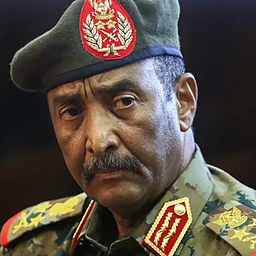
    The Sudanese Armed Forces (SAF) of general Al-Burhan

    Intermediate · English · 4 countries

    Topics

    1. Remaining the main legitimate leader of Sudan in the eyes of the international community
    2. Expelling Hemeti forces from all key infrastructures of the country
    3. Seeking external supports

    About the committee

    The Sudanese Armed Forces (SAF) is the regular army of Sudan, and a shapeshifting figure changing ideologies and sides depending on its current chief general. Today the SAF is led by general Al-Burhan in the current war against the Rapid Support Forces of general Hemeti, a militia with which they fight alongside, both in the name of the Sudan government and in the name of overthrowing an illegitimate regime. Abdel Fattah al-Burhan Abdelrahman al-Burhan, or simply Al-Burhan, is the de facto ruler of Sudan, and was a regional commander in Darfur during the second Sudanese civil war. In 2018 he was appointed commander of the ground forces of the army. Following the Sudanese Revolution in 2019 seeing the fall of Omar al-Bashir's regime, he was handed control of the military junta, the Transitional Military Council. Even though a collective head of state Transitional Sovereignty Council was formed to replace the junta, it was led by Al-Burhan, and in 2021 he seized power in a coup d'état. That would foster the rivalry between the SAF general and Hemeti, until the latter strike in April 2023 and launch the civil war between the two generals. While the RSF accuse Al-Burhan of recreating an oppressive regime, it is to note that the Khartoum massacre in 2019 was commited by the RSF under the orders of the SAF. The RSF now put the finger on links between the SAF and Islamic movement leaders, including Secretary-General of the Islamic Movement Ali Karti, in the city of Port Sudan, accusations the Sudan’s ruling Sovereign Council has denied.

    Countries

  • 4 countries
    1. Standing as the main legitimate leader of Sudan in the eyes of the international community
    2. Expelling Al-Burhan forces from all key infrastructures of the country
    3. Seeking external supports

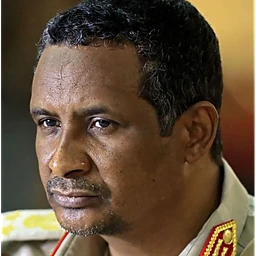
    The Rapid Support Forces (RSF) of general Hemeti

    Intermediate · English · 4 countries

    Topics

    1. Standing as the main legitimate leader of Sudan in the eyes of the international community
    2. Expelling Al-Burhan forces from all key infrastructures of the country
    3. Seeking external supports

    About the committee

    The RSF commanded by Hemeti is one of the strongest militia in Sudan, and is currently seeking to overthrown the regular army perceived as oppressive as the former Sudan regime they once help to destroy in 2019. The group evolved from so-called Janjaweed militias, which fought in a conflict in the 2000s in the Darfur region, where they were used by the government of long-ruling President Omar al-Bashir to help the army to brutally put down a rebellion. War crimes and crimes against humanity, even genocide, are the accusations levelled at the militias as a result of the war, which has claimed more than 300,000 lives. Over time, the militia became stronger. Recognised as a pro-government militia, it was made into the RSF in 2013. As the RSF became more prominent and its role in the country’s security affairs grew, their leader's business interests prospered with help from al-Bashir. His family expanded its holdings in gold mining, livestock and infrastructure. The Rapid Support Forces is commanded by General Mohamed Hamdan Dagalo, commonly known as “Hemeti”, or “Little Mohamad”. He held the position of deputy head of Sudan’s ruling Sovereign Council before the war broke out. Now seeking support in the international, especially from the United Arab Emirates, he rebranded the conflict as a war against Islamist ideologies behind Al-Burhan forces.

    Countries

  • 4 countries
    1. Setting up a naval base in the Red Sea
    2. Developping new fronts for the West in the world to disperse the US involvement in Ukraine
    3. Forging long-term alliances in the Horn of Africa

    Federation of Russia

    Intermediate · English · 4 countries

    Topics

    1. Setting up a naval base in the Red Sea
    2. Developping new fronts for the West in the world to disperse the US involvement in Ukraine
    3. Forging long-term alliances in the Horn of Africa

    About the committee

    Russia has arguably expanded its influence in Africa in recent years more than any other external actor. These engagements extend from deepening ties in North Africa, expanding its reach in the Central African Republic and the Sahel, and rekindling Cold War ties in southern Africa. Russia’s approach is distinctive among external actors in that Moscow typically relies on irregular (and frequently extralegal) means to expand its influence—deployment of Wagner mercenaries, disinformation, election interference, support for coups, and arms for resources deals, among others. This low-cost, high influence strategy seeks to advance a very different world order than the rules-based, democratic political systems to which most Westerners aspire for Africa. Sudan is part of this global strategy in Africa, and while not being a key element in the world powers, it could still grant the Federation direct access to the Red Sea.

    Countries

  • 4 countries
    1. Keeping safe economic activities in the Red Sea
    2. Helping to the destruction of all remnants of Islamist forces in Sudan
    3. Keeping Sudan from becoming a democratic independent state not easy to control
    United Arab Emirates

    Intermediate · English · 4 countries

    Topics

    1. Keeping safe economic activities in the Red Sea
    2. Helping to the destruction of all remnants of Islamist forces in Sudan
    3. Keeping Sudan from becoming a democratic independent state not easy to control
    About the committee

    Just as its rival Saudi Arabia, the United Arab Emirates wants to be a key player in the Middle-East by keeping weak countries under its wings, preventing democratic states from emerging, and seizing control of key ports. But while both countries supported the two generals, the United Arab Emirates realized that by helping both sides, they would only be creating a never-ending conflict that would grow and, sooner or later, spread to the whole region, threatening the numerous economic activities and ports seized by the UAE and Saudi Arabia in the Red Sea. Thus, while still pretending to be neutral, the Emirates have switched to a more radical help in favor of Hemeti, because he fights the general representing the former islamist regime of Sudan, Al-Burhan. It is then no surprise that Hemeti then branded the conflict as a war against radical islamist ideologies. The United Arab Emirates fear islamist ideologies, they see them as the cause of Arab Spring like revolutions and a threat to their authority. Thus, as Saudi Arabia favors Al-Burhan, the conflict looks more and more like a proxy-war between the two middle east oil giants.

    Countries

  • 4 countries
    1. Making the Sudanese Armed Forces (SAF) closely dependent on Egypt
    2. Maintaining Sudan as an easy-to-control military state instead of an independent democracy
    3. Restoring order in Sudan to prevent a resurgence of terrorist activities

    Arab Republic of Egypt

    Intermediate · English · 4 countries

    Topics

    1. Making the Sudanese Armed Forces (SAF) closely dependent on Egypt
    2. Maintaining Sudan as an easy-to-control military state instead of an independent democracy
    3. Restoring order in Sudan to prevent a resurgence of terrorist activities

    About the committee

    Relations between Egypt and Sudan date back to the occupation of Sudan by Egypt in the 19th century, during the time of the Ottoman Empire. This occupation did not officially end until Sudan gained independence in 1956. Since then, the Arab Republic of Egypt adopted colonialist policies toward Sudan. Determined to prevent the emergence of a civilian, let alone a democratic government in Sudan, Egypt encouraged the coup against Hamdok’s transitional government in 2021 and has greatly contributed to the ongoing dispute between al-Burhan and Hemeti. A civilian independent state in Sudan is seen as a threat to the regime. A less militaristic state in Sudan would imply Egypt's loss of direct influence over the region, might affect Egypt’s interests particularly concerning the Grand Ethiopian Renaissance Dam on the Nile River, and is seen as leading to a failed state, which could lead to significant political instability in the region.

    Countries

  • 4 countries
    1. Securing the Red Sea coasts near Sudan for economic reasons
    2. Being seen as a major political actor in the middle east through mediation of the conflict
    3. Keeping Sudan from becoming a democratic independent state not easy to control
    Kingdom of Saudi Arabia

    Intermediate · English · 4 countries

    Topics

    1. Securing the Red Sea coasts near Sudan for economic reasons
    2. Being seen as a major political actor in the middle east through mediation of the conflict
    3. Keeping Sudan from becoming a democratic independent state not easy to control
    About the committee

    The Kingdom of Saudi Arabia has long sought to establish itself as a key player in the middle east, not only economically but also politically. This explains its intervention in Sudan by helping no less than 8000 foreigners fleeing the country when the current conflict broke out, and by offering its help as a mediator between the two generals during the Jeddah talk. Yet, Saudi Arabia is also one of the many countries that actively prevented a civilian state to establish itself in Sudan, by exacerbating the tensions with the militaries more easy to manipulate. The crown prince Mohammed ben Salmane even support more Al-Burhan than Hemeti, more supported by the United Arab Emirates, to the point that some see the conflict as proxy-war between the two middle east oil giants. Being first to secure key ports around the Red Sea has been a recurring theme in Saudi global strategy since the Yemen conflict where the Emirates seize control of a couple of Yemeni ports, and Sudan is no exception. In this way, the Kingdom of Saudi Arabia has destabilised the region to make it easier for itself to assert its power.

    Countries

Partner conferences

NeomaTech 2023

Reims, France

View conference
SATMUN 2023

Lyon, France

View conference
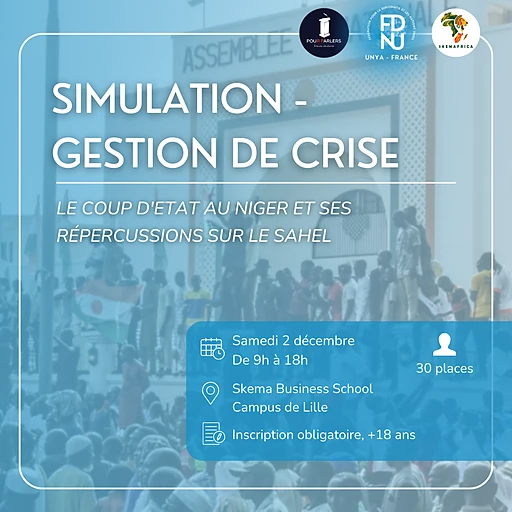
CriSahel 2023

Lille, France

View conference
FMUN 2024

Toulouse, France

View conference
TouMUN 2024

Tours, France

View conference
MEUPa 2024

Paris, France

View conference
SIA 2024

Paris, France

View conference
RUWAR 2024

Lyon, France

View conference

Organizers

Armand Avizanda Perelló-Santandreu
FDNU - Simulations Director
Emma Gatse
Saclay United Nations - President
Loujaine Ghannouchi
FDNU - Deputy Simulations Director

More MUN conferences

ConferencesFranceSUDWAR 2023