MUNtenia 2023

MUNtenia Model United Nations

Jan 20–22, 2023 Bucharest, Romania

MUNtenia Model United Nations

Conference

Bucharest, Romania·Europe

Jan 20–22, 2023

160 delegates expected

High school and university students

In English

Applications

Closed
  • DelegatesNov 23 – Dec 26, 2022
  • Head delegates, Faculty advisorsNov 26 – Dec 26, 2022

About

Be the change you want to bring!

MUNtenia Model United Nations 2023 is a debate conference centred around a simulation of prestigious United Nations organs and institutions, such as the UN Security Council or the UN General Assembly Committees. We aim to create an environment which not only facilitates the evolution of our participants as delegates, debaters, and representatives of their countries but also as human beings. We strive to pack an academically enriching experience while also offering an unforgettable fun and enjoyable atmosphere throughout our conference.


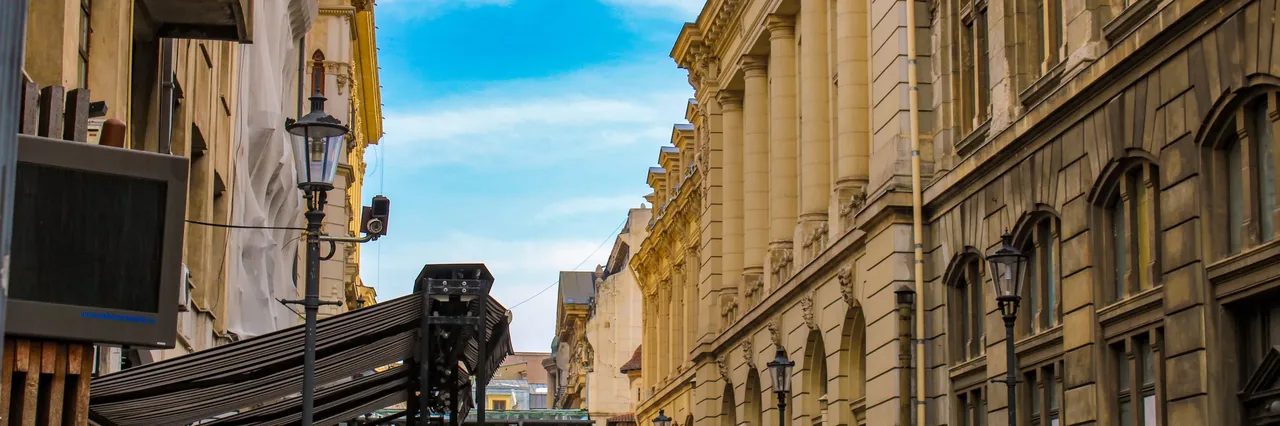
This year’s editions take a major turn in departing the beautiful and culturally abounding city of Slobozia for Romania’s capital and largest urban area, Bucharest.


The major relocation has also had profound effects on our Secretariat and Organising Team, freshly packed with dedicated and inspiring new members. This year’s edition will also include a whopping seven committees (ECOSOC, WHO, DISEC, SPECPOL, LEGAL, UNSC and CRISIS) adapted to all difficulties and discussing various fascinating topics, from the re-enactment of the Bolshevik Revolution to the analysis of the economic impacts of international sanctions and embargos. '
 

Requirements for applying as a delegate:

  • High School or University Student.
  • Age 14-22.
  • No prior experience is necessary.
  • Citizen of the EU/EEA/CH or in possession of a suitable Schengen visa. 

Committees

  • 25 countries
    1. The Issue of Unexploded Remnants of War

    Disarmament and International Security Committee (DISEC)

    Intermediate · English · 25 countries

    Topic

    The Issue of Unexploded Remnants of War

    About the committee

    💣Even after war is over, its dangers remain buried and still harm civilians, years after the conflict. Unexploded weaponry, no matter how old, has the potential to detonate, and even if it does not, it emits contaminants into the environment as it degrades. Land mines contaminate 78 countries, killing or harming 15,000-20,000 people every year. Approximately 80% of victims are civilians, with children being the most endangered age group. An estimated 50% of fatalities occur within hours of the detonation. What is there to be done about former conflict areas? Are some regions impossible to save? Join this edition's DISEC Committee at MUNtenia and have a say in ensuring post-war safety!

    Countries

    How this committee type works
  • 20 countries
    1. Ensuring Stability in the South China Sea

    Special Political and Decolonisation Committee (SPECPOL)

    Intermediate · English · 20 countries

    Topic

    Ensuring Stability in the South China Sea

    About the committee

    💠 The problem of ensuring security in the South China Sea region has been controversial since the 70s, as Brunei, China, Indonesia, Malaysia, the Philippines, Taiwan, and Vietnam have made overlapping claims to the area. Claimant states are interested in retaining or acquiring the rights to the estimated 11 billion barrels of untapped oil and 190 trillion cubic feet of natural gas, fishing stocks, and strategic islands, as well as the control of important shipping lanes. The People’s Republic of China maintains its overwhelming claims under the Nine-dash line, a set of lines that appeared on Chinese maps encompassing the whole zone. In 2016, an arbitration tribunal ruled against China’s claims and did not rule on the ownership of the islands. Adding to that, the recent issue of Taiwan and its controversial status of sovereignty has also influenced politics in the region. The disputes still continue, as the last few years have seen military pressure from China as well as the heavy involvement of the outlying United States. How can the international community put an end to these? What can you do to guarantee that the region is not pressured by unwanted military presence? How can each country be ensured of its maritime security? If you wish to debate on this and find out how one of the most significant disputes of the century could be solved, join us in the SPECPOL Committee of MUNtenia!

    Countries

    How this committee type works
  • 24 countries
    1. Revising Diplomatic Immunities

    Legal Committee (LEGAL)

    Intermediate · English · 24 countries

    Topic

    Revising Diplomatic Immunities

    About the committee

    ⚖ Thanks to their status, government officials and diplomats all over the world benefit from legal immunity from the jurisdiction of another country, due to the Vienna Convention on Diplomatic Relation. Unfortunately, some diplomats misuse their power to take advantage of individuals and organizations. So far, there have been reported plenty of cases of power exploitation such as theft, drug smuggling, employer abuse and slavery, different types of vehicular offenses, money laundering, tax fraud and worst of all murder. Should the rights attributed to diplomats be restricted? How can the UN rework its legal framework for diplomatic immunities? For this and much more, come to the Legal Committee of MUNtenia!

    Countries

    How this committee type works
  • 24 countries
    1. Reducing the Impact of Sanctions and Embargos on Civilians

    Economic and Social Council (ECOSOC)

    Beginner · English · 24 countries

    Topic

    Reducing the Impact of Sanctions and Embargos on Civilians

    About the committee

    💸 It is common knowledge that sanctions, along with embargoes, make up the first line of defense when combating the abuses and misconduct of states and organizations. Although usually imposed on financial, political and military grounds, these approaches often fail to protect the nation’s very citizens by unintentionally harming them in the process. Violations of the rights to life, health, social services, and protection of human dignity occur among the common people, as opposed to the government elites which remain unscathed and continue to divert the population’s resources towards perpetuating economic uncertainty and worsening their quality of life. How can nations make sure that sanctions and embargoes target the oppressors and not the oppressed? Are there any alternatives to regulating the international landscape, all while preventing humanitarian collateral damage? Join the ECOSOC and have a say in the safety and future of thousands across the globe!

    Countries

    How this committee type works
  • 16 countries
    1. Regulating the Activity of Private Military Contractors

    United Nations Security Council (UNSC)

    Expert · English · 16 countries

    Topic

    Regulating the Activity of Private Military Contractors

    About the committee

    🪖 Private military contractors - essentially what is known by the term of “mercenaries” - have proven divisive and difficult to counter throughout history. With the latest diplomatic institutions trying to find a common ground for legislation and regulations, there is no consensus being reached. These private military contractors have various implications around the globe, ranging from state-coordinated policing groups to de facto leaders of countries, being what stands between the latest propped-up puppet regime and a new coup. Is the better solution tight supervision of these organisations or increased operational liberties? Given the subject’s complexity and the academic proficiency of the presidents, join the Security Council!

    Countries

    How this committee type works
  • 22 countries
    1. Improving International Cooperation in Public Health Emergencies

    World Health Organisation (WHO)

    Beginner · English · 22 countries

    Topic

    Improving International Cooperation in Public Health Emergencies

    About the committee

    ⚕The terms "emergency" and "disaster" have varying legal meanings depending on the state. Damage, injury, or loss of life or property on a large scale may be attributed to a variety of causes, natural or manmade. The WHO classifies an event as a public health emergency of international concern, PHEIC, when it decides that it presents a threat to the public health of other states due to spread of illness across borders and may need a coordinated worldwide response. Since 2009, the international scene has faced multiple public health emergencies such as the swine flu pandemic, the polio declaration, the Ebola outbreak in Western Africa, the Zika virus epidemic, the ongoing COVID-19 pandemic, and the monkeypox outbreak. Is there a way for nations to work together to develop a plan to deal with public health crises? Should health risks caused by aspects such as mass overdosing or crimes against humanity be treated as public health emergencies? Find out in the WHO committee at MUNtenia 2023!

    Countries

    How this committee type works
  • 14 countries
    1. The Bolshevik Revolution

    CRISIS

    Expert · English · 14 countries

    Topic

    The Bolshevik Revolution

    About the committee

    ⚒On the 2nd of March 1917, after continuous pressures from the Russian population and the mutiny of many soldiers ordered to use violence to quell civil unrest, Tsar Nicholas II abdicates the throne and a Provisional Government takes his place. Not long after, a reforming Russia fights to leave The Great War and further rages into Civil War. The Bolsheviks fight to consolidate their power, with Vladimir Lenin as their leader. Revolutionary groups scramble to gain political supremacy, while the effects of the War continue to affect the Russian population as a whole. Join the Crisis Committee and have a say in changing the course of the Bolshevik Revolution, as well as shaping the future of the Russian nation and Europe as a whole!

    Countries

    How this committee type works

More MUN conferences

ConferencesRomaniaMUNtenia 2023