
elbMUN 2023

Elbe Model United Nations Conference

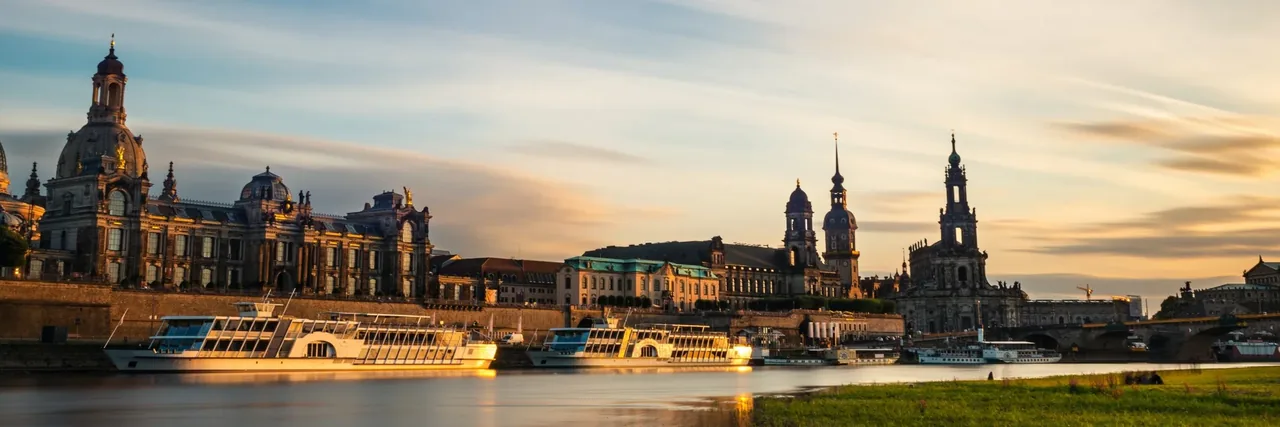
Apr 12–16, 2023 Dresden, Germany

Elbe Model United Nations Conference

Conference

Dresden, Germany·Europe

Apr 12–16, 2023

100 delegates expected

University students

In English

How it went

4.6325 ratings from delegates
Academics
4.52
Logistics
4.52
Social programme
4.84

About

The Nations' Orchestra - Directing the World to Harmony

In 2023, we again invite people from all over Germany, Europe and the world to beautiful “Elbflorenz” (Florence on the Elbe). We are looking forward to discussing current topics of world politics, working out compromises and passing resolutions with you in the Saxony State Parliament over 4 days in up to 5 committees. In between, we'll show you Dresden, party together in the best scene clubs and have a good time.
We are looking forward to seeing you from 12th to 16th April in 2023!

Already registered? 🗨️ Please check your conference documents here on myMUN to join our WhatsApp-group for the conference!

What´s included?

✔️ Delegates at elbMUN will benefit from speeches by experts about the conferences topics, social events 🏰, lunches and coffee breaks with snacks☕and more! You will also receive a certificate of participation and be eligible for awards. 🏆 elbMUN 2023 will be an unforgettable experience of diving into the world of diplomacy and fostering friendships around the 🌏.

Accomodation is not included. 🛋 Not from Dresden? Then you can apply for our 🔗Got-a-Couch Program to be hosted by other students! 

(If you are from Dresden and would like to offer a place to sleep, please let us know!)

Our schedule: 

📆 Click here to take a look at this year´s schedule :) 

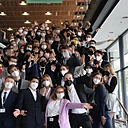
For your more detailed planning: We are looking forward to welcoming you on April 12 from 11 am for registration. Please be at the Saxon State Parliament at the latest at 1:10 pm for a huge group photo with all the Delegates and the team! From 2 p.m. on, elbMUN 2023 will start with the opening ceremony!

From 4:45 pm on the first Informal Comitee Sessions and Guest Speaker presentations will follow.

Please note that we highly recommend staying in Dresden the whole time of your participation in the Conference. You may apply for our “Got-a-Couch Program” - or host people from abroad if you are based in Dresden.

On Sunday, April 16, the Conference will terminate at approximately 5pm.

All levels of experience are welcome!

🤓 You have never been to a MUN or have no idea what exactly it is supposed to be? Perfect! Start your MUN journey in Dresden! elbMUN is a completely beginner friendly MUN-conference! We will inform you about everything you need to know. It would just be handy if you speak a little English!😊

Our conference documents:

As soon as you applied, you will have access to this year's conference documents via myMUN.

Before attending elbMUN 2023, please check the following docs:

☑️ 2023 Delegates' Handbook with Code of Conduct and Rules of Procedure (all one big document 🤓)

☑️ 2023 Study Guide of your specific committee

❗Afterwards, please upload your position paper on myMUN until the Easter weekend, so that the chairs can give you some feedback on your country's position!

Advices and tips:

Don't worry, being a good delegate is not rocket science. Check out our website 🔗here, where we have put together a few tips that will help you deliver a strong performance as a delegate at elbMUN 2023!

You can also visit this website, which has more good tips: 🔗https://bestdelegate.com/

Committees

  • 20 countries
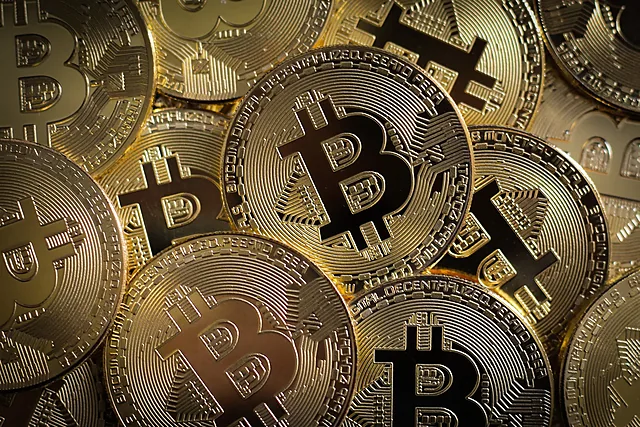
    1. The Regulation and Supervision of Crypto Assets, Currencies and Funds
    • Buse Sevval Aslan
    • Lisa Ielyzaveta Shevchenko

    International Monetary Fund (IMF)

    Intermediate · English · 20 countries

    Topic

    The Regulation and Supervision of Crypto Assets, Currencies and Funds

    About the committee

    In September 2021, El Salvador was the first state to officially adopt the cryptocurrency Bitcoin as legal tender. In April 2022, the Central African Republic followed. This only forms one part of a rising utilization of crypto assets in the digitalized, global economy: Crypto assets increasingly serve for state and private actors as a decentralized means of payment and investment which promotes financial inclusion and allows for faster and cheaper cross-border capital flow. Especially individuals in developing countries with unstable market conditions and high structural inflation rates consider stablecoins a viable alternative to assets in the national currency. In addition, some see cryptocurrencies as a cheaper alternative for international wire transfers. However, crypto assets and brokers remain highly unregulated and unsupervised, which facilitates fraudulent and criminal usage such as tax evasion and money laundering. The list of countries with strict regulation or even prohibition on trading with Crypto assets is expanding, e.g., China has banned all cryptocurrency transactions in September 2021. As cryptocurrencies are by definition not safeguarded by state financial institutions, they have proven to be of high volatility and unpredictability. Even some stablecoins have proved to be not stable at all. The current crash of the trading platform FTX was another notable example of the risks lying in the Crypto sphere. Moreover, the decentralized mining of crypto coins based on blockchain technology might be used to circumvent capital flow restrictions and environmental targets due to high energy consumption, even though some bigger coins like Ethereum changed to the more energy efficient proof of stake method. Therefore, the International Monetary and Financial Committee (IMFC) of the International Monetary Fund (IMF) has decided to elaborate the first set of complete global standards to the regulation and supervision of crypto assets which will be presented to the Board of Governors. The IMFC advises and reports to the Board of Governors on the supervision and management of the international monetary and financial system and is composed of ministers, central bank governors, or politicians, and economists of a similar rank. At the end of a meeting, it will issue a communiqué which will provide guidance for the IMF’s work program for the next six months.

    Chairs

    Countries

  • 20 countries
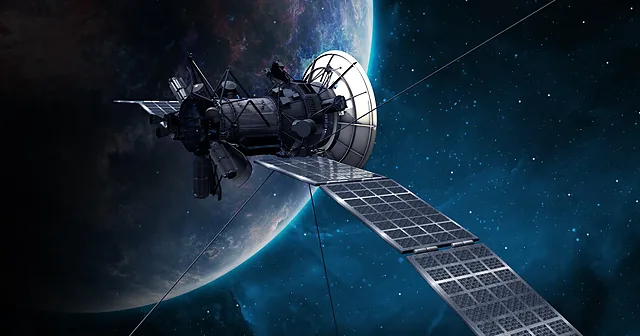
    1. Outer Space as a new battleground: Regulating military action in space
    • Nora Lucía Grumpe
    • Apostolos Symeonidis

    Commission on the Peaceful Uses of Outer Space (COPUOS)

    Intermediate · English · 20 countries

    Topic

    Outer Space as a new battleground: Regulating military action in space

    About the committee

    Satellites that are authorized for spying and early detection, for navigation of precision weapons and for rapid communication between military units – outer space has been militarized. Many nations around the world, especially the U.S., but also Russia, China, India or France are pursuing satellite technology for military purposes to be able to take military action anywhere in the world. Militaries and security policymakers of the world's leading powers attribute to space a key function for future wars. NATO has also expressed the intention to recognize space as a possible theater of war. As NATO Secretary General Jens Stoltenberg states, "NATO has no intention of deploying weapons in space," yet it must be ensured that NATO missions and operations have the appropriate support. In June 2021, NATO defense ministers adopted a space strategy for the first time. The alliance intends to use it primarily to protect satellites that are important for mission communications, navigation, early warning systems on missile launches and situational awareness in conflict zones. States’ military activities in outer space bear numerous risks: attacks on satellites could be used in the event of war to shut down parts of public life. For example, the processing of cashless payments or navigation systems for road, sea and air traffic could be severely affected. How can the risks of military action in space be reduced? In which way can states cooperate to prevent an escalation in space? Is there a need for a secondary legal basis to the Space Treaty concerning military action space?

    Chairs

    Countries

  • 20 countries
    1. Water Security – How glacier melt threatens domestic water resources in the Himalayan Mountains

    • Alinde Gnatzy
    • Ankit Mazumdar

    United Nations Environment Assembly (UNEA)

    Beginner · English · 20 countries

    Topic

    Water Security – How glacier melt threatens domestic water resources in the Himalayan Mountains

    About the committee

    Goal 6 in the UN Sustainable development goals aims to ensure availability and sustainable management of water and sanitation for all, as both are critical to the health of people and the planet. Yet we are still a long way from this goal. This becomes clear when we turn our gaze to the southern regions south of the Hindu Kush and the Himalayas, from Afghanistan and Pakistan to India, Bangladesh and Myanmar. Here, more than 1.6 billion people are directly affected by glacier melt. The rate at which these icy giants are melting has accelerated rapidly over the past decades. For example: the glaciers in a roughly 2000-kilometer-long area between India, China, Nepal and Bhutan have lost about 7.7 billion tonnes of ice annually over the past two decades. In the 25 years between 1975 and the year 2000, the figure was 3.9 billion tonnes. Therefore, the glaciers in the Himalayas and the adjacent Hindu Kush are already in serious danger. But if CO2 emissions continue to rise and global warming is then expected to increase, they could largely disappear by the end of the century – with catastrophic consequences for the regions. Poor drinking water, water levels too low to support agriculture and, above all, the question of whether the areas will still offer liveable foundations for future generations. To answer these questions in the affirmative, the UN executive board is meeting in Dresden this year to conclude a resolution able to crucially support the regions at risk. Do we need new pipelines and more funds to support them? Who should take the lead here: local committees to organize the projects precisely or the joint administration of the UN? What should be the role of the states that are not directly affected by the glacier melt?

    Chairs

    Countries

    How this committee type works
  • 20 countries
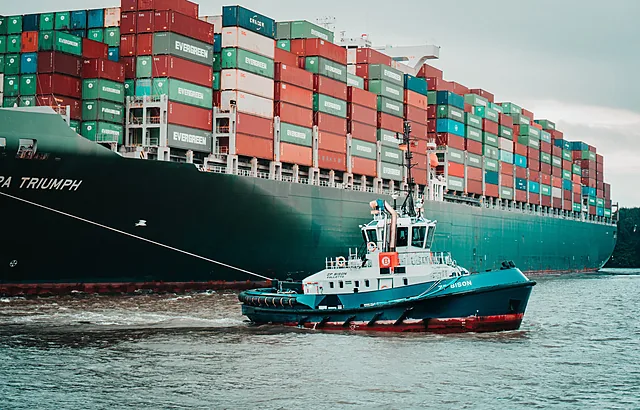
    1. Sustainability and Resilience along the Global Supply Chain
    • Nico Joel Polleichtner
    • Katharina Kühne

    Economic and Social Council (ECOSOC)

    Beginner · English · 20 countries

    Topic

    Sustainability and Resilience along the Global Supply Chain

    About the committee

    More than 10 years ago, the UN member states created a fundamental framework for more sustainable business with the "Guiding Principles on business and human rights". It was the first global agreement on governments and businesses working together to protect and strengthen human rights in the context of business activities. This debate could not be more pressing: In the face of the Corona crisis, the extensive chip shortage, rising inflation and the current energy crisis, we are confronted daily with the importance of functioning supply chains. Disruptions to the supply chain have farreaching global consequences that hinder economic development. At the same time, unsustainable supply chains contribute to a widening divergence in economic prosperity and place a severe impact on the environment. In the last decade, contributions have been made and lead in the right direction but are still not invested enough to fully implement the principles. Therefore, the interaction and cooperation between companies, employees, governments and other stakeholders along the supply chain must be improved. This will foster a trustworthy and sustainable structure of supply chains in the future and ensure the unhindered movement of goods, including medicines, vaccines, and food. We can only achieve sustainable consumption and production in the sense of SDG 12 if human rights, the environment, and climate are also protected in global supply chains.

    Chairs

    Countries

    How this committee type works
  • 20 countries
    1. Strengthening the role of women in peacebuilding processes

    • Pranav Keshavan
    • Charlotte Burkhard

    Commission on the Status of Women (CSW)

    Beginner · English · 20 countries

    Topic

    Strengthening the role of women in peacebuilding processes

    About the committee

    Worldwide, complex conflicts and humanitarian crises continue to ravage communities and hinder the overall well-being and prosperity of societies. Women are often the most impacted by these crises, bearing the brunt of conflict and paying a higher price of the devastation – from increased gender discrimination and violence to the waning of gender-sensitive structures and programming. Still, they remain largely excluded from participating in peace processes, despite overwhelming evidence showing that women’s involvement in peacebuilding and mediation leads to lasting, positive peace that goes well beyond just the silencing of guns. Although important strides have been made since the adoption of the United Nations Security Council resolution 1325 in 2000, women’s direct participation and representation in formal peace processes continues to be the one area that lags behind in the implementation of the Women, Peace and Security (WPS) agenda. Between 1992 and 2019, women served as only 6 per cent of mediators, 6 per cent of signatories and 13 per cent of negotiators globally. The COVID-19 outbreak has shed even greater light on the full extent of gender inequality in contexts affected by conflicts and increased the urgency of fostering gender-inclusive approaches to harness sustainable peace.

    Chairs

    Countries

    How this committee type works

Partner conferences

MainMUN 2023
Frankfurt, Germany

View conference
GöMUN 2023

Göttingen, Germany

View conference
FREIMUN 2023

Freiburg im Breisgau, Germany

View conference

More MUN conferences

ConferencesGermanyelbMUN 2023